
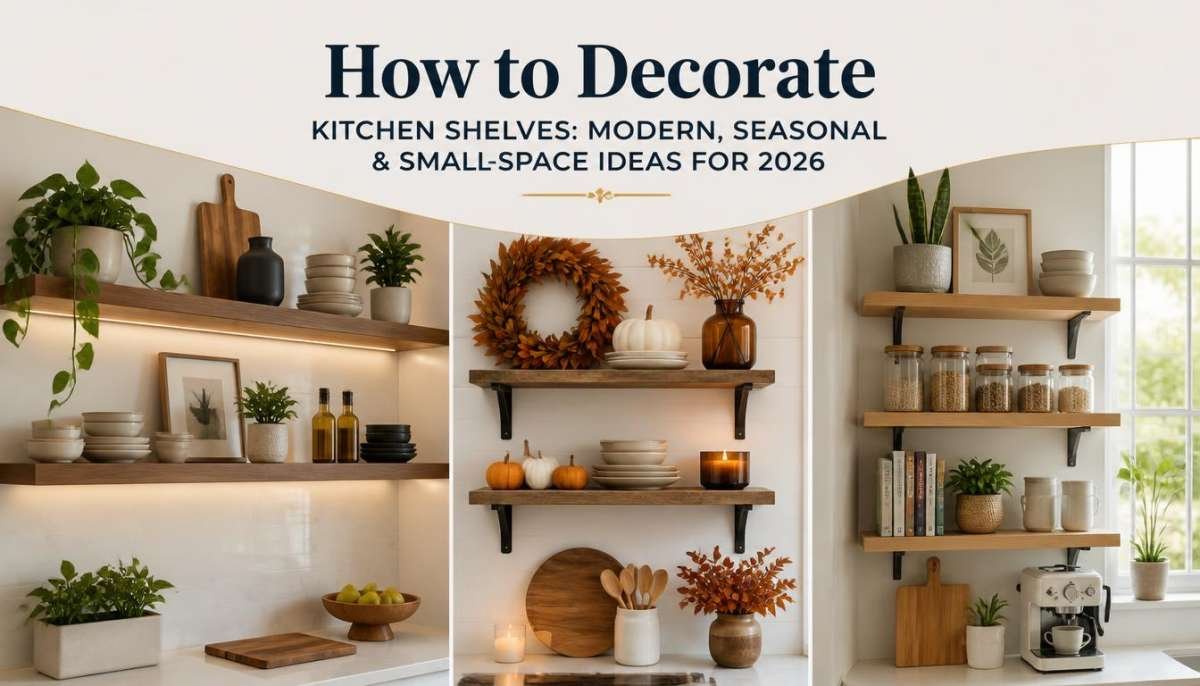
If you’ve ripped out your upper cabinets or moved into a place with open shelving already built in, you know the struggle. Empty shelves look sad and half-finished. Overstuffed ones look like clutter. Getting it right takes more than just grabbing a few candles and calling it a day.
Learning how to decorate kitchen shelves the right way comes down to a few things: balance, function, and knowing when to stop adding stuff. Once you get the hang of it, your shelves can actually make your kitchen feel more put together than closed cabinets ever did.
Let’s get into it.
Before You Style: 3 Ground Rules
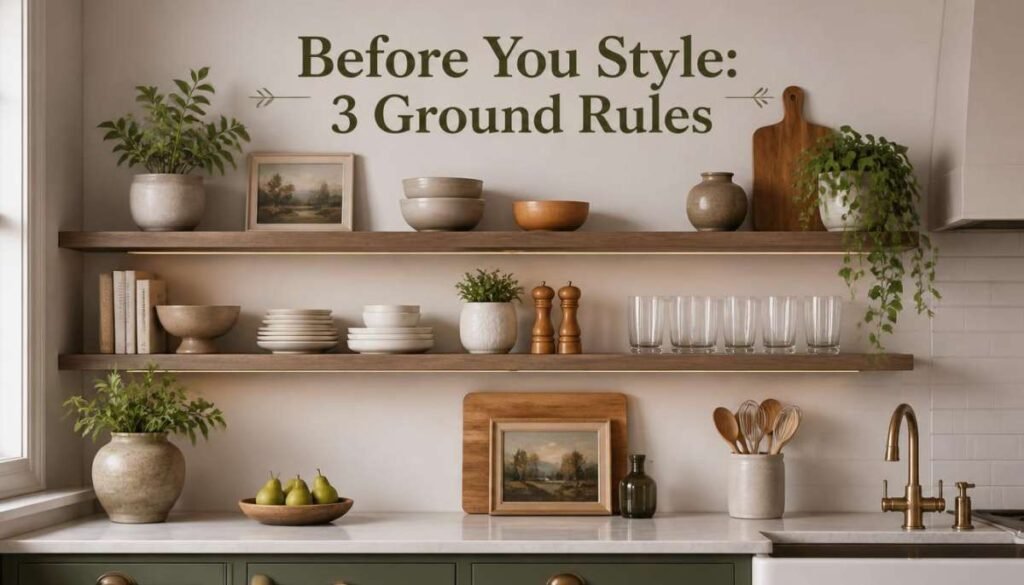
Before you start placing pretty things on your shelves, there are a few practical things worth thinking about first.
Weight and Stability
Heavier pieces belong on lower shelves, closer to the counter. This keeps your center of gravity low and makes the whole setup feel sturdier, especially if your shelves are the floating kind without visible brackets.
Grease-Safe Zones
If your shelves sit close to your stove, skip anything porous like unsealed wood boards, fabric, or open baskets right in that zone. Grease and steam settle into those materials fast, and they’re a pain to clean. Save that spot for glass, ceramic, or metal instead.
Spacing
This is the one most people get wrong. A shelf packed edge to edge looks cluttered no matter how nice the individual pieces are. Leave visible gaps between groupings. As a rough guide, aim for your items to fill about 60-70% of the shelf, not the whole thing.
How to Decorate Kitchen Shelves by Style
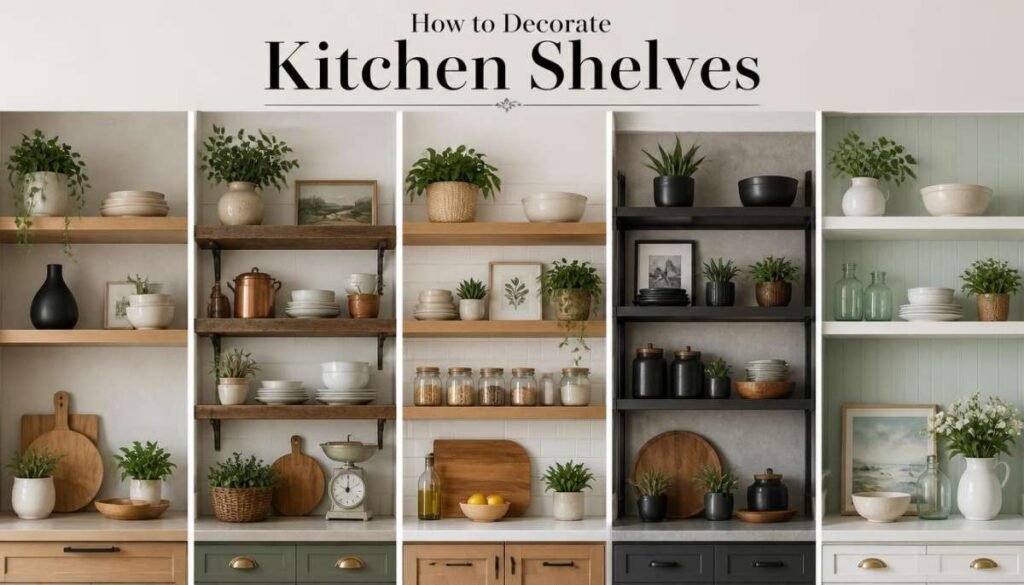
Your personal style should guide what goes up there. Here’s how to approach a few popular directions.
Modern Kitchen Shelf Decor
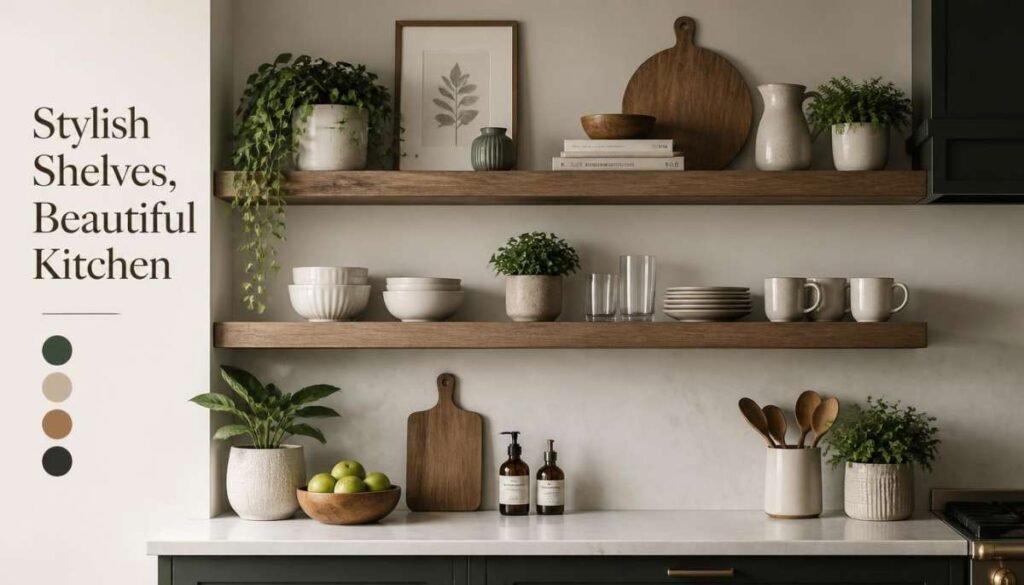
Modern kitchen shelf decor leans into clean lines and a tighter color story. Think white, wood, and matte black together. Keep pieces simple in shape, skip anything too ornate or busy, and let negative space do a lot of the work.
Farmhouse Style
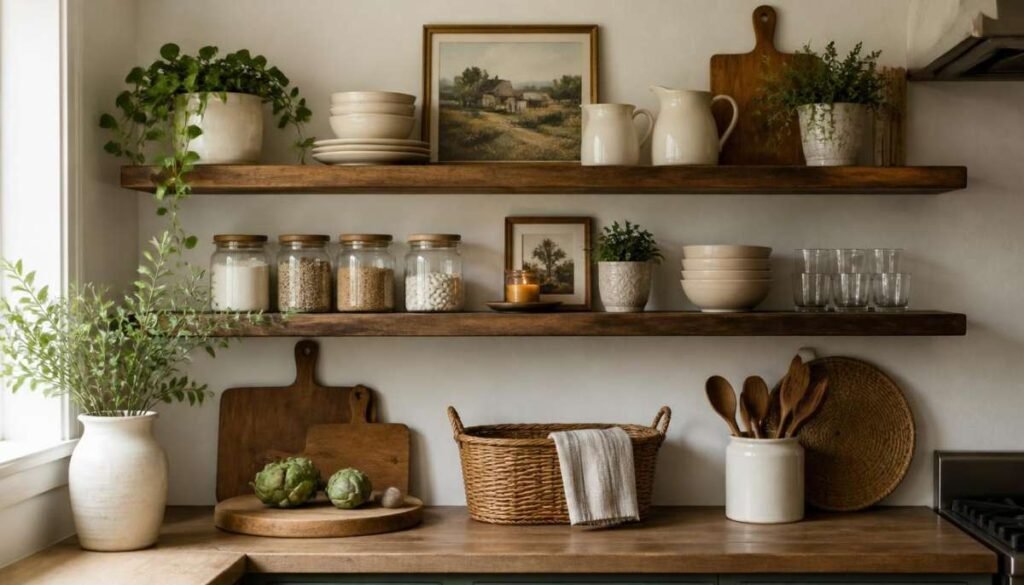
Farmhouse style is warmer and a little more lived-in. Warm neutrals with one terracotta or rust-colored accent piece works well here. Woven baskets, stoneware, and a bit of greenery all fit naturally into this look.
Minimal Style
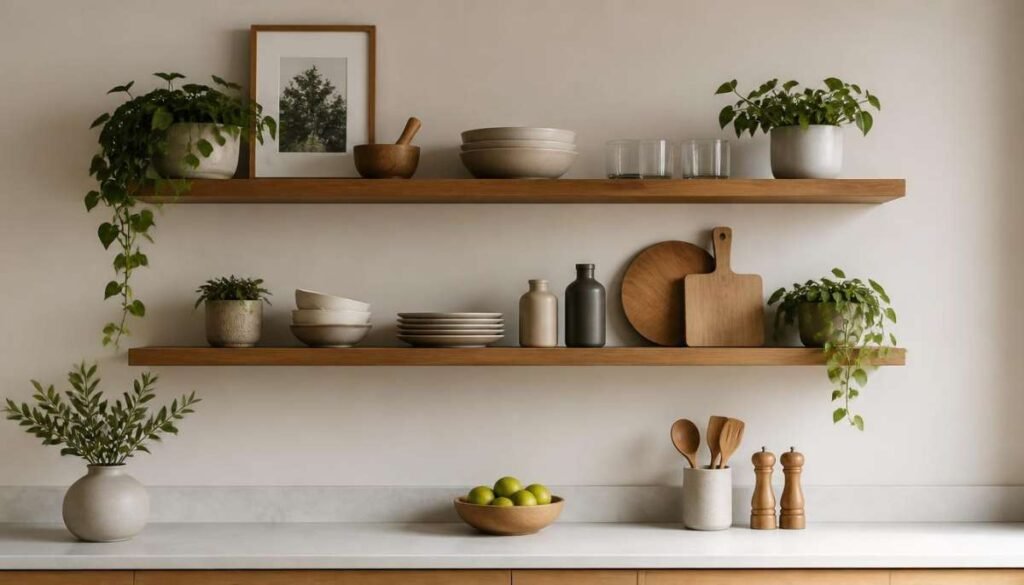
Minimal style takes the modern approach even further. Pick two or three pieces per shelf, max. A single vase, one stack of bowls, done. The restraint is the whole point.
If you’re not sure where to start with color, a safe combo is white and wood tones with one darker accent color repeated two or three times across the shelf. It ties everything together without looking matched or staged.
What to Actually Put on Open Shelves
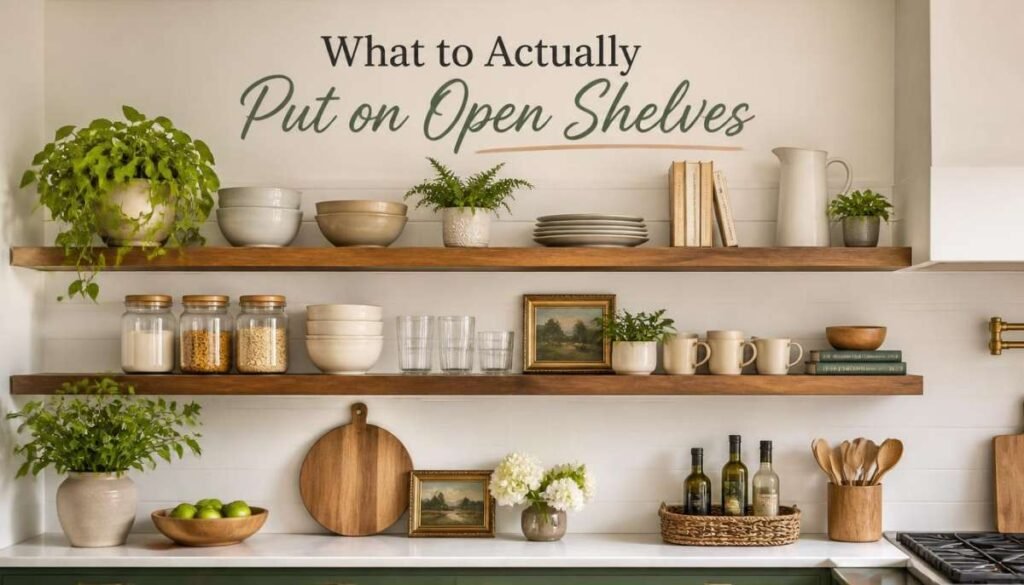
The best open shelves mix things you actually use with things that just look good. Aim for roughly 60% functional, 40% decorative.
On the functional side: everyday plates, mugs you reach for often, cutting boards, oil and vinegar cruets, cookbooks you actually cook from.
On the decorative side: a vase, a small plant, a stack of bowls in a color you love, a piece of framed art leaned against the wall instead of hung.
The trick is treating your daily-use items as part of the styling instead of hiding them away. A stack of your favorite bowls can look just as intentional as a decorative object, especially if the colors and materials feel cohesive.
Quick Reference: What to Put Where
| Shelf Type / Style | Best Items | Avoid |
|---|---|---|
| Modern | White ceramic, matte black accents, simple wood boards | Ornate patterns, busy prints |
| Farmhouse | Stoneware, woven baskets, terracotta pieces, greenery | Sleek chrome, glossy finishes |
| Minimal | 2-3 pieces max per shelf, one statement vase | Anything decorative in groups of more than 3 |
| Small shelf | One larger item instead of many small ones | Tiny trinkets, anything under 4 inches |
| Corner shelf | Rounded shapes, items with a nice angle-view | Flat-backed pieces meant for front-facing display |
| Island shelf (seen from all sides) | Symmetrical or round pieces | Anything with an obvious “front” |
| Near the stove | Glass, ceramic, metal | Unsealed wood, fabric, open baskets |
| Renters / no drilling | Command hook lighting, lightweight decor, removable adhesive strips | Heavy items needing wall anchors |
Good Lighting Makes Shelf Decor Stand Out
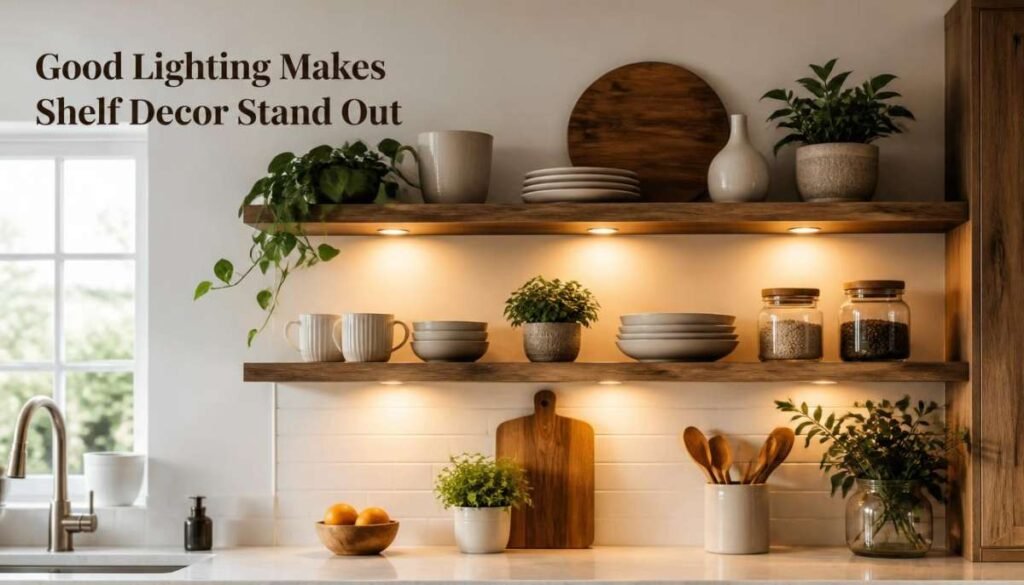
This one gets skipped a lot, but it matters more than people think. Shelves that sit in a dim corner of the kitchen lose all their visual impact, no matter how well you’ve styled them.
If you get natural light from a nearby window, angle a few reflective pieces, like glass or light ceramic, to catch it. If your shelves are tucked away from natural light, a simple under-shelf LED strip light changes everything. It’s a small investment that makes your styling actually visible instead of sitting in shadow.
Decorate on a Budget
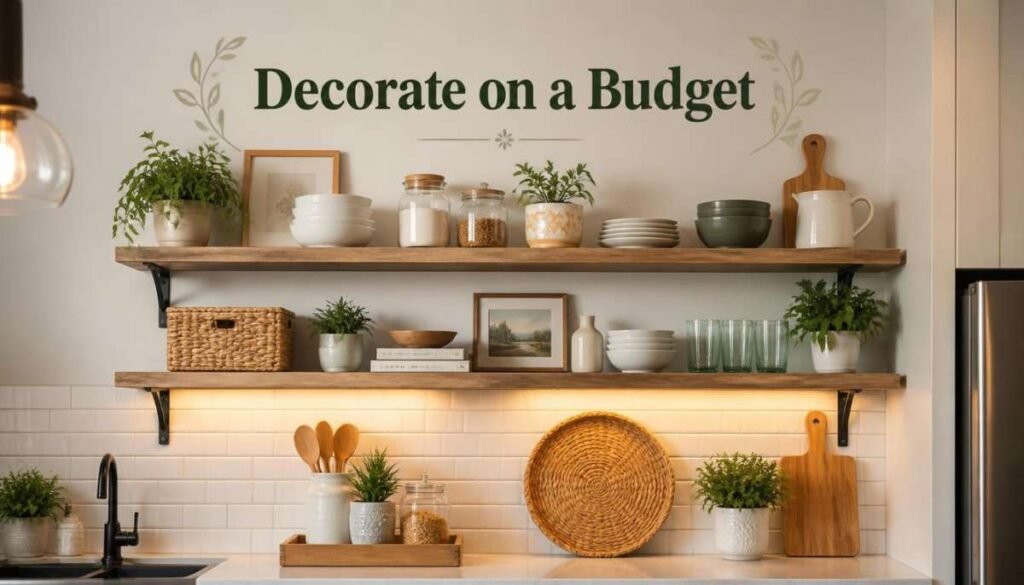
You don’t need a cart full of designer vases to make this work. Thrifted finds are honestly some of the best options for open shelves, since a little wear and imperfection actually adds character instead of taking away from it.
Thrifted and Secondhand Finds
Check secondhand shops for stoneware bowls, old glass jars, and wooden boards. A can of matte spray paint can turn a mismatched thrifted vase into something that fits your color scheme perfectly.
Use What You Already Own
Another budget move: use what you already own. Go through your cabinets before buying anything new. That mug set you never use, or the cutting board buried in a drawer, might be exactly what your shelves need.
Making the Most of Small and Tricky Kitchen Spaces
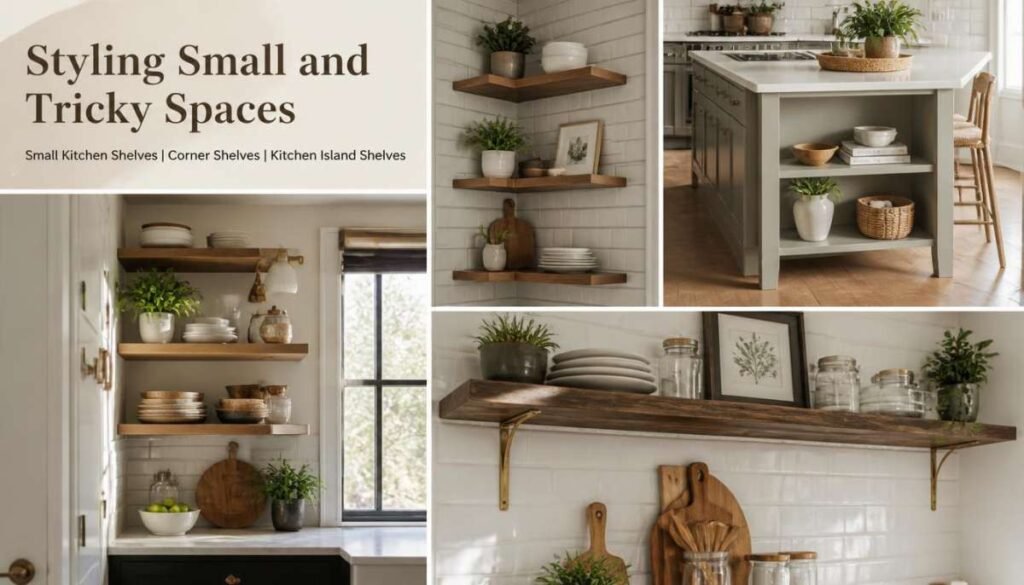
Not every kitchen has a wide, generous shelf to work with. Here’s how to handle the trickier layouts.
Small Kitchen Shelves
Small kitchen shelves need fewer, slightly larger items rather than a bunch of tiny ones. A cluster of small pieces on a narrow shelf just reads as clutter. One good-sized vase and one stack of bowls will look more intentional than five little trinkets.
Corner Shelves
Corner shelves work best with items that have a good profile from an angle, since you’re rarely viewing them straight on. Rounded shapes tend to read better here than anything with sharp, flat edges.
Kitchen Island Shelves
Kitchen island shelves get seen from multiple sides, so avoid anything with an obvious “front.” Symmetrical pieces or ones that look good in the round are the safer bet.
Give Your Kitchen Shelves a Seasonal Refresh
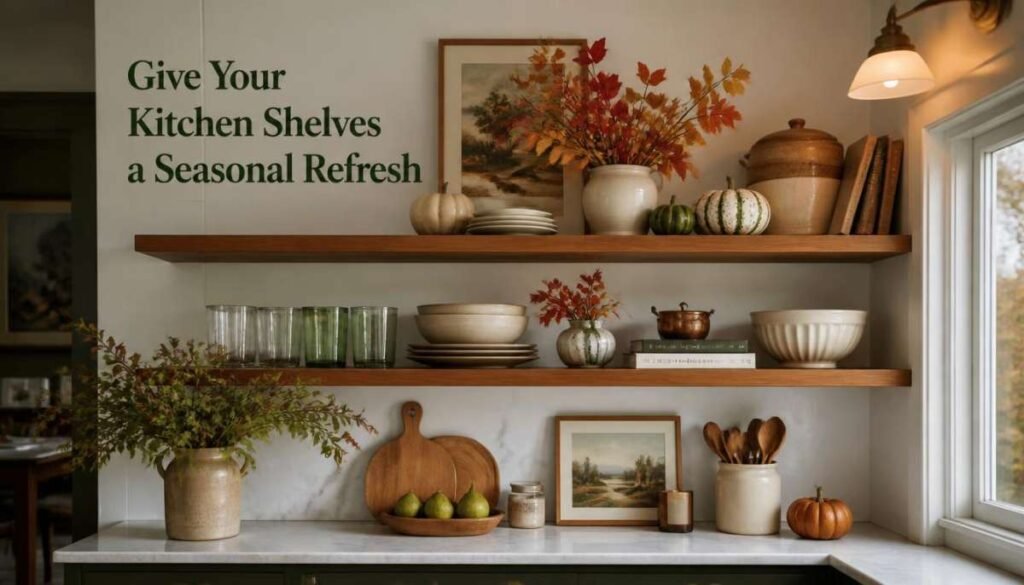
Your shelves don’t have to stay the same all year. Small seasonal swaps keep things feeling fresh without a full restyle.
Fall Shelf Decor
For fall, swap in warm-toned ceramics, a small pumpkin or two in a neutral color, and dried wheat or pampas grass in a vase you already have.
Christmas Shelf Decor
For Christmas, a bit of greenery draped along the shelf edge, a few pillar candles, and small ornaments tucked between your everyday items go a long way. You don’t need to add much, just enough to signal the season without covering up your regular decor.
Keep Your Kitchen Shelves Clean and Fresh
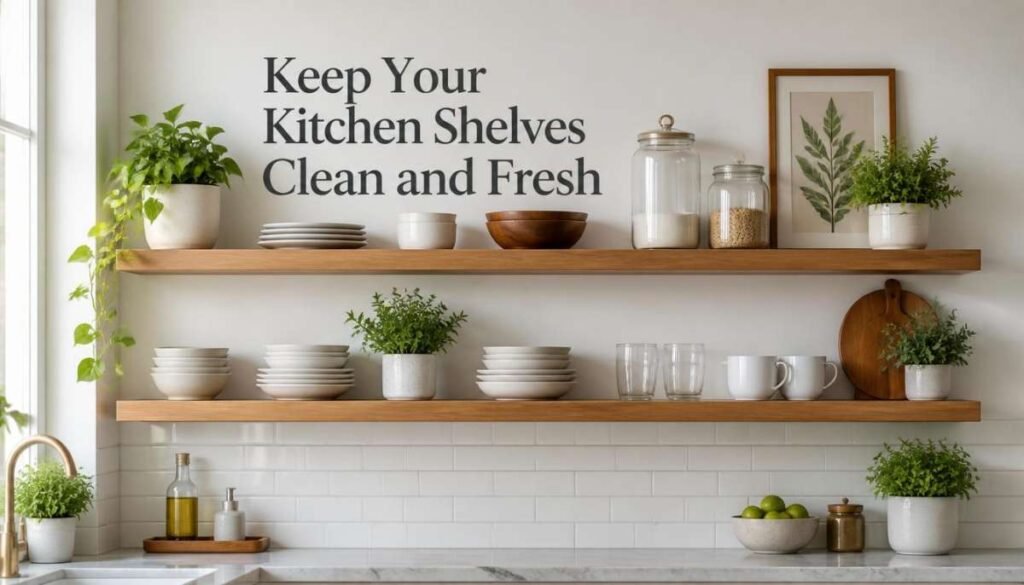
Open shelves in a kitchen collect dust and grease faster than shelves anywhere else in your home. That’s just the nature of cooking nearby.
A quick wipe-down once a week keeps things from building up. Items closest to the stove might need cleaning more often, maybe every few days if you cook frequently. Glass and ceramic are the easiest to keep clean since grease wipes right off. Anything porous, like unsealed wood or fabric, will need more attention and won’t hold up as well long-term in a high-splatter zone.
What to Avoid When Decorating Kitchen Shelves
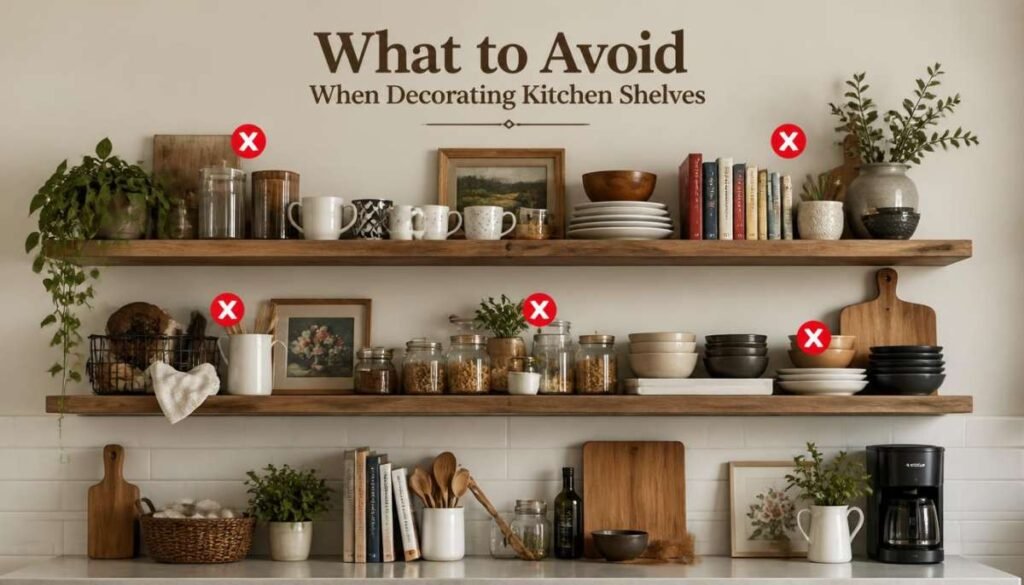
A few simple mistakes can make kitchen shelves look cluttered. Avoid filling every inch and leave some breathing room between items. Mix different heights instead of lining up pieces that are all the same size.
Keep delicate or porous decor away from the stove, where grease and splashes can build up. Also, try not to mix too many colors or styles. Most importantly, don’t overdo it three well-chosen pieces can look better than fifteen crowded together.
Give It a Week Before You Judge It
Once you’ve styled your shelves, don’t rearrange everything the next morning just because it feels slightly off. Live with it for a few days first. You’ll actually use the space, cook near it, reach for things, and that’s when you’ll notice if something’s in the wrong spot or if a piece just doesn’t earn its place.
Most people end up removing one or two things after that first week, not adding more. That’s usually a good sign. It means the shelf is settling into something that actually works for how your kitchen runs, not just how it looked in the first five minutes.
FAQ
Are open kitchen shelves still in style?
Yes, they’ve stuck around because they make a kitchen feel more open and personal. The key is styling them with restraint instead of overcrowding them.
How many items should go on one shelf?
As a general rule, keep it to 3-5 grouped items per shelf, with visible gaps in between rather than a continuous row.
What should you avoid putting on kitchen shelves?
Skip anything fragile or porous near the stove, and avoid anything you rarely use just for the sake of filling space.
How often should I clean open kitchen shelves?
A light wipe weekly is usually enough, though items closer to the stove may need attention every few days.

Hi, I’m Ashir Zahid! I’m a home décor writer and creative enthusiast who loves finding simple and beautiful ways to make everyday spaces feel more comfortable and inviting. I enjoy exploring home styling ideas, practical decorating tips, and timeless trends that can work in real homes without making things feel complicated.
At DailyHomeVibe, I share easy-to-follow ideas for decorating different rooms, choosing the right colors and textures, and giving your home a fresh look with thoughtful details. My goal is to help readers find inspiration they can actually use, whether they are refreshing one small corner or giving their whole home a new feel.