
Short answer first. For most Halloween parties, buy 9 to 10 inch plates as your main plate, at 1.5 per guest. Also add one 7 inch dessert plate per guest. Then choose the material by the food, not the artwork. For example, coated heavy paper handles snacks, cake and dry buffet food. Anything saucy, heavy or cut with a knife, however, wants rigid plastic, melamine or a real plate. Everything below is the working version of that answer. You will get materials compared honestly, a per-guest count formula with worked examples, and theme matching. There is also the mixing trick that cuts the bill, the real cost of disposable versus reusable over several parties, and how to set the table and store what survives.
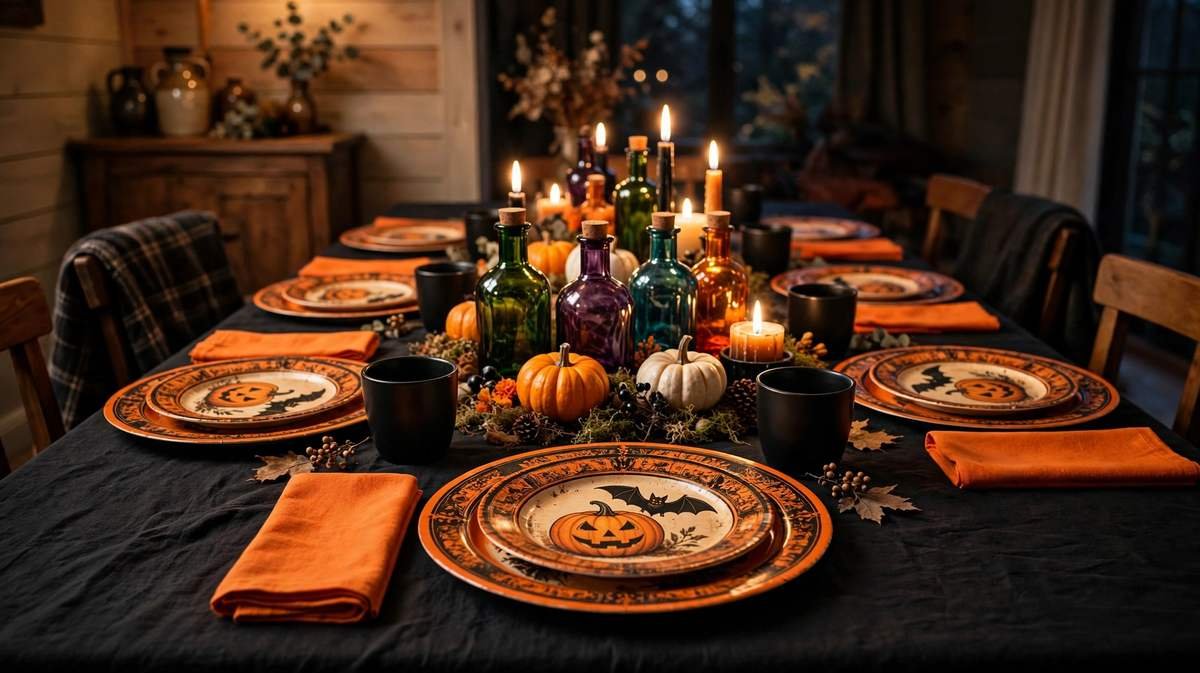
Start With the Food, Not the Artwork
Every disappointing party plate fails the same way. It was chosen in the store aisle for its print, then met food it was never built for. So decide the menu first, in three rough shapes.
A sit-down dinner means a full plate carried a short distance, then real knife and fork work. A buffet or open house means grazing: smaller loads, carried one handed, often while standing, with people drifting back for seconds and thirds. A dessert or classroom party means cake, cookies and candy, where the plate is basically a decorated tray.
Then check your menu for the two plate killers. The first is moisture and grease: chili, pulled pork, saucy meatballs, lasagna, baked beans and anything with a gravy or a butter sauce. The second is cutting: chicken on the bone, sausage, roast vegetables that need sawing, even a dense brownie. A plate can be fine with one of these and fail with both. Match the material to the worst thing on your menu, and everything else takes care of itself.
If you want the room itself to match the table, our Halloween home decor ideas covers the styling side. This guide handles the part guests actually pick up.
Plate Materials Compared, Honestly
Paper: the print king with a time limit
Standard printed paper plates are the cheapest way to buy a theme. The range of art is unbeatable, including shaped plates cut like ghosts and pumpkins. They are also the weakest option on this list. A full meal carried in one hand makes a thin paper plate fold at the edges. Grease from hot food soaks through within ten to fifteen minutes. A dinner knife will saw through the plate into the tablecloth. None of that matters for cake, cookies, chips or a slice of pie eaten promptly. It matters a lot for chili.
Heavy-duty and coated paper plates are a genuine step up rather than a marketing label. The coating resists soaking, so a serving of beans or pasta salad sits safely for the length of a meal. The plate also stays rigid enough to carry. Cutting is still gentle work only. If your party is paper-only for budget or cleanup reasons, coated heavy paper is the version to buy for the main plate. Save the prettier thin prints for dessert.
Plastic: the quiet workhorse
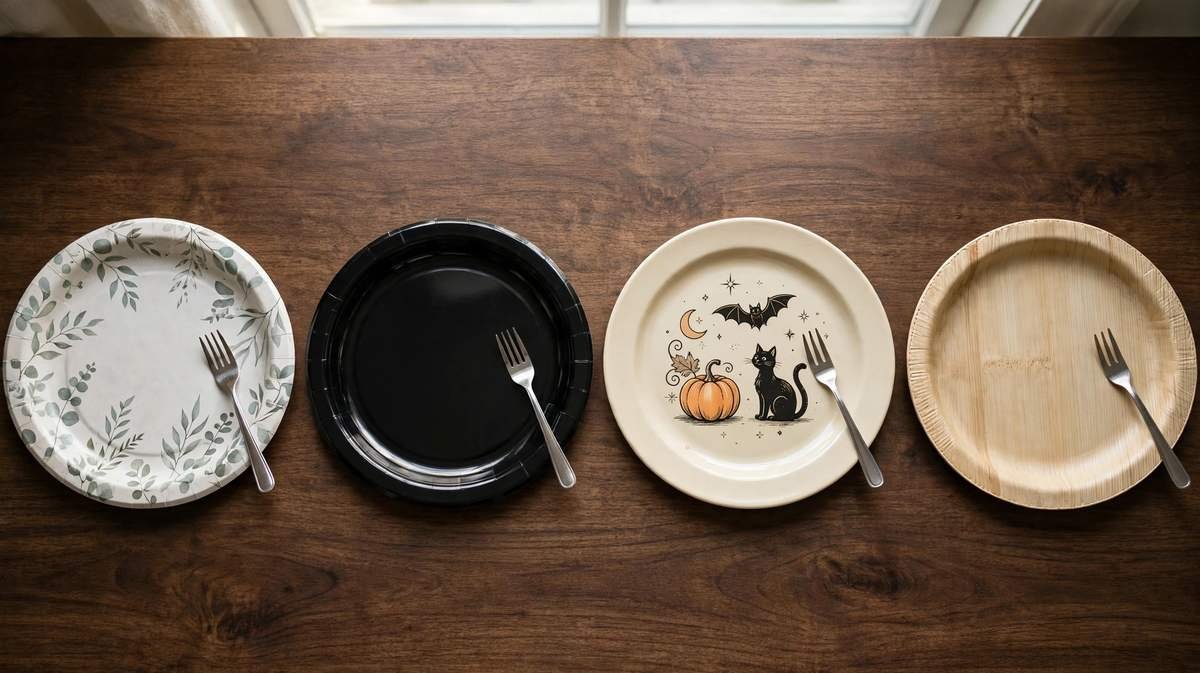
Rigid plastic plates, the kind sold in black, clear or white as well as a smaller range of Halloween prints, are the sturdiest disposable-adjacent option. They hold a loaded plate one handed without flexing and shrug off grease completely. They also take knife and fork work without complaint, so nothing on a party menu bothers them. The trade-off is design choice: you will find a few vintage prints and plenty of solid black, but nothing like the paper range.
Plastic also blurs the disposable line. Thick rigid plates rinse clean and can go on the top rack. As a result, many households wash and reuse them two or three times before they scratch, cloud or warp. Thin bargain plastic is different: treat it as single use, because it cracks at the rim and warps with hot food.
Melamine: the reusable themed plate
Melamine is how you get a real Halloween print on a plate you keep. It looks and feels close to ceramic. It resists chipping, survives being dropped on a patio, and handles heavy food and cutting all night. For hosts who run a Halloween party every year, this is usually the smart money, as the cost math further down shows.
Two limits matter. Melamine must never go in the microwave, because it can crack and leach into hot food. Instead, reheat on ceramic and serve onto the melamine. The prints, while tough, slowly fade with years of harsh dishwasher detergent. Hand washing or a gentle cycle keeps them bright longest.
Bamboo fiber and molded fiber: sturdy, matte, compostable
Pressed bamboo fiber and molded plant fiber plates are the strongest of the single-use options. They are rigid, stand up well to grease and hot food, and their natural beige finish suits vintage, rustic and harvest themes better than glossy prints do. A long sit in sauce will eventually soften the base. So serve saucy food at eating time rather than plating it an hour ahead.
The catch is price and the clock. Per plate, fiber usually costs noticeably more than paper. It is also a buy-for-this-party product rather than a store-for-next-year one, because the plates are built to break down. A dry cupboard keeps unopened packs fine, however. Where home or city composting exists they can go there; otherwise they go in the trash like any other plate. That is worth knowing before paying extra for the compostable claim.
Ceramic and stoneware: the plates you already own
Your everyday dishes are the best cutting surface on this list. They cost nothing. A plain black or white set reads instantly Halloween with orange napkins and a dark tablecloth. For a sit-down dinner of eight or fewer adults, they are hard to beat.
The downsides are breakage and dishes. Costumes, excited kids and crowded rooms are how plates get chipped. A buffet for twenty means either an odd mixed stack or a long wash afterwards. Many hosts land on a hybrid: ceramic for the sit-down courses, party plates for dessert and grazing.
| Material | Sturdiness | Grease and sauce | Knife work | End of the night |
|---|---|---|---|---|
| Standard printed paper | Light, two-hand carry | Soaks through in minutes | No, cuts through | Trash |
| Heavy coated paper | Medium, holds a serving | Holds for a meal | Gentle only | Trash |
| Bamboo or molded fiber | High for a disposable | Good, softens if left sitting | Light cutting | Compost where available, else trash |
| Rigid plastic | High, one-hand carry | No problem | Yes | Trash, or wash and reuse a few times |
| Melamine | High, near ceramic | No problem | Yes | Wash and store for next year |
| Ceramic or stoneware | Highest | No problem | Yes | Wash; breakage risk |
Sizes: What Each Plate Actually Holds
Party plates come in a loose standard set of sizes. The inch numbers matter more than people expect. A 7 inch plate has roughly half the food area of a 10 inch plate. Stepping down a size is therefore a bigger change than it sounds.
- 10 to 10.25 inch dinner plates: a full meal with sides, or the main plate at a buffet where everything goes on at once.
- 9 inch plates: the all-rounder. Lighter dinners, lunch-style menus, older kids, and anyone whose food is mostly finger food. If you buy only one size, buy this one.
- 7 to 8 inch dessert and snack plates: cake, pie, appetizers, grazing snacks, and the plate kids actually manage without tipping it.
- 6 inch and shaped plates: a single cookie, candy, or a kid-sized portion. Treat them as part decoration, part plate, and never as the main event.
One more sizing trap: shaped plates hold less than round plates of the same listed width. The ghost’s head or the pumpkin’s edge is not usable space. If you fall for a shaped design, let it be the dessert plate and keep the main plate round.
How Many to Buy: The Per-Guest Formula
Forget the piece counts on party kits for a moment. Count what a guest actually uses instead. Here is the formula that covers a normal party without running out or buying double:
- Dinner plates: guests x 1.5, rounded up to the next pack size
- Dessert plates: guests x 1 (add a few spares if cake is the main event)
- Snack plates: only needed if grazing stations sit apart from the meal; otherwise dessert plates do both jobs
- Napkins: guests x 2 to 3; napkins disappear faster than anything else on the table
- Cups: guests x 1.5 to 2, because cups get put down and lost more than plates do
Why 1.5 dinner plates and not 1? Seconds, one dropped or soaked plate per few guests, the person who takes a fresh plate for the buffet’s second half, and the two late arrivals you did not plan for. It is cheaper to open one pack too many at home than to run out at 8 pm. Worked examples:
| Guests | Dinner plates (x 1.5) | Dessert plates (x 1) | Napkins (x 2.5) |
|---|---|---|---|
| 8 | 12 | 8 | 20 |
| 12 | 18 | 12 | 30 |
| 16 | 24 | 16 | 40 |
| 20 | 30 | 20 | 50 |
| 30 | 45 | 30 | 75 |
Packs come in fixed counts, usually 8, 20, 40 or 50. The practical move is therefore to round up to the pack, not the exact number. Leftovers split two ways: plain colors fold into your year-round party stash, and themed plates store flat for next Halloween. The storage section below covers exactly how.
Match the Design to Your Theme
Three theme directions cover most Halloween parties. Each one has a plate strategy.
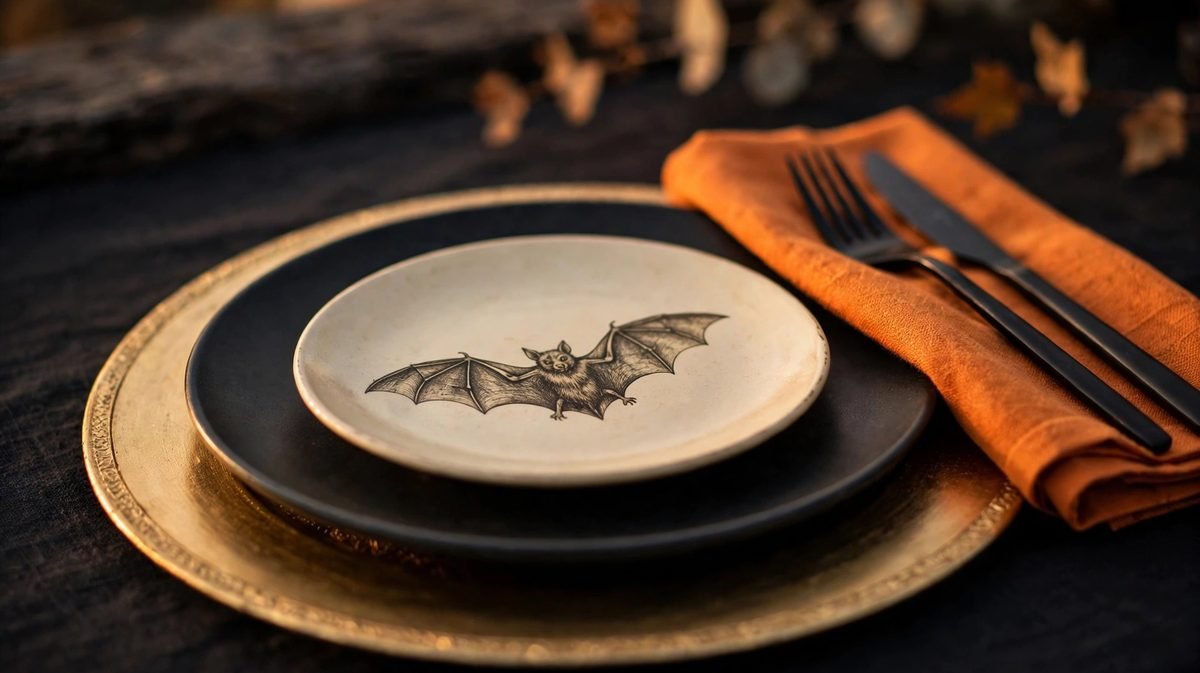
Gothic and grown-up means black and cream art, skulls, ravens, bats and ornate borders. This is the vintage print family. It pairs with black or gold cutlery, a dark cloth and candlelight. Paper prints are plentiful here; melamine exists too and suits an annual adults’ dinner.
Cute and family-friendly means smiling pumpkins, friendly ghosts, bright orange and purple. Shaped plates live in this category and kids love them. Remember the sizing trap above, however. For small hands, a 7 or 8 inch plate in rigid plastic or melamine is easier to carry than a big floppy paper one, and it survives being dropped.
Vintage and storybook means cream backgrounds, old-fashioned black cats, owls and harvest pumpkins. This direction forgives mixing better than any other. The art is meant to look collected rather than matched, and it sits comfortably next to ceramic and fiber plates.
Whichever direction you pick, choose the color palette first and the motif second. A table reads as themed because black, orange and cream repeat everywhere, not because every item carries the same pumpkin. That is also what makes the mixing trick below work.
The Mixing Trick That Cuts the Bill
Themed plates cost more per plate than plain ones. Kits also force you to buy the print at every place and every size. You do not need print everywhere, however. You need it where eyes land.
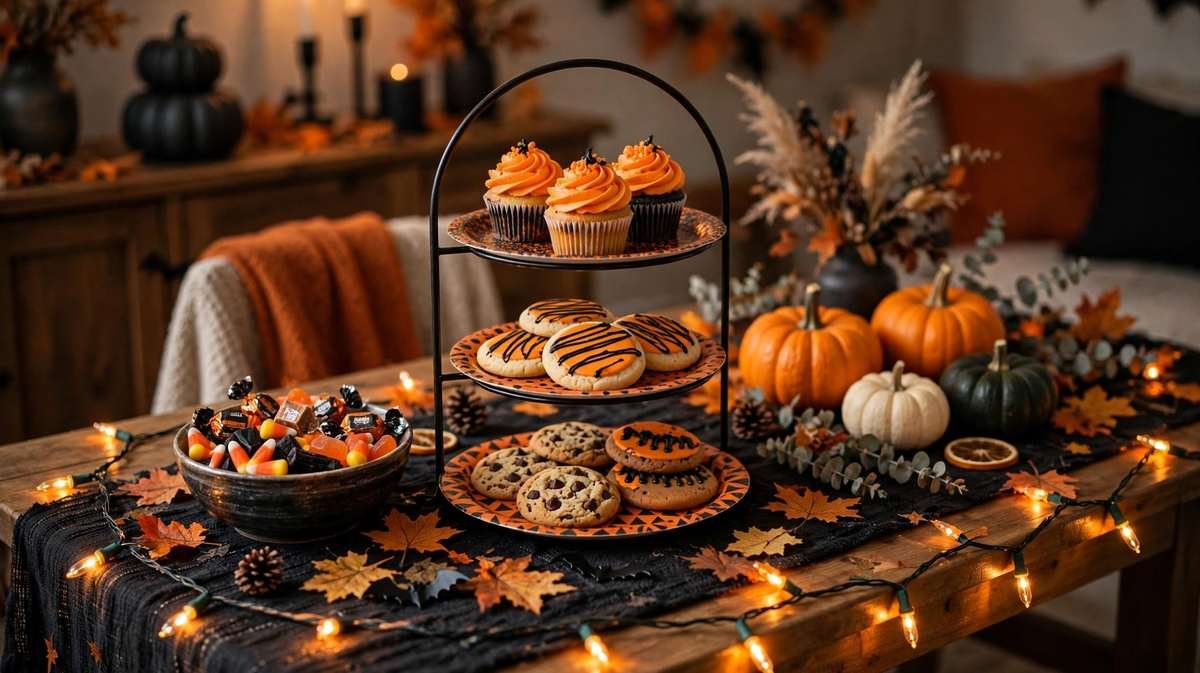
- Themed where it shows: the dinner plate at each place setting, or the dessert plate on the stand at a dessert party. That is the photograph, the first impression, the thing guests pick up and turn over.
- Plain where it works: seconds at the buffet, grazing and snack plates, the stack next to the chili pot. Solid black and solid orange plates usually come in the biggest, cheapest packs in the store and they carry any palette.
- A working ratio: for a buffet, one themed plate per guest for the first round and plain plates behind them covers the look at roughly half the tableware spend. For a sit-down dinner of twelve or fewer, go fully themed; the count is small and the effect is the whole point.
- Chargers do double duty: a reusable charger under a paper plate makes a disposable setting look dressed, and it physically supports a thin plate under a heavy serving. One set of chargers, bought once, upgrades every future party.
Disposable or Reusable: The Three-Party Math
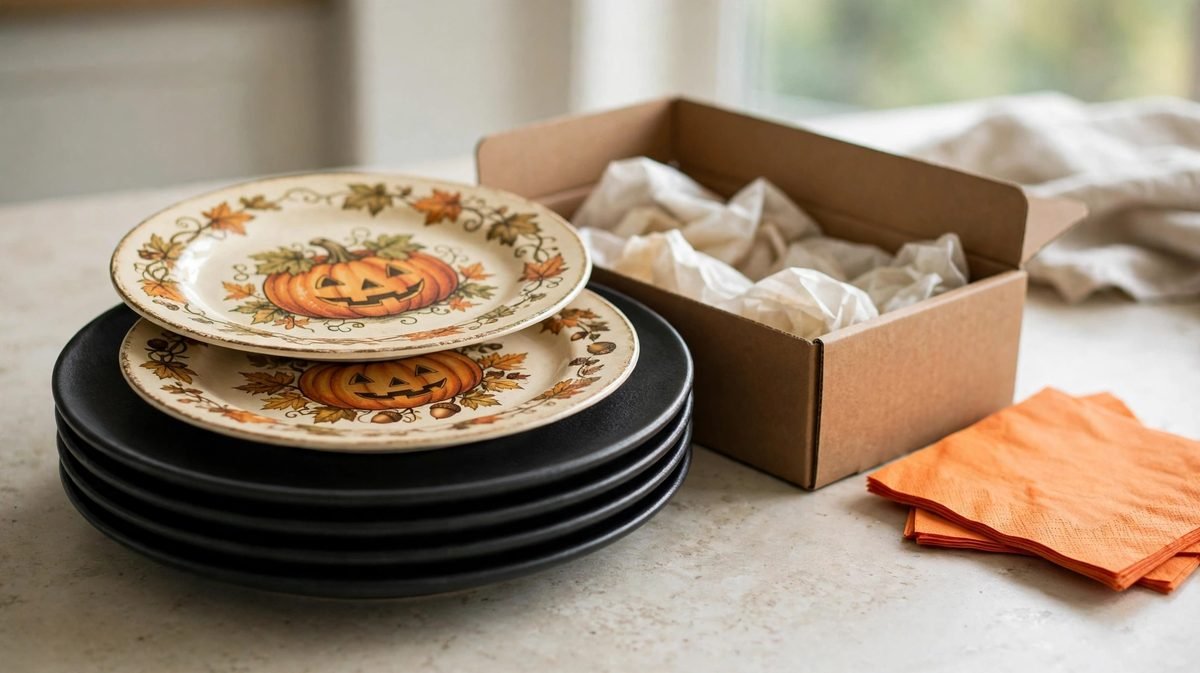
Prices move around, so treat these as typical ranges rather than quotes. Themed paper dinner plates usually run around $0.15 to $0.40 each depending on pack size, with big plain packs at the low end. A themed melamine dinner plate usually runs around $2 to $4 each, often sold in sets of four.
Run that over several parties for twelve guests, dinner plates only, using the 1.5 formula (18 plates per party):
| Parties hosted | Paper, cumulative cost | Melamine set of 18, cumulative cost |
|---|---|---|
| 1 | about $5 | about $54 |
| 3 | about $14 | about $54 |
| 5 | about $23 | about $54 |
| 8 | about $36 | about $54 |
| 12 | about $54 | about $54 |
When Reusables Win
At roughly $0.25 a paper plate, the melamine set pulls level somewhere around the twelfth party for dinner plates alone. That sounds slow. For a once-a-year party with dollar store paper, it is: disposables win on cash. The reusable case gets stronger when dessert plates and cups join the set (they are bought once too), when your parties are bigger, and when you host more than one gathering a season. The same black-based set can work for a fall birthday or Thanksgiving week with different napkins. Against that, reusables add fifteen minutes or so of washing per party, while disposables add a bag of landfill. Most households land in the honest middle: a reusable core of plates they like, topped up with paper for the biggest night of the year.
Setting the Table With Them
Layering is what turns party plates into a setting. At a sit-down table, work in this order: tablecloth or runner, charger or placemat, dinner plate, dessert plate stacked on top, napkin on the plate or under the fork. The stack comes apart naturally as courses arrive, and the top plate is the themed one everyone sees first. A plain dark cloth makes printed plates pop. If you are choosing the cloth itself, our tablecloth decor ideas walks through fabrics and sizes.
At a buffet, reverse the thinking: plates at the head of the line, food in the middle, cutlery and napkins rolled together at the end, so nobody juggles a knife through the serving spoons. Put cups and drinks on a separate table or tray entirely; the drinks station is where lines jam. If you built the potion bottle centerpiece from our DIY Halloween decorations projects, keep the plate palette inside its colors (green, purple, amber and black) and the whole table reads as one idea.
Two safety habits for a table full of party plates: keep the spare stack away from candle flames, since paper and fiber both burn happily, and put heavy serving dishes on trivets rather than asking any party plate to double as a hot rest.
After the Party: Storage and Second Lives
Themed paper leftovers keep perfectly well until next Halloween if they stay dry and flat. Leave them in the original sleeve, slide the sleeve into a zip bag, and store them in a cupboard rather than a damp garage. Damp garages make paper cockle and prints pick up smells. Rigid plastic plates you plan to reuse should be washed, dried fully and stacked with a paper napkin between printed faces to stop scuffs.
Melamine stores like any dish, with one upgrade: a felt circle or napkin between plates keeps vintage prints from rubbing, and a labelled box means October-you finds them in one trip. Our guide to handling seasonal home decor covers the same one-box system for the rest of your Halloween pieces, plates included.
Plain surplus plates need no seasonal guilt at all. Black and orange solids earn their shelf space at birthdays, game nights and barbecues all year. That is one more reason the mixing strategy buys plain in bulk and themed in exact counts.
Frequently Asked Questions
What size plates do I need for a Halloween party?
A 9 to 10 inch plate for the main course and a 7 inch plate for dessert and snacks covers nearly every menu. Remember the area trap: a 7 inch plate holds about half what a 10 inch plate holds. Do not let the small size moonlight as the dinner plate at a real meal.
How many Halloween party plates do I need for 20 guests?
Thirty dinner plates and twenty dessert plates, from the formula above: guests x 1.5 for dinner, guests x 1 for dessert. Round up to whole packs. Add napkins at two to three per guest.
Can Halloween party plates go in the microwave?
It depends on the material, and the differences matter. Melamine: never. Rigid plastic party plates: no, unless the pack explicitly says microwave safe. Paper: only plates labelled microwavable, and only for a short reheat. Ceramic: yes, as normal. When in doubt, reheat on a ceramic plate and serve onto the party plate.
Are melamine Halloween plates worth the money?
Only if they will actually be reused. At typical prices, a themed melamine set takes many parties to beat paper on cost alone, as the table above shows. It makes sense for an annual Halloween party, a household that hosts through the fall, or anyone who prefers washing up to throwing away. For a single party, buy good coated paper instead.
Can I wash and reuse paper Halloween plates?
Not really. A coated plate that held dry snacks might serve a second round the same evening. Washing paper breaks down the coating and the fibers, and prints fade. If reuse is the plan, that is exactly the job rigid plastic and melamine exist for.
What plates hold up under chili or saucy food?
Rigid plastic, melamine and ceramic, in any order. Coated fiber plates handle a serving of chili eaten promptly. Standard printed paper will soak through and soften within minutes, so keep it for dessert and dry food.
Final Thoughts
Halloween party plates stop being a guessing game once the order is fixed: menu first, material second, sizes third, count by formula, print only where it shows. Do that and the table looks like the parties in the photographs. The food stays on the plate instead of the tablecloth, and the receipt stays smaller than the kit aisle wanted it to be.

Hi, I’m Ashir Zahid! I’m a home décor writer and creative enthusiast who loves finding simple and beautiful ways to make everyday spaces feel more comfortable and inviting. I enjoy exploring home styling ideas, practical decorating tips, and timeless trends that can work in real homes without making things feel complicated.
At DailyHomeVibe, I share easy-to-follow ideas for decorating different rooms, choosing the right colors and textures, and giving your home a fresh look with thoughtful details. My goal is to help readers find inspiration they can actually use, whether they are refreshing one small corner or giving their whole home a new feel.