
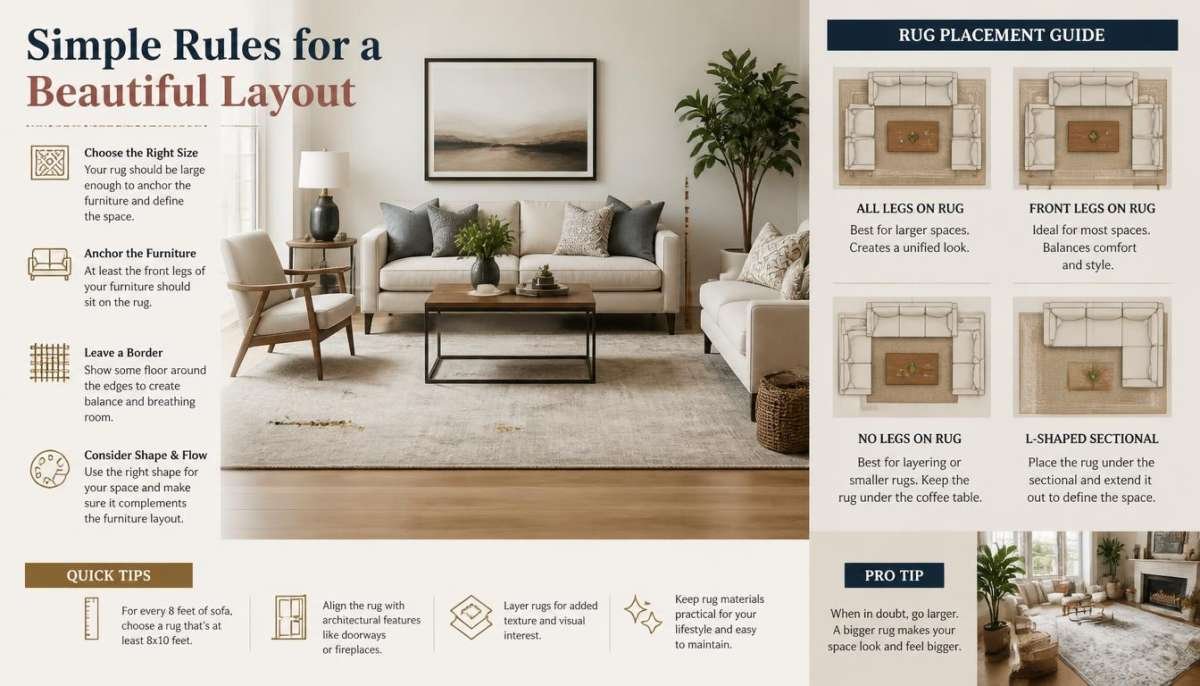
The right rug can make a living room feel finished, cozy, and pulled together. The wrong one can make even a carefully decorated space feel a little awkward. Usually, the problem isn’t the rug itself, it’s where it sits.
Good living room rug placement comes down to a few simple things: the size of your seating area, the position of your sofa and chairs, the coffee table, and how much floor you want to leave visible. You don’t need to follow one strict decorating rule, either. The best setup is the one that makes your furniture feel connected and gives the room a natural flow.
Here are some easy ways to get that balance right without making the room feel overplanned.
1. How to Get Living Room Rug Placement Right
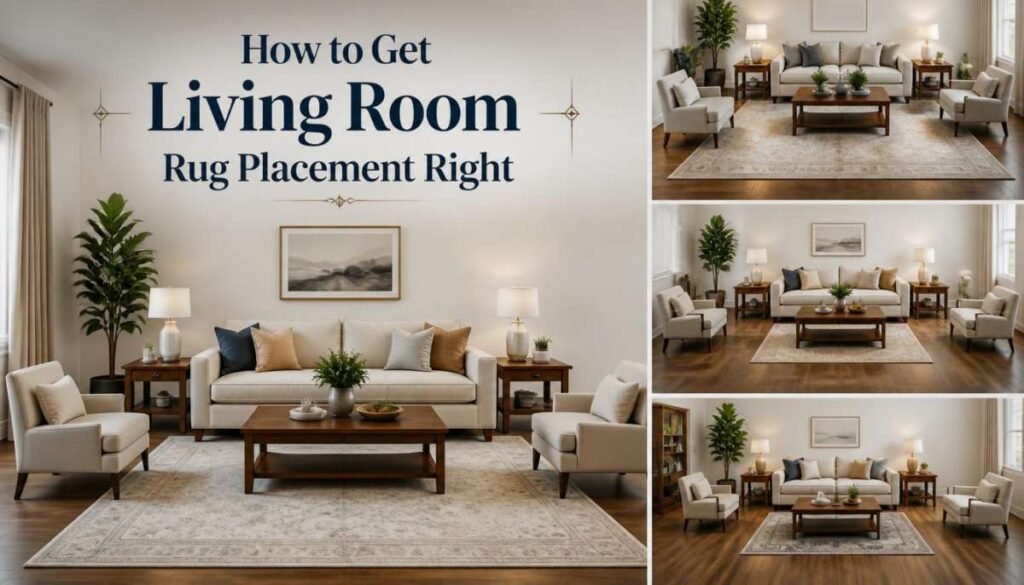
The easiest way to place a living room rug is to start with the furniture rather than the empty floor. Your sofa, chairs, and coffee table should feel like one connected group, with the rug helping visually anchor them.
You also want to consider the amount of flooring you leave exposed. A little breathing room around the rug can make the entire arrangement look cleaner and more intentional.
Start With the Seating Area
Think of the rug as the visual base for your conversation area. Instead of treating it like a separate decoration, use it to bring the sofa, chairs, and coffee table together.
In most living rooms, the rug should sit underneath at least part of the main seating arrangement. This creates a defined zone, especially in a large or open room.
Leave the Right Amount of Bare Floor
You don’t have to cover every inch of flooring. Leaving a visible border around the rug can actually make the room look more intentional.
As a simple guide, try to keep a fairly even amount of exposed flooring around the rug where the room allows it. The exact distance isn’t as important as making sure the rug doesn’t look randomly dropped into the middle of the room.
2. Should the Sofa Sit on the Rug?
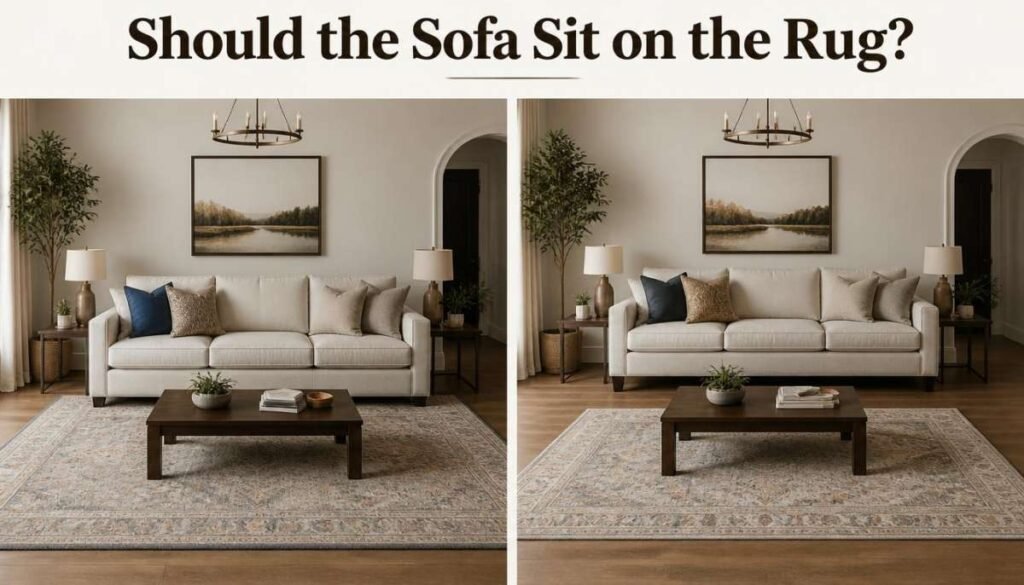
The sofa is usually the largest piece in the seating arrangement, so its position has a major effect on how the rug looks. There are two practical approaches, and both can work depending on your room size.
In a larger room, putting more of the sofa on the rug can create a substantial, connected look. In a smaller room, letting only the front legs overlap the rug can save space while still keeping the furniture visually linked.
All Four Legs on the Rug
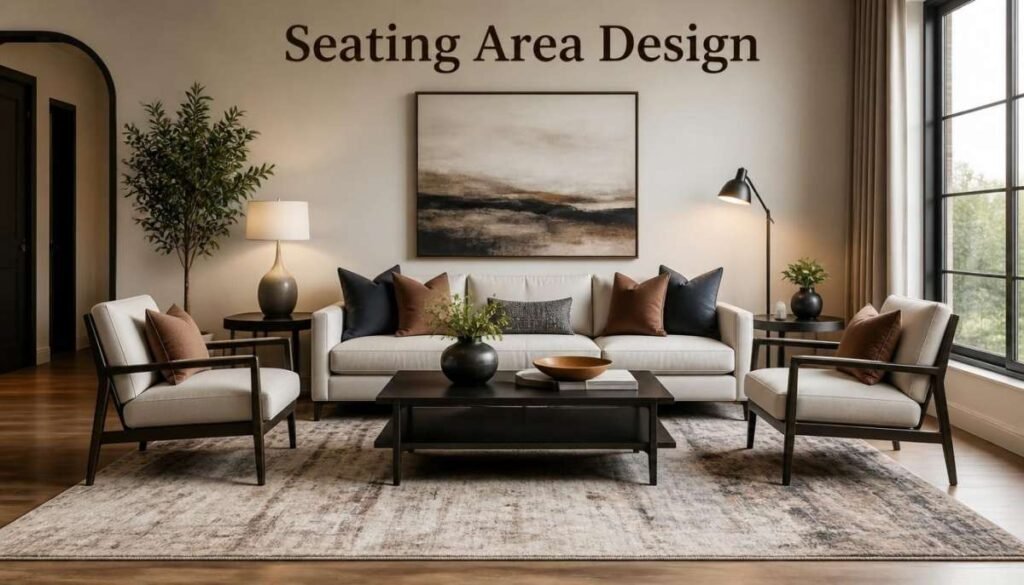
If you have enough space, placing the sofa and other seating completely on the rug gives the room a substantial, grounded appearance.
This approach works particularly well in large living rooms where a smaller rug might otherwise look lost. It also helps create one unified seating area rather than several disconnected pieces.
Front Legs Only on the Rug

This is one of the easiest options for an average-sized living room. Slide the rug underneath the front legs of the sofa while keeping the back legs on the floor.
The same idea can work with armchairs around the sofa. Their front legs can rest on the rug, visually tying the whole arrangement together without requiring an enormous area rug.
3. How to Place a Rug With a Coffee Table
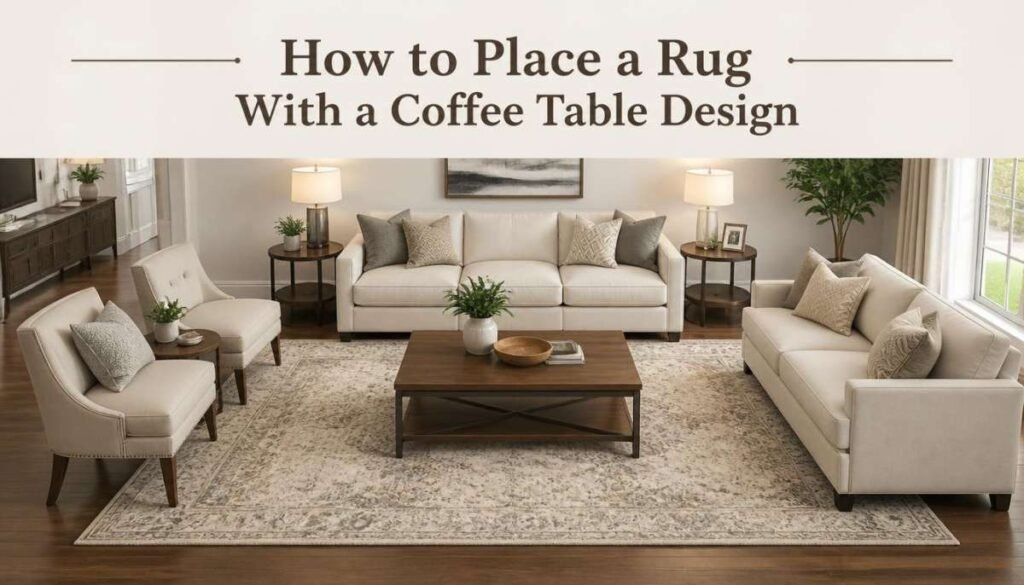
The coffee table is often positioned near the center of the seating arrangement, which makes it useful when deciding where the rug should go. Ideally, the table and rug should look like they belong together rather than sitting as separate pieces.
Give yourself enough rug around the table to create a comfortable visual border. This becomes especially important when the coffee table is large or has a strong shape.
Center the Coffee Table

A coffee table usually looks best when it sits comfortably within the rug rather than awkwardly touching its edge.
Centering the table on the rug gives you a natural focal point and makes the surrounding seating feel balanced. If the rug is large enough, the sofa and chairs can also overlap its edges.
Give the Rug Enough Room Around It
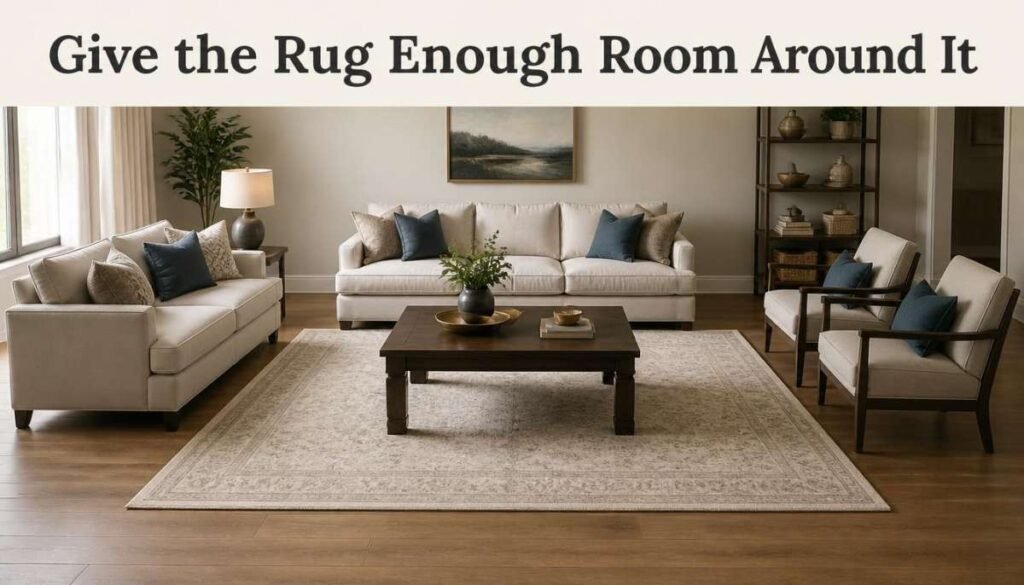
A rug that barely extends beyond the coffee table can feel undersized. Try to give the rug enough visible space around the table so the two pieces don’t look like they’re competing for attention.
If you’re buying a new rug, measure your coffee table and seating area first. A little planning with painter’s tape on the floor can help you picture the final footprint before spending money.
4. Living Room Rug Placement for Different Layouts
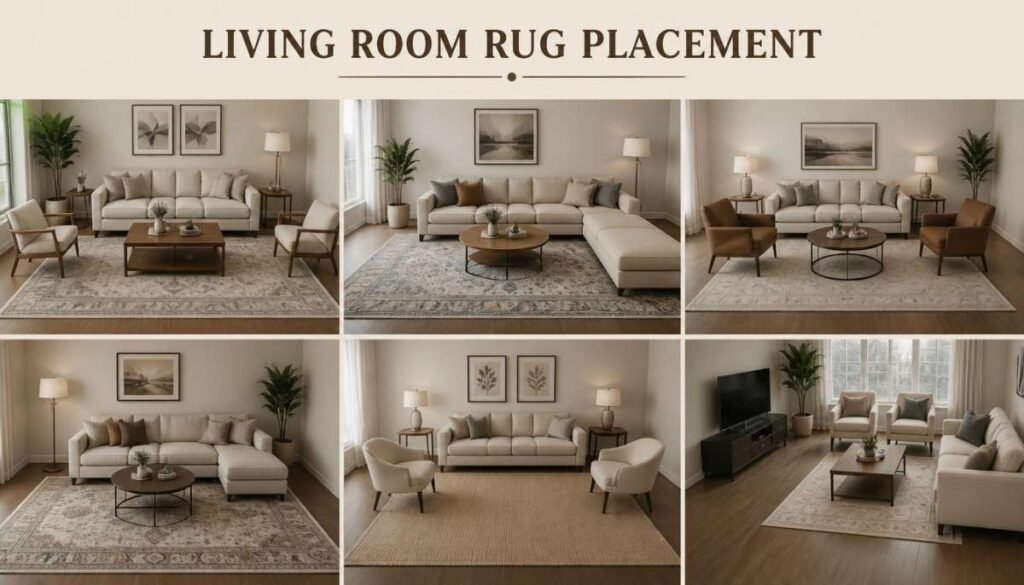
Not every living room has the same furniture arrangement, so the best rug placement will change with the layout. A straight sofa setup needs a different approach from a large sectional or an open-plan space.
The important thing is to use the rug to define the seating zone. Once you identify the main area where people sit and interact, positioning becomes much easier.
Straight Sofa Layout
For a traditional sofa facing a television or another focal point, position the rug so it runs naturally with the length of the sofa.
The coffee table should sit comfortably over the rug, while the sofa overlaps it enough to make the seating arrangement feel connected.
L-Shaped or Sectional Sofa
Sectionals need a little more attention because of their larger footprint. A rug that is too small can disappear underneath the sofa and make the room feel visually cramped.
Ideally, the rug should extend beyond the main seating area rather than stopping right at the sectional’s edges. If possible, place the front portion of the sectional on the rug.
Open-Plan Living Room
In an open-plan home, a rug can do more than add softness. It can help separate the living room from the dining or kitchen area without putting up a physical wall.
Position the rug underneath the living room furniture so it clearly defines that zone. This works especially well when the rest of the space uses the same overall color palette.
5. What Rug Size Works Best?

Rug size is one of the biggest factors in successful placement. Even a beautiful rug can look wrong if it is too small for the furniture or so large that it overwhelms the room.
Instead of choosing a rug based only on the room’s square footage, look at the actual seating arrangement. Measure the area you want the rug to connect and use that measurement as your starting point.
Small Living Room Rug Sizes
A smaller room doesn’t automatically mean you need the smallest rug available. In fact, an undersized rug can make a compact room feel even more chopped up.
Measure your seating arrangement first and choose a rug that reaches far enough under the sofa and coffee table. A rug that connects the furniture usually looks better than one that only sits beneath the table.
Large Living Room Rug Sizes
Large rooms give you more flexibility. If your furniture arrangement allows it, a larger rug can hold the entire seating group and create a comfortable, luxurious feel.
Just remember that bigger isn’t always better. The rug should still leave a sensible floor border and work with the room’s proportions.
How to Measure Before Buying
Before choosing a rug, measure the width and depth of your intended seating zone. Then use masking or painter’s tape to mark those dimensions on the floor.
Walk around the taped area and check the furniture placement from different angles. It’s a simple trick, but it can save you from discovering that your new rug is too small, or much larger than you expected.
6. Which Rug Placement Style Should You Choose?

Once you know the size of your room and furniture arrangement, you can choose a placement style that fits your space. There is no single setup that works for every living room.
Think about the overall effect you want. A full furniture layout feels more substantial, while a floating or partial setup can be lighter and more practical in a smaller room.
The Full Furniture Layout
Choose this arrangement when you want a strong, cohesive look and have enough floor space for a generously sized rug.
With the main furniture sitting fully or mostly on the rug, the seating area feels like one complete composition. This is particularly effective in spacious rooms.
The Floating Seating Layout
If your room is smaller or you don’t want to buy a huge rug, let the rug sit beneath the central portion of the furniture.
The front legs of your sofa and chairs can overlap the rug while the rest remains on the floor. This keeps the seating visually connected without taking over the entire room.
The Layered Rug Look
Layering can add texture and personality when done carefully. A larger neutral rug can provide the base while a smaller decorative rug adds contrast or pattern.
Keep the two rugs visually compatible in color, texture, or style. Otherwise, the room can start looking busy rather than deliberately layered.
7. Living Room Rug Placement Mistakes to Avoid
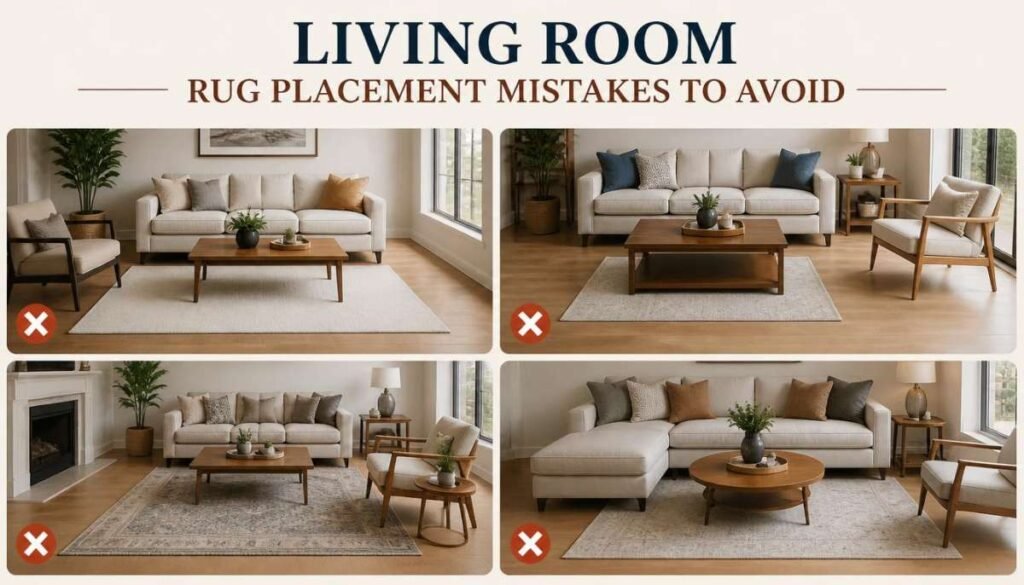
Even when the furniture and rug are individually attractive, a few placement mistakes can make the room feel unbalanced. Most problems come down to scale, spacing, or treating the rug as a separate decoration.
Before settling on the final arrangement, step back and look at the entire seating area. The rug should support the furniture instead of competing with it.
Using a Rug That’s Too Small
This is probably the most common problem. When a rug only fits underneath the coffee table, the sofa and chairs can look like they’re floating separately around it.
If you can’t fit a large rug, focus on making sure it reaches under at least the front legs of the major seating pieces.
Leaving Furniture Disconnected
A beautiful rug won’t help much if the furniture arrangement doesn’t relate to it.
Check the room from the doorway and from the main seating position. If the sofa, chairs, and coffee table look like separate islands, try shifting the rug or furniture until they feel like one conversation area.
Practical Tips for Better Living Room Rug Placement
A few simple checks can make the process much easier before you commit to a rug. These small steps are especially useful if you’re working with an unusual room shape or expensive furniture.
- Use painter’s tape to outline the rug size before buying.
- Measure the sofa and chairs, not just the room.
- Keep the coffee table comfortably within the rug’s boundaries.
- Check the rug from the room entrance as well as from the sofa.
- Leave clear walking paths around the seating area.
- Consider a low-pile rug for busy living rooms.
- Use a rug pad to reduce slipping and keep the rug more stable.
- For large rooms, choose a rug that is large enough to visually hold the seating group.
- For small rooms, prioritize furniture connection over covering more floor.
- Look at the rug in both daylight and evening lighting before deciding on its final position.
A Few Final Thoughts on Living Room Rug Placement
Think of your rug as the foundation of the seating area rather than an accessory you simply place in an empty spot. Once the sofa, chairs, and coffee table feel connected, the whole room tends to look more balanced.
And don’t be afraid to test the layout before committing. A few strips of painter’s tape and five minutes of moving furniture can tell you far more than guessing from a product photo.
FAQs About Living Room Rug Placement
Should a living room rug go under the sofa?
Yes. Ideally, the rug should reach under the sofa’s front legs or, when space allows, sit underneath the entire sofa.
How far should a rug extend past a sofa?
It should extend enough to visually connect the seating area. A few inches beyond the furniture can work, while a larger rug can extend much farther depending on the room.
Should the coffee table be completely on the rug?
Not necessarily. The coffee table should sit comfortably within the rug, and the rug should ideally extend beyond it enough to connect with the surrounding seating.
What size rug is best for a small living room?
Choose a size based on your furniture arrangement rather than the room alone. The rug should be large enough to connect the main seating pieces without overwhelming the available floor space.
Can a rug be too big for a living room?
Yes. A rug that leaves almost no visible floor or overwhelms the furniture can make the room feel cramped. Aim for a size that complements the room’s proportions.

Hi, I’m Ashir Zahid! I’m a home décor writer and creative enthusiast who loves finding simple and beautiful ways to make everyday spaces feel more comfortable and inviting. I enjoy exploring home styling ideas, practical decorating tips, and timeless trends that can work in real homes without making things feel complicated.
At DailyHomeVibe, I share easy-to-follow ideas for decorating different rooms, choosing the right colors and textures, and giving your home a fresh look with thoughtful details. My goal is to help readers find inspiration they can actually use, whether they are refreshing one small corner or giving their whole home a new feel.