
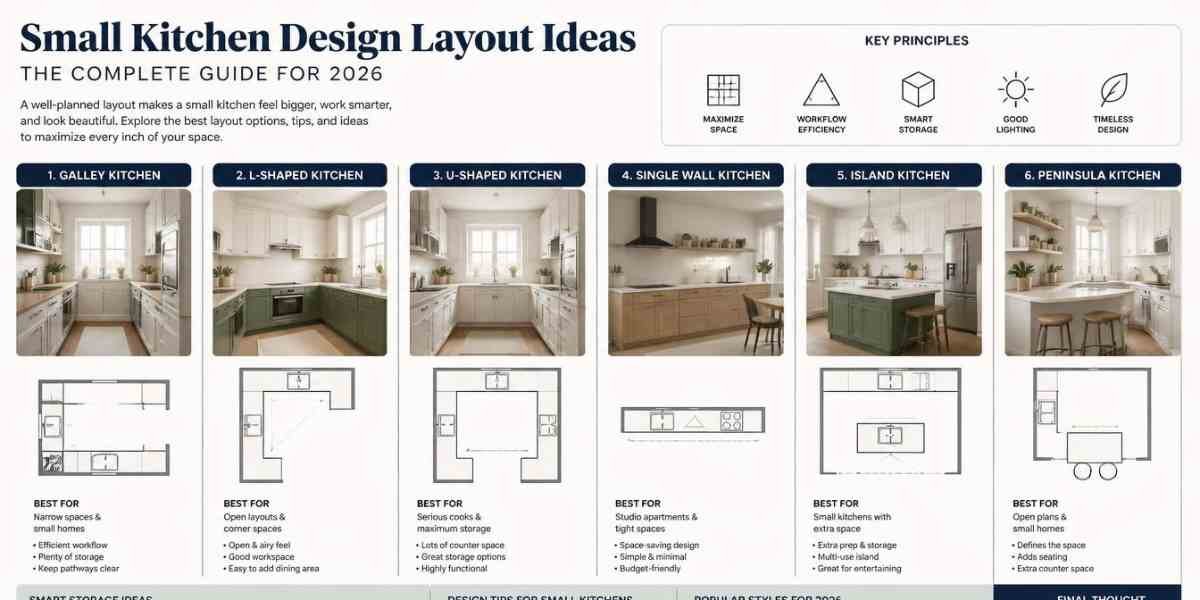
A small kitchen does not have to feel small. With the right layout and smart storage choices, even the tightest kitchen can feel open and organized. A few intentional design decisions can also make it genuinely enjoyable to cook in. The trick is understanding which layout actually fits your space. Do not copy a Pinterest photo shot in a kitchen twice the size of yours.
This guide walks through the best small kitchen layouts and how to choose between them. It also covers practical design ideas that maximize every inch. In addition, it gives specific tips for kitchens in Pakistan. There, layouts and cooking needs often differ from Western designs. Whether you plan a full renovation or just want a harder-working kitchen, you will find real, usable direction here.
Understanding the Most Popular Small Kitchen Layouts
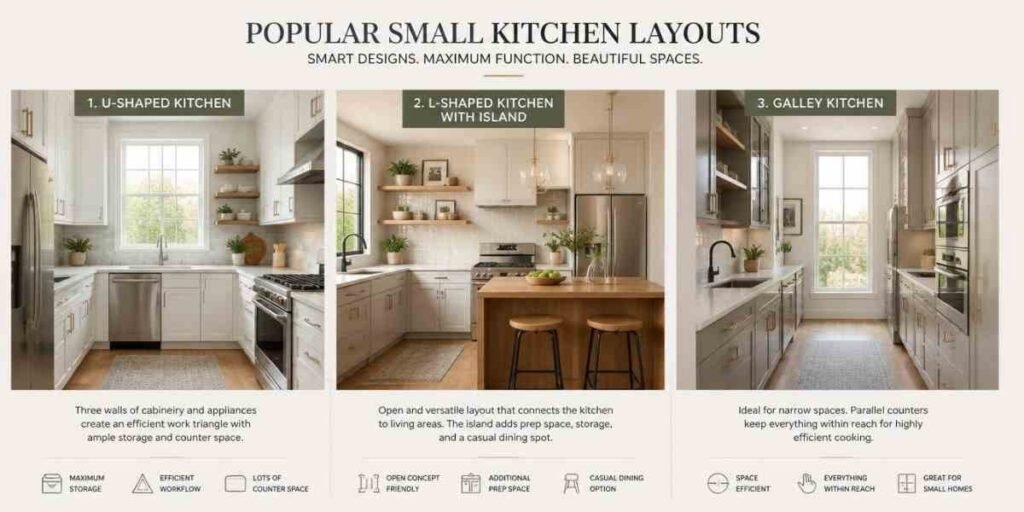
Before choosing colors, materials, or appliances, the layout itself needs to be right. The wrong layout creates a space that feels cramped, no matter how nicely you decorate it. In contrast, the right layout can make even a genuinely tiny kitchen feel functional and calm.
The four layouts that consistently work best in small spaces are the one-wall kitchen, the galley kitchen, the L-shaped kitchen, and in some cases a compact U-shape. Each one solves a different version of the small kitchen problem, so picking the right one depends entirely on your room’s shape and how you actually move through the space while cooking.
The One-Wall Kitchen Layout
The one-wall layout, sometimes called a Pullman kitchen, places everything along a single wall. This includes the sink, cooktop, storage, and counter space. Designers originally created this layout for very small apartments. It remains one of the most space-efficient options available today.
This layout works particularly well for studio apartments and small flats. It also suits any home that must preserve floor space for other furniture. Because you plan no walkway, you gain extra room elsewhere. However, you do need to be intentional with vertical storage. After all, you only have one wall of cabinetry to work with. Adding an island, even a narrow rolling one, can extend the workspace without converting the layout into something more complex.
The Galley Kitchen Layout
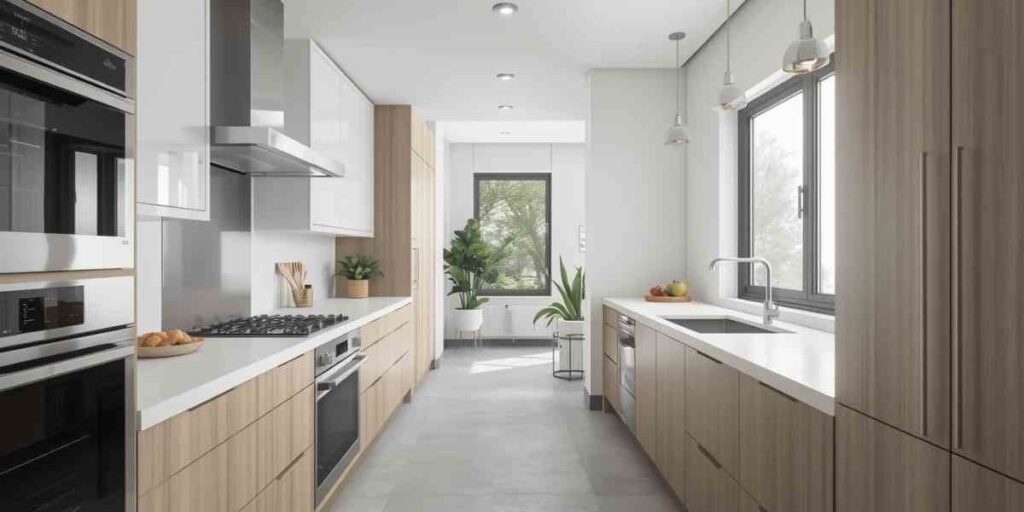
The galley kitchen, also known as a corridor kitchen, uses two parallel walls of cabinetry. These walls face each other, with a walkway down the middle. This is one of the most efficient layouts for small spaces. It puts both the sink and cooktop within easy reach, without wasted steps.
The ideal walkway width for a galley kitchen falls between four and six feet. This width lets doors, drawers, and appliances open comfortably. Also, nobody feels cramped, even while two people cook at once. The biggest risk is that this layout can feel like a narrow corridor. You can avoid that risk by handling the design carefully. Light flooring that runs the length of the space helps the galley feel longer. An uninterrupted ceiling line and a defined feature at the end wall also help. For example, a window or open shelving can make it feel more open, rather than tight and enclosed.
The L-Shaped Kitchen Layout
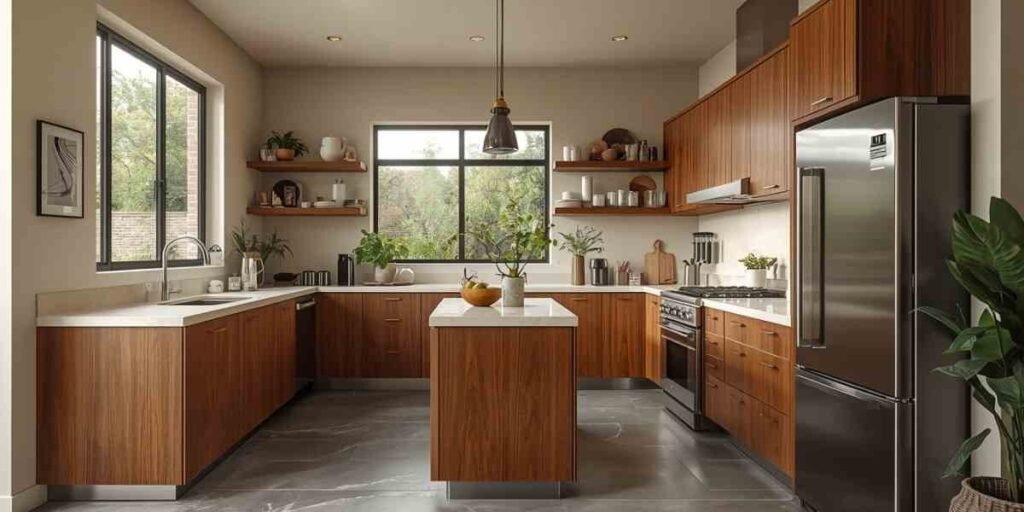
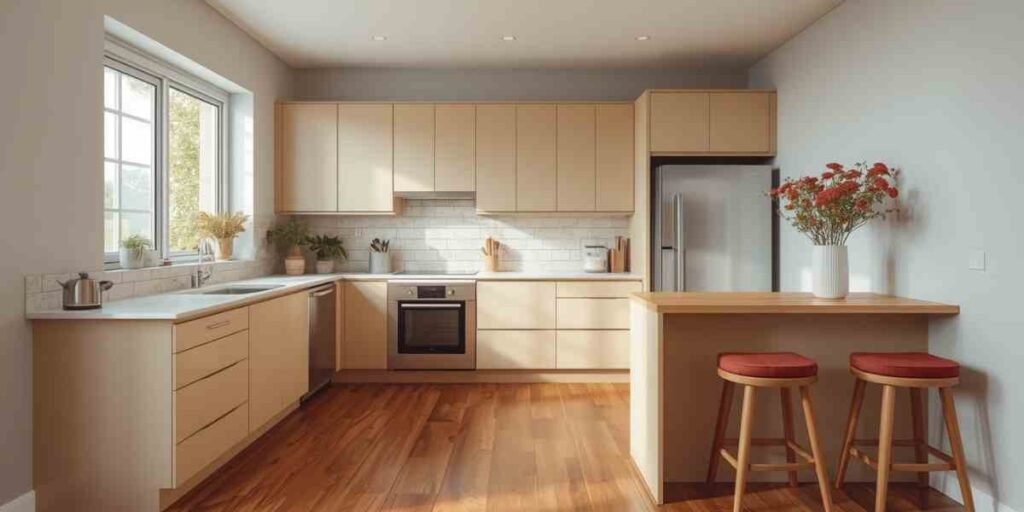
The L-shaped layout uses two adjoining walls to form a corner. This frees up the rest of the room for a small dining table or additional storage. Many people consider this one of the best layouts for small to medium kitchens. It creates a natural, efficient workflow between the sink, stove, and storage areas. It also avoids forcing a narrow walkway.
This layout works particularly well when one leg of the L is slightly longer. The longer leg gives you a defined prep zone on one side. The other side then becomes a cooking zone. If your kitchen has enough depth, consider adding a small peninsula at the end of one wall. This can introduce extra counter space or casual seating, without crowding the room.
Small Kitchen Design Ideas to Maximize Space
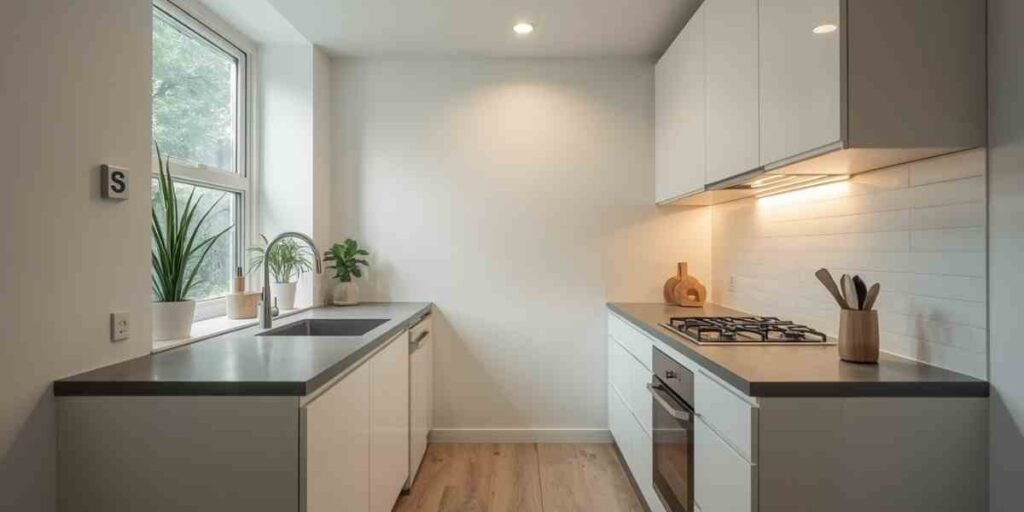
Once you settle the layout, a handful of smart design choices can help. They can make a small kitchen feel significantly larger and more functional. Best of all, they need no structural changes.
Use Floor-to-Ceiling Storage
Most small kitchens waste the upper third of their wall space entirely. Extend cabinetry all the way to the ceiling instead. Even the top section can hold rarely accessed items. This immediately makes the room feel more intentional. It also gives you considerably more storage, without expanding the footprint.
Choose Lighter Colors and Reflective Surfaces
Light colors on cabinetry and walls reflect available light and visually expand a small room. Soft whites, creams, and pale neutrals tend to perform best. This is especially true with reflective surfaces, like glossy tile or light stone countertops. Such surfaces bounce light around the space rather than absorbing it.
Add a Feature Detail Instead of More Furniture
Rather than trying to fit in more furniture or appliances, consider one well-placed design moment instead. A small kitchen often benefits more from a patterned tile backsplash, for example. A painted ceiling or a distinctive light fixture can also work well. This draws the eye and gives the room personality without adding clutter or competing for floor space.
Avoid Visual Clutter on Countertops
In a small kitchen, every visible item adds to a sense of crowding. Keep countertops as clear as possible. Use closed storage for small appliances. Also, limit open shelving to a few intentional, well-styled items. Together, these steps keep the space feeling calm rather than busy.
Plan Lighting Early in the Process
Lighting is one of the most overlooked elements in small kitchen design. Yet it has one of the biggest impacts on how spacious the room feels. Layer under-cabinet task lighting with ambient overhead lighting. Add a statement pendant or two as well. This creates depth and avoids the flat, dim feeling of a single overhead light in a tight space.
What to Consider Before Choosing a Layout
A few practical factors should guide your final layout decision before you commit to cabinets, plumbing, or electrical work. The size and shape of the room itself is the most obvious starting point. However, the location of existing plumbing and gas lines often matters just as much. Moving them significantly increases renovation cost.
Your actual cooking habits matter more than design trends. A household that cooks elaborate meals daily needs more counter space and storage. A household that primarily reheats and assembles food needs less. This is true regardless of how a layout looks in photos. It is also worth being realistic about appliances. Many small kitchen renovations fail because the plan tries to fit too much into the footprint. A full-size refrigerator, dishwasher, and oven may genuinely not fit comfortably together. The result then looks good in a rendering but feels tight and cramped in daily use.
A Real Experience With Small Kitchen Renovation
Reading genuine feedback from people who have been through a small kitchen renovation is valuable. It offers a level of honesty that design photos alone cannot provide.
This kind of feedback reflects a broader pattern across small kitchen renovation reviews. The projects that go smoothly tend to involve genuine flexibility during the design phase. This flexibility matters because almost every small kitchen reveals a layout challenge or two. Those challenges usually appear once work actually begins.
Final Thoughts
A small kitchen succeeds or fails based on layout decisions made early. These decisions come long before paint colors or hardware finishes enter the conversation. Choose the right layout for your specific room. Respect the working triangle. Also, be honest about which appliances you genuinely need.
You might end up with a clean galley kitchen or an efficient one-wall design. Or you might choose an L-shape with room for a small table. Either way, the goal is the same. You want a space that works hard for you every single day. It should not simply look good in a single photograph. Start with the layout, get the function right, and the style will follow naturally.
Frequently Asked Questions
How can I make my small kitchen look bigger?
Light wall and cabinet colors, reflective countertop materials, floor-to-ceiling storage, and strong lighting all help a small kitchen feel larger. Keeping countertops clear and avoiding visual clutter also makes a significant difference.
What is the best layout for a small kitchen?
People generally consider the galley and one-wall layouts the most space-efficient for small kitchens. The L-shape also works well, if your room has enough depth for a corner configuration. The right choice depends on your room’s exact shape and your cooking habits.

Hi, I’m Ashir Zahid! I’m a home décor writer and creative enthusiast who loves finding simple and beautiful ways to make everyday spaces feel more comfortable and inviting. I enjoy exploring home styling ideas, practical decorating tips, and timeless trends that can work in real homes without making things feel complicated.
At DailyHomeVibe, I share easy-to-follow ideas for decorating different rooms, choosing the right colors and textures, and giving your home a fresh look with thoughtful details. My goal is to help readers find inspiration they can actually use, whether they are refreshing one small corner or giving their whole home a new feel.