
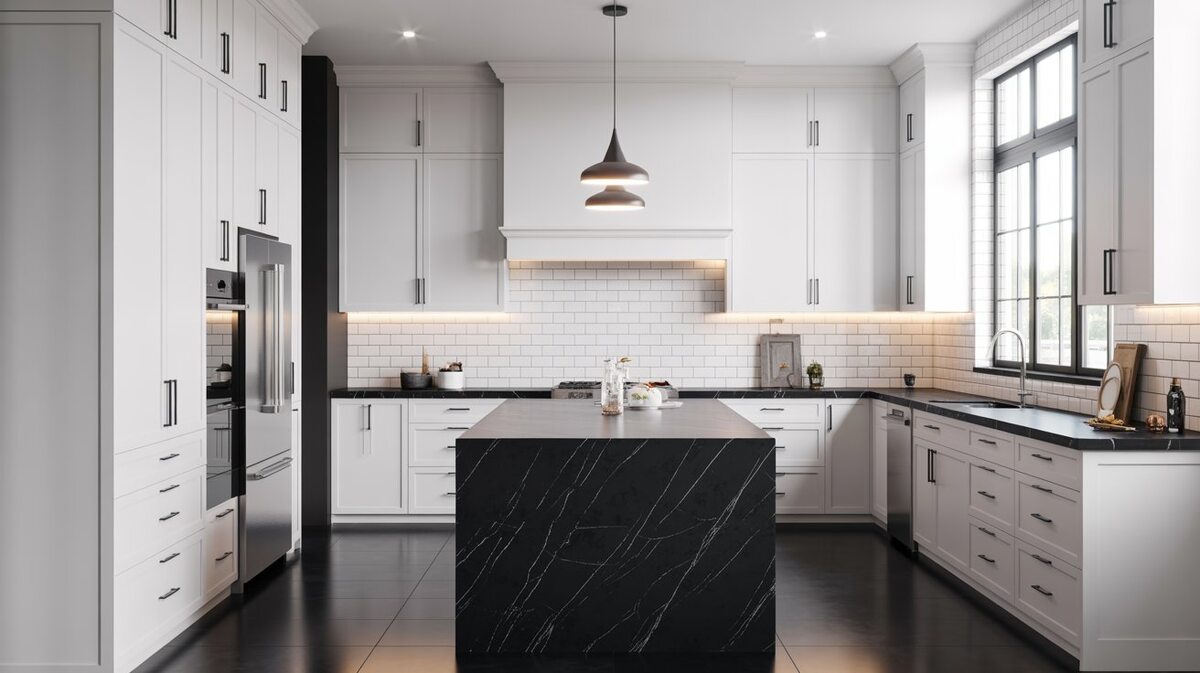
A black and white kitchen is the easiest scheme to start and the easiest to get wrong. The failures are never the colors themselves; they are ratio failures. Too much black and the room turns heavy and small. Too much white with token black handles and it reads cold and unfinished, like a rental.
This guide gives you the working ratios, the finish and grout decisions that decide whether the look feels warm or clinical, and 14 ideas organized from the big surfaces down to the last shelf.
The Ratios That Decide Everything
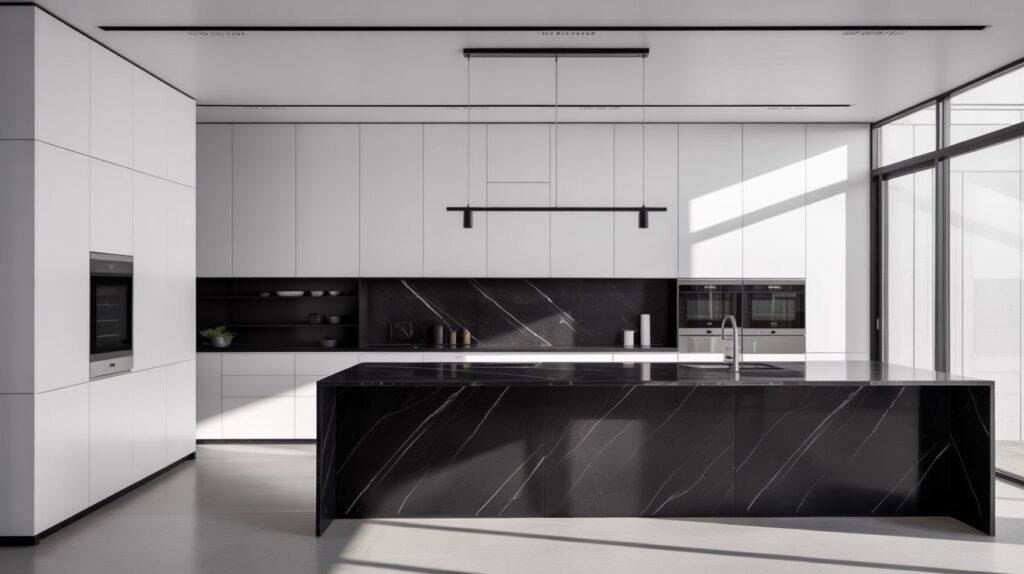
- The safe classic: roughly 70 percent white, 30 percent black. White cabinets and walls, black worktops, hardware, lighting and stools. Works in almost any kitchen, especially small ones.
- The dramatic split: black lower cabinets, white uppers and walls, about 50-50 at eye level but light above the worktop, so the room stays bright where you stand. Best in medium and large kitchens with good daylight.
- The white room with black bones: 85 percent white, with black reserved for window frames, a range cooker, lighting and one furniture piece. The right choice for north-facing or window-poor kitchens.
Whatever ratio you choose, add one warming material, usually wood, and one living thing, usually herbs. Black and white alone, with no wood or green, is what tips a kitchen from modern into sterile. The layout planning in our small kitchen design layout ideas guide pairs well with the small-kitchen ratio advice below.
Cabinets and Large Surfaces
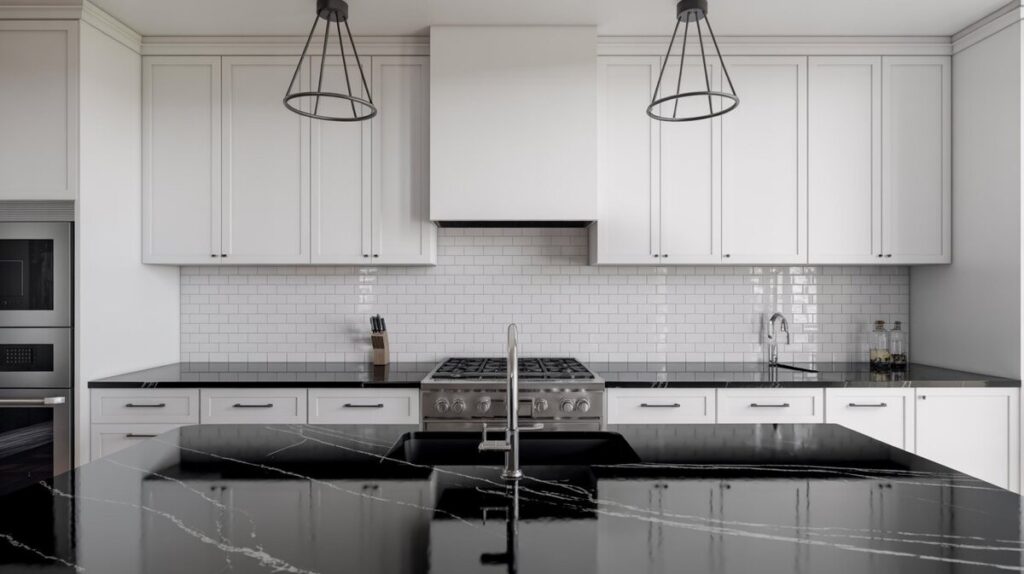
1. Two-Tone Cabinets, Dark Below
Black or very dark lower cabinets ground the kitchen and hide scuffs where shoes and bins live; white uppers keep the walls light. If full black feels brave, charcoal or near-black navy gives 90 percent of the effect with more forgiveness.
2. All-White Cabinets, Black Hardware and Worktop
The most flexible version: white shaker or slab cabinets, matte black handles (bar pulls 128 to 160 mm read modern; knobs read classic), and a black or dark stone worktop. Change the hardware later and the whole scheme shifts, which is why this is the renter-friendly and resale-friendly option.
3. One Black Anchor Piece
In an all-white kitchen, a single large black element, a range cooker, a fridge, an island, or a tall pantry unit, creates the focal point the scheme needs. One anchor, not three competing ones.
Worktops, Backsplash and Grout
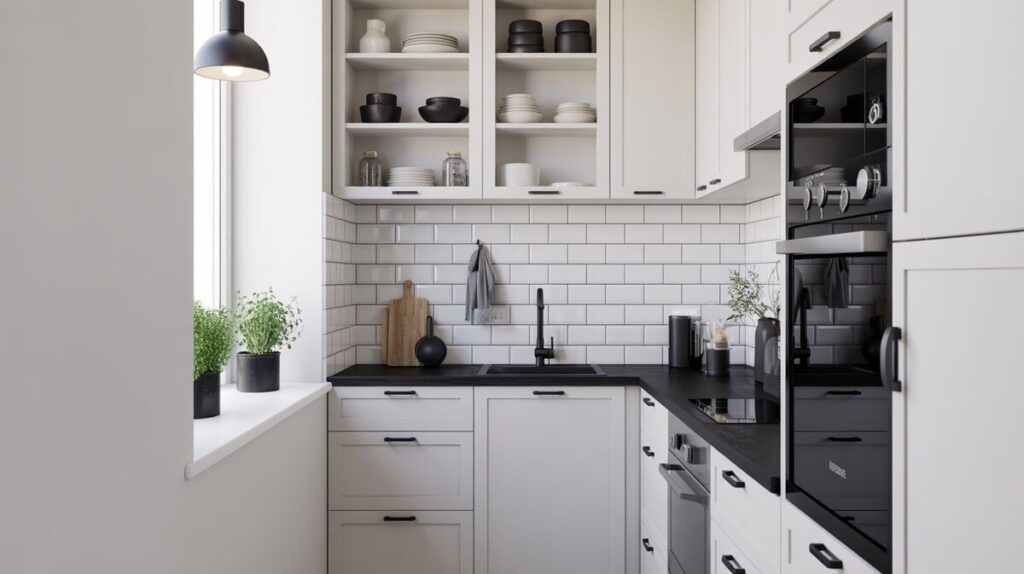
4. Worktop Contrast Rules
Dark worktop on white cabinets, light worktop on black cabinets: contrast at the worktop line is what makes the scheme readable from the doorway. Black granite or quartz with a fine white vein suits classic rooms; honed (matte) finishes show fewer fingerprints than polished. Pure white worktops on white cabinets need a contrasting backsplash or the run disappears into the wall.
5. Backsplash: The Pattern Layer
White subway tile with dark grey or black grout is the signature black-and-white backsplash: the grout draws the grid and does the decorating. Grout lines of 3 to 5 mm show the pattern clearly. For a quieter look, large-format white tiles with matching grout, then let a black open shelf or rail carry the contrast instead.
6. Flooring That Holds the Scheme
Flooring is the largest black-and-white canvas in the room. Checkerboard (30 by 30 cm or 45 by 45 cm tiles, laid straight or diagonal) is the classic and suits traditional and farmhouse versions. In modern kitchens, pale wood or light stone-look floors with black accents above work better, and are kinder to stand on and to keep. Dark floors in small kitchens shrink the room unless the walls and uppers are fully white; the flooring table most guides give you rarely mentions that trade-off.
Walls, Metal and Light
7. Wall Color Between the Two
Walls do not have to be pure white. Warm white or the palest warm grey keeps black accents from looking harsh, especially under warm lighting. Pure brilliant white plus black plus cool lighting is the combination that produces the clinical feel people blame on the scheme itself.
8. One Metal Finish, Repeated
Choose one metal for hardware, faucet and lighting: matte black for modern, brushed brass or gold for warmth and a classic note, chrome for a retro-diner feel. Mixed metals muddy a two-color scheme faster than any other mistake. Repeat the chosen finish at least three times so it reads as a decision.
9. Lighting With Black Bones
Pendant lights with black shades or frames over the island or table (two or three, hung 75 to 90 cm above the worktop), plus warm bulbs at 2700 to 3000K. The warm bulb temperature is non-negotiable in a black and white kitchen; cool white light is the other half of the sterile problem.
Styling: Where Warmth Comes From
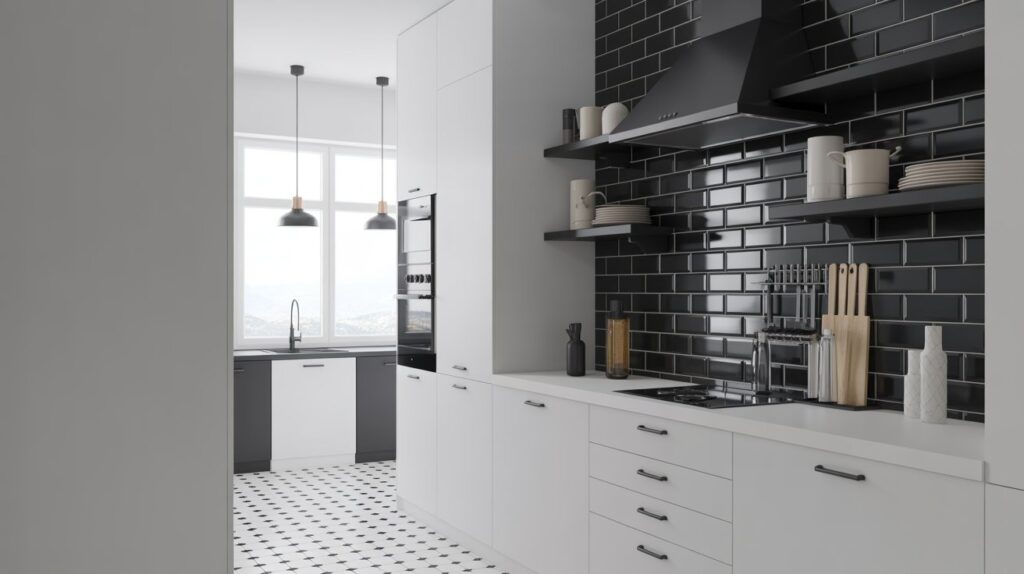
10. Wood, Deliberately Placed
Wooden boards on the worktop, a wood stool, open wood shelves or a butcher-block section: wood is the warming layer. Two or three visible wood pieces are enough; the warm wood tones also connect this scheme to the approach in our rustic kitchen decor ideas if the rest of your home leans that way.
11. Greenery and Produce
Herbs on the windowsill, a bowl of lemons or green apples, one trailing plant on a high shelf. Living color in a two-color room is not cheating; it is the layer that keeps the scheme from feeling like a photograph.
12. Textiles in the Pattern
Tea towels, a runner and seat cushions are where pattern belongs: black-and-white stripes, checks or a small geometric. Textiles are the cheapest test of the scheme, swap them before committing to tile if you are unsure.
13. Open Shelving, Edited Hard
Black brackets with white or wood shelves, holding white dishes, clear glass and one or two black pieces per shelf. Open shelves in a black and white kitchen must be edited to about two-thirds full; a crowded shelf breaks the calm the scheme exists for.
14. The Farmhouse and Modern Dials
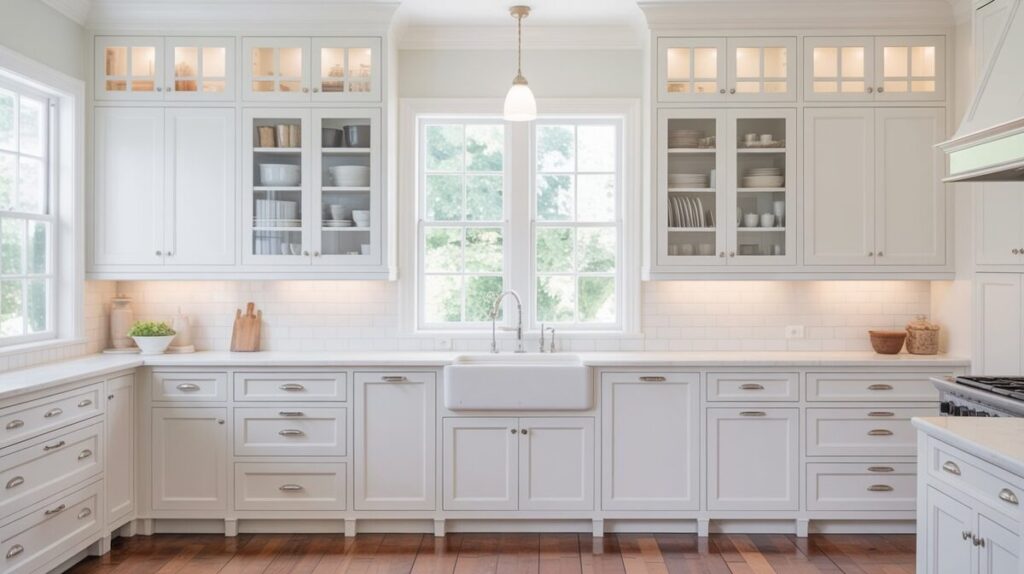
Same scheme, two directions. Farmhouse: shaker cabinets, apron sink, checkerboard or wood floor, brass or black iron, gingham and stripes, open shelves with crocks. Modern: slab cabinets, handleless or long bar pulls, large-format tile, matte black everything, one sculptural light. Pick a dial and turn every choice toward it; halfway between the two is where these kitchens look undecided.
Small Kitchens: The Safe Settings
Use the 70-30 or 85-15 ratio, glossy or satin finishes to bounce light, black kept below worktop height so the eye-level field stays white, and the grout trick on the backsplash for pattern without darkness. A black ceiling or black uppers in a small, dim kitchen is the one move to avoid.
Common Mistakes
- Equal black and white everywhere, checkerboard floors plus two-tone cabinets plus patterned tile, until the room vibrates. One pattern layer is enough.
- Cool lighting. 2700 to 3000K bulbs are the difference between modern and morgue.
- No wood, no green. The scheme needs a warm material and a living one.
- Mixed metals. Pick one finish and repeat it.
- Fingerprint finishes. Polished black surfaces and glossy black cabinet fronts show every touch; matte and honed finishes are the practical choice for family kitchens.
Final Thoughts
Black and white kitchen decor works when the ratio is chosen on purpose, the grout and finishes carry the contrast, the light is warm, and wood and greenery soften the geometry. Start with the ratio, then the worktop contrast, then the textiles, and the room will look designed rather than assembled.
Frequently Asked Questions
What is the best ratio of black to white in a kitchen?
About 70 percent white to 30 percent black suits most kitchens, with black carried by worktops, hardware, lighting and stools. Larger, brighter kitchens can go to a 50-50 split with black lower cabinets and white uppers. Small or dark kitchens should stay nearer 85 percent white.
Does a black and white kitchen show dirt and fingerprints badly?
White shows crumbs and spills; polished black shows fingerprints and dust. The practical combination is matte or honed black finishes, which hide fingerprints well, and satin white cabinets, which wipe clean easily. Avoid glossy black cabinet fronts in busy family kitchens.
How do I stop a black and white kitchen feeling cold?
Warm the light (2700 to 3000K bulbs), use a warm white rather than brilliant white on walls, and add wood in two or three places plus something green and living. Those three moves fix almost every “too clinical” black and white kitchen.
What floor goes with a black and white kitchen?
Checkerboard tile is the classic pairing and suits traditional and farmhouse styles. Pale wood or light stone-look flooring suits modern versions and small kitchens, keeping the floor light and letting cabinets and accessories carry the black.
What metal finish works with black and white cabinets?
One finish, repeated: matte black for a modern look, brushed brass for warmth and a classic feel, or chrome for a retro note. Match hardware, faucet and light fittings to the same finish so the scheme reads as intentional.

Hi, I’m Ashir Zahid! I’m a home décor writer and creative enthusiast who loves finding simple and beautiful ways to make everyday spaces feel more comfortable and inviting. I enjoy exploring home styling ideas, practical decorating tips, and timeless trends that can work in real homes without making things feel complicated.
At DailyHomeVibe, I share easy-to-follow ideas for decorating different rooms, choosing the right colors and textures, and giving your home a fresh look with thoughtful details. My goal is to help readers find inspiration they can actually use, whether they are refreshing one small corner or giving their whole home a new feel.