
The right Halloween party theme depends on one thing: who is walking through your door. Adults-only crowds want candlelit, gothic settings like a vampire dinner party or a haunted speakeasy. Families with young children do best with a pumpkin patch party or a monster mash, which bring almost no scare at all. For mixed ages, the classic haunted house wins, as long as you run it at two scare levels at once. Every theme in this guide comes with its color palette, concrete decor moves, and food and drink tie-ins, plus a budget in real dollars, setup time and a scare rating, so you can pick one tonight and shop once.
One date worth knowing before you choose: Halloween falls on Saturday, October 31, 2026. Nobody has school or work the next morning. That means an afternoon party for kids and a late party for adults can share the same day. It also means your guests will be choosing between invitations. So pick the theme early and send the invite early. Then the rest of the planning gets easier.

How to Pick Your Theme: Four Questions
Every theme below is the right answer for somebody. These four questions tell you which somebody is hosting your party.
Who is actually coming? First, count heads, then note the youngest and oldest guest. A theme built for twelve adults will bore twelve nine-year-olds. In contrast, a theme built for nine-year-olds gives adults nothing to do but supervise. If the age gap spans more than about ten years, go straight to the mixed ages section. Those themes are designed for exactly that problem.
How scary is it allowed to get? Every theme here carries a scare rating from 0 to 5. Your ceiling is set by the youngest guest who will be awake for the scary parts. It is not set by your own taste. Atmosphere (dim light, old music, strange labels) reads as spooky to everyone and frightens nobody. However, gore and jump scares are the two things that actually send small children home early.
Where will people actually stand? Yard themes need a yard, or at least a patio. If your whole party fits in one room, choose a theme built around a table or a drinks station. For example, the vampire dinner, the speakeasy, the murder mystery and the apothecary all work in a single room. That is because the furniture you already own does the decorating.
What is the honest budget? The dollar figures under each theme cover decorations and themed extras, not the main food shop. They assume you are starting from zero. If you already own black linens, candles and a few pumpkins, cut the figure roughly in half. Notice that the cheapest themes are not the emptiest ones. They are the ones where an activity does the work decor would otherwise have to do. For example, dancing or a film carries the evening.
Halloween Party Themes for Adults
Adults-only parties can run darker, later and more formal. These four lean on atmosphere instead of jump scares. That is what grown-up guests actually remember on November 1.
1. Gothic Vampire Dinner Party
A sit-down dinner that treats Halloween like a black-tie occasion. It is the easiest adult theme to make look expensive. That is because candlelight does most of the work and hides everything it does not flatter.
- Palette: Black, oxblood red and antique gold, with candlelight as the fourth color.
- Decor moves: Start with a black tablecloth and a deep red runner. Cluster black taper candles or candelabras down the center of the table. Add dark red roses or dried flowers in low arrangements, so guests can see each other over them. Finish with gold or brass chargers and goblets, which thrift stores stock all year.
- Food and drink: Serve one red signature drink, such as a blackberry bourbon smash, with a pomegranate spritz as the non-alcoholic twin. Dinner can be completely ordinary food renamed on small place cards. For example, a beet salad becomes graveyard beets at zero extra cost.
- Activity: Skip party games entirely. Instead, run a slow playlist of classical strings and dark jazz. Put “formal, with fangs” on the invitation as the costume note.
- Cost: About $75 to $150 on decor starting from zero.
- Setup: 3 to 4 hours, mostly table setting and candle placement.
- Scare level: 1 out of 5. Elegant, never frightening.
- Best for: 6 to 12 adults, a real dining room, and hosts who would rather cook than decorate.
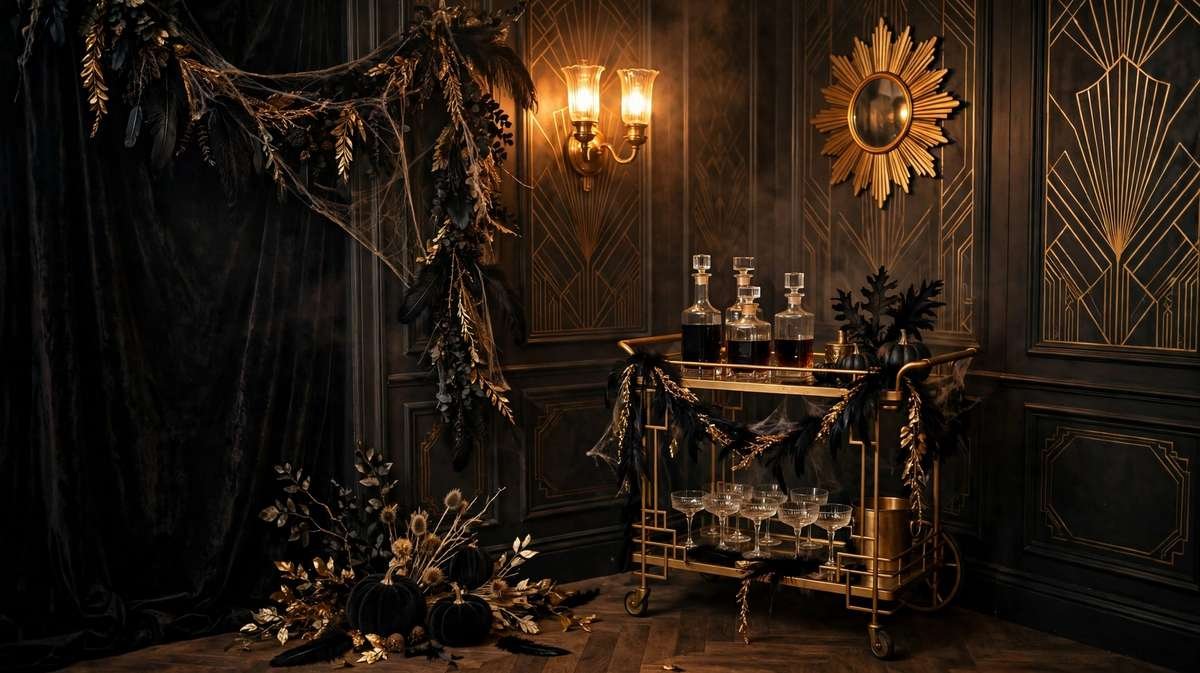
2. Haunted Speakeasy
A 1920s bar night behind a closed door, with the password printed on the invitation. It runs on lighting, music and one good drinks station. As a result, it fits a small apartment better than any other adult theme here.
- Palette: Black, gold and deep green, lit warm and low.
- Decor moves: Hang a “password required” sign on the front door. Add gold and black garlands or feather fans above the bar. Style a bar cart or sideboard as the whole bar, with decanters, coupe glasses and a small printed menu. Switch every lamp to a warm bulb and leave the overhead lights off all night.
- Food and drink: Serve two signature cocktails plus one serious mocktail built with the same care, all with era names. Offer salty snacks in coupe glasses. Add an olive and nut plate if you want the bar to feel stocked.
- Activity: Play a jazz and swing playlist. Add a costume bingo card that runs itself all night: spot a flapper, spot a gangster, spot the guest who ignored the theme entirely.
- Cost: About $50 to $120, mostly glassware you will keep.
- Setup: 2 to 3 hours.
- Scare level: 1 out of 5, atmospheric only.
- Best for: apartments and small homes, 8 to 16 adults, couples and friend groups who talk more than they dance.
3. Murder Mystery at the Manor
The theme is the entertainment. Every guest gets a character in advance. They arrive in costume and spend dinner solving a murder. As a result, even a shy guest list has something to do with its hands and its conversation.
- Palette: Jewel tones, oxblood, brass and dark wood.
- Decor moves: Keep decor light and let the story carry the night. Set name cards and sealed clue envelopes at each place setting. Build a “library” corner from stacked old books, a magnifying glass and a few gilt portrait frames. Use lamps and one candelabra instead of overhead light.
- Food and drink: Serve dinner in courses, because the mystery is structured around them. Name each course after a suspect on the menu card. Keep one bottle or pitcher per table so nobody has to leave the story to get a drink.
- Activity: The mystery itself, from a boxed or printable kit matched to your headcount. Most kits run 6 to 12 players, and larger versions exist. Check the box before you invite a thirteenth sleuth. Keep background music classical and very low, because dialogue is the game.
- Cost: About $25 to $45 for the kit, plus decor you mostly own already.
- Setup: 1 to 2 hours of decorating. However, the character roles must go out with the invitations at least a week ahead.
- Scare level: 2 out of 5. A murder, discussed far more than shown.
- Best for: 6 to 12 adults who know each other at least a little, dinner-party hosts, and any crowd that would rather talk than dance.
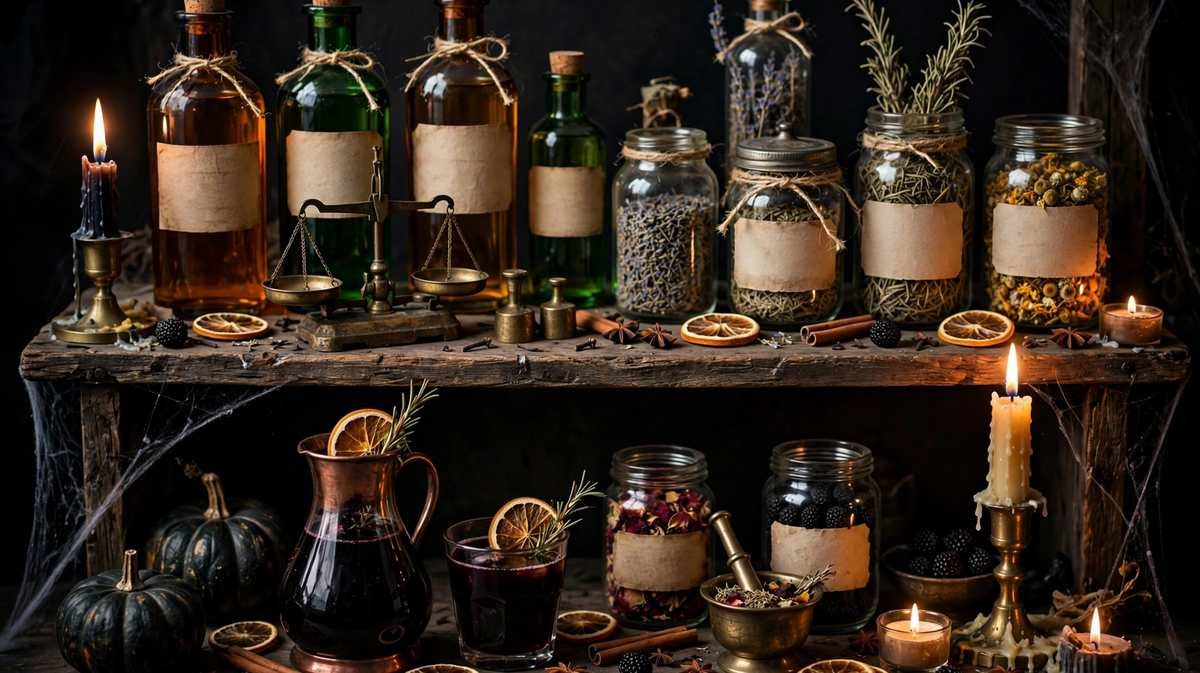
4. Vintage Apothecary
A potion bar with real visual payoff, built from glass bottles, handwritten labels and candlelight. It photographs beautifully and doubles as the drinks station. As a result, the decor is also the entertainment, and nothing needs to hang on a wall.
- Palette: Amber, bottle green, aged cream paper and black.
- Decor moves: Group recycled bottles in odd heights, filled with tinted water and finished with handwritten labels, on shelves and along the bar. Add a small brass scale, a mortar or a stack of battered old books as counter props. Stand dried herbs or eucalyptus in jars. Light the whole arrangement from behind or below with LED candles, so the glass glows instead of the room.
- Food and drink: Serve drinks as tonics and elixirs from the labeled bottles, with recipe cards so guests mix their own and name the result. Add a cheese and charcuterie board on a dark wood board for the shop-counter feeling.
- Activity: The build-your-own potion station is the activity. Offer three base drinks, a row of mixers and garnishes, and a prize for the best-named creation at the end of the night.
- Cost: About $30 to $75, because the bottles come from your recycling and thrift store shelves.
- Setup: About 2 hours, most of it filling and labeling bottles.
- Scare level: 1 out of 5.
- Best for: adults who enjoy a project, cocktail crowds, small spaces, and renters, since nothing attaches to a wall.
Halloween Party Themes for Families With Kids
Kid themes fail in one predictable way. The children finish the activity in twenty minutes and then dismantle the house. Every theme below gives children a job that lasts. It also gives the adults a genuine role instead of a supervising one.
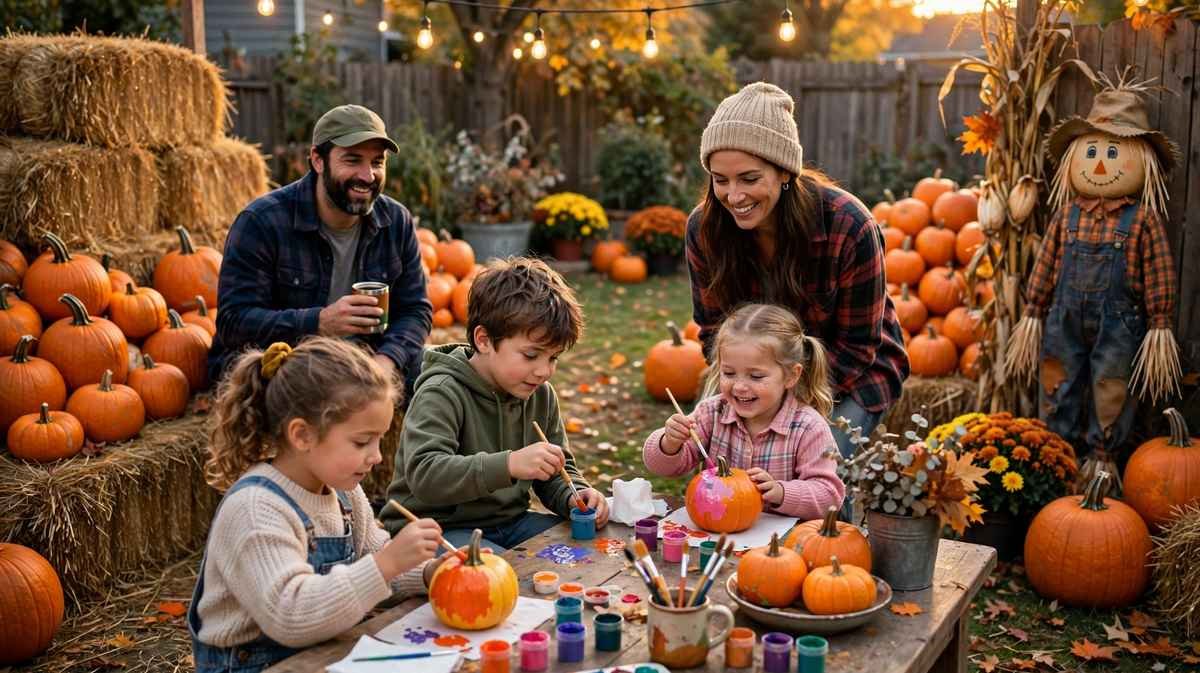
5. Pumpkin Patch Party
The friendliest theme on this list, and the one grandparents enjoy as much as five-year-olds. The pumpkins are the decoration, the activity and the party favor, all in a single purchase.
- Palette: Pumpkin orange, hay yellow, sage green and cream.
- Decor moves: Use hay bales as seating and as pedestals for pumpkin piles. Build a scarecrow in the corner from old clothes stuffed over a broom handle; it takes ten minutes. Cover a painting table in kraft paper, with paints, brushes and old shirts as smocks. Hang string lights overhead for the moment the light goes.
- Food and drink: Serve hot cider in a slow cooker, caramel apple slices, and popcorn in paper bags. Keep one tray of completely plain food for the picky eaters every party has.
- Activity: Run a pumpkin painting contest with joke categories: funniest face, most glitter, most likely to scare a crow. That way every child wins something. Let adults carve at a separate table with the real tools, out of the paint zone.
- Cost: About $40 to $90, and most of it is pumpkins, which go home with the guests.
- Setup: 1 to 2 hours, mostly hauling hay and pumpkins into place.
- Scare level: 0 out of 5.
- Best for: kids aged 3 to 10 with their parents, backyards and patios, and afternoon parties that end before bedtime does its damage.
6. Monster Mash Dance Party
A dance party wearing a Halloween costume. It needs the least decor of any theme in this guide. That makes it the one to pick when the party is suddenly this weekend.
- Palette: Lime green, purple, orange and black, the classic cartoon Halloween mix.
- Decor moves: Make one monster-face photo backdrop, with big eyes and teeth cut from paper and taped to a single wall. Add balloons in the four palette colors, a few with monster faces drawn on in marker. Load one snack table with glow sticks. Keep lights low, with a single colored bulb or party light doing the atmosphere.
- Food and drink: Serve finger food only, because nobody can dance holding a fork. Offer pizza bites, monster mouth apple slices with peanut butter, and green punch labeled as slime.
- Activity: The playlist is the party. Play Monster Mash and run a Thriller dance-along everyone attempts together. Try freeze dance for the younger ones. Hold a costume parade lap every hour so latecomers still get their moment.
- Cost: About $25 to $60.
- Setup: About 90 minutes, mostly pushing furniture against the walls.
- Scare level: 1 out of 5, and only in costume form.
- Best for: kids aged 5 to 12, energetic crowds, big living rooms, and hosts whose main asset is a loud speaker.
7. Young Witches and Wizards Potion Party
A magic-school party where the main event is a potion lab the children run themselves. It works because children with a task and a title (apprentice, potion master) are calm children. The drinks are also the activity, so nobody is asking what happens next.
- Palette: Purple, teal, silver and black.
- Decor moves: Set up a potion station with labeled jars of colored water, droppers, funnels and plastic cauldrons. Use spell books as centerpieces: old books wrapped in brown paper with handwritten titles. String paper stars and a crescent moon garland overhead. Leave a wand at the door for every child; a chopstick with a ribbon tied to it is a perfectly good wand.
- Food and drink: The potions are the drinks: juices and sodas layered so they change color with a stir. Rename snacks as ingredients: pretzel wands, grape eyeballs, cheese straw broomsticks.
- Activity: Run a guided potion class in the first hour. Each child mixes a drinkable potion from a recipe card and stamps it with a name. Then allow free play, and take a group photograph in front of the spell books before anyone leaves.
- Cost: About $40 to $100, depending on how much of the glassware you buy and how many wands you make.
- Setup: About 2 hours, mostly prepping the potion station so it can run without you.
- Scare level: 1 out of 5. Magic, not horror.
- Best for: kids aged 6 to 11, birthday-style groups of 8 to 14, and indoor parties where the weather cannot be trusted.
Halloween Party Themes for Mixed Ages
Mixed ages is the hardest brief in party planning, and the honest answer is never one activity for everyone. Instead, it is one theme, run at two speeds, with one moment in the middle where the whole party meets.
8. Classic Haunted House, With a Scare Dial
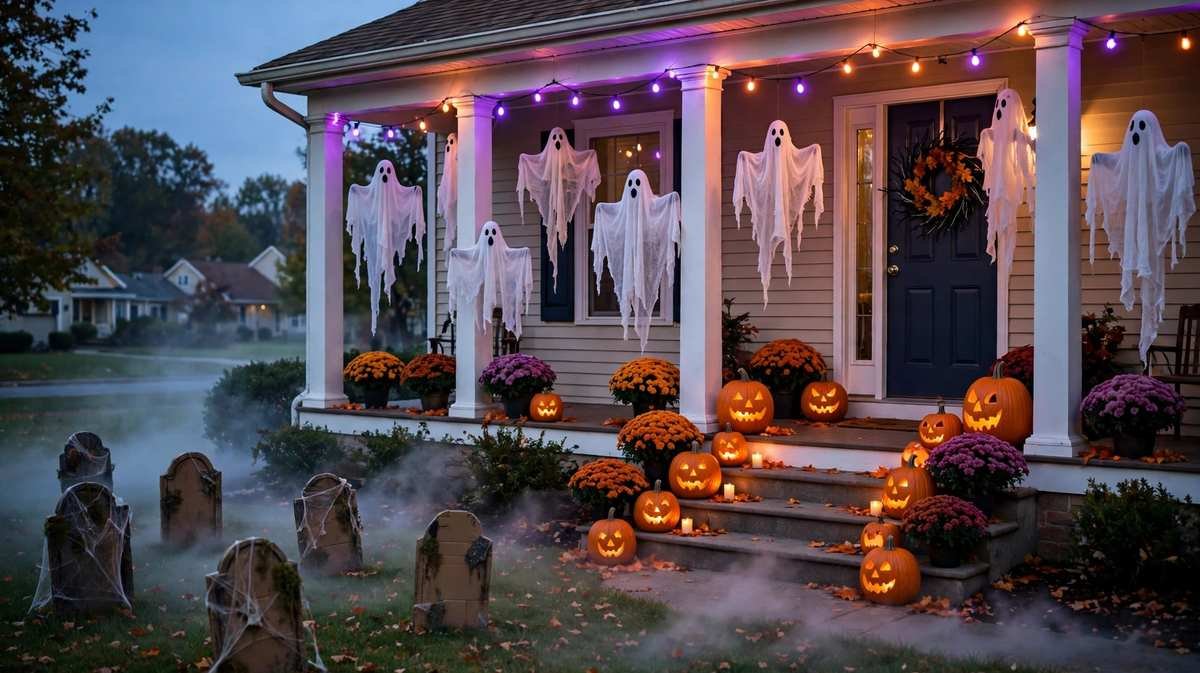
The theme everyone pictures for a mixed crowd. Split it into two zones: a bright front for young children and a darker back for everyone else. No other theme serves toddlers and teenagers at one party.
- Palette: Black, gray and purple, with orange kept to the kids’ zone so the two halves read clearly.
- Decor moves: Let the entryway and porch carry the theme: tombstones on the lawn, hanging ghosts, a monster face on the door. Keep the front room bright with pumpkins and paper bats. Darken the back room with cobwebs, flicker bulbs and a fog machine. Orange lights mark where the scary zone starts.
- Food and drink: One central buffet serves both zones. Keep the drinks station in the bright zone, so no child enters the dark for a soda.
- Activity: A costume parade moves through both zones at a set time, lights up, so the whole party meets. Later, the dark zone gets ghost stories or horror clips for the older crowd.
- Cost: About $50 to $150, mostly optional, since this theme reuses nearly every Halloween item you own.
- Setup: 3 to 5 hours. It is the biggest build on this list.
- Scare level: 1 out of 5 up front, up to 4 out of 5 in back. Set the dial with lighting, sound and gore.
- Best for: The full family and the neighbors: any guest list spanning ten years. Safety note: battery candles near paper, tissue or cheesecloth, since fabric and flame share a house here.
9. Harvest Moon Festival
Halloween with the horror removed and the season kept: food, firelight and fall color. It is the theme for crowds that include babies, grandparents and the one neighbor who quietly hates Halloween.
- Palette: Rust, cream, sage and warm wood tones. No black anywhere.
- Decor moves: Lay a long table with a linen runner and real pumpkins and gourds as the centerpiece. Set mason jars of dried flowers or wheat at intervals. Use string lights and lanterns as the main light source after dark. Add a fire pit if your yard allows one, or a ring of chairs around a cluster of candles if it does not.
- Food and drink: This theme is food-led. Hold chili or soup in a slow cooker and set a dedicated pie table. Keep hot cider and cocoa on constant refill. If your kitchen needs to match, the same rust and cream palette works indoors too, as these fall decorations for the kitchen show.
- Activity: Play lawn games early, cornhole and ring toss while there is light. Then hold a pie or chili vote with a ridiculous trophy. Keep the playlist acoustic and folk, with nothing that has a sudden scream in it.
- Cost: About $40 to $100, and most of that is food rather than decor.
- Setup: About 2 hours.
- Scare level: 0 out of 5, by design.
- Best for: mixed ages with very young children, office-friendly and faith-friendly crowds, and anyone hosting outdoors in real fall weather.
10. Double-Feature Movie Night
Two screenings, one theme. Show an early family film while the children are still awake, then a proper horror feature after they are in bed or on their way home. The same snack bar serves both halves of the night.
- Palette: Black, white and cinema red, warmed up outdoors with string lights.
- Decor moves: Set up a projector and a white sheet or screen, and test it before a single guest arrives. Arrange blankets, cushions and low chairs in rows. Build a popcorn bar with labeled flavor shakers and candy in glass jars. Print classic film covers for one wall: family-friendly posters early, horror posters turned around or swapped in for the late show.
- Food and drink: Offer popcorn with two or three flavored salts, boxed candy, and sodas buried in a tub of ice. Save the one themed cocktail for the second feature, and label it that way.
- Activity: The films are the activity. Add a five-question trivia card for the intermission. Let guests vote between two options for the late film, because a vote makes the second screening feel like an event instead of a wind-down.
- Cost: About $30 to $80, assuming you own or can borrow the projector.
- Setup: About 1 hour, plus 20 minutes of tech testing you should not skip.
- Scare level: 1 out of 5 before the intermission, 4 out of 5 after it, separated by a popcorn refill.
- Best for: mixed ages, low-energy hosts, rainy Halloween nights, and smaller guest lists that still want the night to feel like an occasion.

One Party, Two Speeds: Running Mixed Ages Well
Whichever mixed theme you pick, four habits decide whether it works. They cost nothing. They are the difference between a party where the adults hide in the kitchen and one where nobody wants to leave.
Zone by light, not by walls. Children read brightness as safety and darkness as danger. As a result, a bright front room and a dim back room sort the crowd by itself, without rules, ropes or a single awkward conversation about who is allowed where.
Give the children a job in the first hour. Try painting, potion mixing, a parade lineup, or a scavenger hunt with picture clues. Children who are busy in the first hour settle. In contrast, children who are entertained at briefly and then released spend the evening testing your furniture.
Schedule one shared moment. Hold a costume parade at a fixed time, lights up, everyone in one room. It is the photograph everyone takes home. It is also the point where the two halves of the party actually meet each other.
Set a scare curfew, and print it on the invitation. Before 8 in the evening, the dark zone stays tame. After 8, it is allowed to get darker, because the youngest guests are leaving or asleep. Parents plan their exit around that line, and nobody is surprised by a jump scare at a toddler.
How to Dress Any Theme With DIY Pieces
A theme does not need a truckload of bought decorations. It needs three finished anchors: the front door or entryway, the food or drinks table, and one wall or ceiling. When those three are done, guests read the whole room as themed, even if the corners are bare.
That is where handmade pieces earn their keep. All twelve builds, with materials, costs and steps, are in our guide to DIY Halloween decorations. They map onto these themes more neatly than you might expect. The cardboard tombstones belong at a haunted house entryway. The mason jar luminaries belong on an apothecary shelf and along a speakeasy bar. The potion bottle centerpiece serves the apothecary and the young wizards at once. The cheesecloth ghosts haunt the dark zone of a haunted house and the edges of a movie night. The paper pumpkin garland and the egg-carton bats were practically designed for the monster mash.
Two Rules That Keep DIY Looking Designed
Two rules keep DIY from looking homemade in the wrong way. First, palette discipline: a handmade piece joins the theme only when it is painted in the theme’s colors. Black bats suit the vampire dinner and the haunted house. Paint the same bats purple and silver and they belong at the potion party. Second, one bought hero piece is enough. If you spend money on a single item, spend it on the thing guests photograph: a fog machine, a proper candelabra, a rented projector. Make everything around it.
For the styling underneath any of this, the room-by-room arrangements in our Halloween home decor ideas are the base layer. The theme is simply the costume the room wears for one night.
Party-Day Setup Order
Halloween is a Saturday this year (October 31, 2026), which gives you a full morning. Use it in this order, because each stage is easier once the one before it is finished.
Morning: Cook everything that improves by waiting, which is most party food. Build the big outdoor pieces while it is light. That means tombstones staked, hay bales placed, and the projector screen up and tested.
Early afternoon: Move the furniture, set the zones, dress the food and drinks table. This is the slowest stage and the one guests actually judge, so it gets the fresh hours.
One hour before: Turn on lights and battery candles. Start the playlist, stock the drinks station, and put the password sign or photo backdrop in place. Walk the route a guest will take, from the street to the first drink. Fix the one thing that looks wrong from the doorway. There is always one thing, and it is always visible from the doorway.
Fifteen minutes before: Get costumes on, charge phones, and put the candy bowl by the door if your street does trick-or-treating. Then stop decorating. A host still holding tape when the first guest arrives has planned one stage too many.
Four Theme Mistakes That Quietly Sink a Party
Choosing the theme after buying the decorations. A cart full of mixed bargains commits you to no theme at all, and the room ends up reading as a storage accident. Pick the theme first, write the palette on your phone, and shop once, against the list.
Rating the scare by your own tolerance. Your ceiling is your youngest awake guest, full stop. Adults forgive a tame party in about four minutes. However, a frightened five-year-old remembers your house for years, and so do their parents.
Picking a theme your rooms cannot hold. A murder mystery needs a seat for every guest at the same time. A monster mash needs an empty floor and forgiving neighbors. A pumpkin patch needs somewhere for hay to be. Match the theme to the square footage before the invitations go out, not after.
Food that ignores the theme completely. Renaming dishes costs nothing and does more than another decoration would. A label that says “swamp punch” on an ordinary punch bowl, a menu card that names a suspect per course, a potion name on a child’s juice: guests repeat those names all night. That is exactly what a theme is for.
Frequently Asked Questions
What is the best Halloween party theme for adults and kids together?
The classic haunted house, run at two scare levels: a bright front zone with pumpkins and paper bats for young children, and a darker back zone for everyone else. Hold one costume parade in the middle where the whole party meets. If your crowd includes children under five or anyone who dislikes Halloween itself, the harvest moon festival is the safer answer. It keeps the season and removes the horror entirely.
What is the cheapest Halloween party theme to run?
The monster mash, if you own a decent speaker: about $25 to $60. That is because the playlist is the entertainment and the decor is one paper backdrop and a bag of balloons. Movie night runs a close second if you can borrow a projector. The expensive themes are the ones with no built-in activity, because decor then has to do all the work by itself.
How do I make a scary theme safe for young kids?
Turn the dial instead of changing the theme. Raise the lighting, remove the gore, and swap jump scares for atmosphere (fog, old music, strange labels). Keep one fully bright room with the drinks and the plain food in it. Then set a scare curfew. The dark areas stay tame until an agreed hour, and the invitation says so. That lets parents decide their exit before anyone is upset.
How far ahead should I pick the theme and send invitations?
Pick the theme about three weeks out, so around October 10 for a Halloween night party. Send the invitation the same week. Because Halloween falls on a Saturday in 2026, your guests will likely receive more than one invitation for the same night. The early, specific one, with a theme and a costume note on it, is the one people commit to.
Can I combine two Halloween party themes?
Yes, if one leads and the other accents. Haunted house with an apothecary bar in the dark zone works, because both share a palette of black, amber and old glass. Speakeasy with a murder mystery works, because both are 1920s at heart. However, what fails is two lead themes with clashing palettes and two costume prompts. Guests cannot dress for both, so they dress for neither. Keep one costume instruction on the invitation, always.
What Halloween party theme works in a small apartment?
The haunted speakeasy, the vintage apothecary and the murder mystery all work, because all three are built around a table or a drinks station. They need no floor space and no yard. Skip anything that needs guests to circulate through multiple rooms. In a small space, spend on lighting before anything else. Warm bulbs and candles make a one-room party feel deliberate, while bright overhead light makes every theme look like a meeting.
Final Thoughts
Pick the theme your actual guest list will love, not the one that photographs best in somebody else’s house. A theme is really three small promises: a color palette you can shop against, an activity that carries the middle of the evening, and a scare level your youngest guest can enjoy. Keep those three promises and even the cheapest theme on this list feels like an event. When it is over, pack the themed pieces into one labeled box per theme, so next October starts with a head start instead of a shopping trip. Our guide to handling seasonal home decor without creating clutter shows how to keep that box to a size you will actually store.

Hi, I’m Ashir Zahid! I’m a home décor writer and creative enthusiast who loves finding simple and beautiful ways to make everyday spaces feel more comfortable and inviting. I enjoy exploring home styling ideas, practical decorating tips, and timeless trends that can work in real homes without making things feel complicated.
At DailyHomeVibe, I share easy-to-follow ideas for decorating different rooms, choosing the right colors and textures, and giving your home a fresh look with thoughtful details. My goal is to help readers find inspiration they can actually use, whether they are refreshing one small corner or giving their whole home a new feel.