
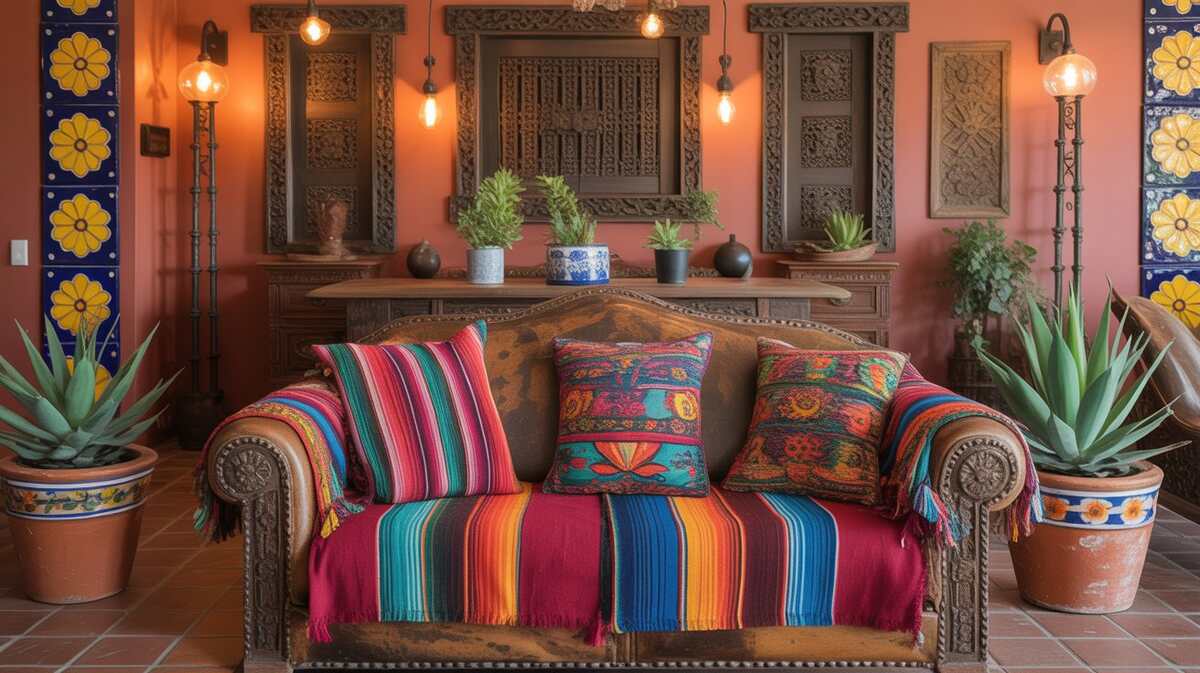
Mexican style home decor is built on three things: saturated color, handmade craft, and materials that come from the earth, clay, wood, cotton, leather and tin. Done well, it feels warm, layered and alive. Done carelessly, it slides into theme-park clichés, plastic sombreros and every bright color fighting at once.
The difference is discipline. Real Mexican interiors use a calm base of white, cream or warm plaster tones, then layer color through specific crafted pieces: Talavera tile, embroidered textiles, terracotta, carved wood. This guide gives you the color rules, the signature materials and 15 ways to apply them room by room, including how to source pieces that respect the artisans who make them.
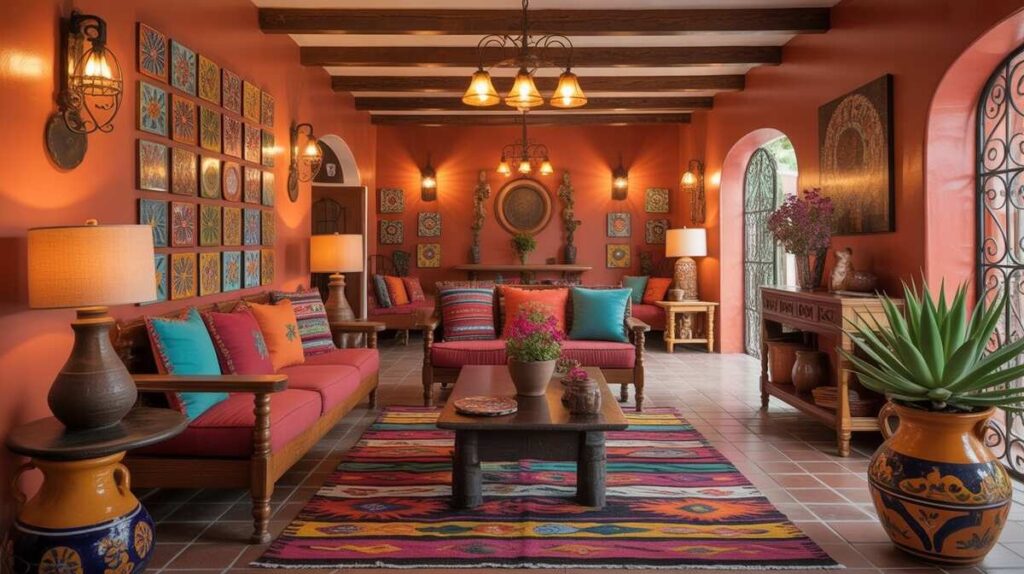
The Color Rule: 60-30-10
Mexican palettes look fearless, but the homes that wear them best follow a ratio:
- 60 percent base: warm white, cream, sand or pale terracotta on walls and large furniture. This is what keeps the room calm.
- 30 percent secondary: one earthy anchor color, usually terracotta, clay red or warm wood brown, carried by rugs, cushions and pots.
- 10 percent accent: the jewel tones, cobalt blue, marigold yellow, fuchsia or emerald, in tiles, embroidery and small pieces.
Pick two accent colors at most. Cobalt and marigold is the classic pairing; fuchsia and emerald is the bolder one. A room where every accent appears at once reads as a market stall, not a home.
The Signature Materials
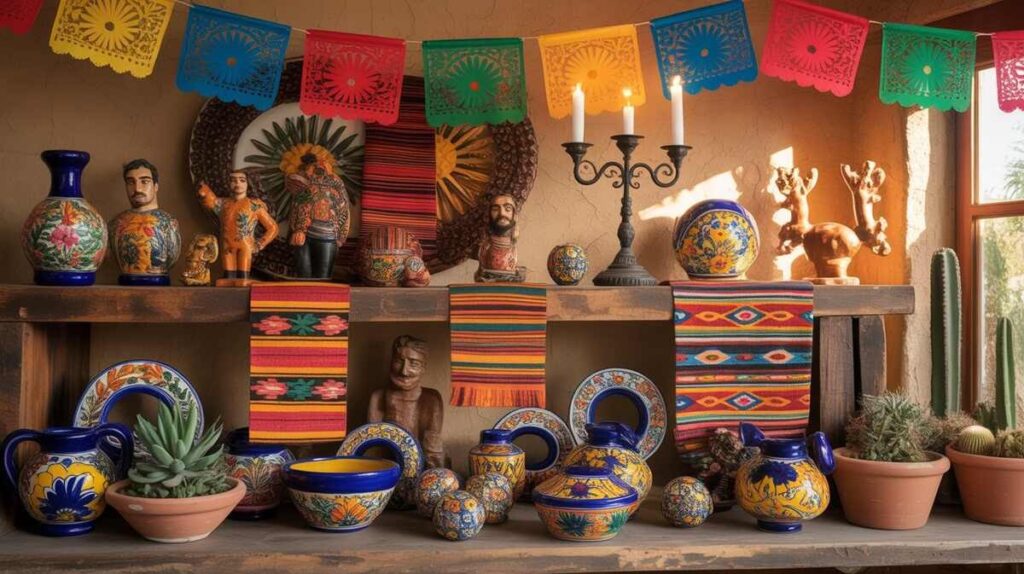
- Talavera tile: hand-painted glazed ceramic from Puebla, in cobalt, green, yellow and terracotta patterns. Genuine Talavera is slightly irregular, and that irregularity is the point.
- Terracotta and clay: unglazed pots, tiles and tableware in natural red-brown. Saltillo floor tiles are the large-format version; they need sealing roughly every two to three years in traffic areas.
- Embroidered textiles: Otomí embroidery (colorful animals and flowers on cotton), serape blankets with woven stripes, and hand-loomed table runners.
- Carved and rustic wood: mesquite and pine furniture, often with visible joinery and a warm, worn finish.
- Tin and metalwork: pierced tin lanterns and mirrors (hojalata) that throw patterned light, and wrought iron for curtain rods, candle holders and pot racks.
- Natural fibers: woven palm, jute and sisal in baskets, placemats and pendant shades, the quiet layer that stops the color from shouting.
15 Ways to Use Mexican Style, Room by Room
Entryway
- A Talavera-tiled step, house number or mirror frame at the door sets the whole house’s tone in one square metre.
- A woven bench runner in serape stripes over a plain wooden bench, with a pair of terracotta planters flanking the door.
Living Room
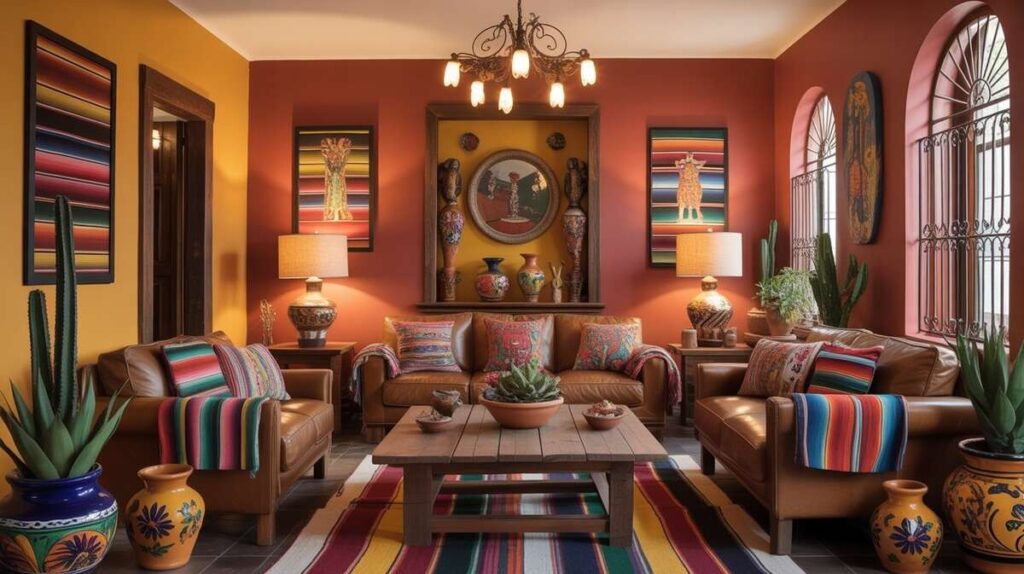
- Start with the rug: a flat-weave in terracotta and cream anchors the seating area and carries the 30 percent layer on its own.
- One embroidered statement: an Otomí throw or a pair of embroidered cushion covers on a plain sofa. Embroidery this detailed should be the only busy pattern at eye level.
- A carved wooden coffee table or side tables, with a clay bowl and a stack of books on top. Keep the styling earthy and low.
- Pierced tin lanterns or a tin star pendant: at night the patterned light does more for atmosphere than any other single piece.
Kitchen and Dining
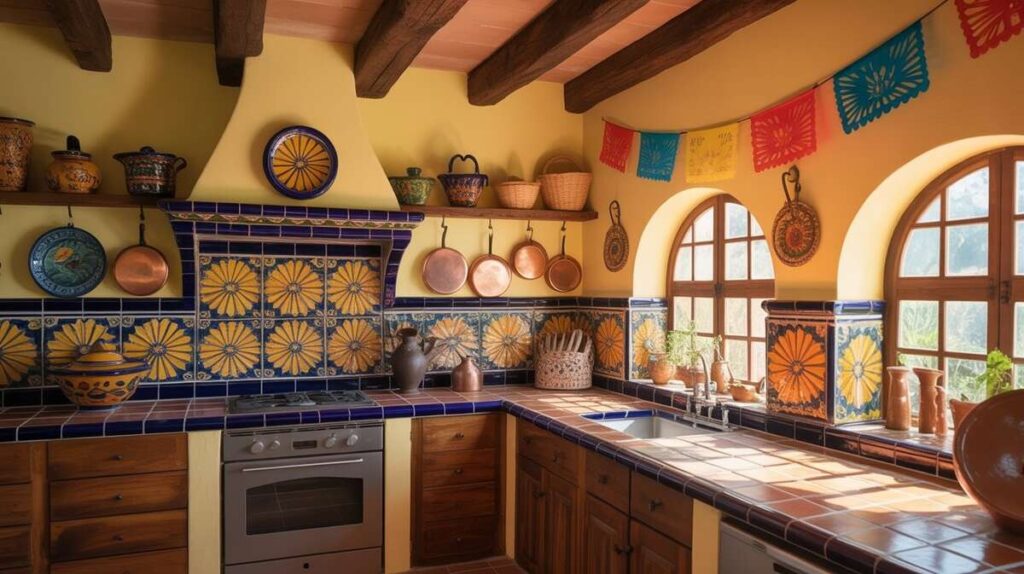
- A Talavera backsplash, or just a Talavera border row above a plain tile field if a full wall is out of budget. Seal the grout, and the tiles themselves only need a damp cloth. Warm, earthy kitchens pair naturally with the approach in our rustic kitchen decor ideas guide.
- Open shelving with hand-painted plates, clay bowls and glass in green or cobalt. Everyday dishes in these colors are decor that earns its place.
- A serape or hand-loomed runner down the dining table, with a simple clay pitcher of marigolds or sunflowers as the centerpiece. For a full place setting, add woven placemats and terracotta-toned napkins.
- Terracotta pendant lights or a wrought-iron pot rack over the island: functional pieces that carry the style without adding clutter.
Bedroom
- A woven or embroidered throw across the foot of the bed over plain white or cream bedding. The bedding stays calm; the throw carries all the color.
- A carved headboard, or two large embroidered cushions as a soft substitute. Add a small clay lamp or tin sconce on each side for symmetry.
Bathroom
- Talavera again, this time as a sink basin, a mirror frame or a shower accent strip. A painted Talavera sink turns the smallest bathroom into the room guests mention.
Patio and Porch
- Terracotta pots in threes, planted with agave, bougainvillea or herbs, plus a woven outdoor rug and string lights. Mexican courtyard style is the original indoor-outdoor living; group plants using the approach in our indoor plants decoration ideas to carry the look inside too.
- Papel picado banners for gatherings: the cut-paper flags are celebration decor, so hang them for occasions and take them down after, outdoors they last days, not months, and that impermanence is part of the tradition.
Sourcing Pieces With Respect
- Buy handmade where you can: artisan marketplaces, fair-trade shops and Mexican import stores that name their makers. Genuine Talavera from Puebla carries a denomination of origin; sellers of the real thing say so.
- Expect and welcome irregularity. Slight asymmetry in embroidery and variation in glaze are the signature of a human maker, not defects.
- Mix old and new: one vintage piece, a worn wooden door panel, an old clay pot, grounds the newer buys and keeps the room from feeling like a themed set.
- Avoid costumes-as-decor: sombreros and ponchos are clothing and cultural dress, not wall art. The style’s real pieces, tile, textile, clay and wood, are stronger anyway.
Common Mistakes
- Every accent color at once. Two accents plus earth tones is the ceiling.
- Skipping the calm base. Color on color with no white or cream anywhere is what makes rooms feel chaotic.
- Plastic and printed imitations. A printed “serape” polyester throw reads cheap next to one woven cotton piece; buy fewer, real things.
- Treating it as a fiesta theme year-round. Papel picado and celebration pieces are for occasions; the everyday style is the tile, clay and textile layer.
- Ignoring scale. Mexican pieces run chunky and generous; tiny versions of everything look lost. One large clay pot beats five small ones.
Final Thoughts
Mexican style home decor rewards restraint in structure and generosity in craft: a calm base, one earthy anchor color, two jewel accents, and pieces made by hand from clay, cotton, wood and tin. Start with a single room’s textile and tile layer, and the warmth the style is famous for follows on its own.
Frequently Asked Questions
What colors define Mexican style home decor?
A warm white or cream base, an earthy anchor of terracotta or clay red, and one or two jewel accents, most classically cobalt blue and marigold yellow. Fuchsia and emerald are the bolder alternatives. The 60-30-10 ratio between base, anchor and accent keeps the palette balanced.
What is Talavera tile, and where do I use it?
Talavera is hand-painted glazed ceramic tile from Puebla, Mexico, known for cobalt, green and yellow patterns on a white or terracotta ground. Use it on kitchen backsplashes, bathroom sinks and accent strips, stair risers, fireplace surrounds and tabletops. Genuine pieces are slightly irregular, which is part of their character.
How do I add Mexican style without redecorating everything?
Change the textile layer and one hard surface: a serape or Otomí throw and cushion covers on the sofa, terracotta planters, and a Talavera mirror frame or border row of tile. Those pieces carry the style into an existing room for a few hundred dollars or less.
Does Mexican style work in small spaces?
Yes, if the base stays light. Keep walls warm white, use one accent color family, and choose a few generous pieces rather than many small ones. A Talavera mirror and embroidered cushions transform a small living room without crowding it.
How do I care for terracotta and Saltillo tile?
Dust and mop with plain water or a pH-neutral cleaner; acids like vinegar dull and etch clay surfaces. Re-seal Saltillo floors every two to three years in busy areas. Unglazed terracotta pots will develop a natural patina outdoors, which most owners consider part of the charm.
Where can I buy authentic Mexican decor?
Look for fair-trade retailers, artisan marketplaces and importers who name the region or maker, Puebla for Talavera, Tenango for Otomí embroidery. Pieces sold with a denomination of origin or a maker’s story are far more likely to be genuine handcraft than unlabelled lookalikes.

Hi, I’m Ashir Zahid! I’m a home décor writer and creative enthusiast who loves finding simple and beautiful ways to make everyday spaces feel more comfortable and inviting. I enjoy exploring home styling ideas, practical decorating tips, and timeless trends that can work in real homes without making things feel complicated.
At DailyHomeVibe, I share easy-to-follow ideas for decorating different rooms, choosing the right colors and textures, and giving your home a fresh look with thoughtful details. My goal is to help readers find inspiration they can actually use, whether they are refreshing one small corner or giving their whole home a new feel.