
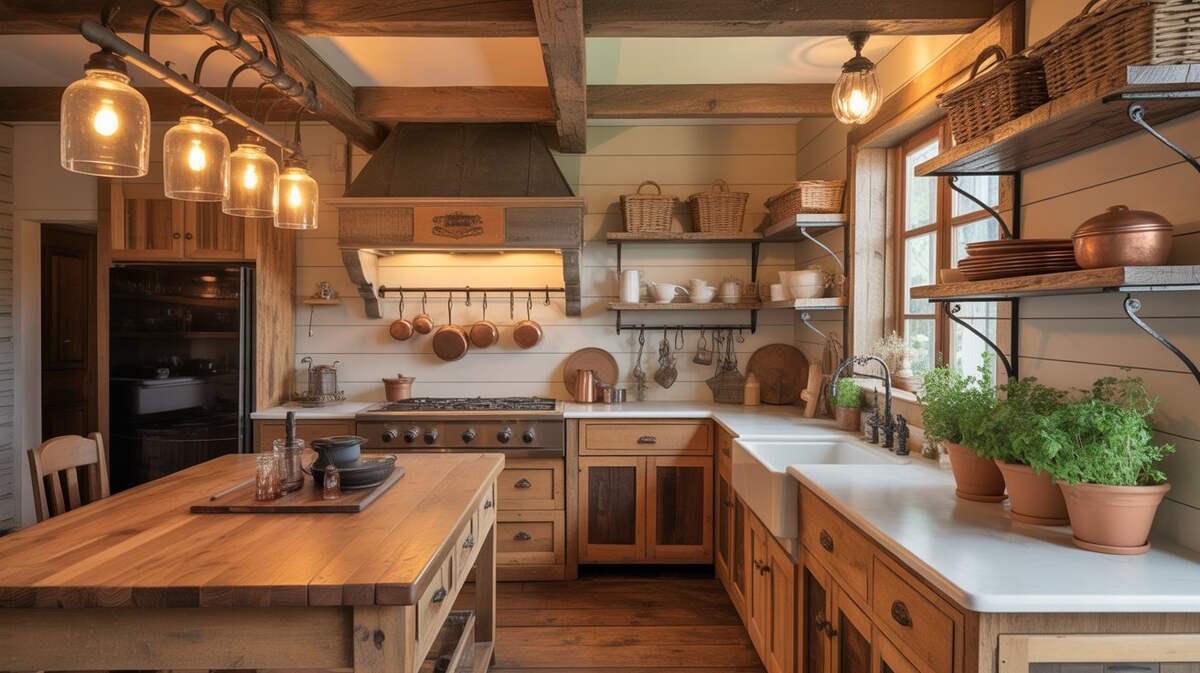
Rustic kitchen decor is not a shopping list of distressed signs and mason jars. At its best, it is a material palette: real wood, stone, linen, ceramic and aged metal, arranged with enough restraint that the room feels warm rather than themed. The kitchens people save and share are never the ones with the most rustic objects; they are the ones where every surface has breathing room and the wood tones agree with each other.
This guide walks the whole kitchen zone by zone with 12 specific ideas, the measurements and finishes that make them work, three budget levels for a full refresh, and the mistakes that push a rustic kitchen from cozy to cluttered.
The Rustic Palette in One Minute
- Wood: one main tone, carried through at least three places (shelves, boards, table or stools). Light oak and weathered pine read fresh; dark walnut reads rich; orange-toned pine reads dated, so if your wood leans orange, balance it with cool whites and greys elsewhere.
- Color: warm whites and creams on walls and cabinets, with sage, olive, clay or charcoal as the single accent family. Two accent colors maximum.
- Metal: one finish for hardware and lighting, ideally aged: matte black, oil-rubbed bronze or antique brass. Polished chrome fights the style.
- Texture: at least one woven element (baskets, a runner, seat cushions) and one living or dried plant element. Texture is what stops a neutral kitchen feeling flat.
The 12 Ideas
1. Build One Counter Vignette, Not Five
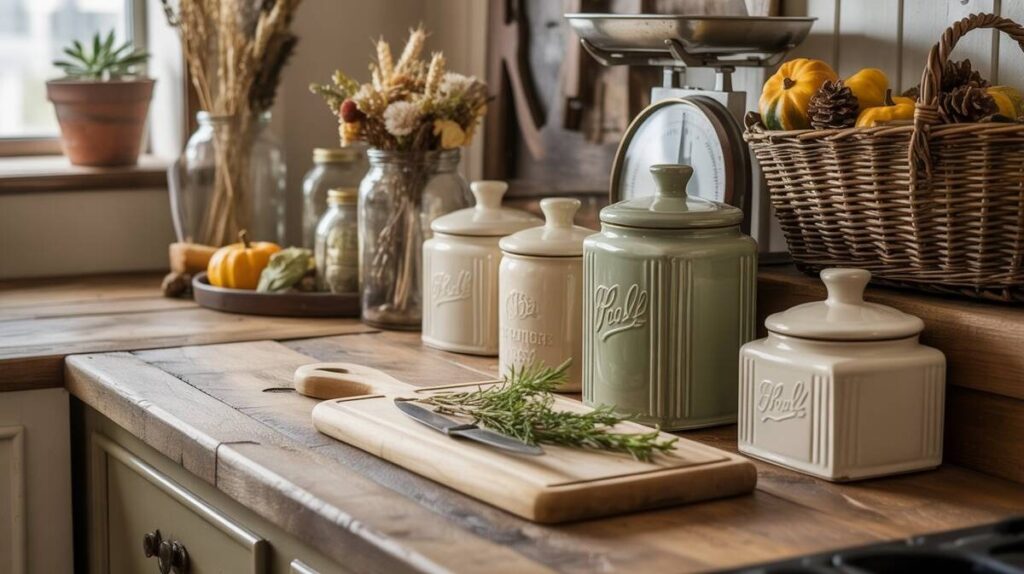
Pick a single 60 to 90 cm stretch of counter and style it as one group on a wooden tray or board: a ceramic utensil crock, a small plant or herb pot, and one beautiful everyday object (an olive oil bottle, a stack of linen towels). Everything on the tray counts as one item visually, which is why it looks calm. The rest of the counter stays clear. Five scattered mini-displays are the number one reason rustic counters look messy in photos.
2. Style Open Shelves by Formula
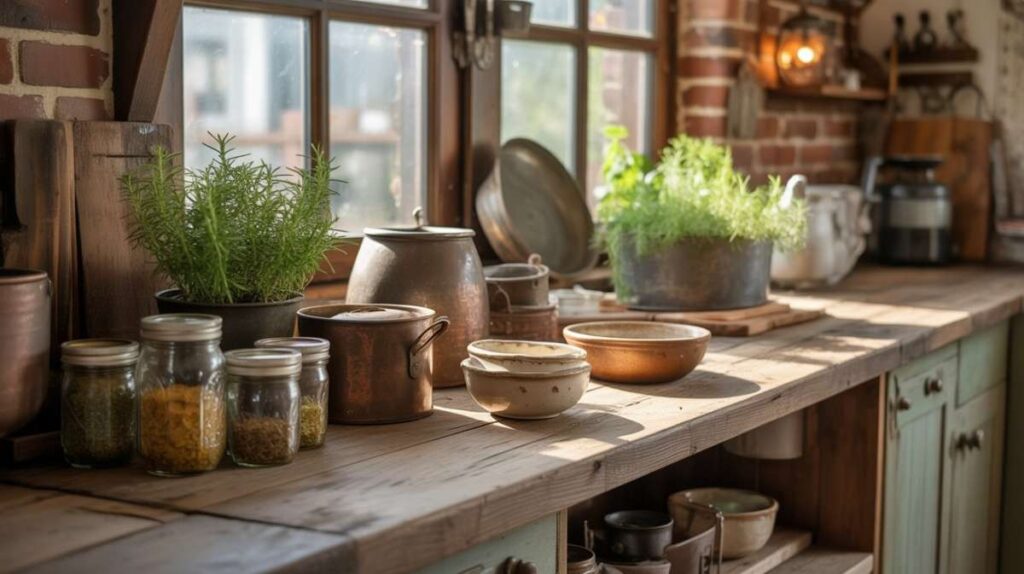
Open shelves fail when they are treated as storage that happens to be visible. Use this mix per shelf: roughly 60 percent everyday dishes in one color family, 25 percent glass or ceramic storage jars, 15 percent one decorative object (a small framed print, a plant, a stack of cookbooks). Keep shelf depth to 25 to 30 cm so items sit in one row with air behind them, group objects in odd numbers, and leave one deliberate gap per shelf. Our full guide to how to decorate kitchen shelves goes deeper on heights and spacing.
3. Swap the Cabinet Hardware
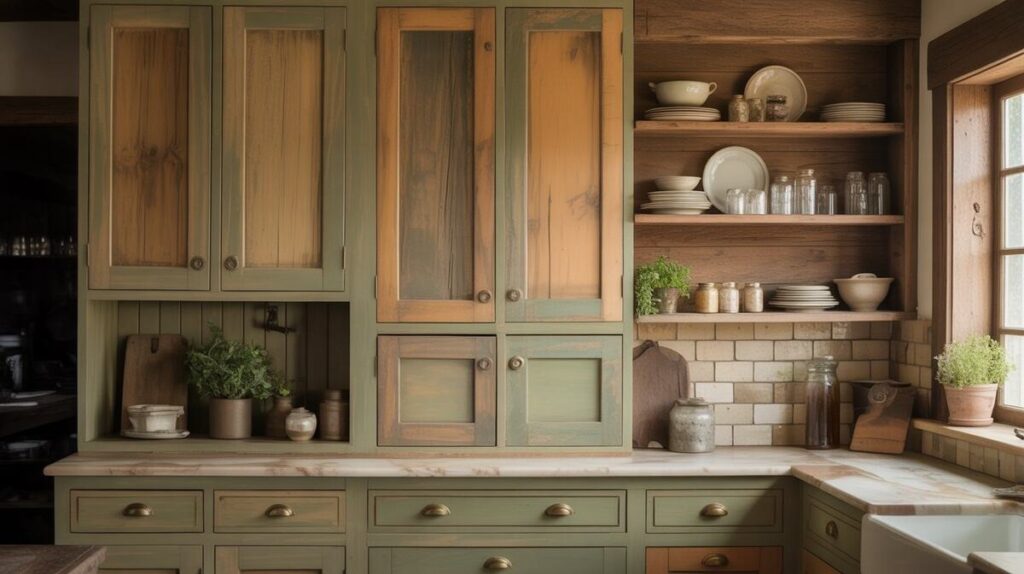
The fastest genuine upgrade in any kitchen: replace shiny modern pulls with matte black, oil-rubbed bronze or antique brass. Use pulls of 96 to 128 mm on drawers and simple knobs on doors, and match the faucet if budget allows. Keep the old hardware in a labeled bag; if you rent, this whole idea reverses in twenty minutes.
4. Use the Space Above the Cabinets
The gap above wall cabinets collects dust or collects compliments; there is no third option. Style it sparsely: two or three large pieces only, such as woven baskets, a row of matching crocks, or trailing greenery in pots. Large and few beats small and many at that height, because small objects read as clutter from floor level.
5. Give the Island a Rotating Centerpiece
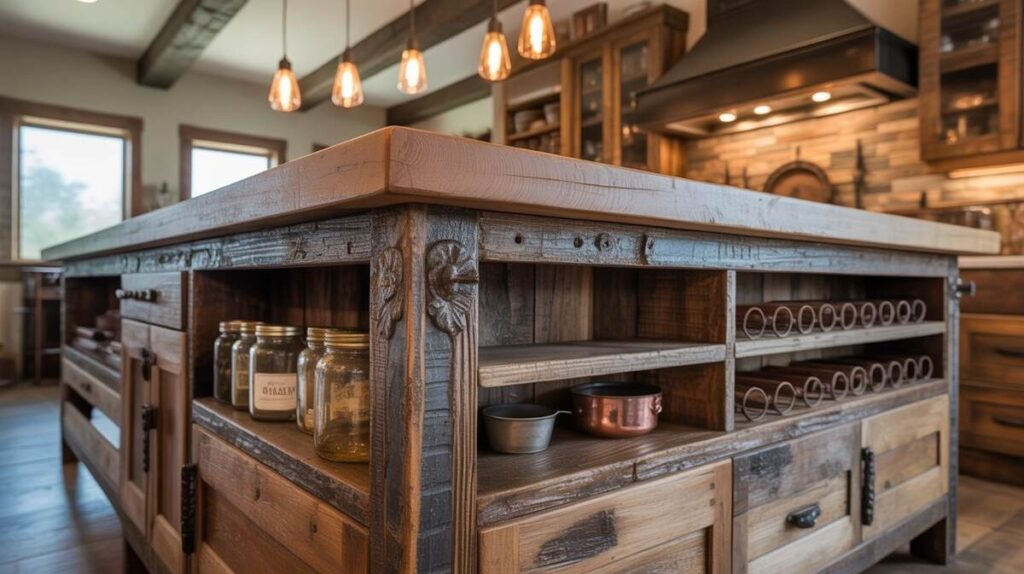
One centerpiece, changed seasonally, keeps an island feeling styled instead of parked on. A wide wooden bowl (fruit in summer, pinecones or gourds in autumn), a low woven tray with a candle group, or a galvanized pitcher of branches. Keep the centerpiece under about 35 cm tall so sightlines across the island stay open for conversation and cooking.
6. Dress the Table Like It Is Used Daily
A linen or cotton runner down the center, a simple centerpiece (wooden board, ceramic pitcher, or a low bowl), and plain ceramic or stoneware dishes outperform any formal setting for this style. Runner width around one third of the table width looks right; let it hang 15 to 20 cm over each end or stop it short of the edge, but not in between.
7. Soften the Window
Cafe curtains in linen or unbleached cotton, hung at mid-window, give privacy without stealing the light a rustic kitchen depends on. On the sill, a row of small herb pots (rosemary, thyme, basil) in matching terracotta or galvanized pots is both the decor and the cooking supply. Avoid swags, valances and anything with a ruffle; the style wants simple cloth, honestly hung.
8. Fix the Light Temperature and Fixtures
Rustic warmth is half lighting. Use bulbs at 2700K (warm white) everywhere; daylight 5000K bulbs will make the same kitchen look like an office. Pendants over an island hang 75 to 90 cm above the counter surface. Black metal or aged-brass pendants with clear or seeded glass shades suit the style; under-cabinet strip lighting at the same 2700K makes wood tones glow in the evening.
9. Add Real Textiles
A flat-weave runner in front of the sink and stove (wool-look or washable cotton, roughly 60 by 180 cm for a galley run), linen-look tea towels in the palette colors, and simple seat cushions on wooden chairs. Our guide to decorative kitchen towels shows how to fold and display them so they read as decor instead of laundry. Textiles are also the cheapest way to change the accent color with the seasons.
10. Add One Honest Wall Texture
Choose one: beadboard on an island front or backsplash zone, a limewash-look paint finish in warm white, or peel-and-stick brick or shiplap panels on a single wall. One texture, applied once, reads as architecture. Three textures read as a theme park. Renters should take the peel-and-stick or paint route and keep it to one wall.
11. Style the Sink Zone
The sink area is where people actually stand and look, so it earns five minutes of styling: a small wooden riser or board under the soap, an amber or ceramic soap bottle instead of the supermarket plastic one, a wooden-handled brush in a small crock, and a folded linen towel over the divider or on a hook. It takes a daily chore corner from utility to styled without a single impractical object.
12. Finish With Something Alive or Dried
Every rustic kitchen needs one organic shape that is not a rectangle: a potted olive or herb on the counter, eucalyptus or dried grasses in a tall crock by the stove, a hanging bundle of dried lavender near the window. This is the cheapest idea on the list and the one that makes the room feel inhabited rather than assembled.
Three Budgets for a Full Refresh
- Under $50: the counter vignette on a thrifted tray, matching tea towels, a potted herb row, and the sink-zone restyle using bottles you already own. This tier changes how the kitchen feels more than any other per dollar.
- Around $200: add the hardware swap, cafe curtains, a flat-weave runner and two baskets for above the cabinets.
- Around $500: add pendant lights, open-shelf restyle with matching dishware, and one wall texture treatment. At this tier the kitchen reads as redesigned, not just decorated.
Rustic in a Small Kitchen
Small kitchens take rustic style well if you choose the light end of the palette: pale wood, warm white, one accent color, and glass or open shelving instead of visual bulk. Keep the counter vignette to one, use the wall texture on the smallest wall only, and let textiles carry most of the color. Dark wood plus small space plus many objects is the combination to avoid.
Mistakes That Make Rustic Look Dated or Cluttered
- Word signs everywhere. One small sign can be charming; six make the kitchen a gift shop.
- Everything distressed. Mix one genuinely worn piece with clean, simple ones; uniform distressing reads as factory-made.
- Orange pine against yellow walls. Cool the walls down to warm white and let the wood be the warm element.
- Too many small objects. At rustic scale, fewer and larger almost always wins.
- Ignoring light temperature. 2700K bulbs have rescued more rustic kitchens than any decor purchase.
Final Thoughts
A cozy farmhouse kitchen is built from agreement: wood tones that match, one metal finish, one accent family, and surfaces that are styled in groups with space around them. Start with the counter vignette and the sink zone this week, and the room will already feel different; add hardware and textiles when budget allows. Rustic done with restraint does not date, because it was never chasing a trend in the first place.
Frequently Asked Questions
What colors work best for a rustic kitchen?
Warm whites and creams as the base, natural wood as the second layer, and one accent family such as sage and olive greens, clay tones or charcoal. Two accent colors at most; the calm of the style comes from repetition, not variety.
How can I make my kitchen rustic on a small budget?
Start with the free and cheap moves: one tray-based counter vignette, decant the soap into a nicer bottle, add a potted herb row and matching linen-look towels. That set, usually under $50, changes the feel of the room more than a single expensive piece would.
Can rustic decor work in a modern kitchen?
Yes, and the mix is often the best version: keep the modern layout and appliances, then layer in wood boards, woven texture, aged-metal hardware and warm 2700K lighting. The contrast between clean lines and natural materials is exactly what modern rustic style is built on.
How do I stop a rustic kitchen looking cluttered?
Style in groups on trays, keep one vignette per surface, leave deliberate gaps on shelves, and choose fewer, larger objects. If a surface holds more than one group, something has to leave. Clear counters are the style’s foundation, not its enemy.
What wood tones should I avoid?
Very orange pine and dark red cherry tones date fastest and fight with most palettes. If you already have them, balance with warm white walls, cool textiles and matte black accents rather than ripping anything out.

Hi, I’m Ashir Zahid! I’m a home décor writer and creative enthusiast who loves finding simple and beautiful ways to make everyday spaces feel more comfortable and inviting. I enjoy exploring home styling ideas, practical decorating tips, and timeless trends that can work in real homes without making things feel complicated.
At DailyHomeVibe, I share easy-to-follow ideas for decorating different rooms, choosing the right colors and textures, and giving your home a fresh look with thoughtful details. My goal is to help readers find inspiration they can actually use, whether they are refreshing one small corner or giving their whole home a new feel.