
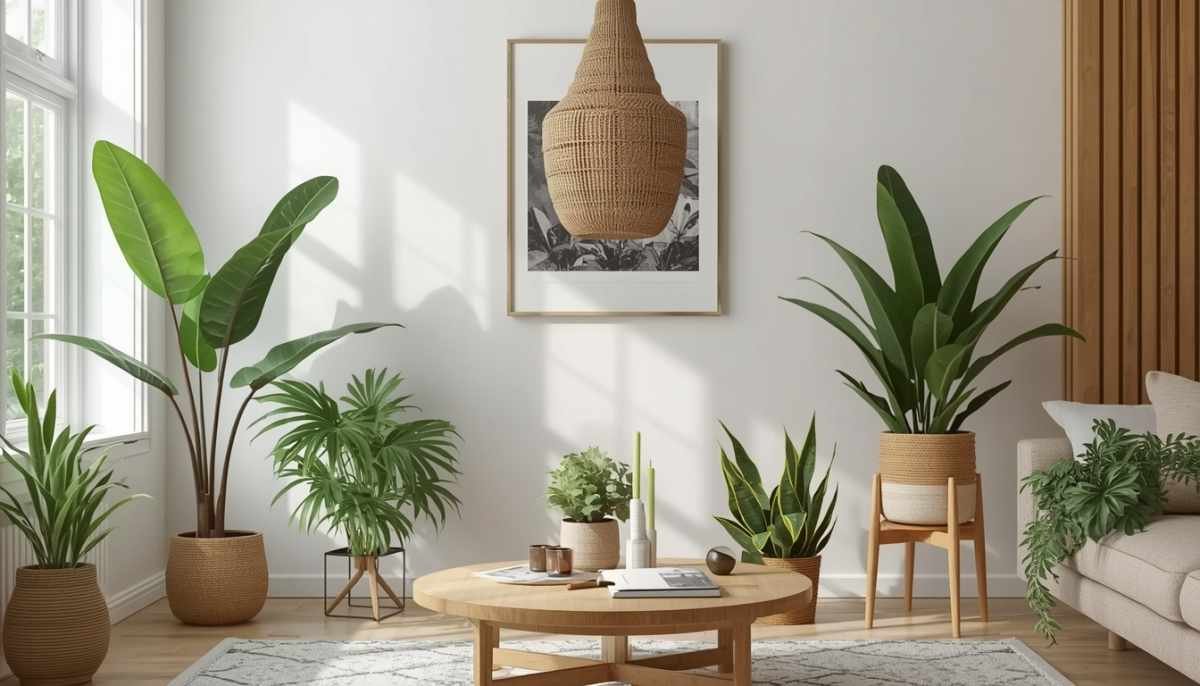
You don’t need a green thumb or a big budget to make a home feel more alive. A couple of well-placed plants can do more for a room than another cushion or wall frame ever will, and most of it comes down to placement rather than money.
This guide walks through some genuinely simple indoor plants decoration ideas at home, the kind you can actually pull off this weekend. No design degree required, just a bit of thought about where things go.
Filling the Awkward Corners First

Every home has that one corner nobody quite knows what to do with, too small for furniture, too empty to ignore. A tall, leafy plant fits right into that gap and instantly makes the room feel finished, without needing another trip to the furniture store.
The same trick works for a bare stretch of wall near a window. A hanging plant fills that space vertically instead of taking up floor room, which is especially handy in smaller homes where every square foot counts.
Playing with Height for a Layered Look

One of the easiest ways to make a plant display look styled rather than random is mixing heights. A tall plant on the floor, a medium one on a side table, and a small trailing one on a shelf creates a bit of visual rhythm that a single flat row of pots never quite achieves.
Even just three plants at different heights can make a small space feel layered and intentional. It’s a small adjustment, but it’s often the difference between a corner that looks decorated and one that looks like plants were simply placed wherever there was room.
And Also Read this Artcle : Best Indoor Plants for a Low Light Bedroom in 2026
Grouping Plants Instead of Scattering Them

A single plant on every surface in a room can end up looking scattered rather than styled, even if each one is lovely on its own. Grouping two or three together, even different types and pot styles, usually reads as more intentional than spreading them out one by one.
Clustering a few on a tray or a shelf turns them into a little vignette instead of a handful of separate afterthoughts. It also makes watering and care easier, since everything that needs similar light and attention lives in one spot.
Turning the Bathroom into a Mini Retreat

Bathrooms are often the most overlooked room when it comes to plants, but the extra humidity in there actually works in your favor. Ferns, pothos, and calathea all tend to thrive perched on a shelf or windowsill in a bathroom, doing better there than they might in a drier living room.
It’s a small addition, but it changes the feel of the space more than people expect. A plant or two by the tub or on the counter softens all the hard surfaces and makes the room feel a little less clinical and a little more like a spa.
Letting a Plant Hide the Ugly Stuff

Every room has something you’d rather not look at, a plug socket, a router, a plain radiator cover, or an unused corner behind a door. A well-placed plant can quietly cover all of that without any actual redecorating involved.
It solves two problems at once, giving you somewhere for a plant to live while also softening the parts of a room that never quite look finished. A medium-sized pot in front of a router or a taller plant beside an outlet does more work than it seems like it should.
Building a Living Wall or Shelf Display

For anyone wanting a bigger visual statement, mounting a few plants on open shelving or a wall creates something closer to living art. It doesn’t need to be symmetrical or matched, a mix of trailing and upright varieties usually looks more natural than a perfectly even arrangement.
This works particularly well in a reading nook or a home office, where a wall of greenery adds warmth without taking up any floor space at all. Just make sure any hooks or brackets used can actually hold the weight once the pots are watered and heavier than they look.
Styling the Dining Table Without Fresh Flowers

A small houseplant makes a surprisingly good substitute for a floral centerpiece, especially for a casual dinner or a birthday at home. It lasts far longer than cut flowers and gives the table a bit of texture without needing to be replaced every few days.
Keeping the plant low enough that people can still see and talk across the table matters more than the plant itself. A trailing variety in a low bowl or a small potted herb works nicely here, and either can move straight to a windowsill once the evening’s over.
Mixing Real and Faux Plants Without Anyone Noticing

Not every spot in a home gets enough light for a real plant to survive, and that’s where a well-chosen faux one earns its place. Mixing a realistic faux plant next to a live one, especially in a darker corner, fills the gap without anyone clocking the difference from across the room.
This is also a practical fix for anyone who’s killed one too many real plants and wants the look without the guilt. A textured faux fern or fig tree paired with one or two real, low-maintenance plants nearby gives a room the same lived-in, green feeling either way.
Choosing Pots That Match Your Home’s Personality

The plant itself only does half the work, the pot does the rest. A woven basket suits a relaxed, earthy space, a plain ceramic pot leans modern and understated, and a brightly painted one can bring in a pop of color without needing to repaint a wall.
Sticking to one or two pot styles throughout a room, rather than a different one for every plant, tends to look more pulled together. It’s a small detail, but it’s often what separates a room that feels styled from one that feels like plants were bought at different times with no plan in mind.
Starting Small if You’re New to This

If plant decor feels intimidating, there’s no need to fill every room at once. Pothos, snake plant, and ZZ plant are about as close to indestructible as houseplants get, and they forgive a missed watering or two without any drama.
Getting comfortable with one or two of these first is a much better starting point than buying ten plants in a single weekend. Once you see how your space, your light, and your schedule actually work together, adding more becomes a lot less guesswork and a lot more confidence.
Final Thoughts
Good indoor plant decor really comes down to a handful of small habits: mixing heights, grouping instead of scattering, and picking spots in the home that genuinely need a bit of life. None of it requires a big budget or a natural green thumb, just a bit of thought about where things go and which plants can actually handle living there.
Start with whichever idea feels easiest to try this week, one corner, one shelf, one bathroom windowsill. The rest tends to fall into place once you see how much difference even a couple of plants can make.
FAQs
Do I need bright light for plants to work as decor?
Not always. Plenty of decorative plants, like pothos and snake plant, do perfectly well in medium or low light spots around the home.
How many plants is too many for one room?
There’s no fixed number here. If a room starts to feel cluttered rather than cozy, that’s usually the sign to stop adding more for a while.
Can I mix real and fake plants in the same space?
Yes, and plenty of people do this, especially in low-light corners where real plants would struggle to survive. Nobody notices the difference unless they get up close.

Hi, I’m Ashir Zahid! I’m a home décor writer and creative enthusiast who loves finding simple and beautiful ways to make everyday spaces feel more comfortable and inviting. I enjoy exploring home styling ideas, practical decorating tips, and timeless trends that can work in real homes without making things feel complicated.
At DailyHomeVibe, I share easy-to-follow ideas for decorating different rooms, choosing the right colors and textures, and giving your home a fresh look with thoughtful details. My goal is to help readers find inspiration they can actually use, whether they are refreshing one small corner or giving their whole home a new feel.