
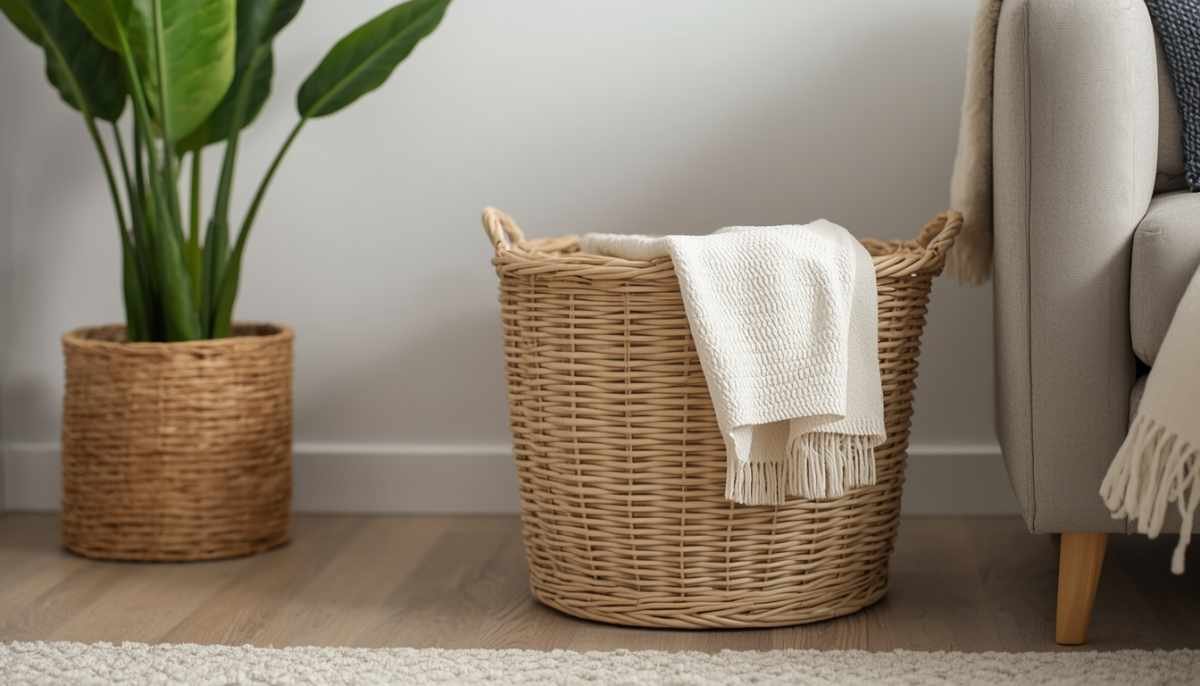
Wicker baskets have a way of making any room feel warmer: folded towels in the bathroom, toys in the living room, herbs on the kitchen counter. They’re one of those small details that quietly pull a space together.
But that same tight, natural weave that gives wicker its charm is also what makes it a magnet for dust and hidden grime. Dirt doesn’t just sit on top as it does on smooth surfaces it works its way into the small gaps between the fibers, settling somewhere a quick wipe can’t reach.
That’s why a basket can look fine from a distance but feel gritty up close, and why the buildup can eventually lead to a musty smell, especially in humid spots like bathrooms or laundry rooms.
The good news is that cleaning wicker isn’t complicated once you understand what you’re working with. Whether it’s true wicker, rattan, or seagrass, the right method depends more on the material and the type of dirt than on any single trick.
This guide walks through exactly how to clean, deep-clean, and dry a wicker basket properly without soaking it, warping its shape, or damaging the finish.
Know Your Material First Wicker vs Rattan vs Seagrass
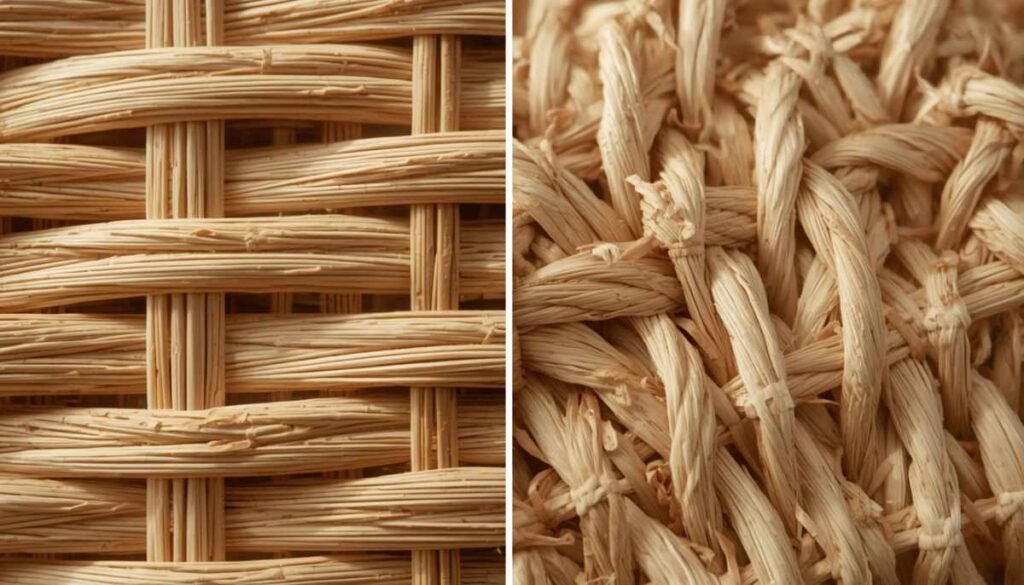
Before you grab a cloth and soap, it helps to know exactly what your basket is made of, because not every wicker basket is cleaned the same way.
Wicker actually refers to the weaving technique, not a specific material it just means something is woven, which can include rattan, cane, or even synthetic fibers.
Rattan is a type of vine most true wicker baskets are made from. It’s sturdy and holds up reasonably well to light moisture, but too much water can still cause it to weaken, discolor, or warp over time.
Seagrass is softer and more absorbent than rattan, which means it holds onto moisture, odors, and stains more easily. It generally needs a gentler, drier cleaning approach, since it doesn’t bounce back from soaking the way rattan can.
If you’re not sure which one you have, run your fingers along the weave. Rattan feels smooth and slightly glossy, while seagrass feels more matte and rope-like, almost like rope you’d find on a boat.
Painted or lacquered wicker is its own category too. That finish acts like a protective seal, but it also means water and harsh cleaners can strip or dull the color if you’re not careful something to keep in mind as you move through the steps below.
| Material | Water Tolerance | Best Cleaning Method | Drying Time | Common Issue |
| Rattan | Medium | Damp cloth + light rinse | 4–6 hours | Warps or weakens if soaked |
| Seagrass | Low | Dry brush + minimal moisture only | 6–12 hours | Absorbs moisture/odor easily |
| Painted / Lacquered Wicker | Low | Very diluted solution, test first | 6–8 hours | Finish strips, dulls, or discolors |
What You’ll Need
You don’t need any specialty products to clean a wicker basket properly. Most of what works best is probably already in your kitchen or cleaning cabinet:
- A soft-bristle brush or an old, clean toothbrush
- A vacuum with a brush attachment
- A microfiber cloth (two, ideally one for washing, one for rinsing)
- Mild dish soap
- White vinegar or baking soda, for tougher stains and smells
- A spray bottle
- A dry towel
Avoid stiff scrub brushes, steel wool, or anything abrasive. Wicker fibers are more delicate than they look, and scrubbing hard enough to feel productive is usually hard enough to fray or splinter the weave.
Step-by-Step: How to Clean a Wicker Basket
Step 1 Remove Dust and Debris
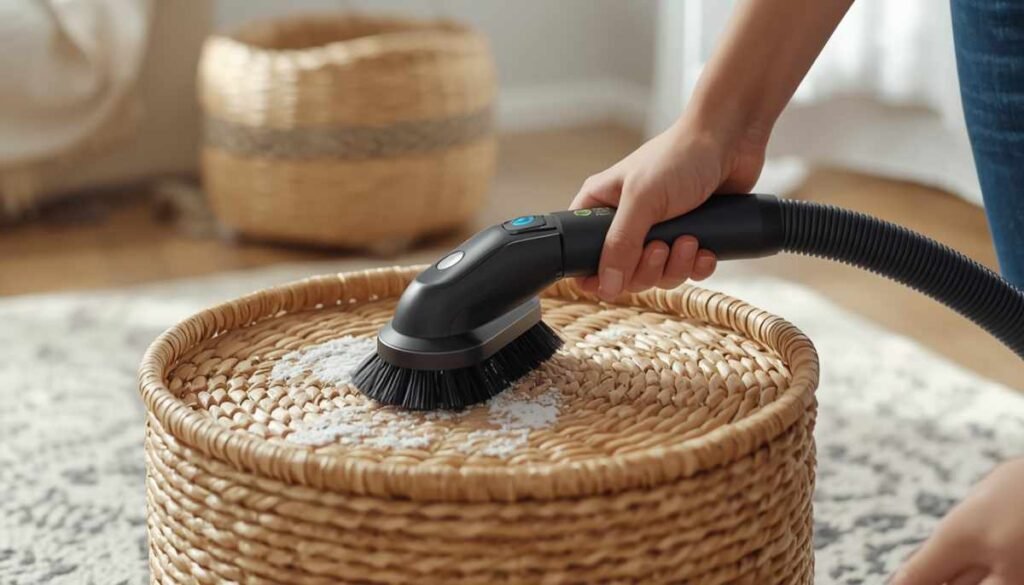
Start dry, before any water touches the basket. Take the basket outside if you can, turn it upside down, and give it a few good shakes to knock loose anything trapped inside the weave crumbs, pet hair, dust bunnies, all of it.
Next, go over the entire basket with a vacuum brush attachment on low suction, working in the direction of the weave rather than across it. Working against the grain tends to loosen fibers instead of just lifting dust off them.
For tight corners or decorative weave patterns the vacuum can’t reach, a soft-bristle brush or an old toothbrush does the job well. This step alone handles most of the light, everyday dust that builds up on baskets used for general storage.
Dust baskets weekly with a dry cloth or soft brush, especially if they’re in high-traffic rooms like the kitchen or entryway. This alone prevents most of the buildup that eventually requires soap and water. If your baskets are part of a bigger storage setup, pairing this habit with a proper closet organization system keeps the whole space looking intentional rather than cluttered.
Step 2 Light Cleaning for Everyday Dirt
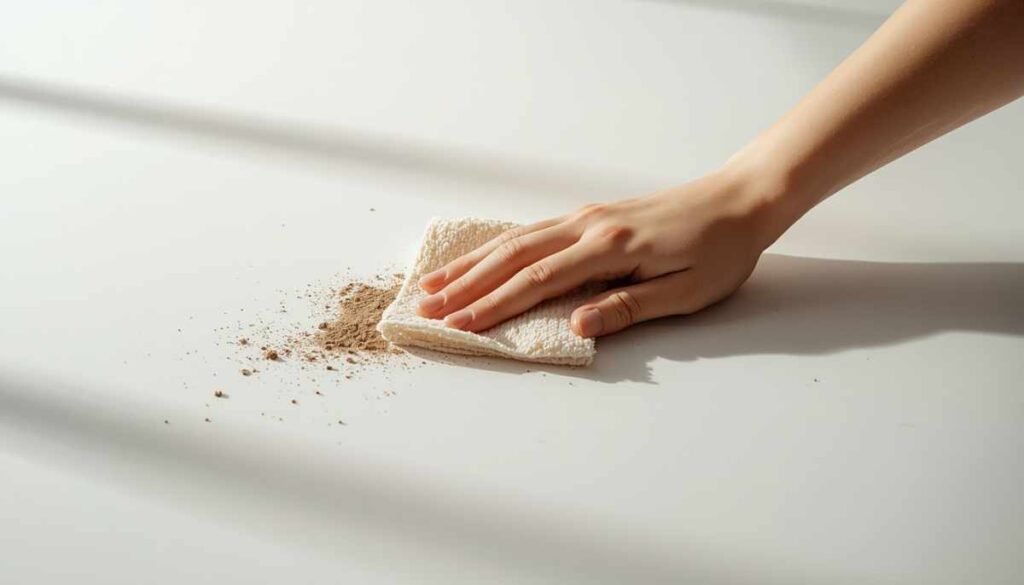
If the basket just looks a little dull or has light surface dirt, you likely don’t need a deep clean at all.
Mix a small amount of mild dish soap with warm water about a teaspoon of soap per quart of water is enough. Dip a microfiber cloth into the solution and wring it out until it’s just damp, not wet.
Wipe down the basket section by section, following the direction of the weave. Rinse the cloth often so you’re not just moving dirt around. Once you’ve gone over the whole basket, switch to a second cloth dampened with plain water to rinse away any soap residue, since leftover soap can attract dirt faster once it dries.
Step 3: Deep Cleaning for Stubborn Stains
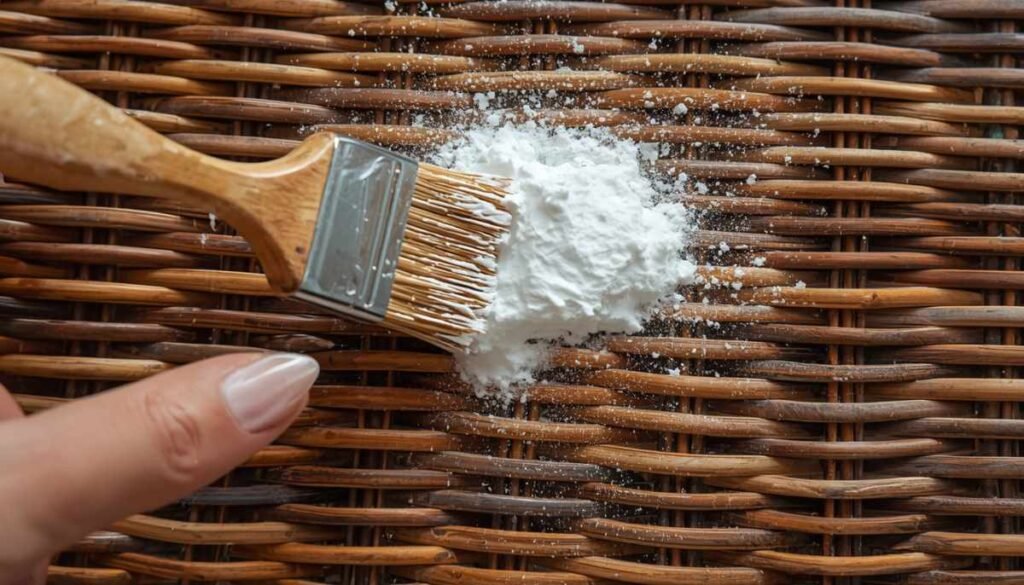
For stains that don’t lift with soap and water old water rings, food stains, or general grime that’s built up over months a baking soda paste works well without being harsh on the fibers.
Mix baking soda with just enough water to form a thick paste, and apply it directly to the stained area with a soft brush or toothbrush, working it gently into the weave. Let it sit for 10 to 15 minutes before wiping it away with a damp cloth.
For grease-based stains, a mix of one part white vinegar to three parts warm water can help cut through residue. Spray it lightly onto the affected area, let it sit for a minute or two, then wipe clean. Always test either method on a small, hidden section of the basket first, especially if it’s painted or has any kind of finish.
Step 4 Rinse the Right Way (Without Soaking)

This is the step where most wicker baskets get accidentally damaged. It’s tempting to just dunk the whole basket in a sink or tub, but submerging wicker in water for any length of time causes the fibers to absorb far more moisture than they can safely handle, which leads to warping, loosening, and eventually cracking as it dries.
Instead, rinse using a barely damp cloth, wiping the surface clean rather than soaking it. If the basket is small enough and genuinely needs a more thorough rinse, a quick, light hose-down outdoors works better than sitting it in standing water, as long as you dry it immediately afterward.
Step 5: Dry Completely

Drying is just as important as cleaning, and it’s the step people tend to rush. A basket that isn’t fully dry before it’s used or stored again is exactly how mold and musty smells get started.
Set the basket in a well-ventilated area with good airflow, ideally outdoors in the shade rather than direct sunlight, since prolonged sun exposure can cause wicker to become brittle and fade over time. If you’re drying it indoors, a spot near an open window or a fan works well.
Depending on humidity, full drying can take anywhere from a few hours to a full day. Don’t rush this part using or storing a basket while it’s even slightly damp is one of the most common reasons cleaned baskets end up smelling musty again within a week or two.
Removing Mold, Mildew, and Musty Smells

If your basket already has a musty smell or visible mold spots, the fix depends on how far it’s progressed.
For mild mustiness with no visible mold, a baking soda treatment works well. Sprinkle baking soda generously over the basket, let it sit for several hours or overnight, then vacuum or brush it off. Baking soda absorbs odor rather than masking it, which is why it tends to outperform sprays or scented products for this particular problem.
For visible mold or mildew, mix equal parts water and white vinegar in a spray bottle. Spray the affected areas, let it sit for 10 minutes, then scrub gently with a soft brush and wipe clean with a damp cloth. Vinegar’s acidity helps break down mold without the harshness of bleach, which can discolor or weaken natural fibers.
Afterward, dry the basket thoroughly and completely before storing it, ideally in direct airflow for at least several hours. Mold typically returns because the basket was put away while still slightly damp, not because the first cleaning failed.
Common Mistakes to Avoid
A few habits are responsible for most wicker basket damage, and they’re worth calling out directly:
Soaking the basket in water. Even a short soak lets fibers absorb more moisture than they can safely release, which leads to warping over time.
Using bleach or harsh chemical cleaners. These can discolor natural fibers and strip painted or lacquered finishes.
Scrubbing with stiff brushes or steel wool. This frays the weave and creates rough spots that catch dirt more easily going forward.
Drying in direct sunlight. This causes fading and makes the fibers brittle and more prone to cracking.
Storing a basket before it’s fully dry. This is the single biggest cause of musty smells and mold returning after cleaning.
Treating painted or lacquered wicker like natural wicker. Finished surfaces need gentler,
more diluted cleaning solutions to avoid stripping the coating.
| Mistake | Why It’s a Problem | What to Do Instead |
| Soaking the basket in water | Fibers absorb too much moisture, leading to warping over time | Use a barely damp cloth instead of full submersion |
| Using bleach or harsh chemical cleaners | Discolors natural fibers and strips painted/lacquered finishes | Stick to mild dish soap, vinegar, or baking soda |
| Scrubbing with stiff brushes or steel wool | Frays the weave and creates rough spots that trap more dirt | Use a soft-bristle brush or old toothbrush |
| Drying in direct sunlight | Causes fading and makes fibers brittle, prone to cracking | Dry in shade with good airflow |
| Storing before fully dry | The single biggest cause of musty smells and mold returning | Wait until completely dry, even if it takes a full day |
| Treating painted wicker like natural wicker | Finished surfaces need gentler treatment to avoid stripping the coating | Use a more diluted solution and test on a hidden spot first |
How to Keep Wicker Baskets Lasting Longer
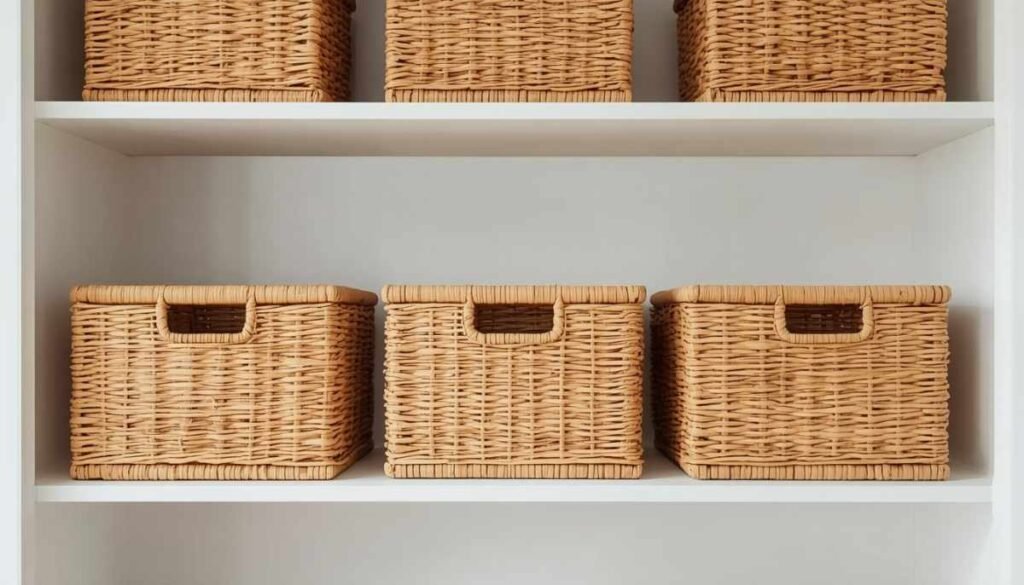
A little regular maintenance goes a long way toward avoiding deep cleans altogether.
Dust baskets weekly with a dry cloth or soft brush, especially if they’re in high-traffic rooms like the kitchen or entryway. This alone prevents most of the buildup that eventually requires soap and water.
Keep baskets out of consistently damp spaces, like directly against a bathroom wall or in a humid basement, since prolonged moisture exposure is what breaks wicker down fastest over time.
If you’re using a basket for laundry or produce storage, a fabric liner protects the interior weave from direct contact with damp items and makes future cleaning much easier.
Finally, address stains and spots as soon as you notice them rather than waiting. Fresh marks lift with a quick wipe, while set-in stains usually need the deeper baking soda or vinegar treatment described above.
FAQ
Can You Wash Wicker Baskets With Water?
Yes, but only with a damp cloth or light rinse never by soaking or submerging the basket, since prolonged water exposure can cause warping and weaken the fibers.
How Do You Get Mold Off a Wicker Basket?
A vinegar-and-water solution applied with a soft brush works well for visible mold. Follow up with thorough, complete drying to prevent it from returning.
Can You Clean Painted Wicker Baskets the Same Way?
Mostly, yes, but use a more diluted cleaning solution. Avoid vinegar or baking soda on painted surfaces unless tested first, as stronger treatments can dull or strip the finish.
How Often Should You Clean Wicker Baskets?
A quick dusting weekly is enough for most baskets. A deeper clean every one to two months helps keep them fresh and prevents dirt buildup.
Disclaimer
This guide reflects general cleaning methods for wicker, rattan, and seagrass baskets based on common household use, and is not a substitute for manufacturer-specific care instructions. Always check any care label or product guide that came with your basket before applying a new cleaning method.
Editor Note
Reviewed for accuracy against common wicker and rattan care practices as of 2026. Steps were checked against both natural and painted or finished wicker types.
Author Note
Written by Liam Alexander, dailyhomevibe.com’s home organization and decor care writer, drawing on recurring cleaning patterns and cross-checked against community home-care discussions.
Article Summary
A dirty or musty-smelling wicker basket is almost always fixable with dusting, light soap-and-water cleaning, and proper drying it rarely means the basket needs to be replaced. Deep-set stains or mold usually respond well to a baking soda or vinegar treatment. If mustiness returns even after cleaning, the basket likely needs longer airflow time before storage, since trapped moisture is the most common cause of recurring odor.

Hi, I’m Ashir Zahid! I’m a home décor writer and creative enthusiast who loves finding simple and beautiful ways to make everyday spaces feel more comfortable and inviting. I enjoy exploring home styling ideas, practical decorating tips, and timeless trends that can work in real homes without making things feel complicated.
At DailyHomeVibe, I share easy-to-follow ideas for decorating different rooms, choosing the right colors and textures, and giving your home a fresh look with thoughtful details. My goal is to help readers find inspiration they can actually use, whether they are refreshing one small corner or giving their whole home a new feel.