
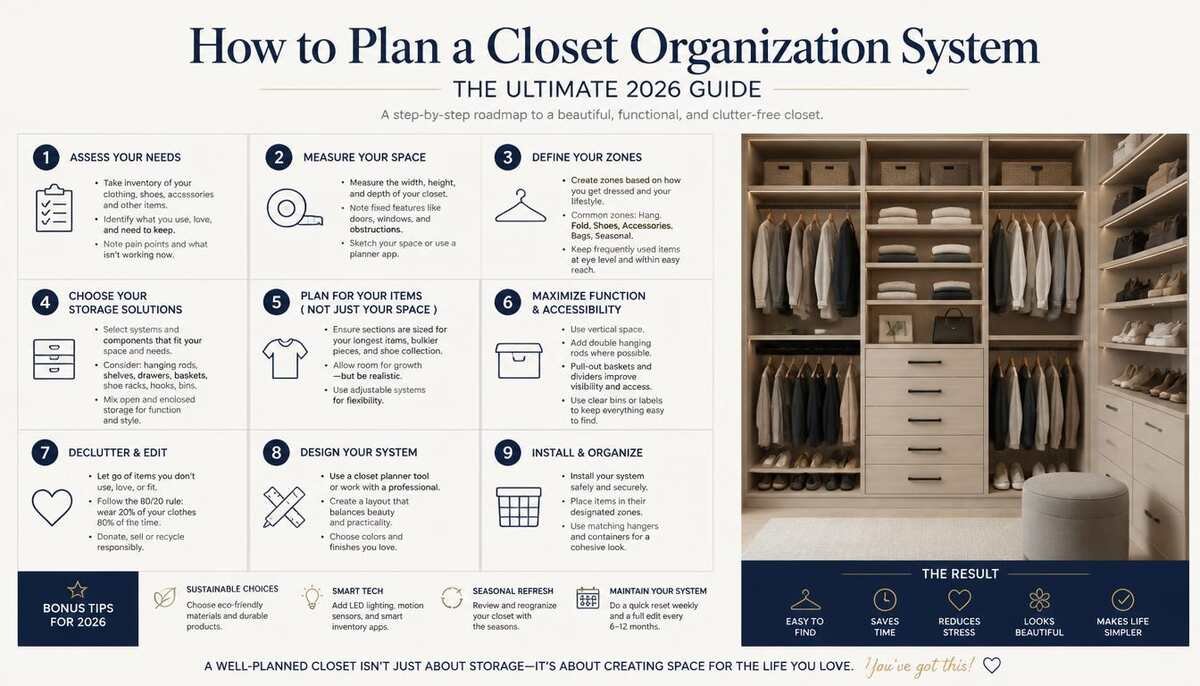
A messy closet can make getting dressed feel way harder than it should. You know that moment when you’re looking for one jacket or a pair of shoes, but somehow everything seems to be in the way? That’s where a good closet organization system can make a huge difference.
The good news is that you don’t need an expensive custom closet or dozens of fancy storage boxes. You just need a system that fits your space, your wardrobe, and the way you actually use your closet. Let’s look at how you can plan one that stays organized for the long run..
Think About How You Actually Use the Space

Look at what you reach for daily versus what you use only occasionally. Everyday items should sit at eye level or within easy reach, while seasonal or rarely-used pieces can go higher up or in bins on the floor.
Vary your hanging heights based on garment length dresses and long coats need more vertical room, while folded-over shirts and pants need far less. Planning around your actual habits, not a generic layout, is what makes a system stick long-term.
Start With Measurements, Not Products

Before buying a single bin or rod, measure your closet’s width, depth, and height from floor to ceiling. This is the step most people skip, and it’s why so many store-bought organizers end up not fitting right.
Sketch the space on paper and note the opening size too. Having real numbers in front of you makes every decision after these shelves, rods, drawers much easier to get right the first time.
Sort Before You Organize

Take everything out of the closet and sort it into keep, donate, and toss piles. Trying to build a system around clutter you haven’t dealt with yet just means organizing the mess instead of solving it.
Once you know what’s actually staying, group similar items together tops, bottoms, shoes, accessories. This tells you how much hanging space you need versus shelving or drawers, which shapes the whole layout.
Choose the Right Storage Components

Closet systems generally combine a few basics: hanging rods, shelves, drawers, and bins. Wire shelving is affordable and allows airflow, while wood or melamine systems look more finished and support more weight.
Decide if you want double hanging rods to separate shirts from pants and skirts, and add hooks or small shelves for accessories like scarves, bags, or jewelry. Mixing components rather than relying on one type usually makes better use of the space.
Plan for Shoes and Accessories Separately

Shoes and small accessories are often the last thing people plan for, and it shows they end up piled on the floor or crammed onto a random shelf. Dedicate a specific zone for shoes, whether that’s angled shelving, hanging pockets, or a simple shelf with 6 to 7 inches of vertical space between rows.
For jewelry, ties, belts, and scarves, small hooks or a shallow drawer work better than tossing them onto a shelf with everything else. Giving these items their own spot from the start prevents them from spreading into areas meant for clothes.
Decide Between DIY and a Pre-Built System

A pre-built wire or modular closet system is the faster route it’s affordable, easy to install, and works well for standard closet sizes. If your closet has an unusual shape or you want more control over the layout, a custom-built wood system using French cleats or fixed shelving gives you more flexibility to design around your space.
Neither option is inherently better; it comes down to your budget, timeline, and how particular you are about the exact layout. A simple wire system solves the basic problem for most closets, while a custom build is worth it for oddly shaped or heavily used spaces.
Leave Room to Grow

It’s tempting to fill every inch of the closet based on what you own today, but wardrobes change. Leave a bit of flexible space, an empty shelf, a spare section of rod so new purchases or seasonal swaps don’t immediately throw the system off balance.
Modular components that can be rearranged later are especially useful here, since they let you adjust the layout without redoing the whole closet. A system with a little breathing room lasts far longer than one built to capacity from day one.
Keep the System Working Long-Term

A closet system only stays organized if you stick to it. Keep items in their designated spots rather than shoving things wherever they fit when you’re in a rush.
Build in a regular habit of putting laundry away as soon as it’s done, and do a quick seasonal check to remove anything that’s crept out of place. A little consistency is what keeps a well-planned closet from sliding back into clutter.
Common Mistakes to Avoid

Skipping the measuring step is the most common mistake; it leads to shelves that don’t fit or wasted vertical space. Overcrowding the closet with too much storage in too little space is a close second, since it makes the closet harder to use, not easier.
Another frequent misstep is organizing without sorting first, which just results in a tidier version of the same clutter. Taking the time to declutter before installing anything saves you from redoing the whole system a few months later.
Frequently Asked Questions
How long does it take to set up a closet organization system?
For a standard closet, you can usually measure, sort, plan, and install a basic system over a weekend. Larger or custom closets may take longer.
Do I need a professional to design my closet?
Not always. If your closet is simple, you can easily plan and install it yourself. For larger or unusual spaces, a professional can make things easier.
What should I put on the top shelf?
Keep things you rarely use up there, such as seasonal clothes, luggage, extra bedding, or storage boxes. This keeps everyday items within easy reach.
How much hanging space do I need?
It depends on your wardrobe. Group your hanging clothes first, then estimate the rod space you need. Leaving a little extra room is always a good idea.

Hi, I’m Ashir Zahid! I’m a home décor writer and creative enthusiast who loves finding simple and beautiful ways to make everyday spaces feel more comfortable and inviting. I enjoy exploring home styling ideas, practical decorating tips, and timeless trends that can work in real homes without making things feel complicated.
At DailyHomeVibe, I share easy-to-follow ideas for decorating different rooms, choosing the right colors and textures, and giving your home a fresh look with thoughtful details. My goal is to help readers find inspiration they can actually use, whether they are refreshing one small corner or giving their whole home a new feel.