
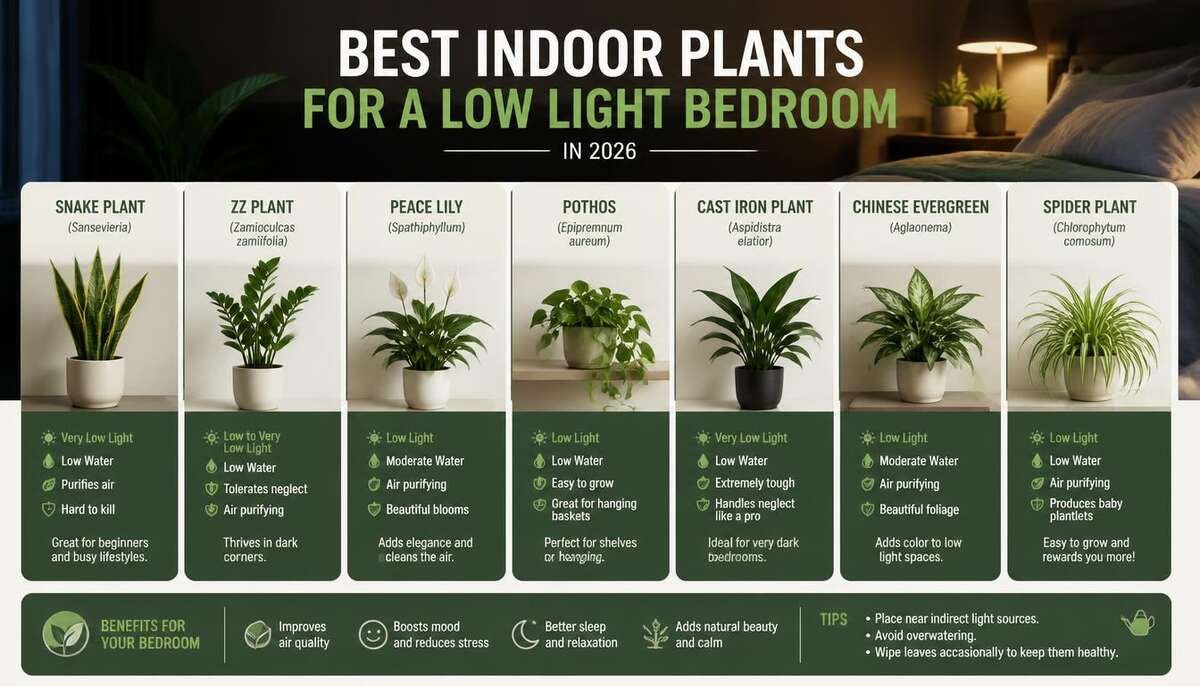
Bedrooms are usually the darkest room in the house, and not by accident. Heavy curtains, north-facing windows, or a bed tucked away from the light are all things people choose on purpose.
The problem is that most houseplant advice assumes a bright, sunny room, which leaves bedrooms as an afterthought.
The good news is there’s a solid group of plants that were basically built for this. Some of the best indoor plants for a low light bedroom are also the ones that ask the least of you, no daily misting, no rotating toward a window, no anxious checking every morning.
This guide covers which ones actually hold up, how to place them, and a few bedroom-specific details most plant guides skip entirely.
Reading Your Bedroom’s Real Light Level First

Before picking a plant, it helps to actually look at your room rather than guess. A simple way to check is the shadow test: hold your hand up during the brightest part of the day and see what kind of shadow it casts on the wall. A sharp, clear outline means you have more light than you think, a faint, blurry shadow means true low light, and no shadow at all means the room is closer to deep shade.
This matters because low light and no light aren’t the same thing, and most plants marketed as low-light still need some ambient brightness to survive long term.
A bedroom with a curtained window that still lets in daylight during the day is a very different environment than a windowless room lit only by a lamp. Knowing which one you’re working with saves you from buying a plant that was never going to make it.
Snake Plant: The One Almost Impossible to Kill

If there’s one plant that comes up in nearly every conversation about low light, it’s the snake plant. Its stiff, upright leaves hold their shape and colour in dim corners where most other plants would start stretching and fading, and it tolerates being forgotten about far better than it should. For a bedroom specifically, this matters because bedrooms are often the room people check at least.
It’s also remarkably forgiving with water, preferring to dry out completely between waterings rather than being kept damp. That alone makes it a strong pick for a nightstand or the top of a dresser, spots where you’re less likely to remember a watering schedule. It’s slow-growing rather than dramatic, but for a low light bedroom, reliability tends to matter more than speed.
Pothos: A Trailing Plant That Forgives Neglect

Pothos is the plant most people recommend to beginners for good reason, it tolerates a wide range of light and doesn’t sulk if you miss a watering here and there. Its trailing vines work especially well on a high shelf or hanging near a window, where the leaves can cascade down without needing much direct attention.
In a bedroom, pothos also brings a bit of visual softness that structural plants like snake plant don’t offer on their own. Pairing the two, something upright and something trailing, gives the room a bit of variety without adding much extra care. If the variegated patterns start fading to plain green, that’s usually the plant’s way of asking for slightly more light, not a sign that anything is going wrong.
ZZ Plant for the Chronically Forgetful Waterer

The ZZ plant deserves more credit than it usually gets. Its glossy, dark green leaves store water in thick underground rhizomes, which means it can go weeks without being watered and barely notice. For a bedroom, where plants are genuinely more likely to be forgotten than in a kitchen or living room, that’s a real advantage rather than just a nice bonus.
It also handles a genuinely dim corner better than most plants sold as “low light,” including spots that get almost no natural daylight at all. The trade-off is that it grows slowly and won’t fill out a room quickly, but for anyone who wants greenery without a maintenance routine, that slow pace is arguably the whole point.
Peace Lily for a Touch of Bloom in the Shade

Most low-light plants are chosen for their leaves rather than flowers, since blooming usually needs more light than a dim bedroom provides. Peace lily is one of the few exceptions, producing white blooms even in fairly shaded conditions, which makes it a nice option if an all-green room is starting to feel a little flat.
It’s also one of the more communicative plants in terms of care, the leaves droop visibly when it needs water and perk back up within hours of a good soak. That makes it a decent option for someone newer to plant care, since the plant essentially tells you what it needs rather than requiring guesswork. Keep it out of direct sun though, since the leaves can scorch faster than people expect.
Calathea and Prayer Plants for Colour Without Sun

If the bedroom feels like it needs more personality than plain green foliage, calathea and prayer plants are worth a look. Their leaves come in deep purples, pinks, and patterned greens, and unlike a lot of colourful houseplants, they don’t actually want direct sun to keep that colour, bright light can wash it out rather than deepen it.
They’re a little more particular about consistent moisture and humidity than snake plant or ZZ plant, so they suit someone who doesn’t mind a slightly more involved care routine. A bedroom with a humidifier running for sleep quality already creates a decent environment for them, which is a nice overlap most people don’t think about until they notice it.
Sizing and Placing Plants Around a Small Bedroom

Bedrooms tend to have less free floor space than living rooms, so plant size matters more here than in most other rooms. A tall floor plant can work well in a corner that’s otherwise unused, while a nightstand or dresser calls for something more compact, a smaller snake plant or a trailing pothos in a modest pot rather than anything sprawling.
It’s also worth thinking about airflow and light direction rather than just floor space. Placing a plant too close to a cold windowsill in winter or directly in the path of an air conditioning vent can stress it more than the room’s overall light level would. A spot a few feet back from the window, out of direct drafts, is usually the sweet spot for most low-light bedroom plants.
The Truth About Plants and Nighttime Oxygen

A lot of bedroom plant advice repeats the idea that snake plants and similar species release oxygen at night and will noticeably improve your sleep. There’s a kernel of truth in this, some plants do use a process called CAM photosynthesis that lets them exchange gases after dark rather than during the day, but the actual volume involved is tiny compared to what a room needs.
Worth knowing before you build your whole bedroom plant strategy around it: the popular belief that houseplants clean indoor air traces back to a 1989 NASA study, but more recent reviews of the research have found that a handful of potted plants don’t meaningfully change air quality in a normal home. TheAmerican Lung Association’s breakdown of the research is worth a read if you want the full picture. None of this means skip the plants, they’re still genuinely nice to live with, just don’t expect them to replace a fan or an open window.
Keeping Pets and Curious Kids Safe

Bedrooms are shared spaces more often than people account for when choosing plants, whether that’s a cat that sleeps on the bed or a toddler who wanders in. Peace lily and pothos are both mildly toxic if chewed on, which doesn’t mean they’re off the table, but it does mean placement matters more than in a room nobody else enters.
Snake plant and calathea are gentler options if pets or small children are a regular presence, though it’s still worth keeping any houseplant out of easy reach rather than assuming toxicity ratings mean total safety. A high shelf or hanging planter solves this for trailing varieties without requiring you to give up the plant altogether.
A Simple Watering Rhythm for Low-Light Plants

Low-light plants grow more slowly than their sun-loving counterparts, which means they also use water more slowly, and overwatering is a far more common problem than underwatering in these conditions. Sticking a finger an inch or two into the soil before watering, rather than following a fixed weekly schedule, avoids most of the root rot issues that come from well-meaning overcare.
Winter makes this even more relevant, since lower light and cooler temperatures slow growth further, meaning most bedroom plants need noticeably less water during the colder months. Adjusting the rhythm seasonally, rather than watering on autopilot, is one of the simplest ways to keep a low-light bedroom plant thriving for years instead of months.
Final Thoughts
The best indoor plants for a low light bedroom aren’t necessarily the prettiest ones in a plant shop, they’re the ones that tolerate being an afterthought. Snake plant and ZZ plant cover the low-maintenance end, pothos and calathea add a bit more texture and colour, and peace lily brings the option of a bloom without much fuss.
Start with one plant rather than filling the whole room at once, and let it tell you whether the spot you picked actually works before adding more. A bedroom doesn’t need to be bright to feel a little greener, it just needs the right plant matched to the light it’s actually getting.
FAQs
Can any plant survive with zero natural light?
Not indefinitely. Even the most tolerant low-light plants need some ambient daylight to survive long term; a windowless room usually needs an artificial grow light instead.
Do bedroom plants actually improve sleep?
There’s no strong evidence that houseplants meaningfully change bedroom air quality or oxygen levels overnight. Any calming effect is more likely down to the visual presence of greenery than measurable air changes.
How often should low-light plants be watered?
Less often than most people assume. Checking the soil before watering, rather than sticking to a fixed schedule, prevents the overwatering that’s the most common cause of low-light plant problems.
Are low-light plants safe for bedrooms with pets?
Some are, some aren’t. Snake plant and calathea are gentler choices, while peace lily and pothos are mildly toxic if chewed and are better placed out of reach.

Hi, I’m Ashir Zahid! I’m a home décor writer and creative enthusiast who loves finding simple and beautiful ways to make everyday spaces feel more comfortable and inviting. I enjoy exploring home styling ideas, practical decorating tips, and timeless trends that can work in real homes without making things feel complicated.
At DailyHomeVibe, I share easy-to-follow ideas for decorating different rooms, choosing the right colors and textures, and giving your home a fresh look with thoughtful details. My goal is to help readers find inspiration they can actually use, whether they are refreshing one small corner or giving their whole home a new feel.