
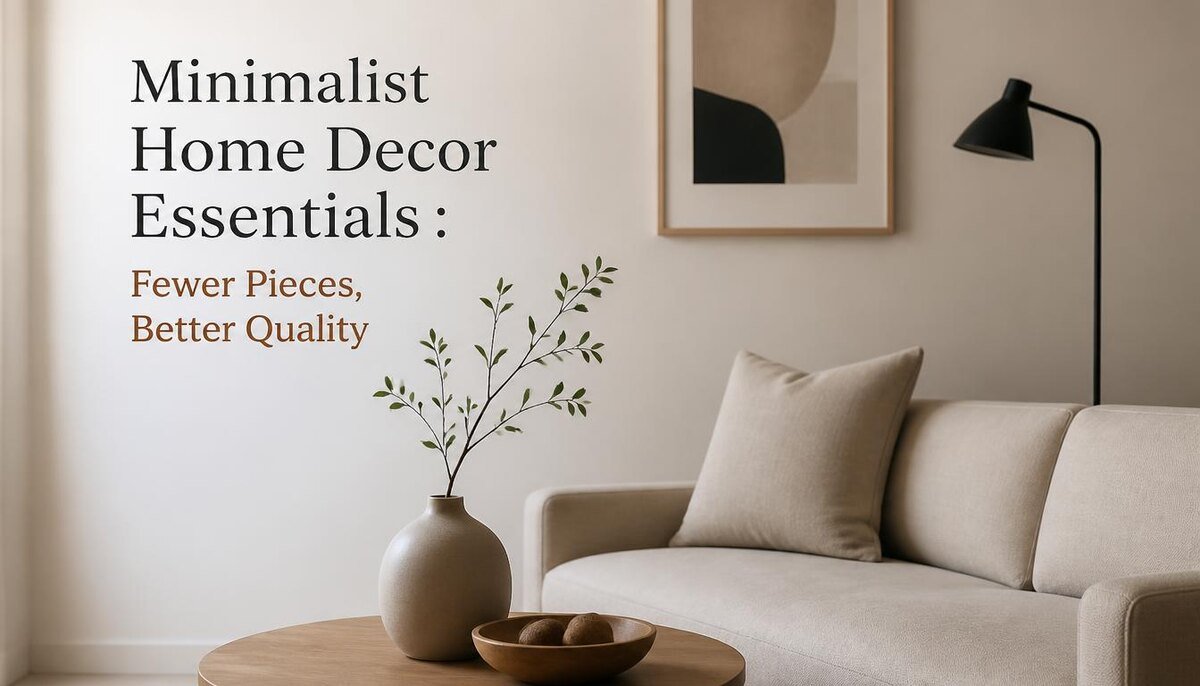
Minimalist home decor isn’t about having an empty house. It’s about making sure everything in your space earns its place. The right minimalist home decor essentials help a room feel calm and open instead of bare or cold. They focus on quality, function, and intention rather than quantity.
Many people assume minimalism means white walls and a single chair. However, that is a common misunderstanding of the style. Minimalist spaces can still feel warm, textured, and personal. They simply avoid clutter, excess ornamentation, and furniture without a real purpose.
This guide explores the essentials that define minimalist decor. It covers each room and category in a simple way. You can use these ideas to create a space that feels intentional rather than incomplete.
The Core Principles Behind Minimalist Decor

Before picking out furniture or accessories, it helps to understand what minimalism is actually built on. At its core, it’s about restraint, choosing fewer, better items instead of filling every surface. Negative space is treated as a design feature, not a gap that needs to be filled, since empty space around objects makes each piece stand out more.
Function matters just as much as appearance in this style. An item should either serve a clear purpose or bring real value to the room; anything that does neither is usually the first thing to go. This is why minimalist homes tend to feel calmer; there’s simply less visual noise competing for attention.
Furniture: Fewer Pieces, Better Quality

Minimalist furniture favors clean lines, simple silhouettes, and functional design over ornate detailing. A single well-made sofa, a simple wooden dining table, or a low-profile bed frame does more for the room than several smaller, competing pieces.
Multi-purpose furniture is especially valuable in minimalist spaces, think a storage ottoman that doubles as seating, or a bed frame with built-in drawers. Choosing furniture that solves two problems at once helps keep the room open without sacrificing storage or comfort.
Lighting That Sets the Mood

Lighting plays a bigger role in minimalist decor than most people expect. Natural light is prioritized wherever possible, which is why minimalist homes often use sheer or minimal window treatments instead of heavy curtains that block the view and dim the room.
For artificial lighting, simple floor lamps with linen or fabric shades, and pendant lights with clean geometric shapes, tend to fit the aesthetic best. Warm, soft lighting rather than harsh overhead lighting also helps a minimalist space feel inviting instead of clinical.
Storage Solutions That Disappear Into the Room

Closed, seamless storage is one of the most defining features of minimalist interiors. Cabinetry with flat-panel fronts and hidden or minimal hardware keeps the visual clutter down, since items are stored out of sight rather than displayed on open shelving.
Floor-to-ceiling built-in units are a common choice because they blend into the architecture instead of standing out as separate furniture pieces. The goal isn’t just tidiness, it’s making sure storage itself doesn’t compete visually with the rest of the room.
A Restrained, Neutral Color Palette

Minimalist spaces typically stick to a limited color palette of soft whites, warm greys, muted beiges, and occasionally deep, grounding tones like charcoal or forest green used sparingly. This restraint is what gives the space its calm, cohesive feel rather than a flat or sterile one.
Rather than avoiding color altogether, minimalist decor uses it deliberately: a single accent wall, one statement textile, or a muted rug ties a room together without overwhelming it. The key is consistency across a room or home, not the complete absence of tone.
Textiles and Natural Materials

Texture does a lot of the emotional work in minimalist spaces, since color and pattern are kept minimal elsewhere. Natural materials like linen, wool, raw wood, and unglazed stoneware bring warmth and depth without adding visual clutter.
A simple wool throw, a linen-covered cushion, or a woven jute rug can soften a room considerably while staying true to the minimalist aesthetic. These materials also tend to age well, which fits the minimalist preference for fewer, longer-lasting pieces over frequently replaced ones.
Décor Objects: Choosing Quality Over Quantity

When it comes to decorative objects, minimalist spaces favor a small number of intentional pieces over a shelf full of trinkets. A single sculptural vase, one piece of meaningful artwork, or a hand-thrown ceramic bowl does more for a room than a dozen smaller decorations spread across every surface.
Well-chosen greenery is one of the few exceptions minimalists tend to embrace freely — a few plants add life and organic texture to a space without cluttering it, as long as they’re placed with the same intentionality as everything else in the room.
Building a Room-by-Room Minimalist Checklist

Different rooms call for slightly different essentials, even within the same overall style. The table below breaks down the core items worth prioritizing in each space.
| Room | Key Essentials |
| Living Room | Low-profile sofa, one statement rug, closed media storage, a single accent lamp |
| Bedroom | Simple bed frame (ideally with storage), linen bedding, one nightstand per side, blackout or sheer curtains |
| Kitchen | Closed cabinetry, minimal countertop appliances, a small set of high-quality cookware |
| Entryway | A single bench or shelf, closed shoe storage, one hook rail instead of scattered hooks |
Common Mistakes When Starting a Minimalist Space

The most common mistake is confusing “empty” with “minimalist.” A room with almost nothing in it can feel unfinished rather than intentional, especially if there’s no texture or warmth to soften the space. Minimalism works best when restraint is balanced with comfort, not when comfort is sacrificed for the sake of looking sparse.
Another frequent misstep is buying decor items specifically because they look minimalist, rather than because they’re genuinely useful or meaningful. This often results in a space that looks the part but doesn’t function well day to day which defeats the actual purpose of the style.
Final Thoughts
Minimalist home decor essentials aren’t about deprivation, they’re about making sure every item in your home has a reason to be there. A well-edited furniture selection, thoughtful lighting, seamless storage, and a handful of quality decor pieces will do more for a room than a house full of things chosen without much thought. Start with one room, focus on function and quality over quantity, and let the space grow from there rather than trying to overhaul your whole home at once.
Frequently Asked Questions
Is minimalist decor expensive?
Not necessarily. While some minimalist pieces are investment items due to their materials and craftsmanship, the style is fundamentally about buying less, which can actually reduce overall spending compared to constantly acquiring new decor.
Can minimalist decor feel warm and cozy, or does it always look cold?
It can absolutely feel warm. Using natural materials, soft textiles, and warm lighting keeps a minimalist space inviting rather than sterile the cold, clinical look often associated with minimalism usually comes from over-editing texture and warmth along with clutter.

Hi, I’m Ashir Zahid! I’m a home décor writer and creative enthusiast who loves finding simple and beautiful ways to make everyday spaces feel more comfortable and inviting. I enjoy exploring home styling ideas, practical decorating tips, and timeless trends that can work in real homes without making things feel complicated.
At DailyHomeVibe, I share easy-to-follow ideas for decorating different rooms, choosing the right colors and textures, and giving your home a fresh look with thoughtful details. My goal is to help readers find inspiration they can actually use, whether they are refreshing one small corner or giving their whole home a new feel.