
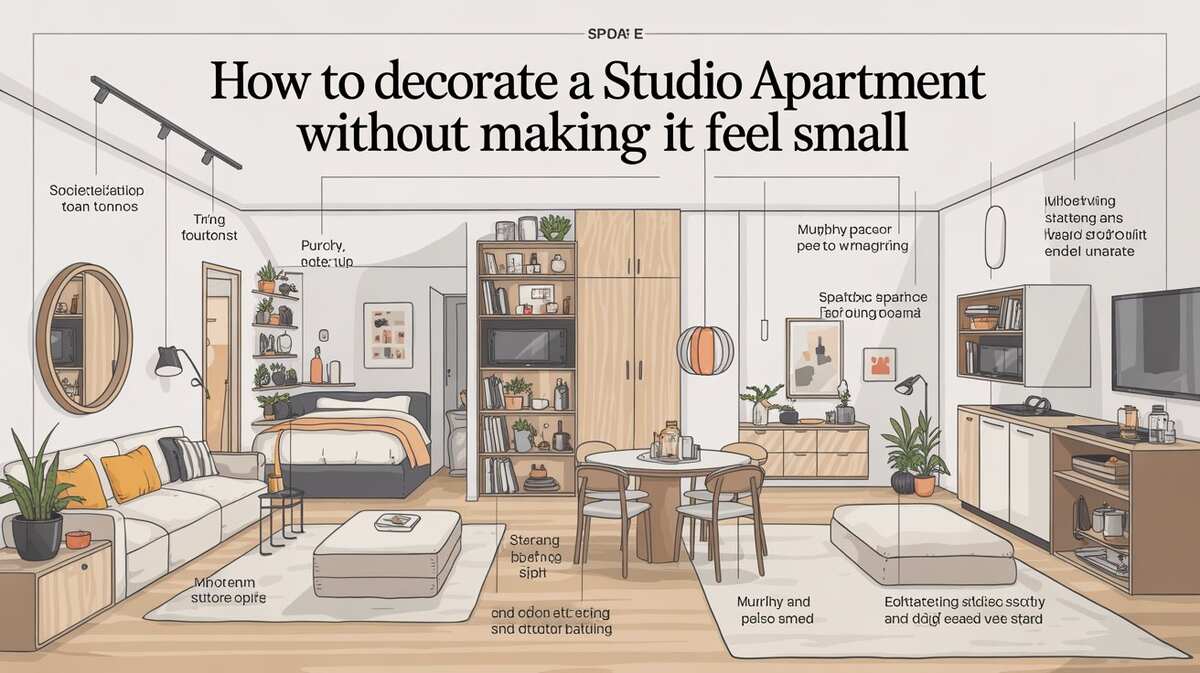
A studio apartment asks one room to be a bedroom, living room, office and dining room at once. Most studios feel small not because of their square metres, but because the four jobs blur into each other: the bed is in the office, the sofa faces a wardrobe, and nothing has a defined edge.
Decorating a studio well is mostly layout discipline. These 12 rules, zoning, furniture sizes, storage heights and light, are the ones that make a 30 to 50 square metre studio live like a much bigger home.
Rule 1: Zone With Rugs and Light, Not Walls
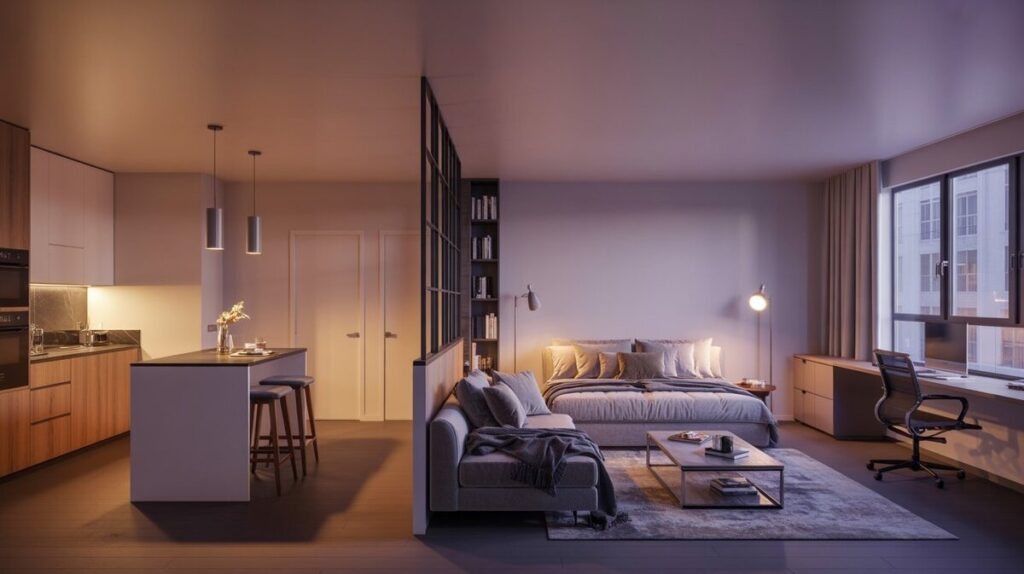
Divide the floor into zones visually: one rug under the living area (at least 160 by 230 cm, with the sofa’s front legs on it), one under or beside the bed area, and the dining spot defined by a pendant light above the table. Your eye reads three anchored zones as three rooms. An open-backed bookshelf (no deeper than 30 cm) placed at right angles to the wall makes the division physical without blocking light the way a solid unit does.
Rule 2: Keep Walkways 75 cm Clear
Furniture pushed randomly into a studio eats the paths between zones. Keep main walkways at least 75 cm wide, 90 cm if you can, and push storage furniture fully against walls. If you cannot walk from door to window without turning sideways, the room will always feel cramped regardless of decor.
Rule 3: The Bed Gets a Real Headboard Wall
A bed floating in the middle of a studio reads as a dorm. Push the bed’s headboard against a wall, dress it like a bedroom (proper pillows, a throw, two side lights, even if they are clip-on), and orient it so it is not the first thing visible from the front door. A low headboard (under 110 cm) keeps sightlines open over it.
Rule 4: Sofa Size Honesty
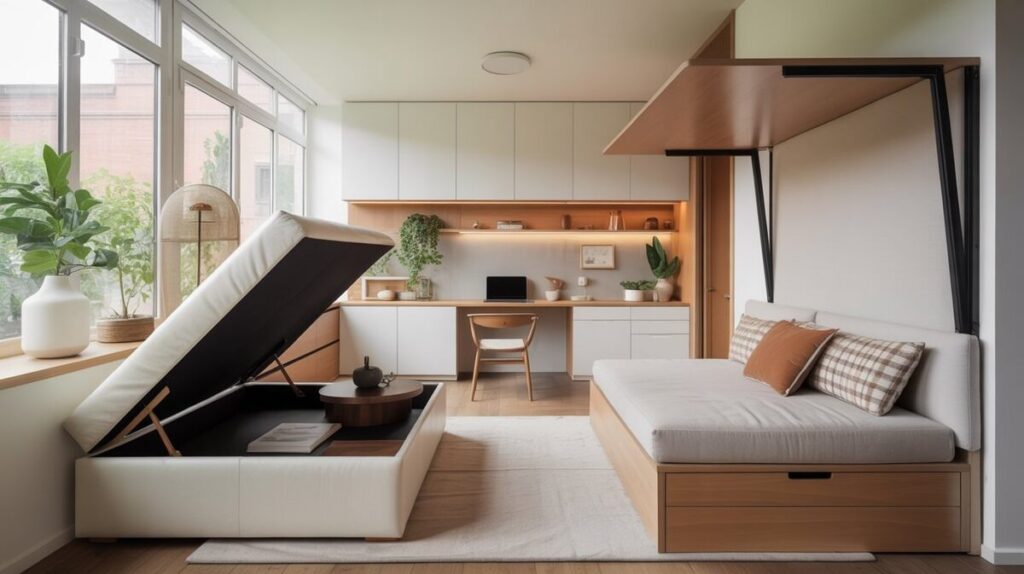
Measure before buying: a studio sofa should be 140 to 180 cm wide and no deeper than 85 cm, with legs that show floor underneath. Leggy furniture makes small rooms look bigger because the floor stays visible. If guests stay over, a good sofa bed in this size beats a larger sofa plus an air mattress stored in your only cupboard.
Rule 5: One Table That Does Three Jobs
A drop-leaf or extendable table (80 cm square closed, opening to seat four to six) serves as dining table, desk and prep space. Wall-mounted fold-down tables work in studios under 30 m². Whatever you choose, give it a pendant light and a defined spot; a table that migrates around the room makes the whole studio feel temporary. Most of the layout logic in our small living room ideas for apartments guide applies directly to the living zone of a studio.
Rule 6: Storage Goes Up, Not Out
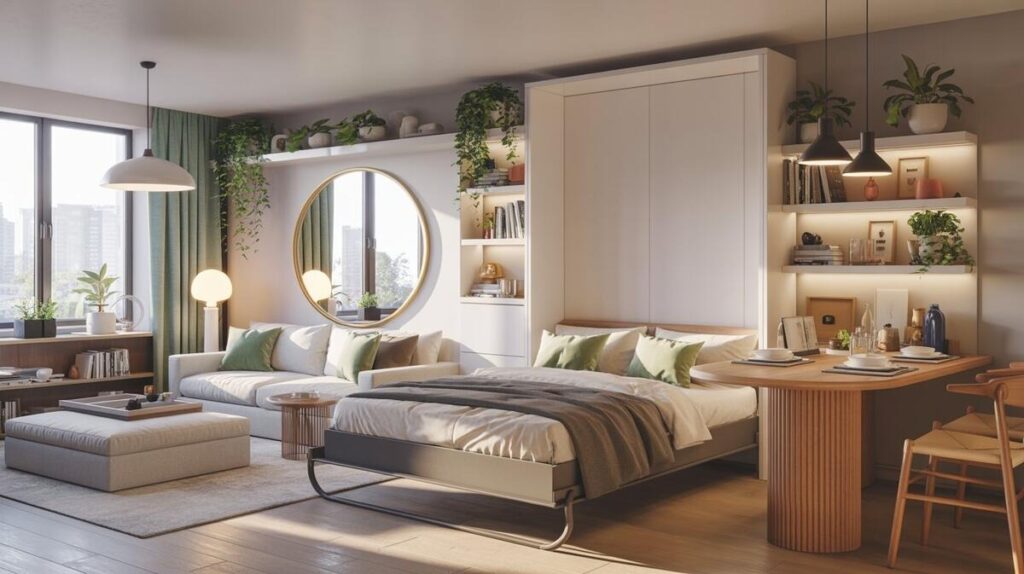
Use the full wall height: shelving or cabinets up to within 30 cm of the ceiling, with daily items between knee and eye height and rarely used things above. Closed storage for the messy categories (papers, cables, cleaning supplies) and open shelves only for the tidy ones (books, dishes, plants). Under-bed storage boxes on wheels hold a season of clothes in the deadest space in the room.
Rule 7: A Kitchen Line That Works Harder
Studio kitchens are usually a single wall. Keep its counters completely clear except the two appliances you use daily, add a rail with hooks for utensils and pans to free the drawers, and use the wall above the counter up to the ceiling. A slim rolling cart (about 25 cm deep) beside the counter adds a movable prep and storage surface that parks in a gap when not needed.
Rule 8: Curtains Hung High and Wide
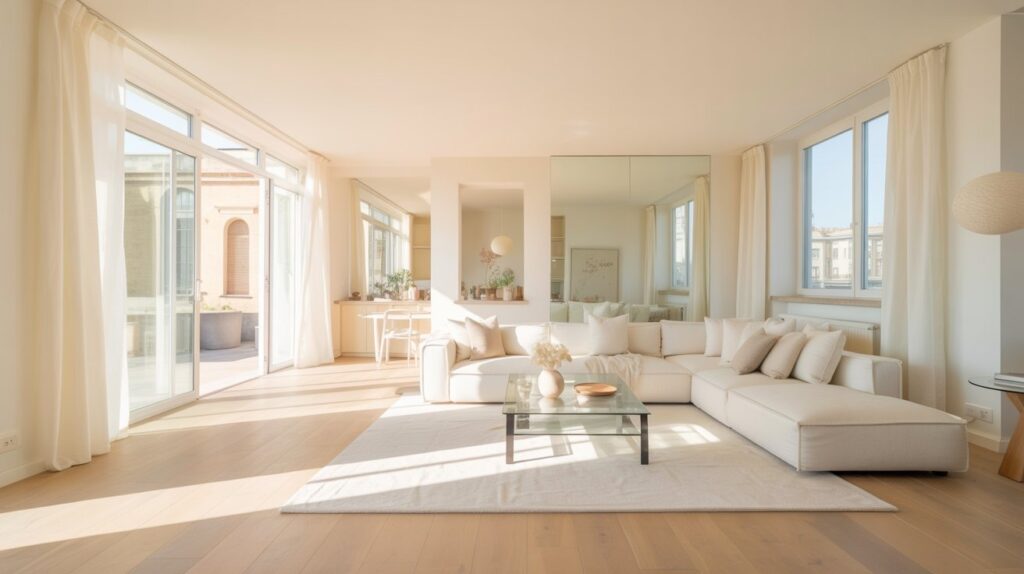
Mount curtain rods 10 to 15 cm above the window frame and 15 cm wider on each side, with curtains falling to the floor. The window looks bigger, the ceiling looks higher, and sheer or linen panels keep daylight while giving privacy, essential when your bedroom window is also your living room window. Blackout lining on the bedroom side is the sleep upgrade every studio needs.
Rule 9: Mirrors Opposite Light
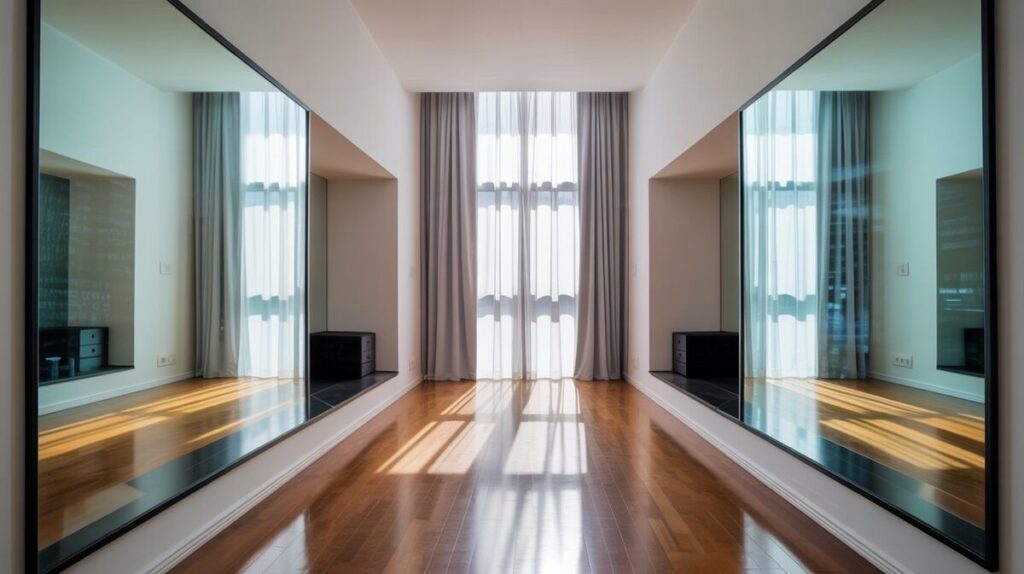
One large mirror (at least 60 by 90 cm) on the wall opposite or beside the window doubles the daylight and the view. Avoid facing the mirror at the bed or the clutter corner; mirrors faithfully reflect whatever they face, so aim them at the window or the best-looking wall.
Rule 10: A Two-Color Limit, Plus Texture
Studios feel chaotic when every zone has its own palette. Choose one base color (walls, big furniture) and one accent, then vary texture instead of color: linen, wood, a woven rug, a knitted throw. The zones separate by function and light, not by competing schemes.
Rule 11: Lighting in Layers, Per Zone
One ceiling light flattens a studio into a bedsit. Give each zone its own source at its own height: a pendant over the table, a floor or table lamp by the sofa, warm bedside lights, and a strip or puck lights under kitchen cabinets. On separate switches or smart plugs, lighting becomes the fastest way to “leave” the office and arrive in the living room at night.
Rule 12: A Landing Strip by the Door
Studios have no hallway to catch the day’s debris. A 60 to 90 cm landing strip at the door, a small shelf or hooks for keys, bag and coat, plus a shoe tray, stops clutter from colonizing every zone. The organization systems in our how to organize a small bedroom guide scale down well for the sleeping zone and wardrobe wall.
Renter Rules That Still Work
Everything above can be done without a single screw in many cases: tension rods and command hooks for curtains and art, leaning mirrors and shelves, over-door storage, and peel-and-stick tiles or wallpaper for one accent wall. Photograph the walls before you start, keep the original fittings in a labelled box, and the deposit survives the style.
Common Mistakes
- Pushing every piece of furniture against the walls. It creates a dance-floor void in the middle and smaller-feeling zones at the edges. Anchor zones with rugs instead.
- A full-size dining set. Six chairs in a studio means five stored chairs. Extendable table, two chairs, two folding spares.
- Dark, heavy curtains at small windows. They eat the light the whole room depends on.
- Open storage everywhere. Visible clutter is visual noise multiplied by four room functions.
- Ignoring the door view. Whatever you see from the front door sets the feeling of the whole home; style that sightline first.
Final Thoughts
A studio feels big when its four jobs have edges: zones marked by rugs and light, walkways kept clear, storage climbing the walls, and one calm palette throughout. None of it requires more square metres, only furniture that fits the measurements and a place decided for everything.
Frequently Asked Questions
How do I divide a studio apartment without walls?
Use rugs to anchor each zone (living, sleeping, dining), a pendant light over the table, and an open-backed bookshelf at right angles to the wall if you want a physical divider. Keep walkways at least 75 cm wide so the zones feel connected rather than chopped up.
What furniture size works best in a studio?
A sofa 140 to 180 cm wide and under 85 cm deep with visible legs, an extendable or drop-leaf table about 80 cm square when closed, and storage furniture no deeper than 30 to 40 cm. Measure your exact floor plan before buying; in a studio, 10 cm too deep is a daily problem.
How can I make a studio apartment look bigger?
Hang curtains high and wide, place a large mirror opposite the window, keep one base color across all zones, use leggy furniture that shows the floor, and light each zone separately instead of relying on one ceiling light.
Where do I put storage in a studio with no closets?
Go vertical: shelving up to near the ceiling, under-bed boxes for seasonal clothes, a rail system in the kitchen, hooks and a landing strip by the door, and closed cabinets for anything visually messy. If it does not have a decided home, it becomes clutter in a studio within a week.
Can a studio apartment feel like a real home, not a dorm?
Yes, and the difference is the bedroom treatment: bed against a wall with a headboard, proper bedding and bedside lights, oriented away from the front door. Add zoned rugs, layered lighting and a landing strip, and the room reads as a small home rather than a temporary crash pad.

Hi, I’m Ashir Zahid! I’m a home décor writer and creative enthusiast who loves finding simple and beautiful ways to make everyday spaces feel more comfortable and inviting. I enjoy exploring home styling ideas, practical decorating tips, and timeless trends that can work in real homes without making things feel complicated.
At DailyHomeVibe, I share easy-to-follow ideas for decorating different rooms, choosing the right colors and textures, and giving your home a fresh look with thoughtful details. My goal is to help readers find inspiration they can actually use, whether they are refreshing one small corner or giving their whole home a new feel.