

Yes, peace lilies can be planted outdoors, and in the right spot they often grow bigger and bloom more than they ever do on a windowsill. But a peace lily is a tropical rainforest plant, not a hardy garden perennial, and one cold night can do more damage than a whole summer of imperfect care. Whether yours can live outside comes down to three things: your climate zone, your temperatures at night, and whether it grows in a pot you can move or in the ground where it has to take whatever comes.
This guide gives the exact rules: the temperatures that help and harm, the right home spots (porch, patio, shaded bed), pots versus in-ground planting, how to move an indoor plant outside without shocking it, and the seasonal routine that keeps it alive year after year.

The Short Answer by Zone
- Zones 11 to 12: yes, outdoors all year, in the ground or in pots. This is the peace lily’s natural climate.
- Zone 10: mostly yes, but with care. A sheltered spot near the house usually survives; a cold snap can still burn the leaves, so pots you can pull under cover are safer.
- Zones 8 to 9: yes in pots for spring and summer, but the plant must come indoors for autumn and winter.
- Zone 7 and colder: treat it as a summer patio plant only. Outside after the last warm nights of spring, back inside well before the first cold ones of autumn.
The Temperature Rules (This Is the Part That Matters Most)
Peace lilies grow happily between 18 and 30°C (65 to 85°F), which is ordinary room temperature and warm-season outdoor weather in most places.
- Below 15°C (60°F): growth slows right down. A pot can visit this range briefly, but do not leave it there night after night.
- Below 10°C (50°F): leaf damage begins: blackened patches, collapse, and leaves that never recover.
- At or near 0°C (32°F): frost kills the plant outright. There is no nursing it back.
The practical rule for pots: when night temperatures start dropping below 15°C (60°F) regularly, the outdoor season is over. Bring the plant in. Gardeners lose more peace lilies to “one surprisingly cold night” than to every pest and disease combined.
Where Outdoors at Home: The Right Spots
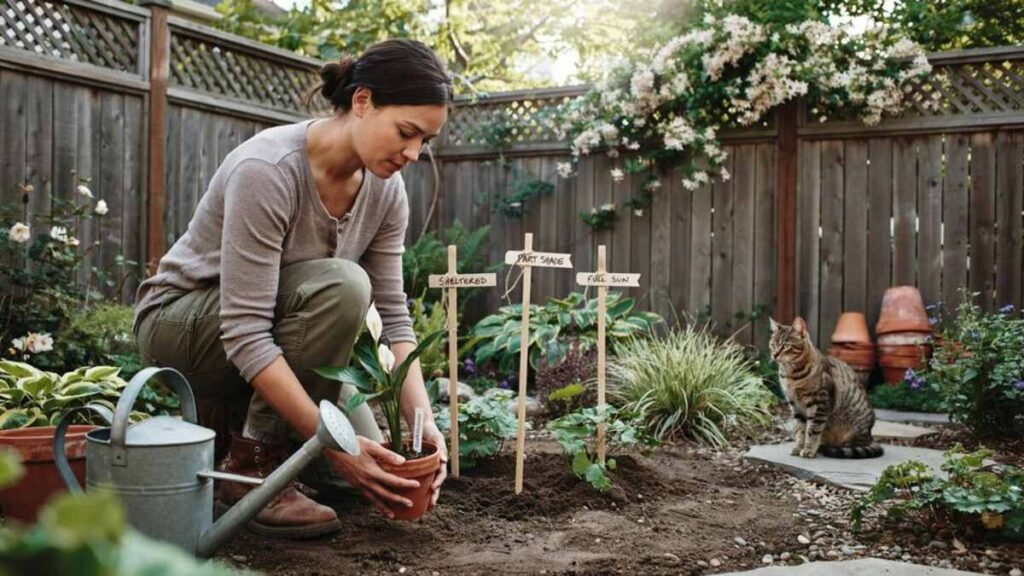
A peace lily outdoors wants what the rainforest floor gives it: bright light with almost no direct sun, shelter from wind, and air that does not dry out.
Good spots around a home:
- A covered porch or veranda, especially one facing east or north
- A shaded patio under a pergola or awning
- Beneath a tree canopy, where light arrives dappled
- Along the north or east wall of the house, in the shade band the building itself casts
A little gentle morning sun, an hour or two, is fine and encourages blooming. Direct afternoon sun scorches the leaves white and brown within days. If the leaves start looking bleached or papery at the edges, the spot is too sunny, whatever the plant tag said.
Pots or In the Ground?
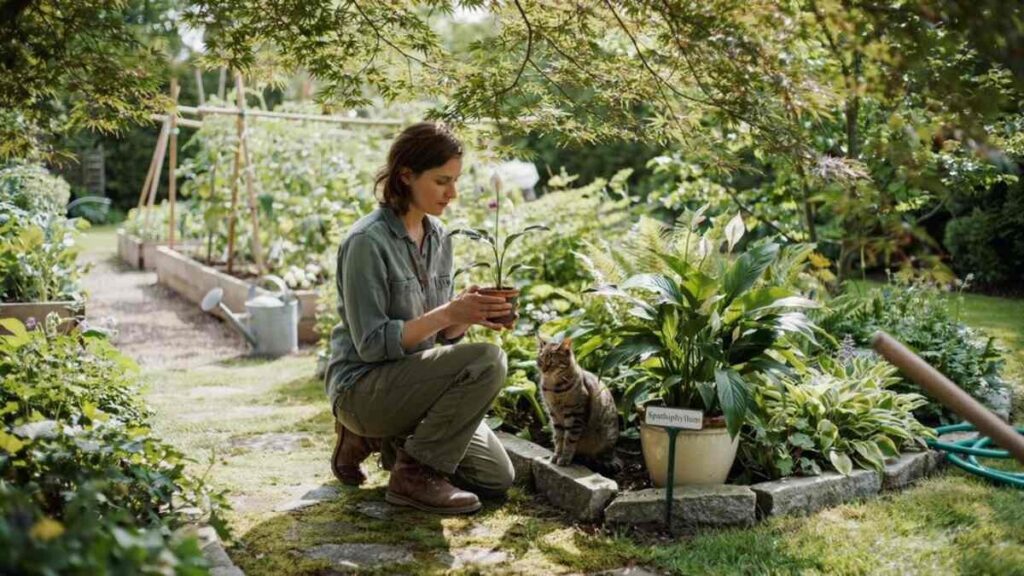
For most homes, pots are the smarter choice, even in warm zones. A pot gives you control: you can chase the shade as seasons shift, pull the plant under cover before a storm or cold snap, and manage the soil and water exactly. Choose a pot one to two sizes up from the current one (for example, from 15 cm to 20 cm across), with drainage holes; a peace lily in a pot without drainage is a root-rot case waiting to happen.
In-ground planting suits zones 11 to 12 and very sheltered zone 10 gardens. Pick the shadiest, most sheltered bed you have, ideally near the house where walls hold a little warmth. In the ground, the plant spreads over the years into a lush clump that no pot can match, but it cannot be rescued when weather turns, which is why the zone rules above are strict.
Moving an Indoor Peace Lily Outside Without Shocking It
An indoor plant thrown straight onto a patio will sunburn and wilt, even in a shady spot, because outdoor light and air are stronger than anything it knows. Acclimate it over about two weeks:
- Days 1 to 4: put the pot in full outdoor shade for 2 to 3 hours, then bring it back in.
- Days 5 to 9: leave it in outdoor shade most of the day; bring it in at night.
- Days 10 to 14: leave it out day and night in its shade spot, as long as nights stay above 15°C (60°F).
- After that, it lives outside, and you can begin normal watering and feeding.
Bleached patches during this process mean it is getting more sun than you think. Move it deeper into shade and slow the schedule down.
Soil: The Mix That Works

Peace lilies want soil that holds moisture evenly but never sits soggy, rich in organic matter.
- In pots: 2 parts standard potting mix, 1 part compost, 1 part perlite or fine bark. This holds water while letting the excess drain.
- In the ground: dig in compost generously across the planting area (a bucket per plant is a good start), and plant at the same depth the lily grew in its pot.
- Finish with a 5 cm mulch layer around the plant, kept a few centimeters away from the stems. Mulch holds moisture, cools the roots, and cuts weeding.
Watering Outdoors
Outdoor peace lilies dry out faster than indoor ones because of wind and warmth, so check them more often, every day or two in summer. Water when the top 2 to 3 cm of soil feel dry, and water deeply enough that it runs from the drainage holes.
The peace lily’s famous droop is a thirst signal, not a crisis: a well-watered drooping plant usually stands back up within a few hours. What it cannot forgive is the opposite routine, constantly soggy soil, which rots the roots and turns leaves yellow from the base. Pots standing in full saucers after heavy rain should be emptied the same day.
Feeding and Flowering
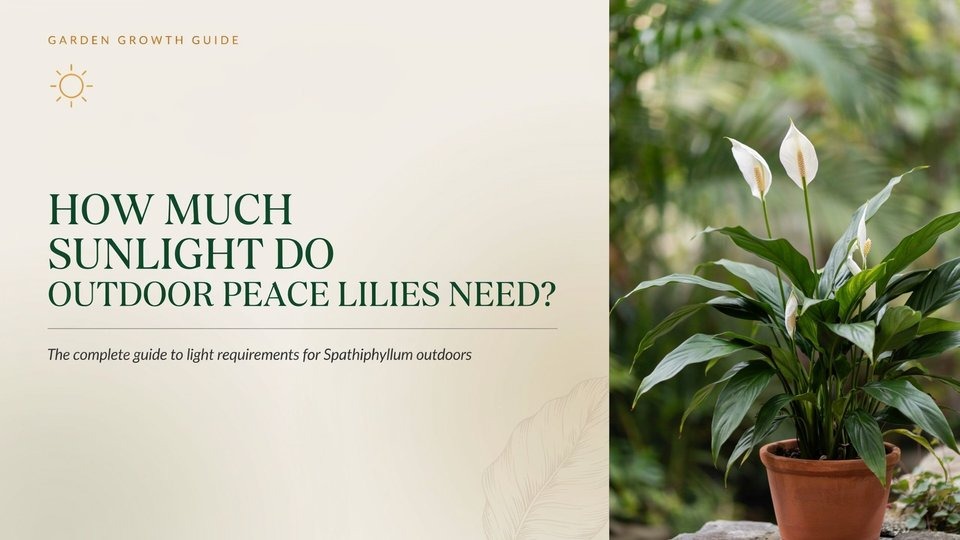
Feed every 6 to 8 weeks through spring and summer with a balanced houseplant fertilizer at half the label strength, and stop feeding entirely in autumn and winter. More is not better: overfed peace lilies grow brown leaf tips and, oddly, often stop flowering.
Outdoor plants bloom more than indoor ones when the light is right, because “bright shade” outdoors is far brighter than a typical indoor spot. If yours grows lush leaves but no white blooms, the usual causes are light that is too deep, a plant that is still young, or too much fertilizer pushing leaf growth instead of flowers.
The Seasonal Routine
- Spring move-out: wait until nights are reliably above 15°C (60°F), acclimate over two weeks as above, and repot first if the plant is root-bound.
- Summer: water often, feed on schedule, rinse dust and pollen off the leaves with a gentle hose spray every few weeks; a clean leaf photosynthesizes better and shows pests early.
- Autumn move-in: when nights trend below 15°C (60°F), bring pots in. Before the plant rejoins your houseplants, shower the leaves, check the undersides for aphids, mealybugs and scale, and keep it apart from other plants for a week or two. Outdoor hitchhikers are the main way houseplant pest problems start.
- Winter (zones 11 to 12, staying outside): water less often, skip feeding, and cover the plant with a frost cloth on any unusually cold night forecast.
Common Problems Outdoors
- Yellow leaves: too much sun, or soil that stays wet. Check the spot first, then the watering.
- Brown leaf tips: fertilizer buildup, very dry air, or heavily chlorinated tap water. Flush the pot with plain water once, and ease up on feeding.
- Sudden total droop: thirst (water and wait a few hours) or a cold night (damage shows as dark, limp leaves that do not recover).
- No flowers: light too low, plant too young, or too much fertilizer.
- Slugs and snails: the outdoor peace lily’s most likely pest. Check under leaves in the evening; a shallow dish of beer nearby or copper tape around a pot genuinely helps.
- Aphids and mealybugs: blast off with a hose, then wipe leaves; repeat weekly until clear.
A Safety Note for Pet Households
Peace lilies contain calcium oxalate crystals and are toxic to dogs and cats if chewed, causing mouth pain and drooling. They are not among the most dangerous lilies (true lilies are far worse for cats), but in a home with a chewing puppy or a plant-nibbling cat, grow peace lilies in hanging planters or in a spot the pet cannot reach, indoors or out. Our guide to low light outdoor plants includes a full dog-safe and toxic shade-plant list if you are planting a shaded corner from scratch.
Final Thoughts
A peace lily outdoors is a fair trade: it asks for shade, steady moisture and protection from cold, and in return gives you bigger leaves, stronger growth and more of those white blooms than the same plant would manage indoors. Follow the temperature rules, acclimate it patiently when it moves, and it will reward you for years. If your climate is too cold for the ground, a pot on a shaded porch gets you nearly all of the benefit with none of the frost risk, and it pairs beautifully with the other shade plants in our low light outdoor plants guide.
Frequently Asked Questions
Can peace lilies survive winter outdoors?
Only in zones 11 to 12, where nights stay warm. In zone 10 a sheltered plant may survive a mild winter with some leaf damage. Everywhere colder, winter outdoors will kill it; bring pots in before nights fall below 15°C (60°F).
Can I put my indoor peace lily straight outside in summer?
Not straight onto the patio. Indoor plants sunburn and wilt outdoors because outdoor light and air are far stronger. Acclimate over about two weeks, starting with a few shaded hours a day, as described in the moving section above.
Do peace lilies need full sun outdoors?
No. They want bright, indirect light or light morning sun only. Direct afternoon sun scorches the leaves white and brown within days, and deep full shade stops them flowering. Bright shade is the sweet spot.
Are peace lilies better in pots or in the ground outside?
Pots suit most homes, because you can move the plant for shade, storms and cold snaps, and control soil and water exactly. In-ground planting is better only in zones 11 to 12 (and sheltered zone 10), where the plant can spread into a large clump over the years.
Are peace lilies safe around dogs and cats?
No. Peace lilies contain calcium oxalate crystals and irritate the mouth if chewed, so they are considered toxic to dogs and cats. Grow them out of a pet’s reach, for example in a hanging planter. Our guide to caring for a snake plant indoors covers another popular plant with the same keep-out-of-reach rule.
Why is my outdoor peace lily not flowering?
The three usual causes are light that is too deep (move it to brighter shade), too much fertilizer (cut feeding back to half strength every 6 to 8 weeks), or a plant that is simply still young. A mature plant in bright shade with modest feeding normally blooms through the warm months.

Hi, I’m Ashir Zahid! I’m a home décor writer and creative enthusiast who loves finding simple and beautiful ways to make everyday spaces feel more comfortable and inviting. I enjoy exploring home styling ideas, practical decorating tips, and timeless trends that can work in real homes without making things feel complicated.
At DailyHomeVibe, I share easy-to-follow ideas for decorating different rooms, choosing the right colors and textures, and giving your home a fresh look with thoughtful details. My goal is to help readers find inspiration they can actually use, whether they are refreshing one small corner or giving their whole home a new feel.