
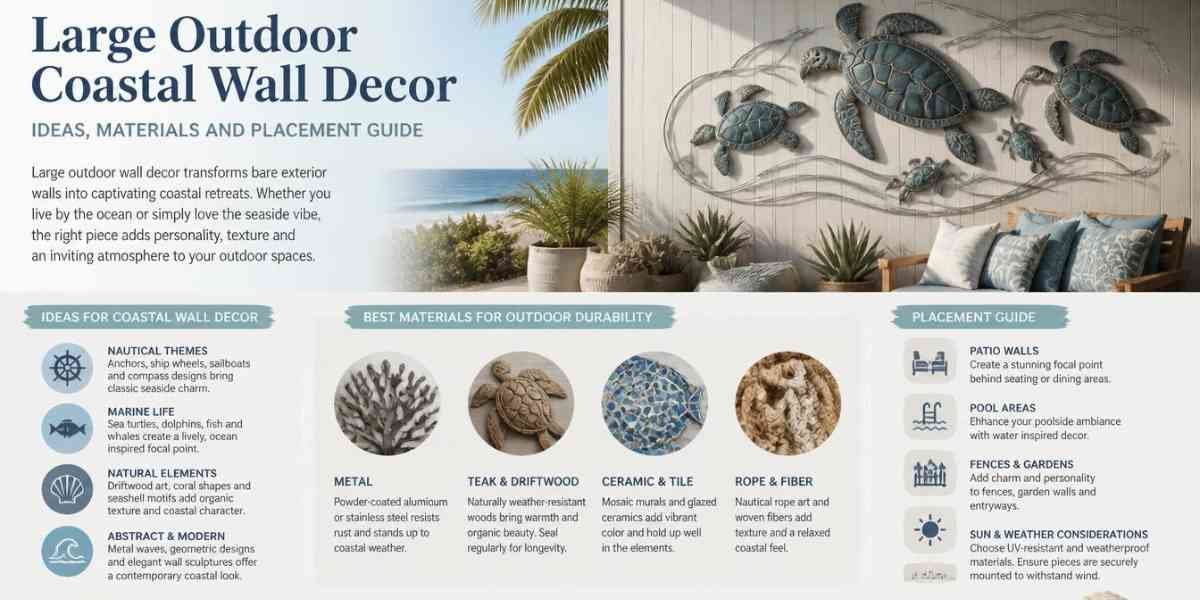
A blank patio wall or a long empty fence is the most underused decorating space in most backyards. Large outdoor coastal wall decor fills it with the relaxed, sea-air feeling of the coast, even if the nearest beach is hours away. But outdoor walls are a harsh place to hang art: full sun, rain, wind and, near the coast, salt in the air destroy indoor pieces in a single season.
This guide covers the 12 statement ideas that work best at large scale, the materials that genuinely survive outside (and the ones that only pretend to), a sizing rule that keeps a piece from looking lost or cramped, and how to mount heavy pieces safely on brick, siding and fences.
The Materials That Actually Survive Outside
Material choice is the whole game outdoors. Ranked by how they hold up in full weather:
- Powder-coated aluminum: the best all-round choice. It does not rust, it is light for its size, and the coating holds color for years. Most quality large metal coastal art is aluminum for exactly these reasons.
- Powder-coated steel: strong and cheaper than aluminum, but if the coating chips, rust starts at the chip. Fine under a covered patio; risky in open rain, and near salt air it needs inspection each spring.
- Marine-grade or sealed teak and treated wood: beautiful and genuinely coastal, but wood moves, greys and eventually cracks outdoors. Sealed pieces on covered walls last for years; expect silvering on anything fully exposed, which many people like.
- Resin and fiberglass: molded pieces (starfish, shells, turtles) that shrug off rain completely and stay light. Quality varies widely; thick, UV-stabilized resin keeps its color, thin cheap resin chalks and fades.
- Outdoor canvas and fabric panels: only buy pieces sold specifically as outdoor art, with UV inks and a sealed frame, and even then give them a covered wall. A standard indoor canvas outside is a one-season purchase.
- PVC and composite boards: printed coastal scenes on rigid board are weatherproof, flat and affordable; they read flatter than metal or wood but survive everything.
In salt air, shorten every expectation: rinse metal pieces with fresh water a few times a summer and touch up coating chips before they spread.
The 12 Statement Ideas
1. Layered Metal Wave Panel
A wide wave sculpture in layered, powder-coated metal is the single most effective large coastal piece: it has depth, casts moving shadows, and reads from across the yard. Widths of 120 to 180 cm suit most patio walls.
2. School of Fish
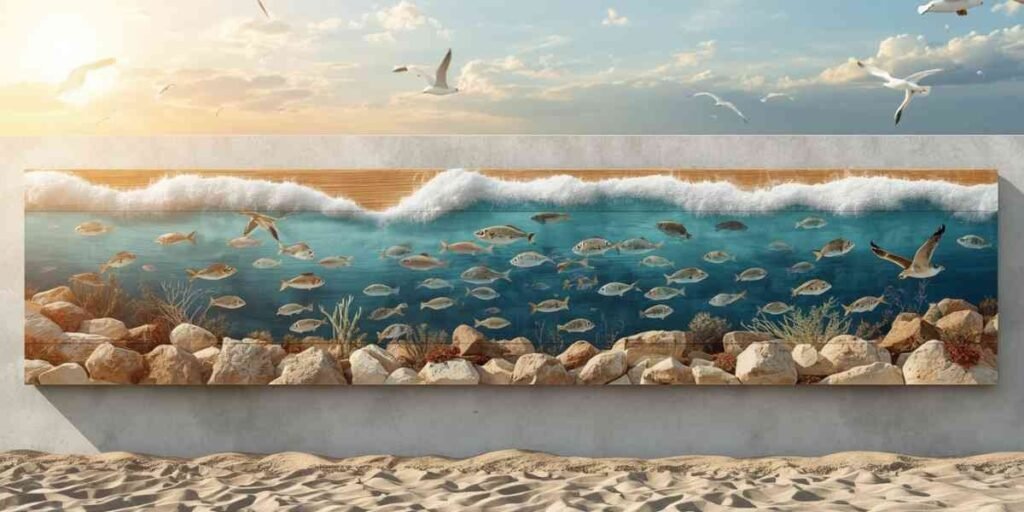
A loose formation of metal or resin fish, spread over 150 cm or more of wall, fills a long horizontal space (above a fence line or outdoor sofa) better than any single rectangle. Arrange them swimming in one direction with varied heights.
3. Oversized Compass Rose
A compass rose of 90 to 120 cm across anchors a square or tall wall and suits nautical and classic homes. In aged bronze or navy-and-white finishes it stays timeless rather than themed.
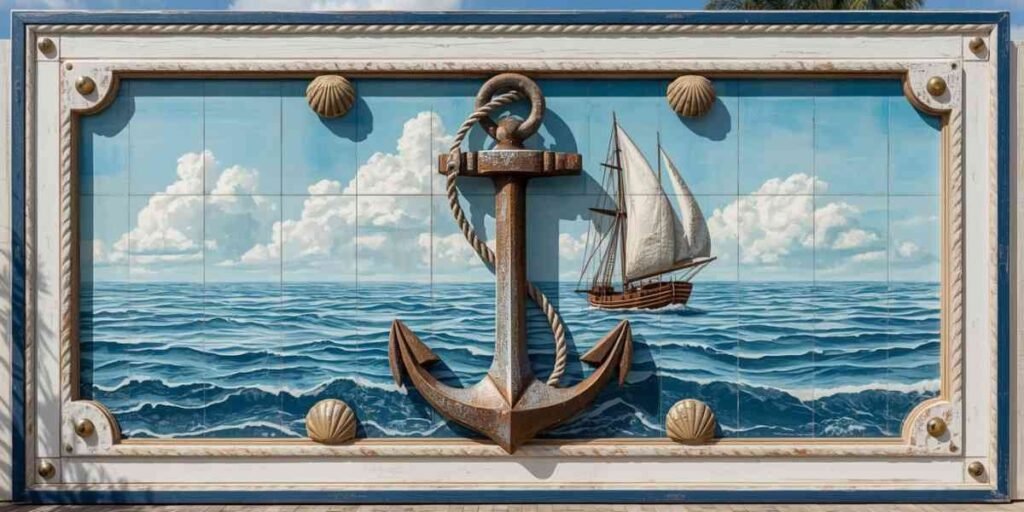
4. Anchor Statement Piece
A large anchor (90 cm plus) in distressed metal or sealed wood is the boldest nautical symbol. It needs wall space around it; crowded by other pieces, it turns into clutter.
5. Ship’s Wheel
A real or replica ship’s wheel, 80 to 100 cm across, brings warm wood tones and instant coastal character. Sealed wood only, and best under cover; raw wood wheels split outdoors.
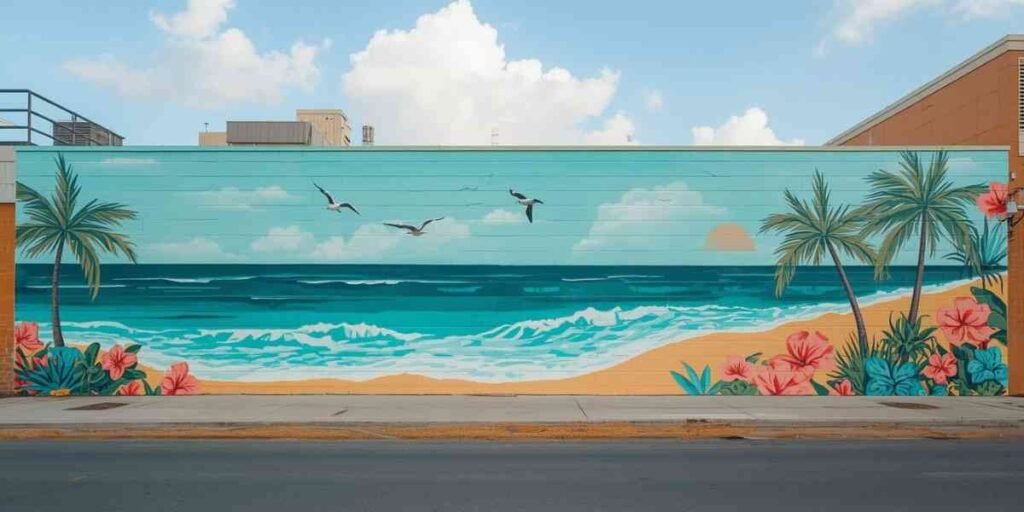
6. Multi-Panel Beach Scene
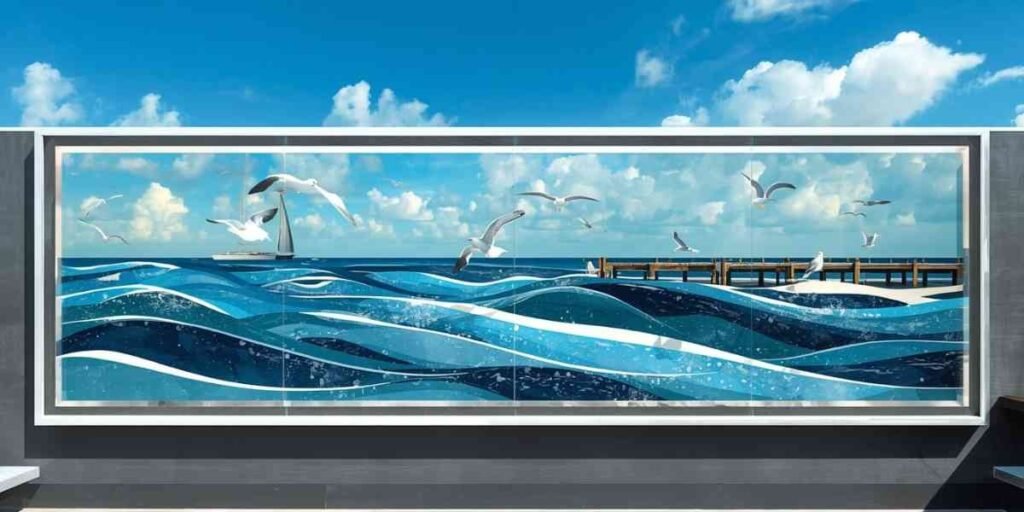
Three to five panels forming one shoreline, dune or wave photograph spreads easily across 180 to 240 cm. On rigid outdoor board or metal, this gives the window-onto-the-beach effect that visually enlarges a small patio.
7. Driftwood and Rope Wall Hanging
Real driftwood pieces, rope work and macramé-style hangings in weather-tough fibers soften metal-heavy walls. Treat them as covered-patio pieces; constant rain rots natural rope and wood.
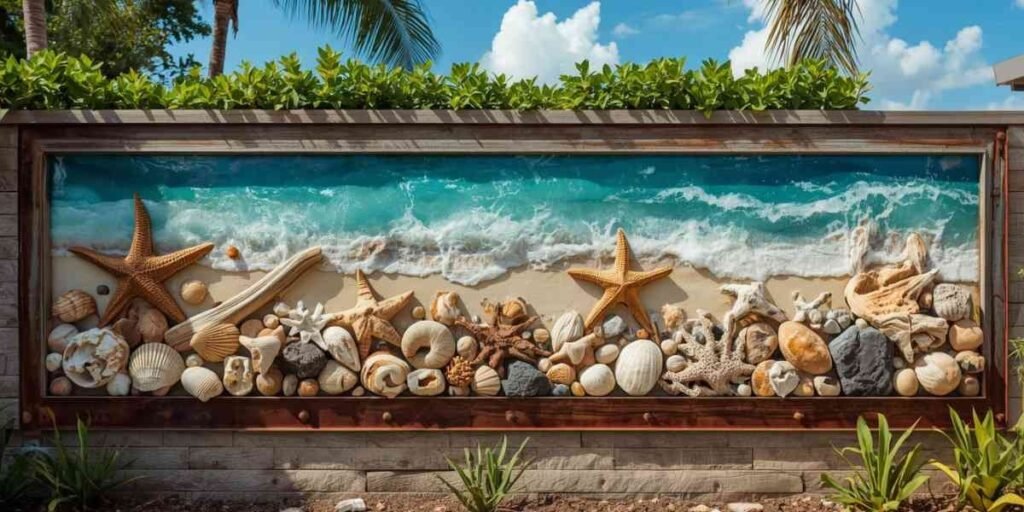
8. Starfish, Shell and Sea-Life Sculptures
Oversized starfish, sand dollars, sea turtles or a mermaid silhouette in resin or metal work as a grouped trio on a medium wall or a single giant on a small one. Keep to one species per wall for a designed look.
9. Vintage Nautical Chart or Map Panel
A harbor chart or coastline map of a place you actually know, printed on outdoor board or metal, is the most personal piece on this list and a genuine conversation starter at outdoor dinners.
10. Coastal Sign, Done Right
One large, well-made sign (a place name, a harbor, a simple “Beach House”) in sealed wood or metal can work. The rule is one, and big; a wall of small novelty signs is the look to avoid.
11. Layered Gallery Wall of Medium Pieces
If one huge piece is out of budget, group three to five medium pieces (60 to 90 cm each) in the same material and color family, hung with consistent 8 to 10 cm gaps. The group reads as one large installation from a distance.
12. Living Coastal Wall: Planters and Art Combined
Wall-mounted planters with trailing, salt-tolerant plants around a central metal piece bring the wall alive and soften hard surfaces. On a shaded fence, pair the art with the shade planting approach in our low light outdoor plants guide so the greenery survives the same wall the art hangs on.
The Sizing Rule: Half to Two-Thirds
Large outdoor pieces fail by being too small far more often than too big. The working rule: the piece (or group) should span roughly one half to two thirds of the wall’s width, with clear breathing room at the edges. Above outdoor seating, hang the center of the piece at about 160 to 170 cm from the ground, slightly higher than indoor eye level, because people view it from farther away and often standing. For a two-story wall, go genuinely oversized or stack a vertical pair; a single medium piece floats and looks apologetic.
Mounting Heavy Pieces Safely
- Brick and masonry: masonry anchors or sleeve bolts into the brick (not just the mortar), rated well above the piece’s weight. This is the strongest common wall; use it confidently.
- Wood siding and fences: screws must land in studs or fence posts/rails, not just the siding boards. Find the framing first; a 15 kg metal panel on two siding boards will tear out in the first storm.
- Vinyl siding: use siding hooks or mount through to the sheathing with long screws and spacers so the siding is not crushed.
- Stucco: drill carefully with a masonry bit and use toggle or sleeve anchors rated for stucco.
- Wind: in exposed spots, use two mounting points minimum and add a bottom standoff or security clip so the piece cannot lift and rattle or blow off. Flat pieces tight to the wall survive wind best.
- Always check what is behind the wall before drilling (wires, pipes), and use stainless or coated outdoor hardware so the fixings do not become the first thing to rust.
Placement Around the Home
- Patio wall above seating: the classic spot; size to the seating group, not the whole wall, if the wall is very long.
- Pool walls and pool house: coastal themes belong here naturally; choose resin or aluminum, because splashed chlorinated water is hard on steel coatings.
- Fence lines: a long fence takes a fish school or a gallery group; space pieces evenly rather than clustering at one end.
- Outdoor dining wall: a chart panel or compass rose behind the table defines the dining zone like art does indoors.
- Front porch wall: one medium-large piece by the door gives the house its coastal signal to the street; keep it to one so the entry stays calm.
For the indoor side of the same style, our nautical wall decor ideas cover the living room and hallway versions of these pieces.
Lighting It After Dark
Dimensional metal art earns its keep at night: a warm outdoor sconce or a low spotlight aimed across the piece makes layered cutouts throw long shadows. Solar spotlights aimed up from planting beds work where there is no wiring. Keep light warm (around 2700 to 3000K) so sea blues stay rich instead of turning grey.
Care and Seasonal Routine
- Spring: wash pieces with mild soap and water, inspect coatings and touch up chips on steel with matching outdoor paint, tighten fixings.
- Summer in salt air: rinse metal monthly with fresh water to slow salt corrosion.
- Autumn: check fence mounts after storm season; bring outdoor canvas and natural rope/wood pieces under cover or into storage before winter in cold climates.
- Winter: aluminum, resin and PVC can stay out in most climates; wood and canvas live longer with a season indoors.
Common Mistakes
- Buying indoor art for an outdoor wall. One rainy season ends the experiment and the piece.
- Hanging too small. A 60 cm piece on a 6 m fence is not a focal point; it is a postage stamp.
- Ignoring the fixing. The piece rarely fails; the mounting does, usually in the first big wind.
- Mixing every coastal symbol at once. Waves plus anchor plus wheel plus shells plus signs reads as a seafood restaurant. Choose one family and repeat it.
- Forgetting the sun’s direction. A south or west wall fades colors fastest; put your best piece on the wall that gets gentler light, or choose metal finishes that age gracefully.
Final Thoughts
Large coastal wall decor works because outdoor walls are big, blank and seen from a distance, exactly the conditions a bold piece wants. Choose a material that survives your weather, size it to half the wall or more, mount it into structure rather than surface, and the wall you ignored becomes the part of the backyard everyone photographs.
Frequently Asked Questions
What is the best material for large outdoor coastal wall decor?
Powder-coated aluminum, because it never rusts, stays light at large sizes and holds its color for years in sun and rain. Resin is the best budget alternative; powder-coated steel is fine under cover but chips must be touched up to stop rust.
How big should outdoor wall decor be?
Aim for the piece or group to span about half to two thirds of the wall’s width. On a typical 4 to 5 m patio wall, that means a piece or arrangement of roughly 2 to 3 m. When in doubt, go bigger; too small is the common failure outdoors.
Can outdoor wall decor stay outside all winter?
Aluminum, resin and PVC pieces can stay out year-round in most climates. Sealed wood, outdoor canvas and natural rope pieces last much longer if they come under cover or indoors for winter, especially where freeze and thaw cycles are strong.
How do I hang a heavy metal piece on a fence?
Screw into the fence posts or the horizontal rails, never just into the fence boards, using outdoor-rated screws in at least two points. For very heavy pieces, add a third central fixing or a bottom standoff so wind cannot work the piece loose.
How do I stop coastal decor looking cheap or themed?
Limit yourself to one symbol family (waves, or nautical instruments, or sea life), repeat it at scale, and stick to a tight palette of sea blue, white, sand and one metal. Restraint at large size reads as design; variety at small size reads as souvenirs.
Does salt air really damage outdoor decor?
Yes. Salt accelerates rust on steel, dulls coatings and corrodes cheap fixings. Near the coast, choose aluminum or resin, rinse metal pieces with fresh water a few times each summer, and use stainless fixings so the mounts outlast the art.

Hi, I’m Ashir Zahid! I’m a home décor writer and creative enthusiast who loves finding simple and beautiful ways to make everyday spaces feel more comfortable and inviting. I enjoy exploring home styling ideas, practical decorating tips, and timeless trends that can work in real homes without making things feel complicated.
At DailyHomeVibe, I share easy-to-follow ideas for decorating different rooms, choosing the right colors and textures, and giving your home a fresh look with thoughtful details. My goal is to help readers find inspiration they can actually use, whether they are refreshing one small corner or giving their whole home a new feel.