
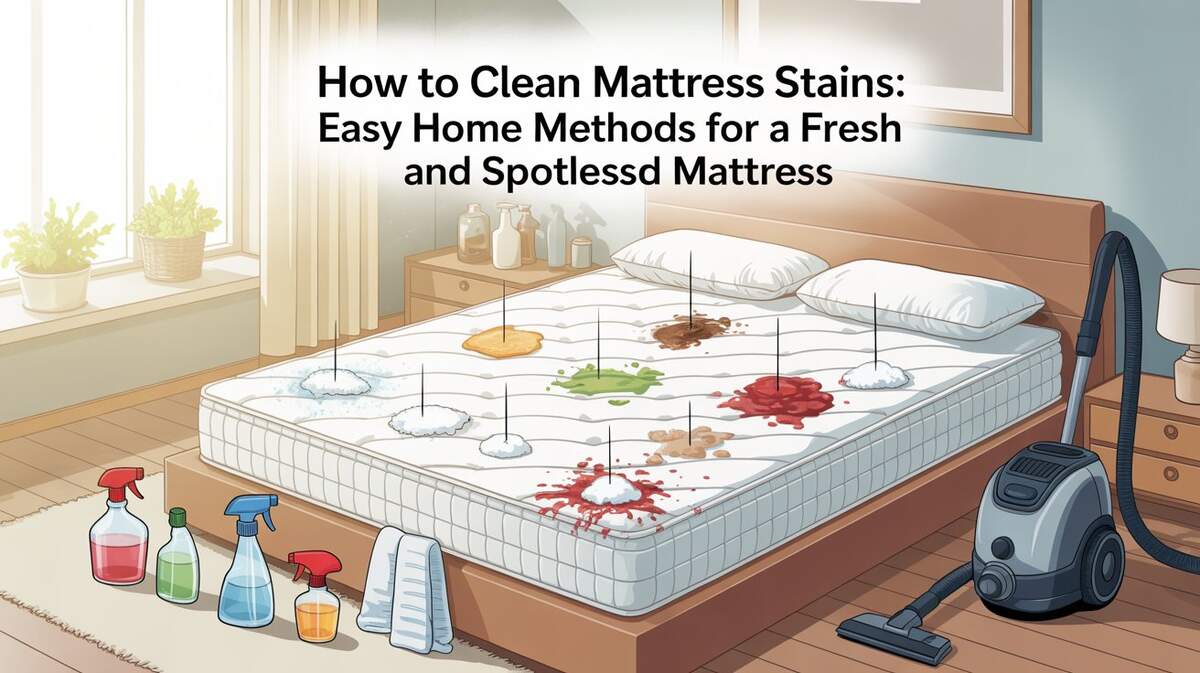
How to Clean Mattress Stains: The Right Method for Each Stain
Every mattress stain looks the same from a distance, a dull patch that will not come out, but the stain type decides the method. Sweat needs an oxidizing mix and patience. Urine needs an enzyme cleaner and hours, not minutes. Blood needs cold water only, because heat sets it permanently. This guide gives the exact amounts, dwell times and step order for each common stain, plus the drying rules that stop a cleaned mattress from turning into a mold problem.
One principle runs through every method below: a mattress is a sponge with a cover on it. Liquid you pour on goes down, not across, and it comes back up slowly or not at all. So every method here uses sprays, pastes and blotting instead of soaking, and every method ends with real drying time.
Before You Start: Five Rules That Decide Whether This Works
- Blot, never rub. Rubbing spreads the stain wider and pushes it deeper. Press a clean white towel straight down, lift, move to a dry part of the towel, repeat.
- Work from the outside of the stain toward the center. This stops the ring from growing.
- Test any mix on a small corner first, especially on colored ticking, wool or latex foam.
- Never soak a mattress, and go doubly careful with memory foam. Foam holds water deep inside and can take a day or more to dry; a soaked foam mattress is a mold risk.
- Dry fully before the protector and sheets go back on. A mattress that feels dry on top can still be damp an inch down. When in doubt, give it more hours, not fewer.
The Kit: What You Actually Need
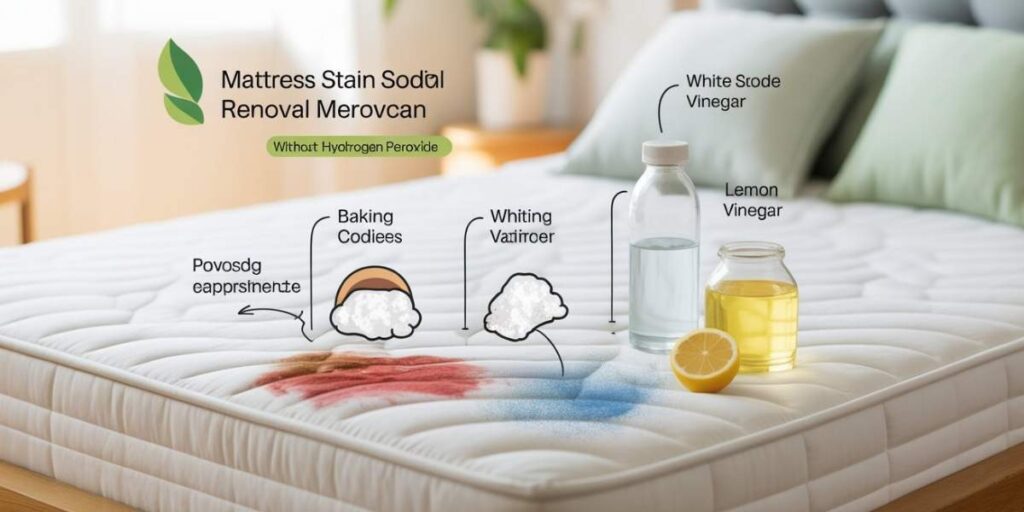
- Baking soda, one standard box (about 450 g) covers a full-mattress deodorize plus spot work
- Hydrogen peroxide, 3 percent, the standard drugstore bottle (for light-colored mattresses; skip it for dark or colored fabric)
- White vinegar, one bottle
- Mild dish soap
- Cold water and two spray bottles
- An enzyme cleaner made for urine and organic stains (the one genuinely worth buying; a 500 ml bottle lasts many incidents)
- Clean white towels or white cloths (white, so no dye transfers onto damp fabric)
- A vacuum with an upholstery or crevice attachment
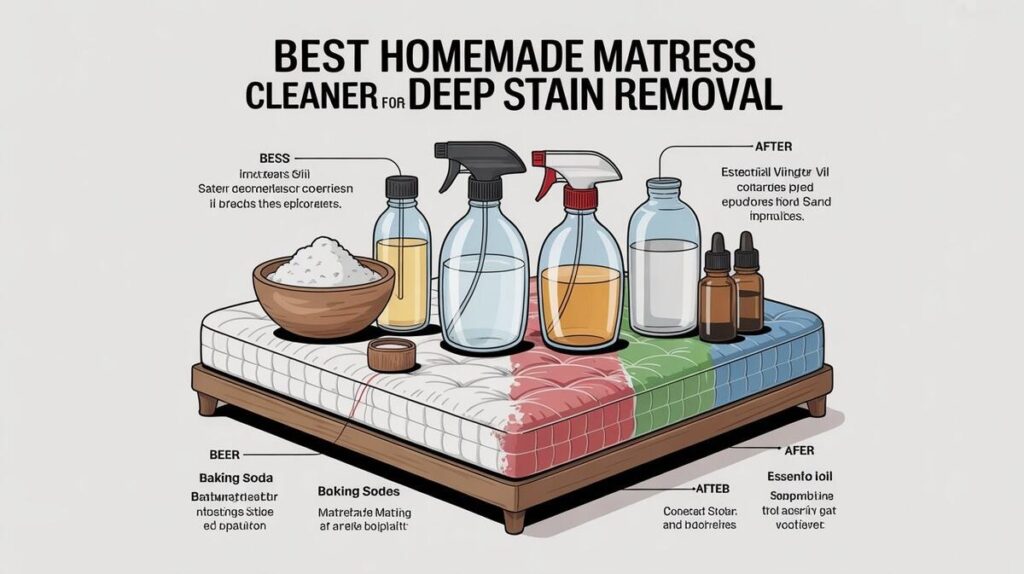
The First Ten Minutes: Any Fresh Spill
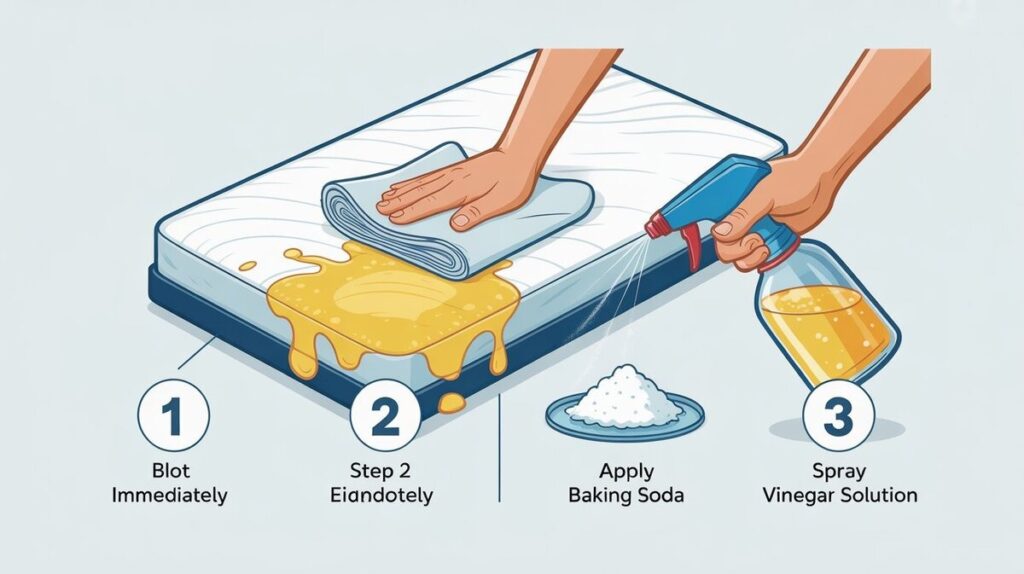
Whatever just spilled, the first response is the same, and speed matters more than the product.
- Strip the bedding straight into the wash.
- Blot the area with a dry towel until the towel stops picking up moisture. For a big spill, fold the towel, stand on it, and let your weight do the pressing.
- Only then apply the stain-specific treatment below. Treating a puddle just dilutes your cleaner.
- Leave the bed unmade until the spot is treated and fully dry.
Yellow Stains From Sweat and Body Oils
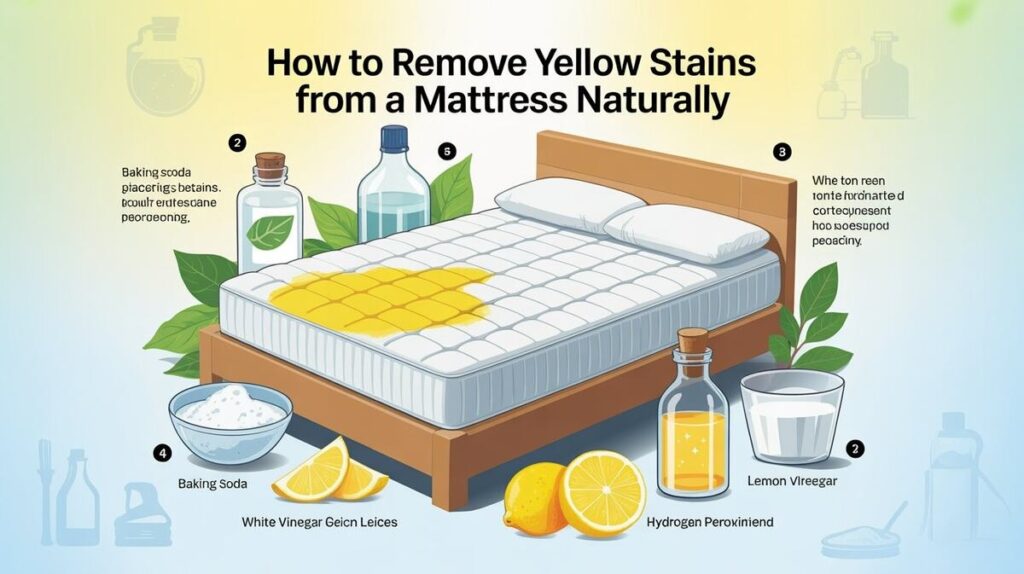
Yellow patches are oxidized sweat and skin oils that built up over months. They are the slowest stains to shift, and one pass rarely finishes them.
- Mix in a spray bottle: 250 ml hydrogen peroxide (3 percent), 1 tablespoon of dish soap, and 1 tablespoon of baking soda. Shake gently until the soda dissolves. Make it fresh; the mix loses strength within a day.
- Spray the yellowed area until it is evenly damp, not wet through.
- Leave it for at least 30 minutes, up to 1 hour for old, dark staining.
- Blot firmly with a damp white cloth to lift the loosened residue, then with a dry towel.
- Repeat once if the yellow is still visible. Two patient passes beat one flooded pass every time.
- Let the area dry completely before judging the result; the stain always looks worse while damp.
No peroxide, or a colored mattress? Use the gentler route: spray with a 1:1 mix of white vinegar and cold water, wait 15 minutes, blot, then cover with a thick layer of baking soda for 8 hours or overnight and vacuum it up. It lightens yellowing more slowly, but it is safe on any fabric.
Urine Stains (Kids, Pets, Accidents)
Urine is the stain that punishes shortcuts, because what you leave behind keeps smelling every warm night afterward. The smell lives in uric acid crystals that water and soap do not fully break down. An enzyme cleaner does; that is its whole job.
With an enzyme cleaner:
- Blot up everything you can first, as above.
- Saturate the stain area with the enzyme cleaner, enough to reach as deep as the urine reached. For a child’s accident on a double bed, that is typically 100 to 150 ml worked into a patch about 30 cm across.
- Cover the spot with a damp towel to keep it moist, and leave it 8 to 12 hours. Enzymes work while the area stays damp; a dried-out treatment is a stopped treatment.
- Remove the towel, blot, and let the mattress dry fully, ideally with a fan on it.
- If a smell remains when the spot is dry and you press your nose close, repeat once. Old or repeated accidents sometimes need two rounds.
Without an enzyme cleaner (household fallback):
- Blot thoroughly, then spray with white vinegar, enough to dampen the whole stain. Wait 15 minutes; the vinegar neutralizes the ammonia smell.
- Blot again, then sprinkle baking soda generously over the damp area (about 100 g for one accident patch).
- Leave 8 hours or overnight, then vacuum. This handles odor well but is weaker on the stain itself than the enzyme route.
Blood Stains
Blood has one rule that overrides everything: cold water only. Warm or hot water cooks the protein and bonds it to the fibers for good.
- Blot fresh blood with a cloth dampened in cold water, working inward.
- For dried blood, make a paste of 2 tablespoons of salt and 1 tablespoon of cold water. Spread it over the stain and leave it 30 minutes. The salt draws the stain out as it dries.
- Wipe the paste away with a cold, damp cloth and blot dry.
- On a white or light mattress, a small amount of hydrogen peroxide on a cotton ball, dabbed only on the stain, lifts what is left. Rinse by dabbing with cold water. Skip peroxide on colored fabric.
Coffee, Tea and Red Wine
- Blot up the excess immediately; these drinks keep spreading sideways while you watch.
- Mix 1 teaspoon of dish soap into 240 ml of cold water. Dab it onto the stain with a cloth, a little at a time, blotting between applications.
- For red wine, first cover the fresh stain with a thick layer of table salt and leave it 15 minutes. The salt pulls a surprising amount of the wine back out. Brush the salt off, then use the dish soap solution.
- Rinse by dabbing with a cloth dampened in plain cold water, so no soap film stays behind to attract dirt.
Vomit
- Scrape up solids with a dull knife or an old card, lifting away from the fabric.
- Blot, then treat with the enzyme cleaner exactly as for urine (same saturation, same 8 to 12 hour dwell under a damp towel). The enzyme cleaner handles both the stain and the smell.
- After drying, a baking soda pass (below) finishes any remaining odor.
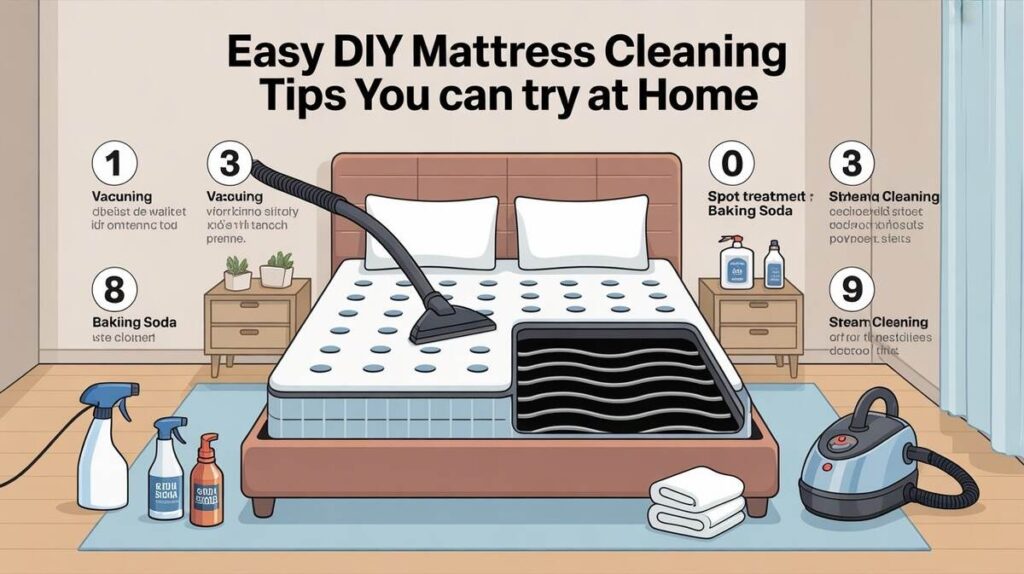
The Whole-Mattress Refresh: Baking Soda Deodorize
Do this after spot treatments, and on its own every few months.
- Vacuum the bare mattress first, slowly, including the seams and piping where dust collects.
- Sprinkle baking soda over the entire surface. Use a full generous layer, roughly 200 to 250 g for a double mattress, more where smells are stronger.
- Leave it at least 8 hours; 24 hours is better if the bed can stay stripped.
- Vacuum it all up, slowly, in two directions.
- No vacuum? Brush the soda off with a stiff brush into a dustpan, then wipe with a barely damp cloth. It is slower and leaves a little more behind, but it still removes most of the odor the soda absorbed.
While the mattress is stripped, it is a good moment to check the rest of the room’s soft surfaces too; our carpet cleaning hacks guide covers the same blot-and-dwell approach for floors.
Drying: The Step That Prevents a Worse Problem
A cleaned but damp mattress, sealed under a protector, is exactly how mold starts. Drying is not the boring tail of the job; it is half of it.
- A fan blowing across the surface cuts drying time dramatically. Open windows help on a dry day.
- A small dehumidifier in a closed room is the fastest option in humid weather.
- Expect a lightly sprayed spot to dry in 2 to 4 hours with airflow. A deep urine treatment can take 8 to 12 hours.
- Test with the back of your hand and by pressing a dry paper towel firmly into the spot for 10 seconds. If the towel picks up any moisture, wait longer.
What Never to Do
- Never soak a mattress with a bucket of solution or a soaking wet cloth routine. It drives the stain deeper and the water may never fully leave the foam.
- Never use hot water on blood or urine. Heat sets protein stains and bakes in odor.
- Never use bleach on foam. It yellows and degrades foam, and the fumes linger in a sleeping surface.
- Never mix vinegar and hydrogen peroxide together in one bottle; the combination forms peracetic acid, an irritant. Use them in separate steps if a method calls for both.
- Be cautious with steam cleaners on memory foam. The heat and forced moisture can damage foam layers and their adhesives; check the mattress maker’s guidance first.
The Twice-a-Year Deep Clean (30 to 40 Minutes of Work)
- Strip the bed and wash all bedding, including the protector.
- Vacuum the mattress thoroughly, seams included.
- Spot-treat any stains with the matching method above.
- Do the full baking soda deodorize (8 hours or overnight).
- Vacuum, rotate the mattress head-to-foot (or flip it, if the maker says it is two-sided), and remake the bed only when fully dry.
If you are planning a whole-room deep clean around it, our Deep Clean Time Estimator helps you budget the hours room by room, and the same dwell-time thinking runs through our guide to cleaning bathroom tiles without scrubbing.
Keeping It Clean Afterward
- A waterproof mattress protector is the single cheapest stain treatment there is. It takes the spill so the mattress never does. Wash it monthly, and after any accident.
- Rotate the mattress every 3 to 6 months to even out sweat load and wear.
- Treat spills the day they happen. A fresh stain is a ten-minute job; the same stain next month is a project.
- Air the bed for 20 to 30 minutes before making it when you can. Trapped overnight moisture is what feeds yellowing and smells.
Frequently Asked Questions
How long does a mattress take to dry after stain cleaning?
A lightly sprayed spot usually dries in 2 to 4 hours with a fan or open window. A deep enzyme treatment for urine can take 8 to 12 hours. Never remake the bed while any dampness remains, because a protector over a damp mattress invites mold.
Can I use bleach on mattress stains?
No. Bleach yellows and breaks down foam, can damage the ticking, and leaves fumes in the surface you sleep on. Hydrogen peroxide at 3 percent, used only on light-colored fabric, does the brightening job safely.
How do I remove a urine smell that will not go away?
The smell means uric acid crystals are still in the mattress, and only an enzyme cleaner breaks them down. Re-treat with a full saturation and the full 8 to 12 hour damp dwell under a towel. One thorough enzyme round fixes most cases; very old accidents occasionally need two.
Can I clean an old, dried stain, or is it too late?
Old stains respond, just more slowly. Rehydrate the area lightly with the matching solution, give it the full dwell time, and expect to repeat the treatment two or three times. Yellow sweat staining is the most stubborn and improves gradually with each peroxide pass.
Is a steam cleaner safe for a mattress?
On a traditional spring mattress it can help, used lightly and followed by thorough drying. On memory foam it is risky: heat and forced moisture can damage the foam and its glued layers. Check the maker’s care guidance for your specific mattress first.
When is a mattress too stained to save?
If stains cover most of the surface, if a mold smell survives two full treatments, or if the mattress is past roughly 8 to 10 years old with deep body impressions, replacement is the honest answer. Cleaning extends a mattress’s life; it cannot reverse a decade of deep-set moisture and wear.

Hi, I’m Ashir Zahid! I’m a home décor writer and creative enthusiast who loves finding simple and beautiful ways to make everyday spaces feel more comfortable and inviting. I enjoy exploring home styling ideas, practical decorating tips, and timeless trends that can work in real homes without making things feel complicated.
At DailyHomeVibe, I share easy-to-follow ideas for decorating different rooms, choosing the right colors and textures, and giving your home a fresh look with thoughtful details. My goal is to help readers find inspiration they can actually use, whether they are refreshing one small corner or giving their whole home a new feel.