
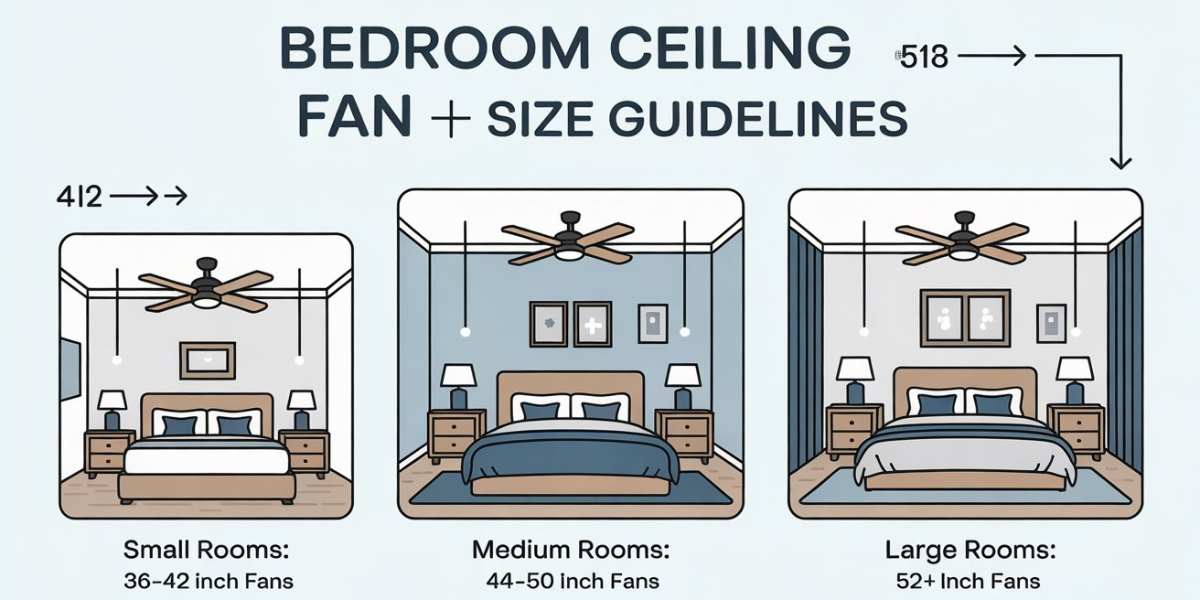
Choosing the right ceiling fan size for your bedroom can completely change how comfortable your space feels. A fan that is too small may not circulate enough air, while a fan that is too large can overpower the room and create excessive airflow or noise. That is why understanding bedroom fan sizing is important before buying a new ceiling fan.
Modern homeowners now focus on energy-efficient ceiling fans, quiet bedroom fans, smart ceiling fan designs, and airflow optimization when decorating bedrooms. The right ceiling fan not only improves cooling performance but also enhances bedroom aesthetics, sleep comfort, and indoor air circulation throughout the year.
Why Ceiling Fan Size Matters in a Bedroom
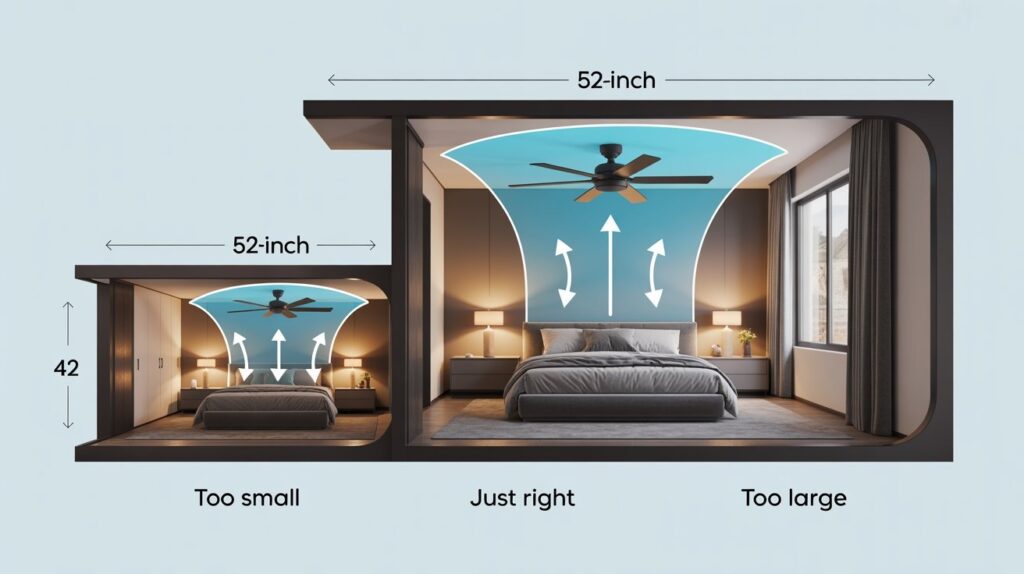
Many people buy a ceiling fan based only on appearance, but fan blade span plays a major role in comfort and airflow. A properlysized bedroom ceiling fan distributes air evenly, keeps theroom cooler, and helps reduce energy bills during warm seasons. It also supports better sleep by maintaining consistent airflow at night.
Small fans often struggle to cool medium-sized bedrooms, while oversized fans may feel uncomfortable in compact spaces. Bedroom dimensions, ceiling height, and furniture layout all affect how well a fan performs. Choosing the correct fan size creates balanced airflow without making the room feel windy or crowded.
What Size Are Most Bedroom Ceiling Fans?
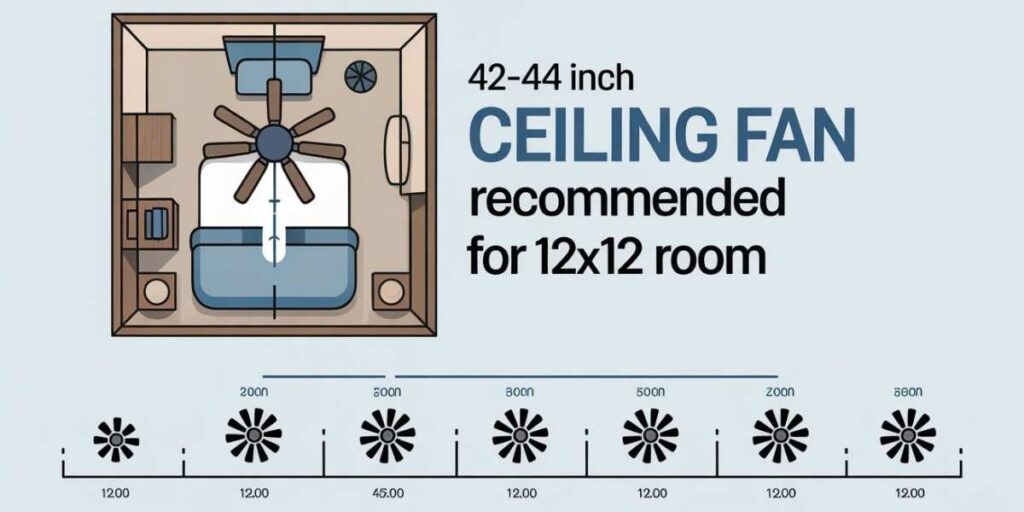
Most standard bedroom ceiling fans range between 42 inches and 52 inches. This size works well for average bedrooms and provides efficient airflow without overwhelming the space. Homeowners usually choose fan sizes based on square footage and room dimensions rather than decoration alone.
For smaller bedrooms, compact ceiling fans around 36 to 44 inches are often enough. Larger master bedrooms may require 52-inch to 60-inch fans for proper air circulation. Modern ceiling fan brands also offer low-profile fans, smart fans, and silent motor options designed specifically for bedrooms.
Best Ceiling Fan Size for a 10×10 Bedroom
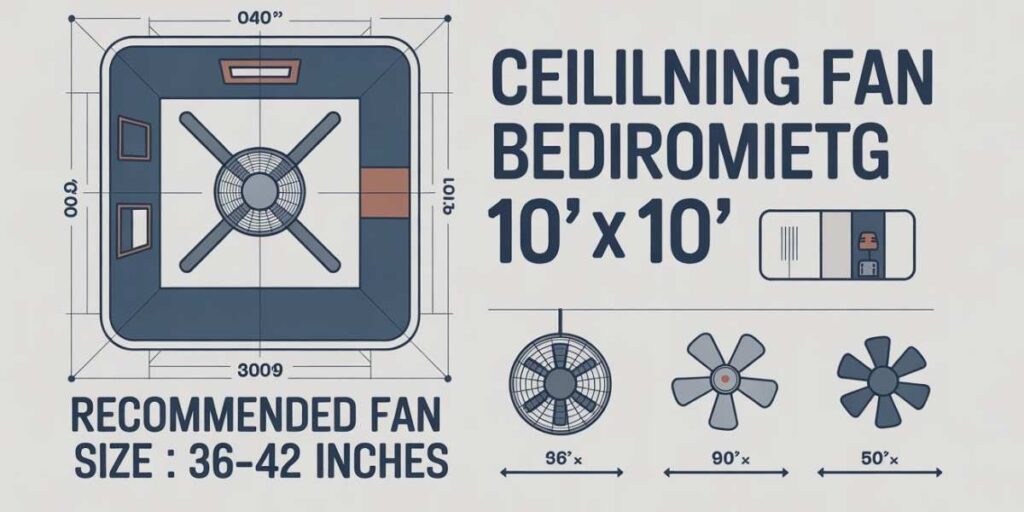
A 10×10 bedroom usually works best with a ceiling fan between 36 and 44 inches. This size provides enough airflow to keep the room comfortable without making the space feel too windy. Compact bedroom ceiling fans are ideal for guest rooms, apartments, and smaller sleeping areas.
Low-noise ceiling fans are especially useful in smaller bedrooms because they improve sleep quality while maintaining steady airflow. Choosing a fan with multiple speed settings also gives better control over cooling performance during different seasons.
Selecting the Correct Ceiling Fan for a Medium Bedroom
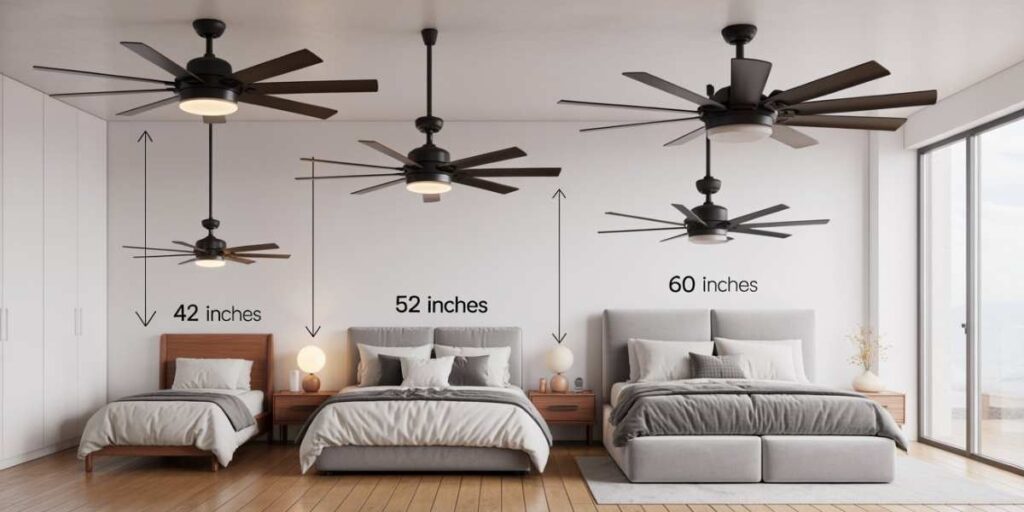
A 12×12 bedroom typically needs a 48-inch to 52-inch ceiling fan for balanced air circulation. This is one of the most common bedroom sizes, which is why many homeowners choose 52-inch modern ceiling fans for bedrooms. These fans provide excellent cooling coverage without dominating the room visually.
The correct fan size also improves energy efficiency because it helps distribute cool or warm air more evenly.
Can a Ceiling Fan Be Too Large for a Bedroom?
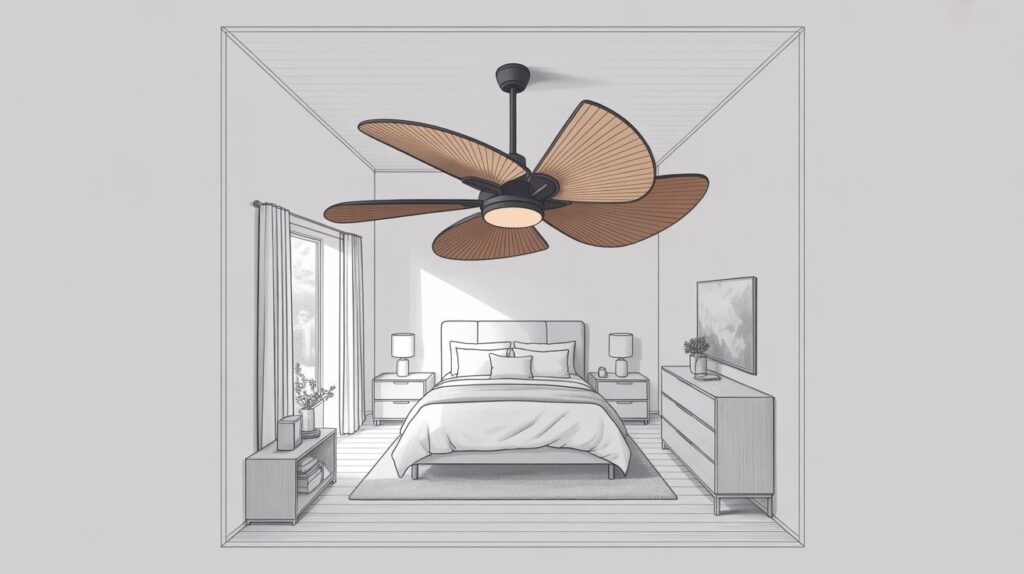
No, a 52-inch ceiling fan is not usually too big for a 12×12 room. In fact, it is considered one of the best fan sizes for medium bedrooms because it offers strong airflow and efficient cooling performance. Many modern homes use this fan size in bedrooms for maximum comfort.
However, ceiling height also matters when installing larger fans. Bedrooms with low ceilings should use flush-mount or low-profile ceiling fans to maintain safe clearance while still delivering effective airflow throughout the room.
What Size Ceiling Fan for a 12×14 Bedroom?
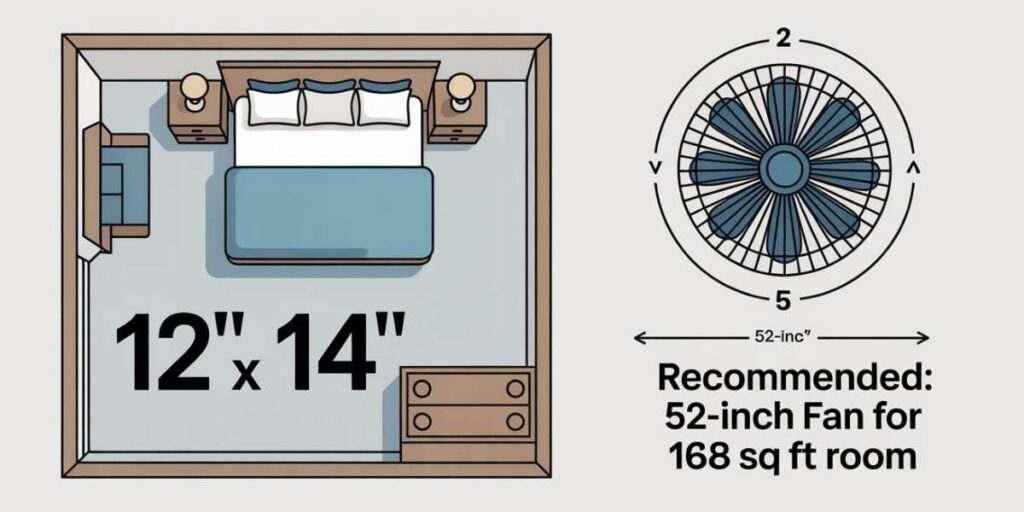
A 12×14 bedroom often benefits from a ceiling fan between 52 and 56 inches. Larger bedrooms need wider blade spans to move air effectively across the entire room. This helps eliminate warm spots and creates more consistent cooling during summer months.
Many homeowners now prefer smart ceiling fans with remote controls, dimmable lights, and reversible motors for larger bedrooms. These features improve convenience while supporting year-round temperature control and energy savings.
Ceiling Fan Size Chart for Bedrooms
Here is a simple bedroom ceiling fan size guide based on room dimensions:
| Bedroom Size | Recommended Fan Size |
| Up to 10×10 | 36–44 inches |
| 10×12 | 44–48 inches |
| 12×12 | 48–52 inches |
| 12×14 | 52–56 inches |
| Large master bedroom | 56–60 inches |
This ceiling fan sizing chart helps homeowners choose the right airflow capacity for different bedroom layouts. Correct sizing improves comfort, cooling efficiency, and overall room appearance.
Should You Choose a Ceiling Fan With Light?
Many modern bedroom ceiling fans come with built-in LED lighting systems. A ceiling fan with light saves space and eliminates the need for extra overhead fixtures. This works especially well in smaller bedrooms or minimalist room designs.
Smart lighting features are becoming increasingly popular because they combine convenience, style, and energy efficiency in one fixture.
Can a Ceiling Fan Affect Your Sinuses?
Yes, ceiling fans may sometimes affect sensitive sinuses if airflow directly hits the face for long periods. Continuous airflow can dry nasal passages in some individuals, especially during sleep. However, this does not happen to everyone and usually depends on fan speed and room humidity.
Using moderate fan speeds and maintaining proper indoor humidity can reduce discomfort. Many people still prefer sleeping with ceiling fans because improved air circulation helps create a cooler and more comfortable sleeping environment.
Low Profile Ceiling Fans for Small Bedrooms
Low-profile ceiling fans are perfect for bedrooms with lower ceilings because they sit closer to the ceiling surface. These fans improve safety while still delivering efficient airflow in compact rooms. Modern flush-mount fans also look stylish and minimal in contemporary bedroom interiors.
Many small bedroom ceiling fans now include quiet DC motors that reduce noise significantly. This creates a peaceful sleeping atmosphere while maintaining proper air circulation throughout the night.
Energy Efficient Ceiling Fans for Bedrooms
Energy-efficient ceiling fans help lower electricity costs while keeping bedrooms cooler during warm weather. Many modern fans use DC motors that consume less power and operate more quietly compared to traditional ceiling fan motors.
Smart energy-saving ceiling fans also include timer settings, remote controls, and reversible airflow options. During winter, reversing the fan direction helps circulate warm air more effectively, improving comfort and reducing heating costs.
How to Measure Ceiling Fan Size Correctly
Ceiling fan size is measured by the blade span from one blade tip to another. For fans with an even number of blades, measure directly across. For odd-numbered blade fans, measure from the center to one blade tip and double the number.
Accurate measurements help homeowners choose the correct ceiling fan size based on bedroom square footage. Proper installation spacing also improves airflow performance and enhances the overall appearance of the room.
Final
Finding the right bedroom ceiling fan size is about balancing airflow, comfort, room dimensions, and design preferences. Small bedrooms usually perform best with compact fans, while larger bedrooms benefit from wider blade spans and stronger airflow coverage.
Modern ceiling fans now combine style, smart technology, energy efficiency, and quiet operation to improve both comfort and bedroom aesthetics. Choosing the correct fan size helps create a cooler, more relaxing, and visually balanced sleeping environment.
Frequently Asked Questions
What size are most bedroom ceiling fans?
Most bedroom ceiling fans range between 42 inches and 52 inches depending on room size and airflow needs.
How big of a fan should I get for a 12×12 room?
A 48-inch to 52-inch ceiling fan usually works best for a standard 12×12 bedroom.

Hi, I’m Liam Alexander! As a home décor specialist for dailyhomevibe.com, I’m super passionate about bringing elegance and simplicity into modern living spaces. I love sharing smart design solutions, helping you optimize your space, and highlighting timeless trends to inspire you to create a home you truly love coming back to.