
Have you ever walked into one room and immediately noticed that it feels colder than everywhere else? You turn up the heat, check the thermostat, and still end up wondering why that particular room never seems to warm up.
If you’re asking, “Why is one room colder than the rest of my house?”, the problem is often more than just the thermostat. Uneven airflow, blocked vents, leaky ducts, poor insulation, drafty windows, and the room’s location can all affect its temperature.
The good news is that many cold-room problems are easy to identify once you know what to look for. Here’s how to find the cause and what you can do about it.
Why Is One Room Colder Than the Rest of My House?

A room can feel colder because it receives less warm air, loses heat faster, or both. The location and construction of the room can also make a noticeable difference.
1. The Room Has Poor Airflow
Start by checking the vent in the cold room. Hold your hand over it while the heating system is running and compare the airflow with another room.
If very little warm air is coming out, there could be an airflow problem somewhere between the HVAC system and that room.
This is especially common with rooms located far from the furnace or rooms connected to long duct runs.
2. Furniture Is Blocking a Vent
A sofa, cabinet, bed, rug, or other large object can partially block a supply vent.
Even when the vent looks open, furniture positioned directly in front of it can interfere with how warm air enters the room.
Try moving the furniture away from the register and see whether the room becomes more comfortable.
3. The Ductwork Is Leaking
Your heating system can produce plenty of warm air, but some of it can be lost before reaching the room.
Leaks, disconnected sections, damaged ducts, or poorly sealed connections can reduce the amount of conditioned air reaching certain spaces.
A cold room at the end of a duct run can sometimes be a sign that the air isn’t reaching it efficiently.
4. The Room Has Poor Insulation
Insulation helps slow down heat loss through walls, ceilings, floors, and other parts of the building envelope.
A poorly insulated room can lose heat much faster than an insulated room, particularly during cold weather.
This can be especially noticeable in older homes, converted spaces, rooms above garages, and rooms with exterior walls.
5. Cold Air Is Coming Through Windows or Doors
Large windows and exterior doors can be significant sources of heat loss when they have gaps, worn seals, or poor insulation.
On a cold day, stand near the window or door and check whether you can feel a noticeable draft.
Even a small gap around a frame can make a room feel uncomfortable.
6. The Room Has More Exterior Walls
A room surrounded by exterior walls is exposed to outdoor temperatures on more sides than a room in the middle of the house.
Corner rooms can be particularly noticeable because they often have two exterior walls and sometimes several windows.
That extra exposure can make them lose heat more quickly.
7. The Room Is Above a Garage, Basement, or Crawlspace
The space underneath a room can affect how warm the floor feels.
A bedroom or living area above an unheated garage, crawlspace, or poorly insulated basement may feel colder because the floor is exposed to a colder space underneath.
If the room is consistently cold from the floor upward, insulation beneath the room is worth investigating.
8. The Room Gets Less Sunlight
Natural sunlight can warm rooms during the day.
A room that faces away from the sun or receives very little direct sunlight may naturally feel cooler than a sunny room.
This isn’t necessarily an HVAC problem, but it can make an existing temperature difference more noticeable.
How to Find Out Why One Room Is Colder

Before buying a heater or making expensive changes, spend a few minutes checking the room itself.
Compare the Temperature
Use a simple indoor thermometer to compare the cold room with nearby rooms.
Check the temperatures at roughly the same time rather than relying only on how the rooms feel.
A measurable difference can help you determine whether you’re dealing with a real temperature imbalance or simply a room that feels colder because of drafts or cold surfaces.
Check the Airflow
Put your hand over the supply vent while the HVAC system is running.
Compare it with a vent in a warmer room.
If the cold room has noticeably weaker airflow, investigate the vent, ductwork, or HVAC distribution.
Check for Blocked Vents
Look around the entire vent rather than checking only whether the register is technically open.
Furniture and rugs can interfere with airflow.
Make sure supply vents and return vents have enough space around them to work properly.
Look for Drafts
Run your hand slowly around windows, doors, baseboards, and other exterior openings.
A noticeable stream of cold air can point toward an air leak.
Pay particular attention on windy or very cold days because drafts are often easier to detect then.
Notice When the Room Gets Cold
Timing can provide useful clues.
If the room is cold all day, insulation, airflow, or the room’s location could be contributing.
If it becomes noticeably colder after sunset, windows and exterior walls could be playing a larger role.
If it gets cold only when the HVAC system is running, airflow or ductwork deserves closer attention.
How to Fix a Cold Room in Your House

Once you’ve identified the likely cause, start with the simplest fixes before moving toward larger repairs.
Move Furniture Away From Vents
Give supply vents plenty of open space.
Moving a sofa or cabinet a few inches can sometimes make a noticeable difference in how air circulates around the room.
Clean or Replace the HVAC Filter
A dirty filter can restrict airflow through the HVAC system.
Check the filter according to the manufacturer’s recommended maintenance schedule and replace it when necessary.
If the filter becomes dirty unusually quickly, there could be another issue worth investigating.
Improve Airflow
Make sure supply vents are open and unobstructed.
Also check whether the room has an adequate return-air path. If air cannot circulate properly back toward the HVAC system, simply adding more warm air may not solve the underlying problem.
Seal Drafty Windows and Doors
Weatherstripping and appropriate caulking can help reduce unwanted air movement around windows and doors.
For older windows, heavier curtains can also help reduce the chilly feeling near the glass, although they won’t replace proper window or insulation repairs when those are needed.
Improve Insulation
If the room loses heat through an exterior wall, ceiling, floor, or attic area, improving insulation can help the space hold onto conditioned air for longer.
For larger insulation projects, it’s worth identifying where the heat loss is actually occurring before spending money on materials.
Check the Ductwork
If airflow is weak or the problem affects a room far from the HVAC equipment, have the ductwork inspected.
A professional can look for leaks, disconnected sections, poor connections, and other distribution problems.
Check the Thermostat Location
Your thermostat measures the temperature around its own location.
If it is installed in a warmer part of the house, the heating system may stop running even though another room remains cold.
This doesn’t necessarily mean the thermostat itself is faulty. Its location can simply make it a poor representation of the temperature in other areas.
Why Is One Bedroom Colder Than the Rest of the House?

Bedrooms often have temperature differences for reasons that aren’t immediately obvious.
Upstairs and Downstairs Can Have Different Temperatures
Warm air naturally moves upward, while lower areas can remain cooler.
This can create noticeable differences between bedrooms upstairs and living spaces downstairs.
Bedrooms at the End of Long Duct Runs
A bedroom located far from the HVAC equipment may receive less conditioned air than rooms closer to the system.
If the vent has weak airflow compared with other rooms, duct distribution should be checked.
Bedrooms Above Garages Can Feel Colder
A bedroom directly above an unheated garage can lose heat through the floor if that area isn’t adequately insulated.
Cold flooring can also make the entire room feel less comfortable even when the air temperature isn’t dramatically different.
Exterior Bedrooms Lose Heat More Easily
A bedroom with several exterior walls or large windows has more surfaces exposed to outdoor temperatures.
That can increase heat loss during winter.
Windows Can Make a Bedroom Feel Colder
Even when the air temperature seems reasonable, sitting beside a cold window can make you feel chilled.
Check the seals and surrounding frame for noticeable drafts or cold spots.
Why Is One Room Colder in Winter but Hotter in Summer?

A room that is too cold in winter but too hot in summer often has a deeper comfort or airflow problem.
The same room may lose heat quickly during winter and gain heat quickly during summer.
Poor Insulation
Insulation helps slow the transfer of heat in both directions.
If a room has insufficient insulation, outdoor temperature changes can have a stronger effect on the indoor space.
Air Leaks
Gaps around windows, doors, walls, and other openings allow outdoor air to enter and conditioned indoor air to escape.
Sealing obvious leaks can improve comfort throughout the year.
Uneven HVAC Air Distribution
If the room receives too little conditioned air in winter and summer, the issue may be related to ductwork or system balancing.
Sun Exposure
A room with strong afternoon sunlight can become considerably warmer in summer.
During winter, the same sunlight can sometimes provide useful warmth during the day.
Room Location
Top-floor rooms, corner rooms, rooms over garages, and rooms with large exterior surfaces can all respond differently to outdoor temperatures.
When Should You Call an HVAC Professional?

Some cold-room problems are easy to troubleshoot, but others require professional inspection.
Consider getting professional help when:
The Room Stays Cold After Basic Fixes
If you’ve cleared the vents, checked for drafts, changed the filter, and still have a significant temperature difference, there may be a deeper issue.
Airflow Is Very Weak
A supply vent that produces noticeably less air than the rest of the house can point toward a duct or airflow problem.
Several Rooms Have Temperature Problems
If multiple rooms are too hot or too cold, the issue may involve the HVAC system, duct design, airflow balance, or insulation rather than one individual room.
You Suspect Leaking or Damaged Ducts
Ductwork located in attics, crawlspaces, basements, or other difficult-to-access areas can be difficult to inspect safely yourself.
Your Heating System Is Struggling
If the HVAC system runs for unusually long periods, doesn’t reach the desired temperature, or frequently cycles on and off, professional evaluation can help identify the cause.
Simple Ways to Keep Room Temperatures More Consistent

Once you’ve fixed the main problem, a few simple habits can help maintain more even temperatures.
Keep Vents Clear
Don’t cover supply or return vents with furniture, rugs, boxes, or other objects.
Maintain the HVAC System
Follow the manufacturer’s maintenance recommendations and replace filters as needed.
Seal Obvious Drafts
Check exterior doors and windows periodically, especially before winter.
Use Curtains Strategically
Curtains can help reduce the chilly feeling around windows during cold weather. Open them when useful sunlight can naturally warm the room.
Keep Interior Air Moving
Ceiling fans and other circulation methods can help distribute air more evenly when used appropriately for the season.
Monitor Temperature Differences
A few inexpensive thermometers placed in different rooms can help you spot temperature patterns instead of relying only on how each room feels.
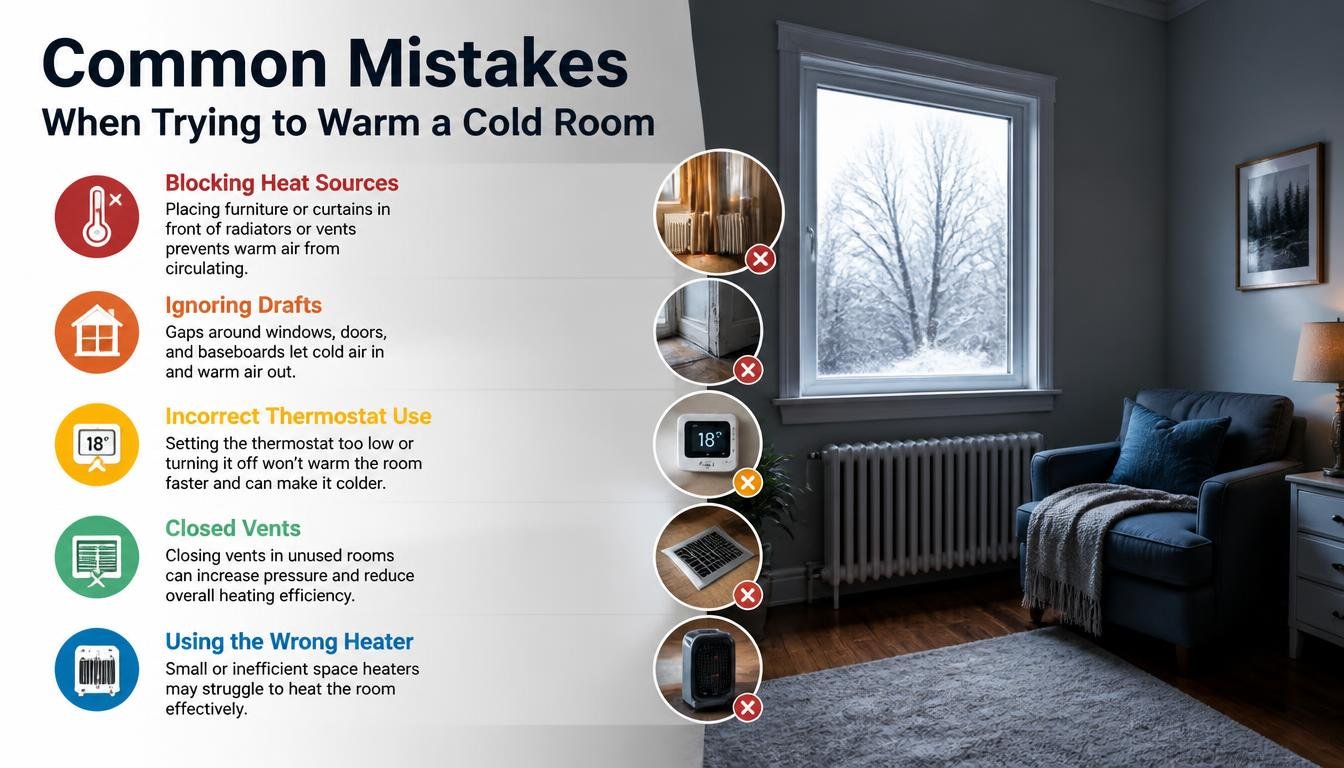
Common Mistakes When Trying to Warm a Cold Room

Trying to fix the problem without finding the cause can sometimes waste money.
Closing Vents in Warmer Rooms
Closing several vents isn’t always the best way to redirect heat to a cold room. Your HVAC system is designed to operate with a particular airflow balance.
Turning the Thermostat Up Too High
Setting the thermostat much higher won’t necessarily make one distant room heat faster.
If the room has poor airflow or significant heat loss, the underlying issue still needs attention.
Blocking Supply Vents
Adding furniture over or directly in front of a vent can make the problem worse.
Ignoring Ductwork
It’s easy to blame a cold room on windows or insulation, but ductwork can also be responsible for poor heating distribution.
Assuming Every Cold Room Needs More Insulation
Insulation is important, but it isn’t automatically the cause.
Check airflow, drafts, windows, and ductwork before committing to a larger project.
Using a Space Heater as the First Solution
A space heater can provide temporary warmth, but it doesn’t fix the reason the room is colder.
If you rely on one, follow the manufacturer’s safety instructions and keep it away from curtains, bedding, furniture, and other combustible materials.
FAQs About One Room Being Colder
Why is one room colder than the rest of my house?
A room can be colder because of poor airflow, blocked vents, leaking ducts, inadequate insulation, drafty windows, exterior walls, limited sunlight, or its location above a garage or other unconditioned space.
How do I fix one room that is colder than the rest of the house?
Start by checking the vent, airflow, furniture placement, filter, windows, doors, and obvious drafts. If the temperature difference continues, inspect the ductwork, insulation, and HVAC system.
Why is my bedroom colder than the rest of my house?
A bedroom may be colder because it is farther from the HVAC system, has exterior walls or large windows, sits above an unheated space, or receives less conditioned airflow.
Why is one room colder even when the heat is on?
The heating system can be running normally while one room receives inadequate airflow or loses heat faster than other rooms. Check the vent, ductwork, insulation, windows, and doors.
Can a blocked vent make a room colder?
Yes. Furniture, rugs, or other objects positioned over or directly in front of a supply vent can interfere with airflow and reduce the amount of warm air entering the room.
Can poor insulation cause one room to be colder?
Yes. Poor insulation allows heat to escape more quickly through walls, ceilings, floors, or other parts of the home’s exterior envelope.
Can leaky ducts make one room colder?
Yes. Leaks or disconnected duct sections can reduce the amount of conditioned air reaching a room, particularly when the room is far from the HVAC equipment.
Why is one room colder in winter but hotter in summer?
A room with poor insulation, air leaks, strong sun exposure, or uneven HVAC airflow can lose heat quickly in winter and gain heat quickly during summer.
Should I close vents in rooms that are warmer?
Not necessarily. Closing vents can affect the airflow balance of the HVAC system. It’s better to identify why the cold room isn’t receiving or retaining enough conditioned air.
When should I call an HVAC professional?
Call a professional if airflow is very weak, several rooms have temperature problems, the HVAC system struggles to maintain the desired temperature, or you suspect ductwork or equipment problems.
A cold room isn’t always a sign that your entire HVAC system needs replacing. Start by finding out whether the room is losing heat, receiving too little conditioned air, or both. Once you identify the source, the right fix becomes much easier to choose.

Hi, I’m Ashir Zahid! I’m a home décor writer and creative enthusiast who loves finding simple and beautiful ways to make everyday spaces feel more comfortable and inviting. I enjoy exploring home styling ideas, practical decorating tips, and timeless trends that can work in real homes without making things feel complicated.
At DailyHomeVibe, I share easy-to-follow ideas for decorating different rooms, choosing the right colors and textures, and giving your home a fresh look with thoughtful details. My goal is to help readers find inspiration they can actually use, whether they are refreshing one small corner or giving their whole home a new feel.