
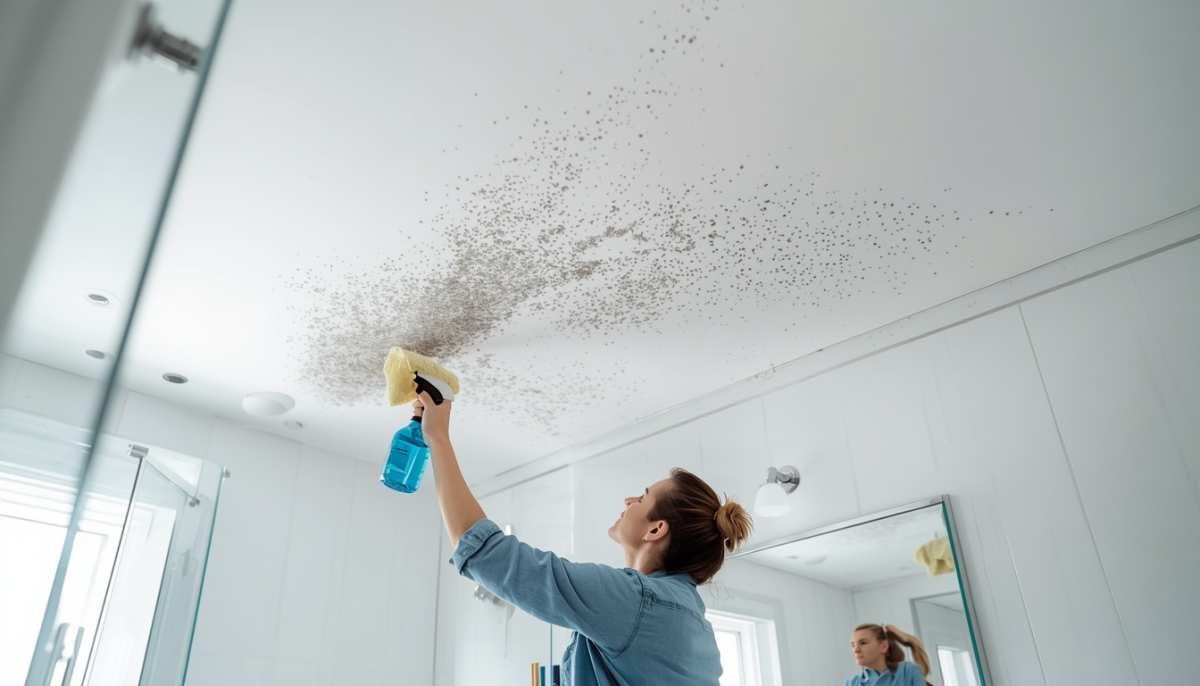
Seeing dark spots spreading across your bathroom ceiling can make the whole room feel dirty, even after a thorough cleaning. Bathroom ceilings often develop mold because warm showers create steam, while poor ventilation allows moisture to linger on the surface.
If you want to remove mold from a bathroom ceiling without bleach, you have several options. The right approach depends on the ceiling material, how much mold you have, and whether moisture is still reaching the area.
For a small amount of surface mold, you can clean the affected area with a suitable bleach-free method, gently remove the visible growth, and dry the ceiling completely. However, cleaning alone will not solve the problem if a leak, condensation, or poor ventilation keeps the ceiling damp. EPA guidance emphasizes that controlling moisture is essential for preventing mold from returning.
Quick Answer: For a small amount of surface mold, choose a suitable bleach-free cleaning method for your ceiling, gently remove the visible growth, and dry the area completely. Then address the moisture problem that caused the mold in the first place.
Why Does Mold Grow on a Bathroom Ceiling?
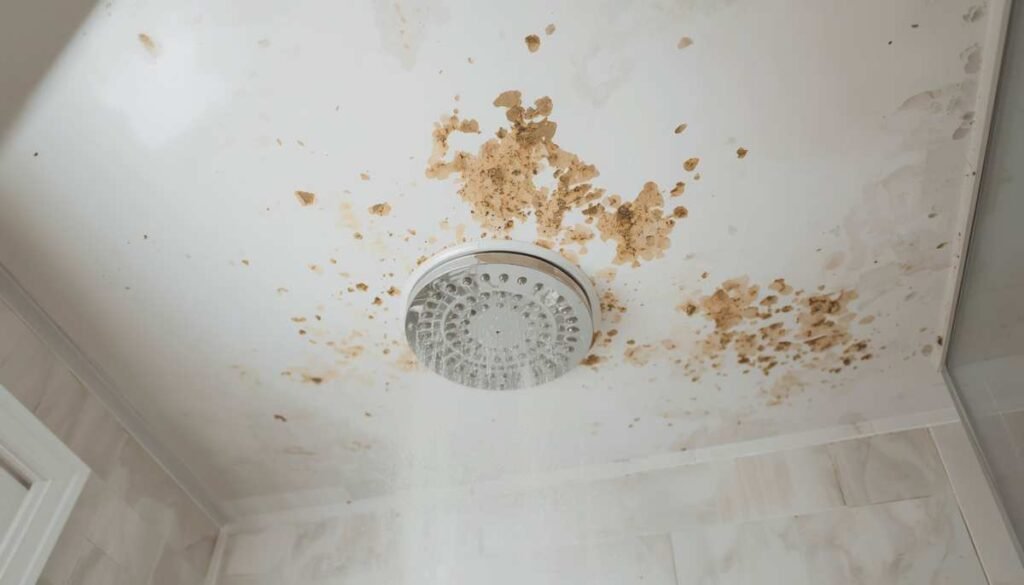
Your bathroom ceiling has several conditions that mold likes. Every hot shower releases moisture into the air. If that moisture cannot escape, it can settle on cooler surfaces such as the ceiling.
Poor ventilation makes the problem worse. An exhaust fan that does not vent properly, a bathroom without enough airflow, or a habit of keeping the room closed after showers can allow humidity to remain trapped.
Leaks can also cause ceiling mold. A plumbing problem above the bathroom, a roof leak, or water damage can keep the ceiling damp from the inside. Mold can grow on drywall, ceiling tiles, wood, paint, and other materials when moisture is present.
Is Mold on a Bathroom Ceiling Common?
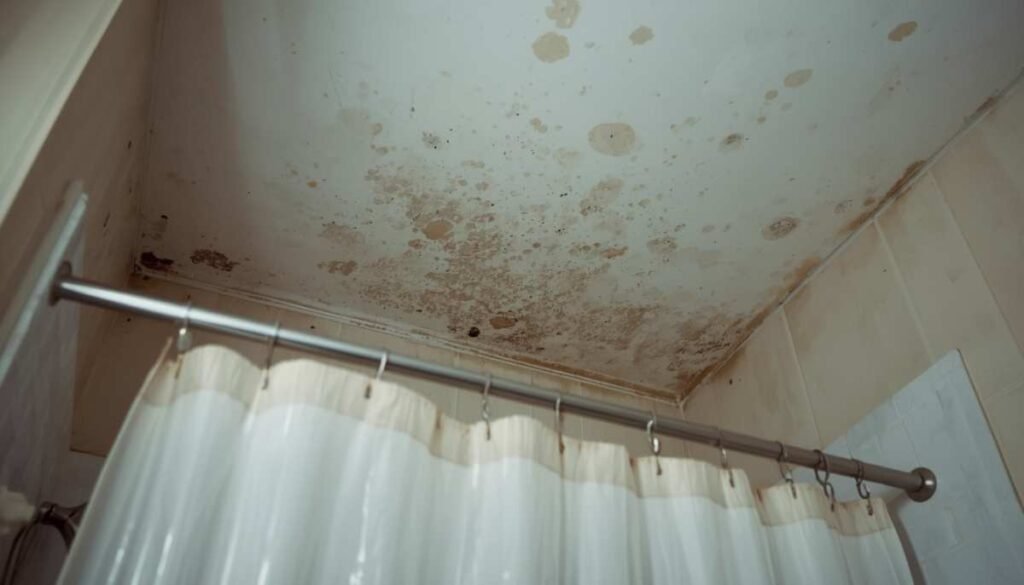
Yes. Bathroom ceilings are especially vulnerable because they regularly experience steam, humidity, and condensation.
A few small spots may appear after repeated exposure to moisture. If you keep seeing new mold after cleaning, however, look beyond the visible spots. Recurring mold often points to an unresolved moisture problem.
Why Does Mold Keep Coming Back on My Bathroom Ceiling?

Mold can return when the underlying moisture problem remains.
For example, you might clean the ceiling today, but if shower steam continues collecting there every day, the surface can become damp again. The same thing can happen when a hidden plumbing leak or roof leak keeps feeding moisture into the ceiling.
If mold appears in several areas of your bathroom, see our guide on how to remove mold from bathroom for a broader approach to bathroom mold, humidity, ventilation, and prevention.
What to Do Before Removing Mold From the Ceiling
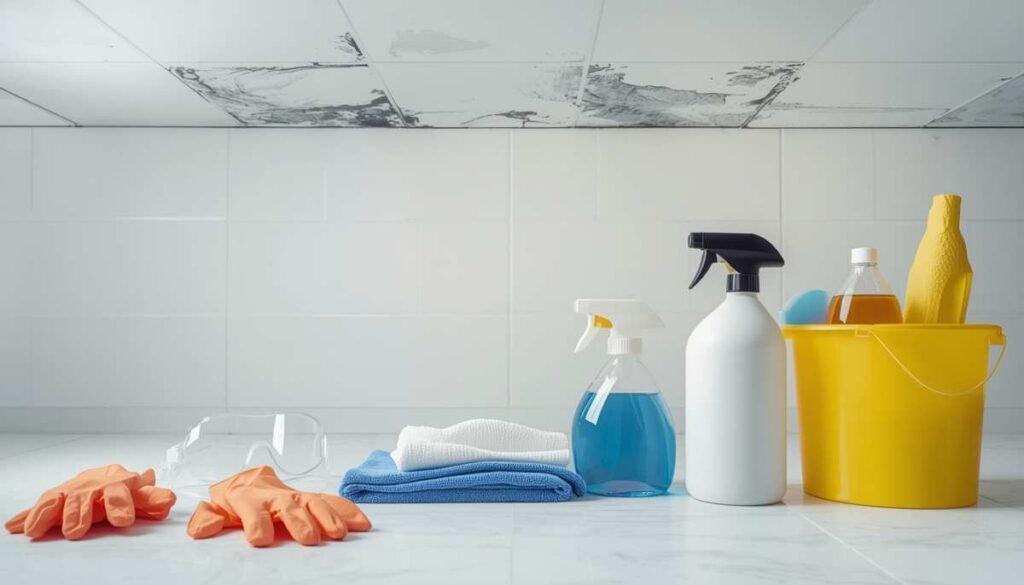
Before you start cleaning, take a few minutes to prepare the room. Mold cleanup can expose you to mold particles, so protecting yourself matters.
Open a window if you have one and use an exhaust fan that vents outdoors. Wear protective gloves and eye protection. CDC guidance recommends appropriate respiratory protection during mold cleanup, including at least an N95 respirator for cleanup work.
Cover the floor beneath the affected area if you expect cleaning solution to drip. Remove towels, toiletries, and other items that you do not want exposed to mold or cleaning products.
Next, inspect the ceiling.
If the ceiling feels soft, crumbles when touched, has significant water damage, or shows widespread growth, do not treat it like a simple surface-cleaning job. Porous materials can hold mold in areas that are difficult to clean completely. EPA notes that porous materials such as ceiling tiles may need replacement when mold grows into them.
Before You Start: Quick Checklist
| Check | What to Do |
| Ventilation | Open a window or use an exhaust fan that vents outside |
| Hands | Wear protective gloves |
| Eyes | Wear protective goggles |
| Breathing protection | Use appropriate respiratory protection for mold cleanup |
| Floor | Protect the area below the ceiling |
| Ceiling condition | Look for soft, crumbling, or water-damaged areas |
| Cleaning product | Check that it is suitable for the surface |
| Moisture source | Look for leaks, condensation, or poor ventilation |
If you have allergies, immune suppression, underlying lung disease, or certain chronic respiratory conditions, CDC advises against taking part in mold cleanup.
How to Remove Mold From Bathroom Ceiling Without Bleach
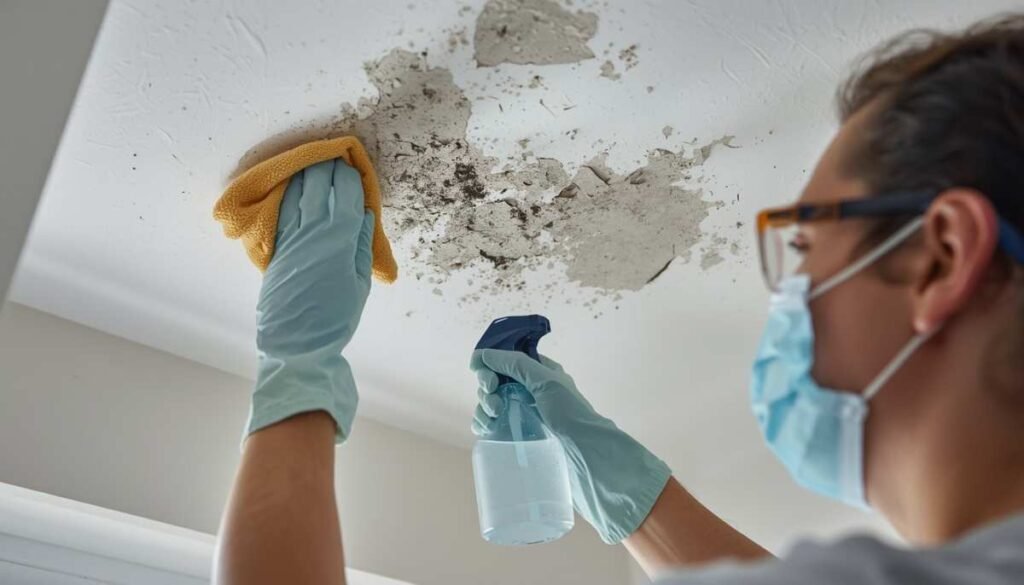
For a small area of surface mold on a suitable hard or painted surface, you can follow a careful bleach-free cleaning process.
Which Bleach-Free Method Should You Use?
Before jumping into the steps, this quick comparison can help you choose an approach.
| Method | Best For | Main Advantage | Important Consideration |
| Detergent + Water | Small areas on suitable hard surfaces | Simple cleaning method | Avoid excessive moisture |
| Vinegar | Some suitable household surfaces | Common bleach-free option | Test painted surfaces first |
| Hydrogen Peroxide | Small surface areas | Another bleach-free option | Check the product and surface |
| Baking Soda | Light surface cleaning and odors | Gentle household ingredient | Not a complete fix for recurring mold |
| Commercial Mold Cleaner | Product-specific cleaning | Made for mold-related cleaning | Follow the label directions |
The safest choice depends on the ceiling material. EPA guidance recommends cleaning mold from hard surfaces with detergent and water and drying the surface completely.
Step 1: Ventilate the Bathroom

Start by improving airflow.
Open the bathroom window or use an exhaust fan that vents outside. Good airflow helps remove humid air from the room.
Do not begin by spraying a large amount of liquid onto the ceiling. You want to clean the mold without unnecessarily soaking the surface.
Step 2: Protect Yourself and the Area
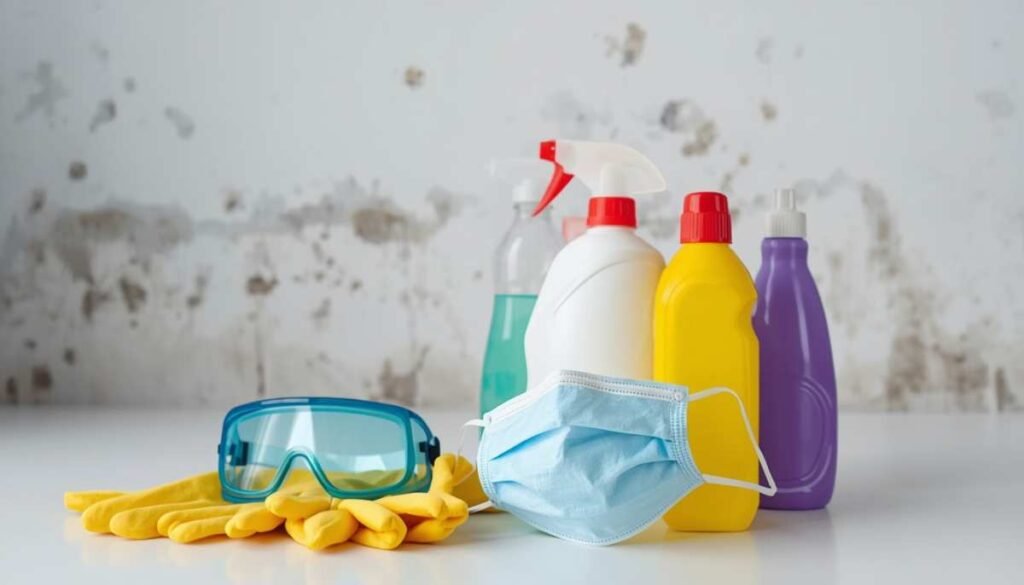
Put on protective gloves and goggles before handling the affected area.
If you are cleaning a larger amount of mold or expect significant exposure, use appropriate respiratory protection. CDC recommends protecting your eyes, skin, and respiratory system during mold cleanup.
Keep children and pets away from the cleaning area while you work.
Step 3: Choose a Bleach-Free Cleaning Solution
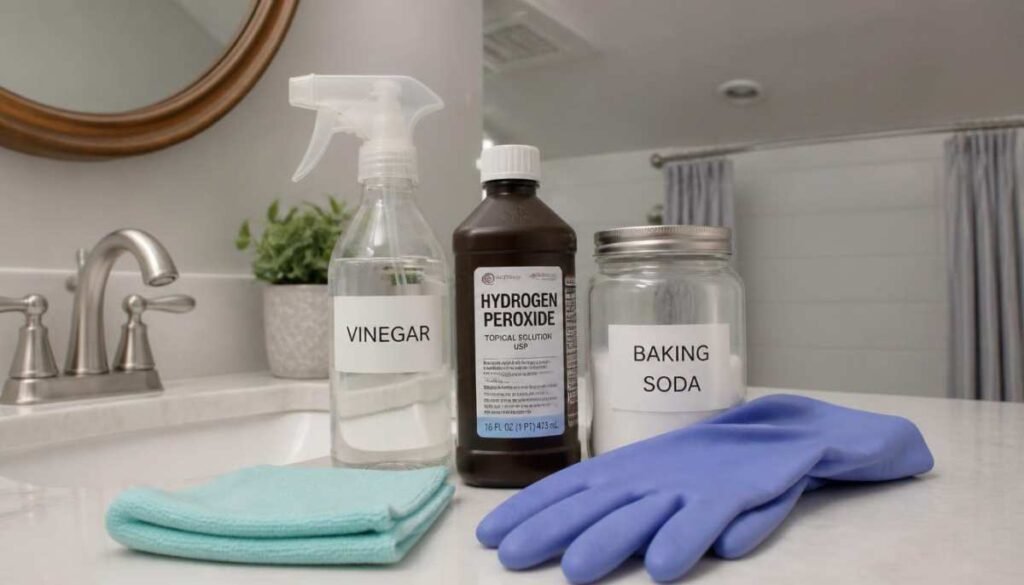
You do not have to rely on bleach simply because you are dealing with mold.
For many household situations, detergent and water can clean mold from suitable hard surfaces. EPA specifically recommends scrubbing mold from hard surfaces with detergent and water, followed by thorough drying.
You can also choose a commercial mold cleaner that does not contain chlorine bleach. If you do, read the label carefully and make sure it is suitable for your ceiling surface.
For painted or textured ceilings, test your chosen cleaner on a small, inconspicuous area first.
Step 4: Apply the Cleaner Carefully
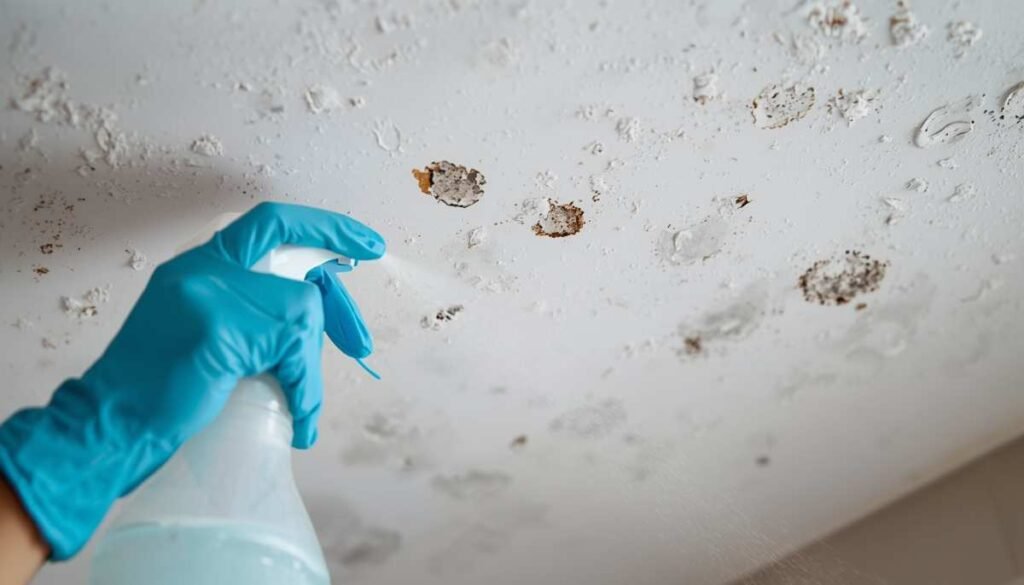
Apply a small amount of your chosen cleaning solution to the affected area.
Avoid soaking drywall or another porous ceiling material. Excess moisture can create another problem while you are trying to solve the first one.
Work in small sections rather than covering the entire ceiling at once.
Step 5: Give the Cleaner Time to Work
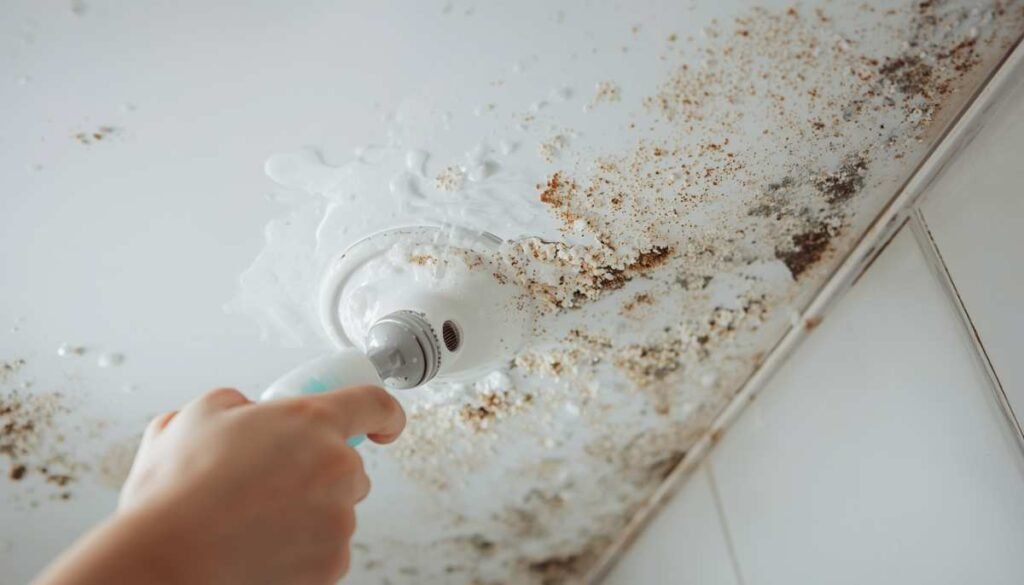
If you are using a commercial product, follow the contact time listed on its label.
Do not assume that leaving a household cleaner on the surface for hours will make it more effective. Different products work differently, and some can damage paint or other finishes when left on too long.
Step 6: Gently Scrub the Mold
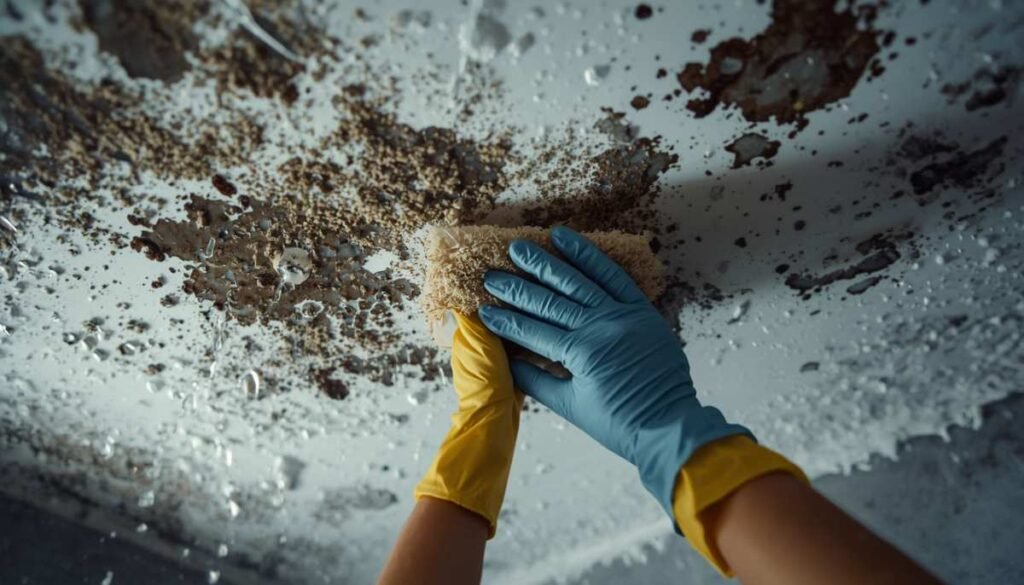
Use a soft brush or suitable sponge to loosen the visible mold.
Work gently, especially on painted or textured ceilings. Aggressive scrubbing can damage the finish and spread dirty water across a larger area.
The goal is to physically remove the visible mold rather than simply change its color.
Step 7: Wipe the Ceiling Clean
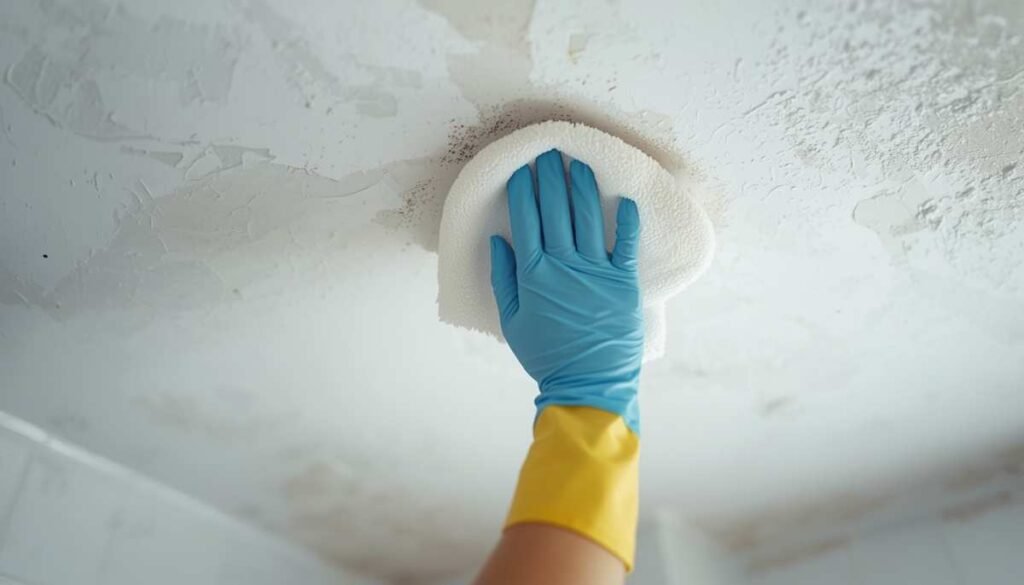
After loosening the mold, wipe the area with a clean, damp cloth as appropriate for the surface.
Avoid repeatedly soaking the ceiling.
If the cleaning product requires rinsing, follow its label directions. Otherwise, remove the remaining residue using the method recommended for that particular product.
Step 8: Dry the Ceiling Completely
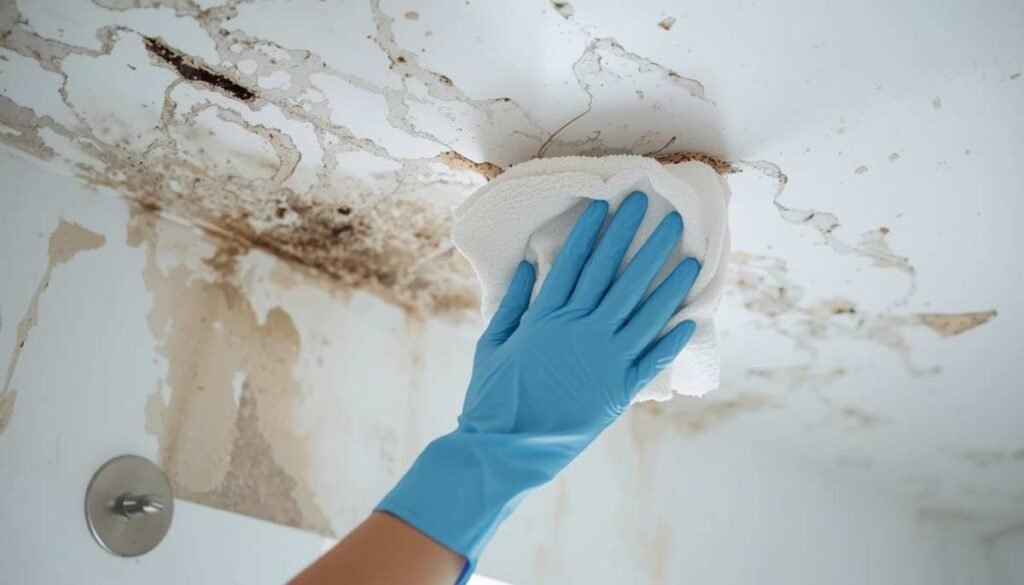
Drying is one of the most important parts of mold cleanup.
Use clean towels where practical, improve ventilation, and allow the surface to dry fully. EPA guidance emphasizes fixing moisture problems and drying affected areas completely because mold growth depends on moisture.
Do not paint over a damp or moldy ceiling. Clean and dry the surface first. CDC also advises against simply covering mold with paint because the underlying problem remains.
Your 8-Step Mold Removal Checklist
| Step | What You Do | Why It Matters |
| 1 | Ventilate the bathroom | Helps remove humid air |
| 2 | Protect yourself | Reduces exposure during cleanup |
| 3 | Choose a suitable cleaner | Matches the surface and your needs |
| 4 | Apply carefully | Prevents unnecessary soaking |
| 5 | Follow product directions | Gives the cleaner appropriate contact time |
| 6 | Gently scrub | Removes visible growth |
| 7 | Wipe clean | Removes loosened mold and residue |
| 8 | Dry completely | Helps reduce recurring moisture |
How to Remove Mold From a Bathroom Ceiling With Vinegar
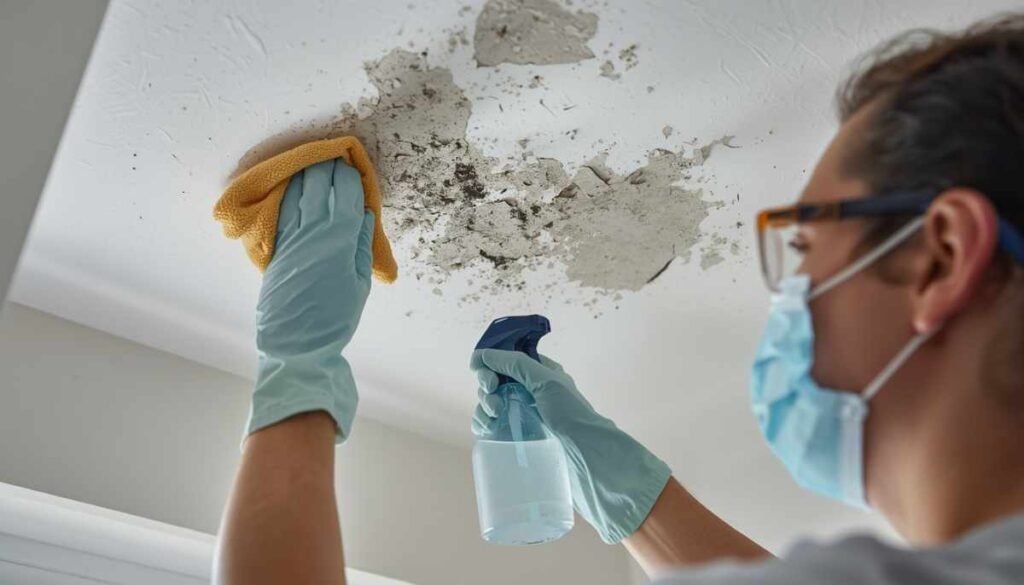
Vinegar is one of the most common household options people consider when they want to avoid bleach.
If you decide to use vinegar on a suitable surface, test a small hidden area first. Some paints, finishes, and ceiling materials may react differently to acidic cleaners.
Apply the solution carefully to the affected area rather than saturating the ceiling. Clean the visible growth gently, then wipe the area according to the needs of the surface.
After cleaning, focus on drying the ceiling completely.
The most important part is not the cleaning ingredient alone. If steam, condensation, or a leak continues to keep the ceiling damp, mold can return after cleaning.
Never mix vinegar with bleach or other cleaning products. CDC warns against mixing cleaning products because dangerous chemical reactions can occur.
Can Hydrogen Peroxide Remove Mold From a Bathroom Ceiling?
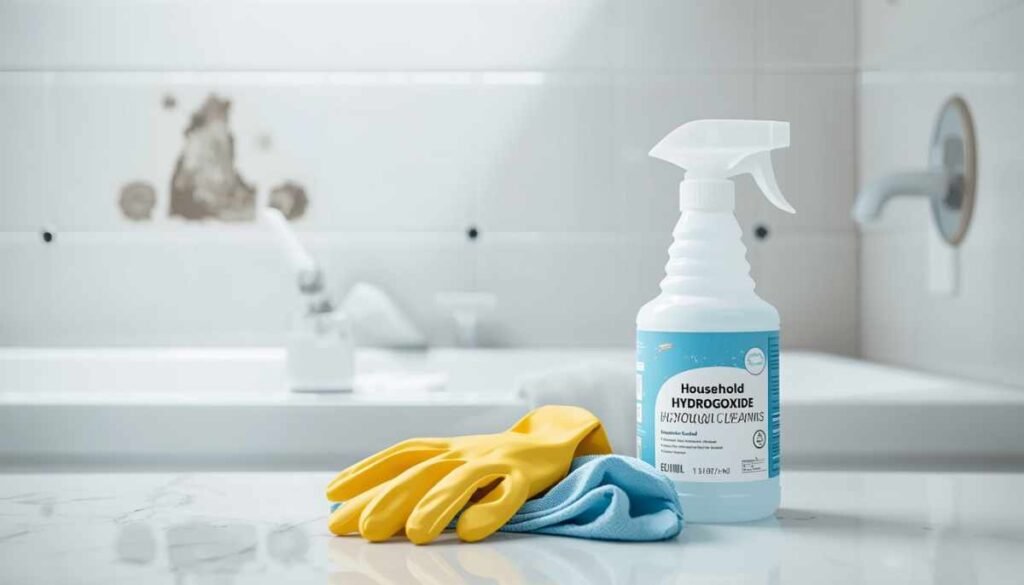
Hydrogen peroxide is another bleach-free cleaning option some homeowners consider for surface mold.
If you use a household hydrogen peroxide product, check its concentration and label directions first. Test it on a small hidden section to see whether it affects the paint or ceiling finish.
Apply it carefully, follow the product’s directions, and remove the loosened residue as directed.
Do not assume hydrogen peroxide will solve a recurring mold problem by itself. If moisture continues reaching the ceiling, the mold can return.
Most importantly, do not combine hydrogen peroxide with other household cleaners. Use one cleaning product at a time and follow its safety instructions.
Can Baking Soda Remove Mold From a Ceiling?
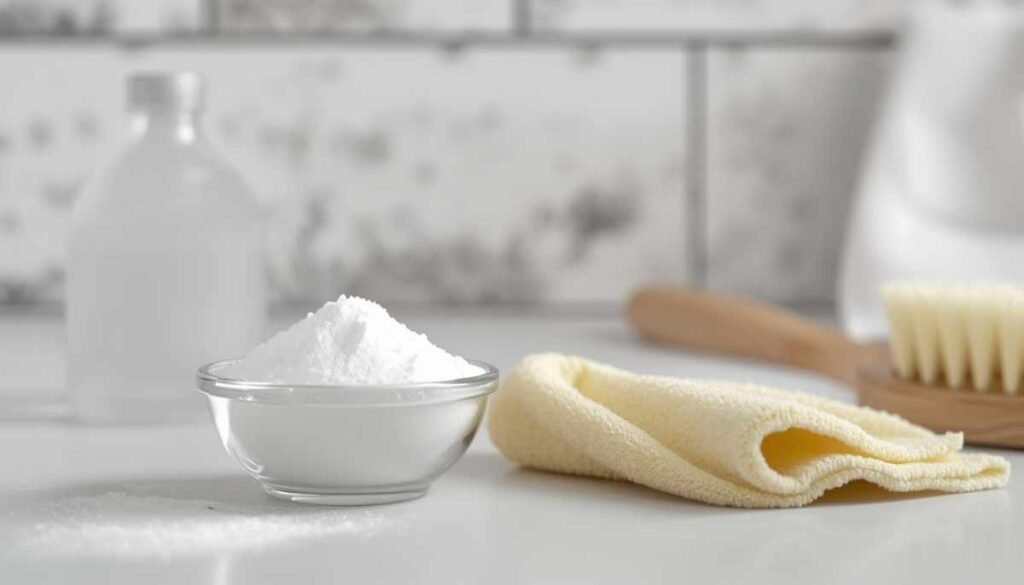
Baking soda can be useful as a gentle household cleaning ingredient, but you should not treat it as a guaranteed solution for every mold problem.
It may help with light surface buildup and musty odors. However, a recurring mold problem requires more attention to moisture, ventilation, leaks, and the condition of the ceiling itself.
If the ceiling remains damp after cleaning, switching from one household remedy to another will not address the underlying cause.
Think of cleaning as one part of the solution. Moisture control is what helps prevent the problem from returning.
What Is the Best Mold Remover for a Bathroom Ceiling?

The best mold remover depends on the ceiling material and the size of the problem.
For a small amount of surface mold on a suitable hard surface, detergent and water can be a practical cleaning method. EPA guidance recommends cleaning mold from hard surfaces and drying them completely.
A commercial bleach-free mold cleaner may make sense when you want a product specifically designed for mold-related cleaning. Always check whether the product is suitable for painted, textured, or other ceiling materials.
For porous materials, the situation is different. Mold can grow into spaces that make complete cleaning difficult. In some cases, contaminated porous materials may need to be removed rather than repeatedly treated.
That is why choosing the strongest cleaner is not necessarily the answer. The better approach is to match the cleaning method to the surface and fix the moisture source.
Cleaning Method: What It Can and Cannot Fix
| Method | What It Can Help With | What It Cannot Fix |
| Detergent + Water | Surface cleaning | Ongoing moisture |
| Vinegar | Some household cleaning situations | A hidden leak |
| Hydrogen Peroxide | Some surface cleaning | Structural water damage |
| Baking Soda | Light cleaning and odors | A persistent moisture source |
| Commercial Cleaner | Product-specific mold cleaning | Underlying water damage |
This distinction matters because EPA recommends addressing the moisture problem rather than simply treating the visible mold.
How to Permanently Remove Mold From a Bathroom Ceiling
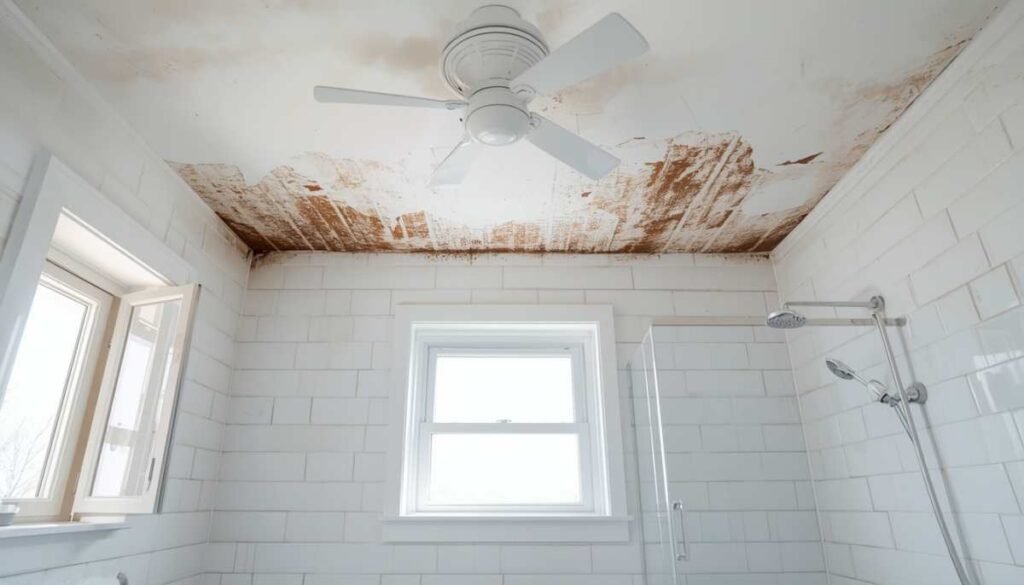
Permanently preventing mold from returning to bathroom ceiling
You cannot guarantee that mold will never return, but you can greatly reduce the conditions that allow it to grow.
Start by identifying why the ceiling became damp.
Check whether your bathroom exhaust fan works properly. Look for condensation after showers. Inspect the ceiling for signs of plumbing or roof leaks. Pay attention to water stains, peeling paint, soft drywall, or areas that repeatedly become damp.
Then address the moisture problem.
Use ventilation during and after showers. Keep the bathroom as dry as practical. Repair leaks promptly and allow damp surfaces to dry completely.
EPA notes that if you clean mold without fixing the underlying moisture problem, the mold is likely to return.
Find the Cause Before the Mold Comes Back
| What You Notice | What It May Point To | What to Check |
| Ceiling gets wet after showers | Steam and condensation | Bathroom ventilation |
| Mold returns quickly | Ongoing moisture | Humidity and airflow |
| Water stains appear | Possible leak | Plumbing or roof |
| Paint starts peeling | Moisture or surface damage | Ceiling condition |
| Ceiling feels soft | Water damage | Hidden moisture |
| Mold spreads to several areas | Larger moisture problem | Bathroom and surrounding surfaces |
So, if you want a long-term solution, do not stop when the dark spots disappear. Find out why they appeared in the first place.
How to Remove Mold From Bathroom Walls and Ceiling
If mold has spread from the ceiling to your bathroom walls, you can address the affected areas as part of the same cleanup project.
However, treat each surface according to its material.
Painted walls may tolerate a cleaning method that would damage a delicate ceiling finish. Tile and grout also require different care from drywall or ceiling tiles.
Start by identifying whether the surface is painted, tiled, textured, or porous. Then choose a suitable cleaning method and test it in a small area when necessary.
If you are dealing with mold throughout the bathroom rather than only on the ceiling, our complete bathroom mold cleaning guide covers additional areas such as walls, grout, ventilation, humidity, and recurring mold.
How to Remove Mold From a Popcorn or Textured Ceiling
Textured and popcorn ceilings need extra care because their uneven surfaces can trap moisture and make aggressive cleaning risky.
Avoid scrubbing hard or soaking the surface. Excessive pressure can damage the texture and leave you with a larger repair problem.
Test any cleaning solution on a small hidden section first. If the texture becomes soft, flakes away, or shows significant water damage, stop the DIY cleanup.
A professional assessment may make more sense when mold has penetrated the material or the ceiling has suffered substantial water damage.
What Does Your Ceiling Look Like?
| What You Notice | What to Do |
| Small dark surface spots | Consider careful surface cleaning |
| Mold on painted ceiling | Test the cleaner first |
| Mold on textured ceiling | Avoid aggressive scrubbing |
| Peeling or damaged paint | Investigate moisture |
| Soft or crumbling ceiling | Stop DIY cleaning and investigate water damage |
| Mold keeps returning | Find and fix the moisture source |
Is Black Mold on a Bathroom Ceiling Dangerous?
People often use the phrase “black mold” when they see dark or black-colored growth. However, color alone does not tell you exactly what type of mold you have.
You do not need to identify the species before deciding to clean visible mold. CDC guidance says that if you see or smell mold, you should clean it up and fix the moisture problem rather than relying on identifying the exact type first.
Mold exposure can affect people differently. People with allergies, immune suppression, certain lung conditions, or chronic respiratory diseases may face greater risks during mold cleanup. CDC recommends that people in these higher-risk groups avoid taking part in mold cleanup.
If you have a large amount of mold, significant water damage, or concerns about exposure, consider professional advice before starting the cleanup.
When Should You Call a Professional for Bathroom Ceiling Mold?
A small surface patch may be manageable as a household cleaning task, but some situations call for professional help.
Consider professional assessment when:
- The mold covers a large area.
- The ceiling has significant water damage.
- The drywall feels soft or crumbles.
- You suspect a hidden plumbing or roof leak.
- Mold keeps returning after cleaning.
- Mold appears to extend inside porous materials.
- Sewage or contaminated water caused the damage.
- Someone in the household has health concerns related to mold exposure.
EPA notes that larger mold problems may require professional remediation, especially when extensive water damage is involved.
Know When to Stop DIY Cleaning
Stop and investigate the problem if the ceiling is soft, crumbling, heavily water-damaged, or the mold keeps returning after cleaning. Repeatedly treating the visible spots will not solve an unresolved moisture problem.
How to Prevent Mold From Coming Back
Once you remove the visible mold, prevention becomes your next priority.
Improve Bathroom Ventilation
Run the exhaust fan during showers and afterward to help remove humid air. If your bathroom has a window and outdoor conditions allow, opening it can also improve airflow.
Make sure the exhaust fan actually vents outside rather than simply moving humid air around the room. CDC recommends using bathroom exhaust fans that vent to the outside.
Reduce Shower Steam and Condensation
Long, hot showers can fill a small bathroom with moisture.
Using the exhaust fan and keeping airflow moving can help reduce the amount of condensation that settles on the ceiling.
Fix Leaks Quickly
Do not ignore water stains or damp patches.
A leak above the ceiling can continue feeding moisture into the material even when the bathroom itself looks dry. Fix plumbing or roof problems as soon as you find them.
Keep the Ceiling Dry
After cleaning, give the ceiling enough time to dry completely.
If the same area becomes damp every day, investigate why. Mold needs moisture to grow, so keeping the surface dry is one of the most useful long-term prevention steps.
Watch for Early Signs
Check your ceiling regularly for:
- Small dark spots
- Musty odors
- Peeling paint
- Water stains
- Discoloration
- Soft or damaged areas
Finding a small problem early can make cleanup easier than waiting until mold spreads.
A Simple After-Shower Mold Prevention Routine
| After Your Shower | Why It Helps |
| Run the exhaust fan | Removes humid air |
| Keep airflow moving | Helps moisture escape |
| Reduce lingering steam | Limits condensation |
| Let damp surfaces dry | Reduces moisture available to mold |
| Watch recurring ceiling spots | Helps you catch problems early |
The goal is not to clean mold every few weeks. The goal is to make your bathroom less friendly to mold in the first place.
Frequently Asked Questions
Can I remove mold from a bathroom ceiling without bleach?
Yes, small areas of surface mold can often be cleaned without bleach. EPA guidance recommends cleaning mold from suitable hard surfaces with detergent and water and drying the surface completely. The appropriate method depends on the ceiling material and the extent of the mold.
What is the best way to remove mold from a bathroom ceiling?
Start by improving ventilation and protecting yourself. Then use a suitable cleaning method for the ceiling material, physically remove the visible mold, and dry the surface completely. Most importantly, find and fix the moisture source so the mold does not keep returning.
Does vinegar remove mold from a bathroom ceiling?
Vinegar is a common household cleaning option, but its suitability depends on the ceiling material and finish. Always test a small area first and never mix vinegar with bleach or other cleaning chemicals.
How do I permanently remove mold from my bathroom ceiling?
The long-term solution involves more than cleaning the visible spots. Fix leaks, improve ventilation, reduce condensation, and keep the ceiling dry. EPA notes that mold is likely to return if the underlying water problem remains.
Is black mold on a bathroom ceiling dangerous?
Dark-colored mold should be treated as mold without trying to identify its exact species by appearance alone. Remove visible mold safely and address the moisture problem. People with certain allergies, respiratory conditions, immune suppression, or other health concerns should avoid mold cleanup and seek appropriate advice.
Is mold on a bathroom ceiling common?
Yes. Bathrooms naturally produce moisture through showers and baths, so poor ventilation, condensation, and leaks can create conditions where mold grows.
Can hydrogen peroxide remove mold from a bathroom ceiling?
Hydrogen peroxide can be considered as a bleach-free household cleaning option for some surfaces. Check the product directions and test the surface first. It should not replace fixing the moisture problem that caused the mold.
Can baking soda get rid of mold on a ceiling?
Baking soda can help with light surface cleaning and odors, but it should not be treated as a complete solution for recurring mold. If moisture remains, mold can return even after cleaning.
Why does mold keep coming back on my bathroom ceiling?
Recurring mold usually means the ceiling continues to experience moisture. Poor ventilation, shower condensation, plumbing leaks, roof leaks, or damp building materials can all contribute to repeated growth.
Can I remove mold from bathroom walls and ceiling at the same time?
Yes, you can address both areas during the same cleanup project when the affected growth is limited and the surfaces are suitable for cleaning. Use a method appropriate for each material and investigate the moisture source if mold appears in multiple locations.
Final Thoughts
Removing mold from a bathroom ceiling without bleach starts with the right cleaning method, but it should not end there.
Clean the visible mold carefully, protect yourself during the process, and dry the ceiling completely. Then look for the reason the mold appeared in the first place. Better ventilation, fewer moisture problems, and quick leak repairs can make a much bigger difference than repeatedly cleaning the same dark spots.
If the mold covers a large area, keeps returning, or has damaged the ceiling material, professional assessment may be the safer choice. The goal is not simply to make the ceiling look clean for a few days. It is to remove the visible mold and create a bathroom environment where it has less opportunity to grow again.

Hi, I’m Ashir Zahid! I’m a home décor writer and creative enthusiast who loves finding simple and beautiful ways to make everyday spaces feel more comfortable and inviting. I enjoy exploring home styling ideas, practical decorating tips, and timeless trends that can work in real homes without making things feel complicated.
At DailyHomeVibe, I share easy-to-follow ideas for decorating different rooms, choosing the right colors and textures, and giving your home a fresh look with thoughtful details. My goal is to help readers find inspiration they can actually use, whether they are refreshing one small corner or giving their whole home a new feel.