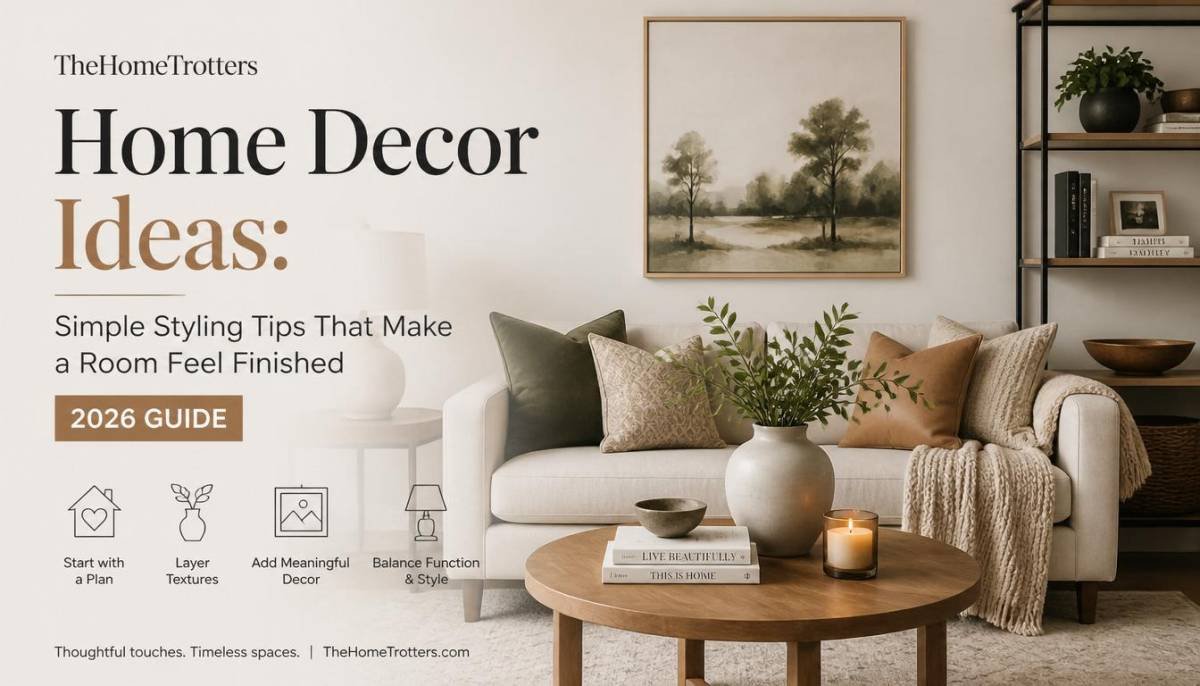
A room can have expensive furniture and still feel unfinished. It can also have almost nothing new in it and feel warm, calm, and put together. The difference usually comes down to a few decisions made early, not the size of the budget.
TheHomeTrotters home decor ideas center on four things: a cohesive color palette that lets pieces move between rooms, travel-inspired personal touches, natural materials like stone and wood, and smart, grouped organization. Put simply, the goal is to make a room feel intentional before adding anything new to it, not after.
This guide walks through that process room by room, with practical fixes you can actually use this weekend.
What Are TheHomeTrotters Home Decor Ideas Really About?

At the core, this style is built around four things: a cohesive color palette that lets pieces move freely between rooms, personal travel-inspired touches that give a space character, natural materials like stone and wood for a grounded feel, and tidy, intentional organization rather than scattered clutter.
In practice, this means the room isn’t styled as one fixed setup. It’s built so a rug, a chair, or a set of pillows can shift to a different room later without clashing, because the underlying palette was never room-specific to begin with.
That flexibility is also why shopping your own house works so well with this approach. Before buying anything new, walking through other rooms and pulling pieces that already fit the palette often solves half the styling problem for free.
Also Read : Large Outdoor Coastal Wall Decor: Ideas, Materials and Placement Guide
Decide How the Room Should Feel Before You Shop
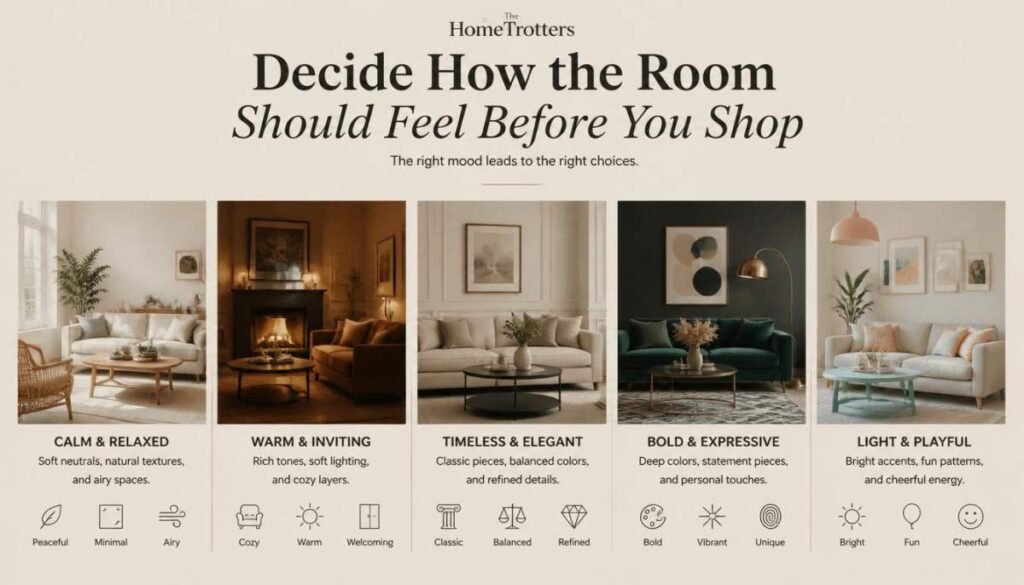
Every well-styled room has a mood decided before it has furniture. Calm and restful, bright and social, or quiet and focused pick one word for the room and let it guide every choice after.
This single step prevents the most common decorating mistake: buying pieces that look good individually but pull the room in different directions. A soft, neutral sofa paired with a bold graphic rug can work, but only if both were chosen with the same mood in mind.
Once the mood is set, color and lighting decisions become much faster, because there is a clear filter to run them through.
Color, Texture, and Lighting: The Real Foundation of a Finished Room
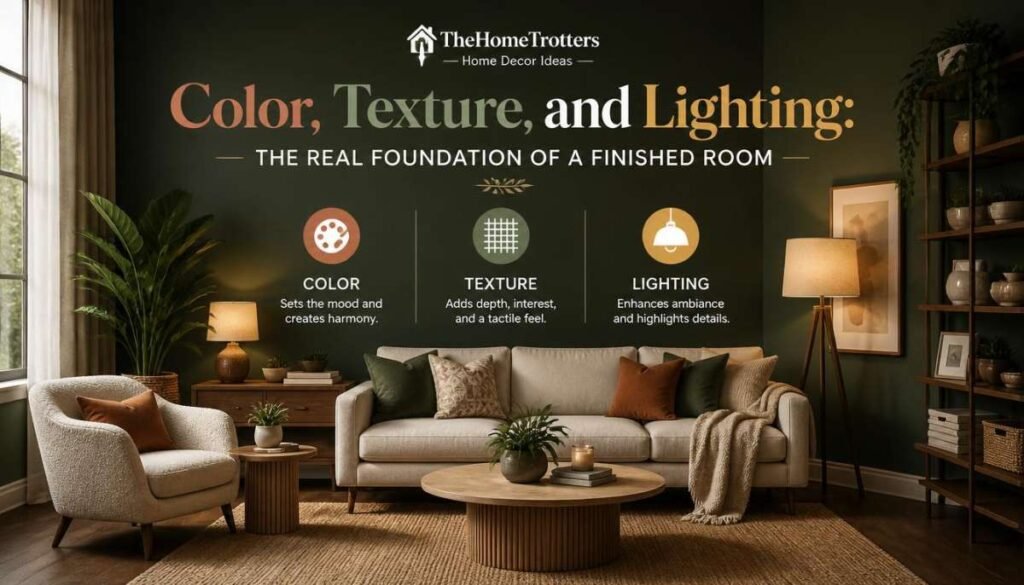
These three elements do more work than any single piece of furniture. Getting them right first makes almost everything placed afterward look intentional.
Color
Color sets the emotional tone of a room before anyone notices the furniture. Light, neutral tones like cream, soft beige, and warm white open a space up and make it feel larger. Deeper tones like clay, olive, or charcoal add coziness and make a room feel grounded.
A simple rule that works in almost any room: one dominant neutral, one supporting tone, and one accent color used sparingly in cushions, art, or small objects.
It also helps to keep that same palette consistent across the whole home rather than choosing a new scheme per room. When every room shares a base palette, a throw pillow or a side chair can move from the living room to the bedroom without ever looking out of place.
Texture
Texture is the detail most rooms are missing.A room built entirely from smooth, uniform surfaces can look plain, even when the color palette is spot on. Mixing a woven throw, a linen cushion, a wood surface, and a matte ceramic vase gives the eye somewhere to land.
In practice, texture is often the fastest, cheapest upgrade available, since it rarely requires new furniture just a few tactile layers added to what already exists.
Personal, travel-sourced pieces add another layer worth including here. A woven textile picked up on a trip, a hand-made bowl, or a piece of cultural art brings a worldly, collected feel that store-bought decor alone can’t replicate.
Natural, architectural materials do similar work in a different way. Stone accents whether a small stone tray, a tiled accent wall, or a stone-topped side table add a grounded, elevated feel indoors and work just as well for outdoor or entryway spaces.
Lighting
Lighting changes how every other decor choice reads. A room with only one overhead ceiling light will look flat no matter how well it is decorated. Layering three light sources ceiling, a floor or table lamp, and an accent light creates depth.
Warm-toned bulbs suit living rooms and bedrooms, while cooler, brighter light works better in kitchens and home offices where focus matters more than ambiance.
Less Clutter, More Character: Why Editing Makes a Room Shine
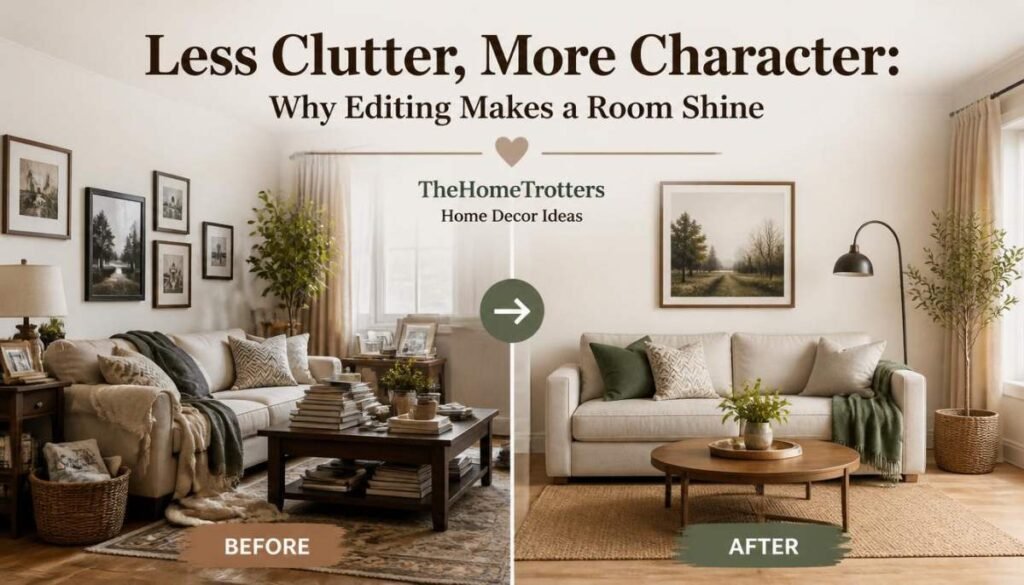
More decor is not the same as better decor. A room with fewer, well-chosen pieces almost always looks more expensive than one filled with small items competing for attention.
A useful habit is the one-in, one-out approach: before adding a new decorative object, remove one that no longer earns its spot. This keeps surfaces breathing and keeps the room’s mood clear instead of diluted.
Editing also applies to walls and shelves. A shelf with five carefully placed objects reads as styled. The same shelf with fifteen objects reads as cluttered, even if each item is attractive on its own.
Grouping helps here too. Candles, bud vases, and books tend to look intentional when grouped by type and size rather than scattered individually across a surface. A cluster of three candles at varying heights reads as styled; the same three candles spread across three different shelves just reads as leftover clutter.
Room-by-Room TheHomeTrotters Home Decor Ideas
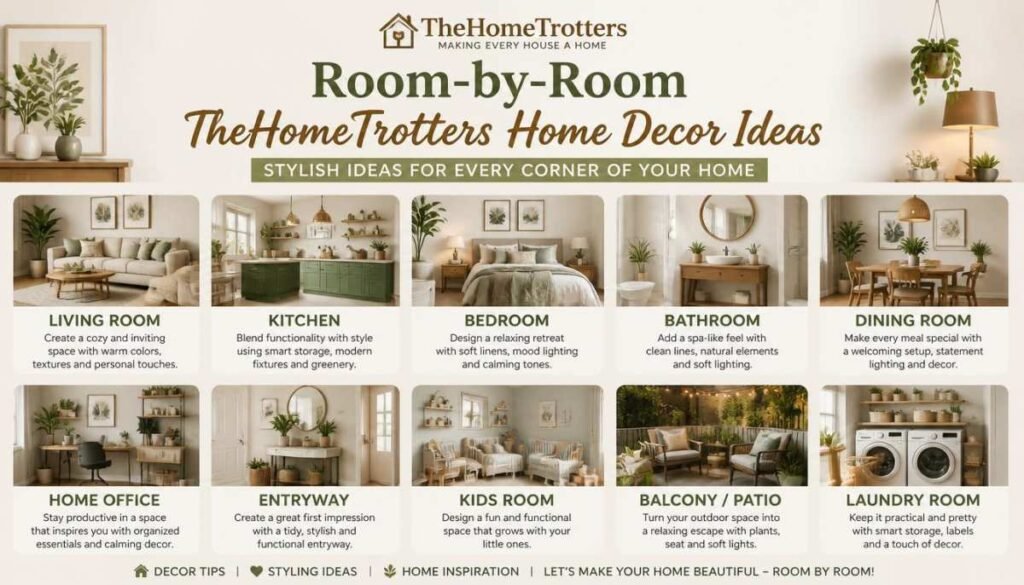
Different rooms need different priorities. Here is how the mood, color, texture, and lighting approach plays out in each space starting with a closer look at small living room decorating ideas before moving through the rest of the home.
None of these rooms need to be tackled all at once picking one space to start with is usually enough to see the difference this approach makes.
Living Room
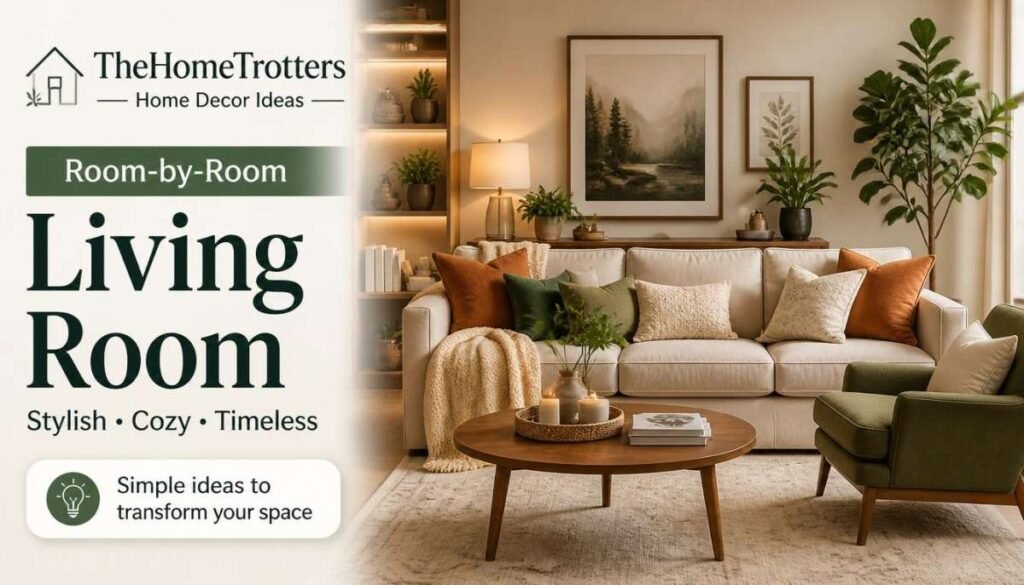
The living room usually benefits most from layered lighting and a clear focal point, whether that’s a sofa, a media console, or a large piece of art. Floating furniture slightly away from the walls, instead of pushing everything back, often makes the room feel larger and more conversational.
Bedroom
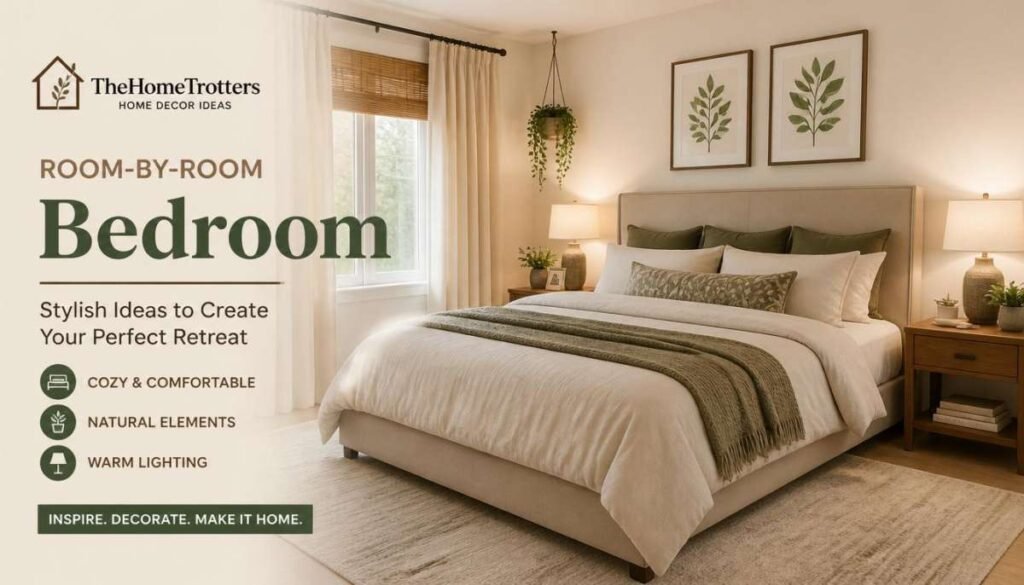
A bedroom should lean toward the calm end of the mood spectrum. Soft, muted colors, layered bedding textures, and warm lamp lighting instead of overhead light all support better rest. Keep nightstands and dressers edited to just the essentials.
Kitchen
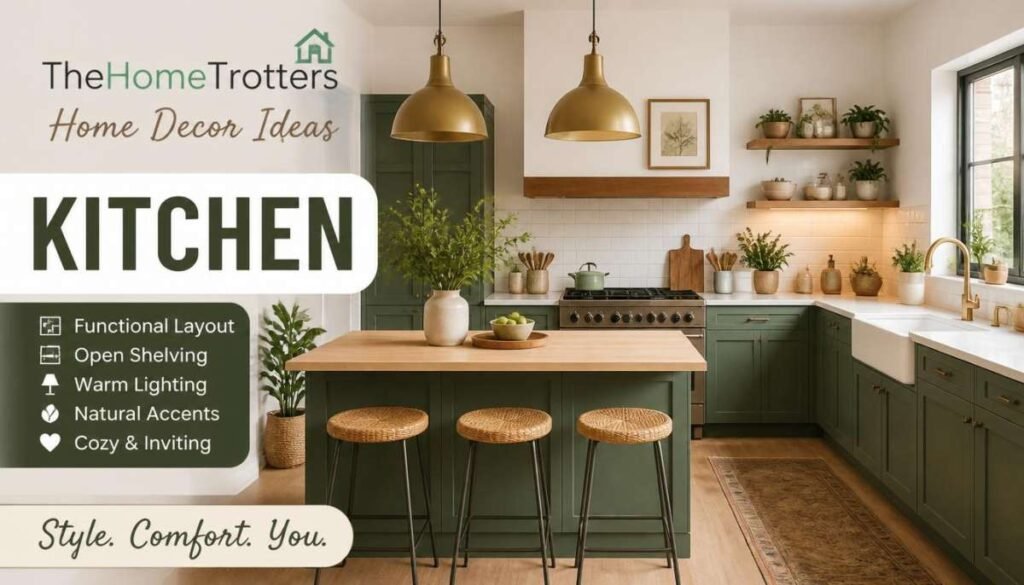
Kitchens benefit from brighter, functional lighting layered with a warmer accent light for evenings. Open shelving works well when styled with a small, repeated color palette too many colors on display makes even a clean kitchen look busy.
Bathroom and Entryway
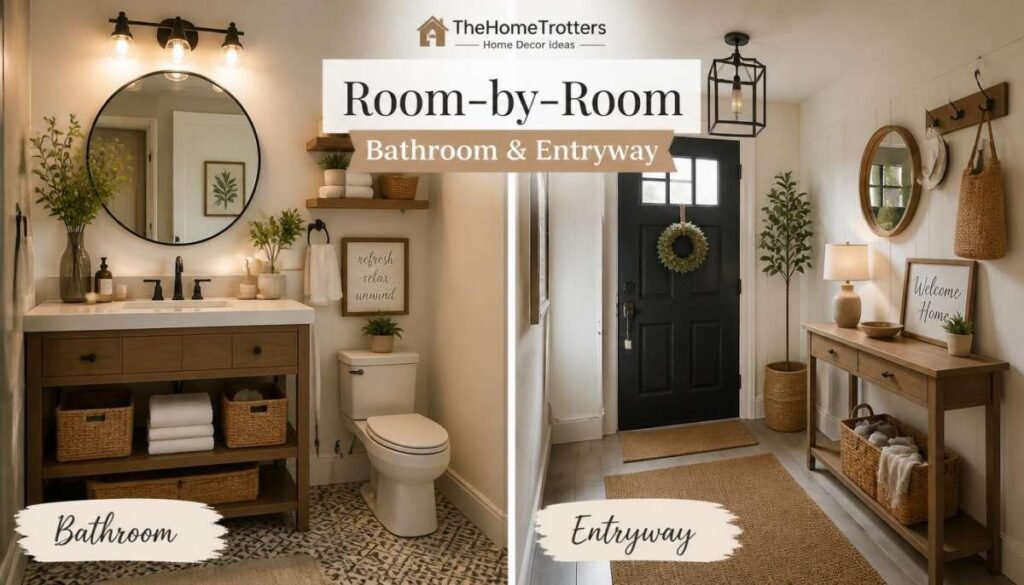
These smaller spaces respond well to a few intentional touches: a textured bath mat, a small tray for daily items, or a single piece of wall art. Because the square footage is limited, restraint matters even more here than in larger rooms.
Room-by-Room Budget Decor Fixes
| Room | Quick Win | Estimated Cost | Time Needed |
| Living Room | Add a floor lamp + rearrange seating | $30–$80 | 1–2 hours |
| Bedroom | New bedding layers + soft lamp light | $40–$100 | 30–60 minutes |
| Kitchen | Open shelf styling with limited color palette | $20–$50 | 1 hour |
| Bathroom | Textured bath mat + small tray | $15–$40 | 15 minutes |
| Entryway | Single wall art piece + accent light | $25–$60 | 30 minutes |
Small Updates That Usually Make the Biggest Difference

Full renovations are not required to notice a real change. A few updates consistently deliver the most visible improvement for the least effort:
Swapping old cushion covers and adding one new throw changes a sofa’s entire feel in minutes. Repainting a single accent wall resets a room without repainting the whole space. Adding a floor lamp where only ceiling light existed adds depth instantly. Grouping existing decor items instead of scattering them also makes a room look considerably more styled.
Budget-Friendly TheHomeTrotters Decor Fixes
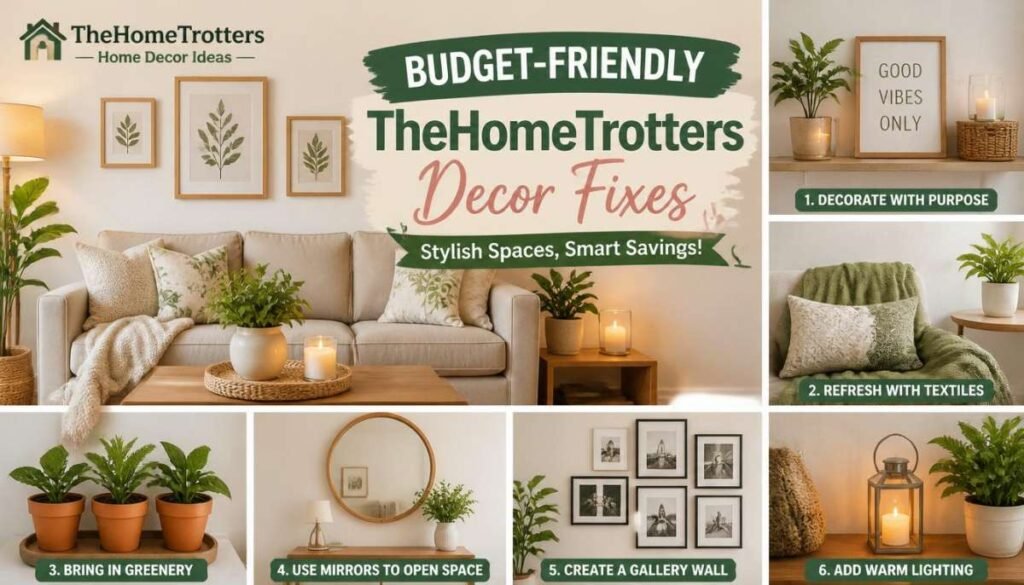
Good styling does not require a large budget. Secondhand and thrifted furniture, repainted rather than replaced, often blends in seamlessly once styled with the right textures. Removable wallpaper and peel-and-stick tiles give rental-friendly ways to add color without a permanent commitment.
Rearranging existing furniture into a new layout is free and often reveals a better use of the space than the original arrangement. Mirrors placed opposite a window are another low-cost way to add both light and a sense of space.
Common Mistakes That Make a Room Feel Off
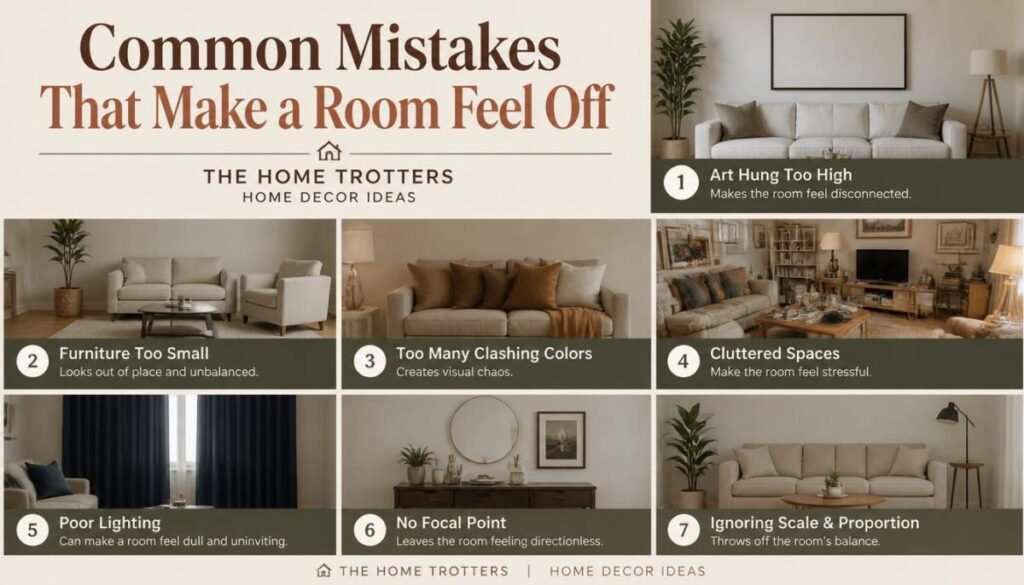
A few recurring mistakes explain most rooms that feel almost right but not quite finished. Pushing all furniture flat against the walls is one of the most common it often makes a room feel smaller and less social, not bigger. Relying on a single overhead light source is another, since it flattens the room’s depth.
Buying decor items one at a time without a plan for how they’ll work together is a third common issue. This is exactly what the mood-first approach earlier in this guide is meant to prevent.
Common Decor Mistakes vs. Fixes
| Mistake | Why It Happens | Fix |
| Furniture pushed flat against walls | Feels like the safe default layout | Float furniture slightly, create conversation zones |
| Single overhead light only | Most homes are built with one ceiling fixture | Layer in a lamp and one accent light |
| Buying decor item-by-item with no plan | Shopping before deciding on a mood | Decide mood and color plan before buying anything |
| Too many small objects on display | Wanting every shelf to feel decorated | Apply one-in, one-out editing |
| Matching every color and texture exactly | Assuming matching means coordinated | Mix textures within one shared color family |
How to Apply These Ideas in Your Own Home
Start with one room rather than the whole home at once. Decide its mood in a single word, choose a simple color plan, layer in two or three textures, and add at least two light sources. Only after that foundation is in place should new furniture or decor be considered.
This sequence mood, then color and texture, then lighting, then shopping is the fastest way to get a room that feels finished rather than simply full.
FAQ Section
How do TheHomeTrotters home decor ideas transform a living space?
TheHomeTrotters home decor ideas transform a living space by combining balanced color palettes, layered textures, thoughtful lighting, and functional layouts. These design principles make any room feel brighter, more organized, and visually cohesive without requiring a complete renovation.
Which decorating style works best with TheHomeTrotters home decor ideas?
TheHomeTrotters home decor ideas work well with a variety of interior styles, including modern, minimalist, Scandinavian, farmhouse, boho, and contemporary designs. The key is maintaining a consistent color palette and mixing textures to create a warm, personalized space.
Can TheHomeTrotters home decor ideas work in small homes and apartments?
Yes. TheHomeTrotters home decor ideas are especially effective for small homes and apartments because they emphasize smart layouts, multifunctional furniture, light color schemes, mirrors, and layered lighting. These techniques help maximize space while making compact rooms feel larger and more inviting.

Hi, I’m Liam Alexander! As a home décor specialist for dailyhomevibe.com, I’m super passionate about bringing elegance and simplicity into modern living spaces. I love sharing smart design solutions, helping you optimize your space, and highlighting timeless trends to inspire you to create a home you truly love coming back to.