
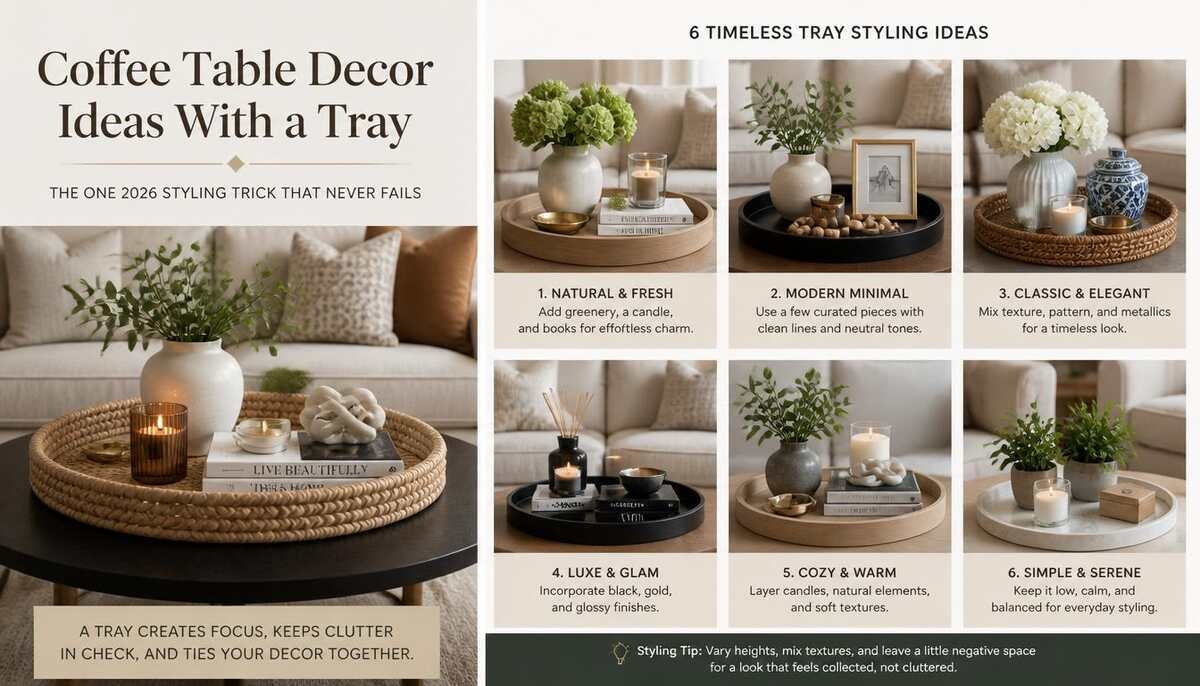
Coffee table decor ideas with a tray solve a problem almost every living room has: a table that looks either completely bare or randomly cluttered, with nothing in between, and honestly, most of us land in the cluttered camp without even meaning to.
This is really just living room styling done well, and a tray fixes the core issue almost instantly. It gathers everything into one contained, intentional-looking vignette instead of letting decorative objects scatter across the surface like they’ve got somewhere better to be.
The tricky part isn’t finding pretty things to put on it, it’s getting the tray size, shape, and arrangement right so the whole thing looks curated instead of accidental. Here’s how to actually pull that off, step by step.
Why a Tray Changes the Whole Table
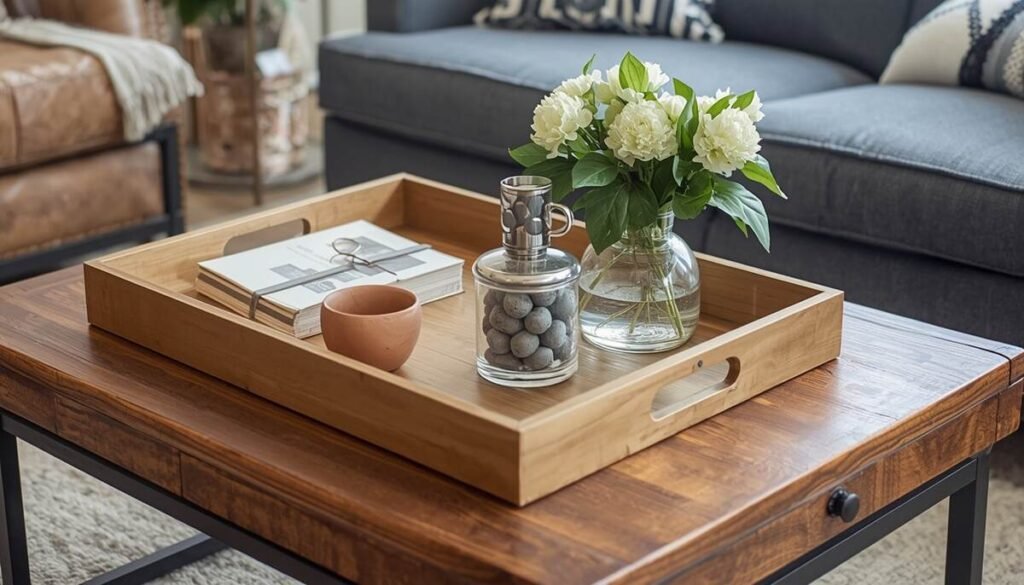
A coffee table is one of the largest flat surfaces in a living room, which means it either pulls the whole space together or becomes the spot where remotes, mail, and random clutter quietly pile up (you know the spot).
A decorative tray solves this by creating a visual boundary, the same principle interior designers mean when they talk about grounding or anchoring a vignette. Everything inside it reads as one intentional grouping, and everything outside it has to earn its spot, which naturally keeps the rest of the table clearer.
It also just makes life easier. Instead of rearranging five or six individual objects, you lift one tray away entirely for game night and put it right back when you’re done. No fuss.
Getting the Size Right
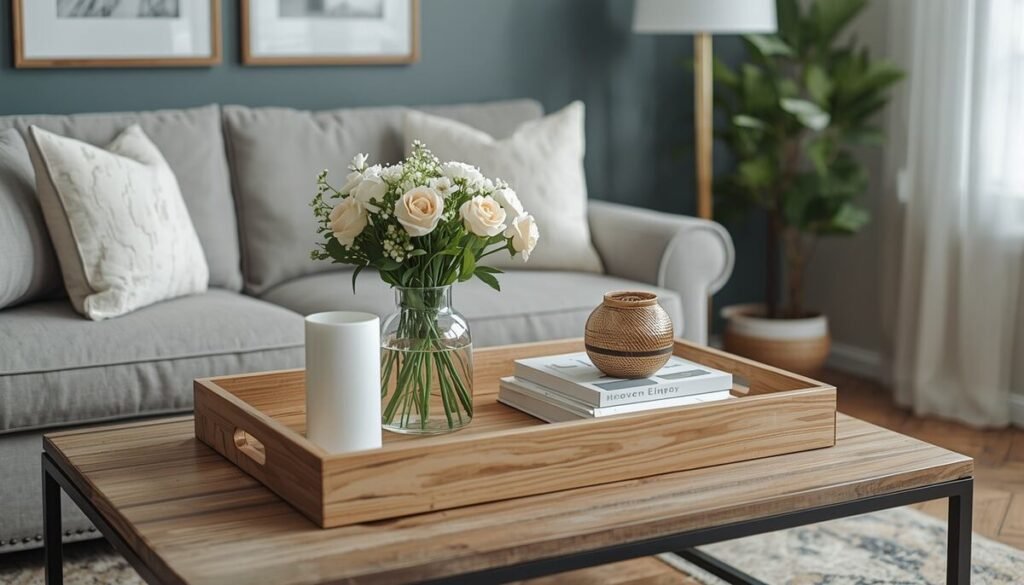
This is where most people go wrong before they even start styling, and it’s an easy mistake to make. A tray that’s too small looks like it’s floating on the table, kind of lost and apologetic. One that’s too large just crowds out any usable space for a drink or a book.
The most consistent rule across professional styling advice: your tray should cover roughly one-third to one-half of the coffee table’s surface area. For a round coffee table, that generally means a tray with a diameter around one-third of the table’s width. For a rectangular table, some designers keep the tray to about two-thirds of the table’s length instead, which leaves breathing room on both ends.
Matching Tray Shape to Table Shape
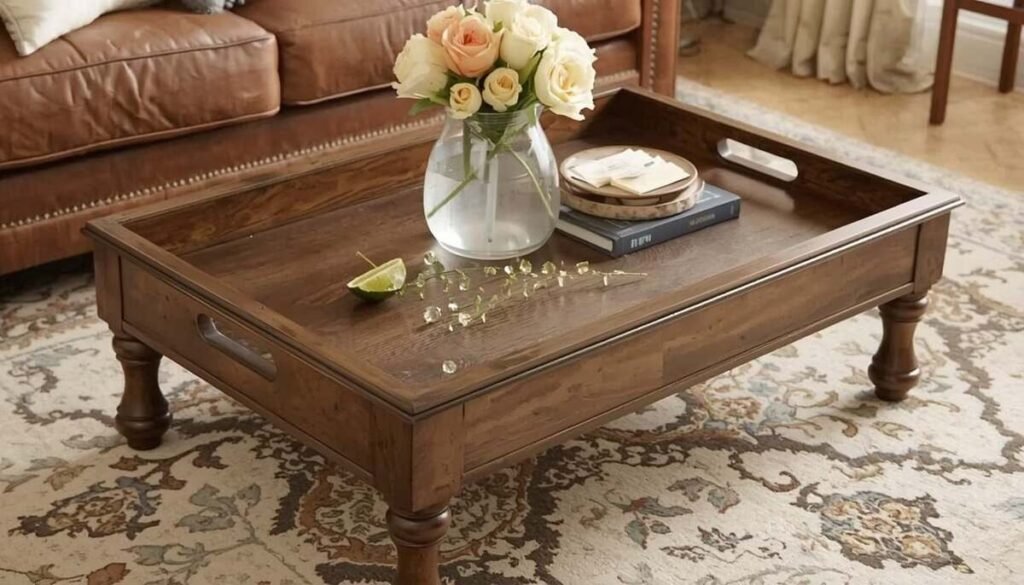
Neither one is objectively better, it really comes down to how much visual contrast the rest of the room can already handle.
Same Shape, Softer Look
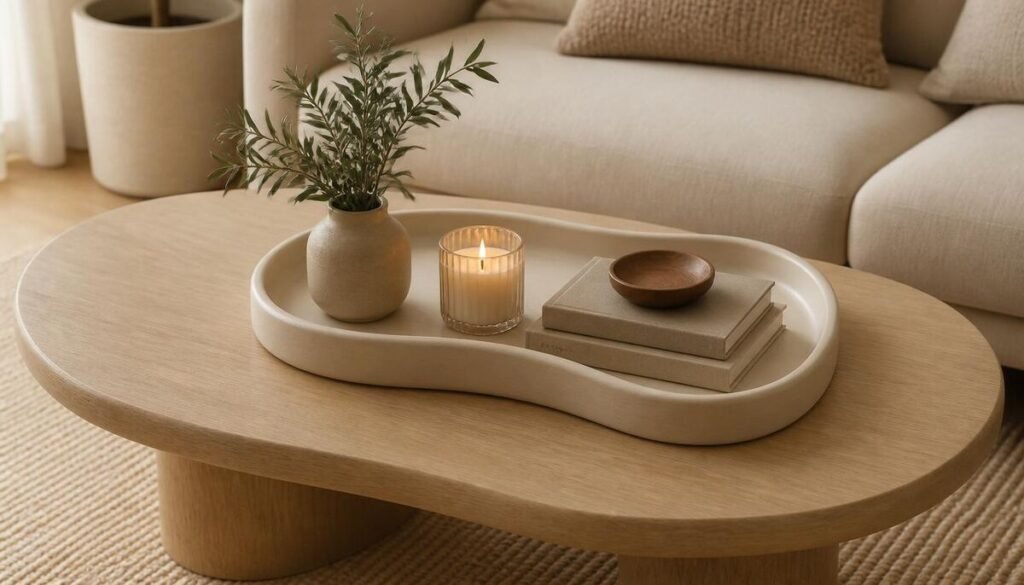
A round tray on a round table, or a rectangular tray on a rectangular table, creates a clean, cohesive look. The shapes echo each other, which reads as calm and intentional rather than busy.
Contrasting Shape, More Visual Interest
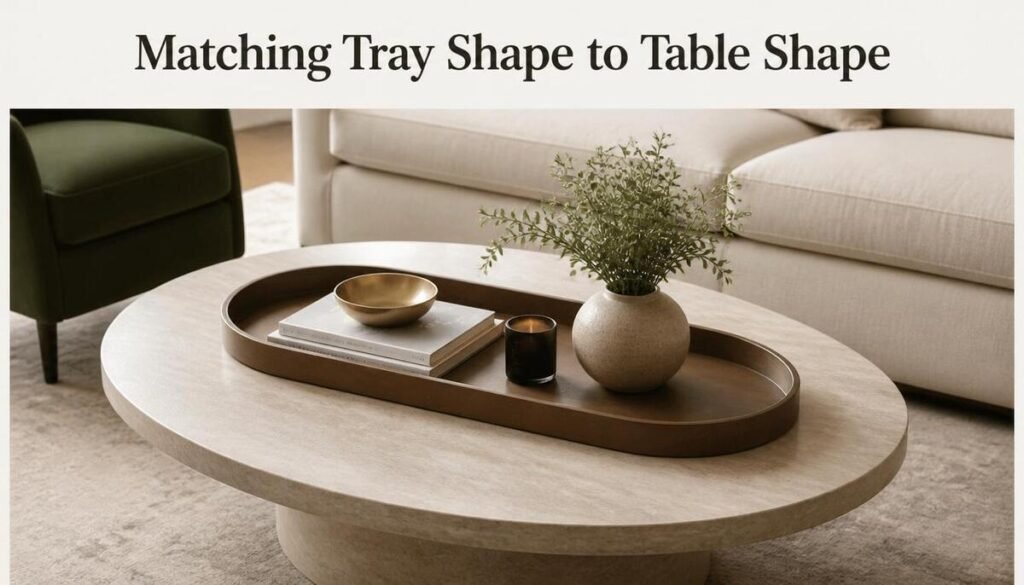
Mixing shapes on purpose, a round tray on a rectangular table, or the other way around, adds a bit of tension that makes the styling feel more custom. This works especially well when the coffee table has hard, angular lines, since a round tray softens them without losing structure.
Which One Should You Pick?
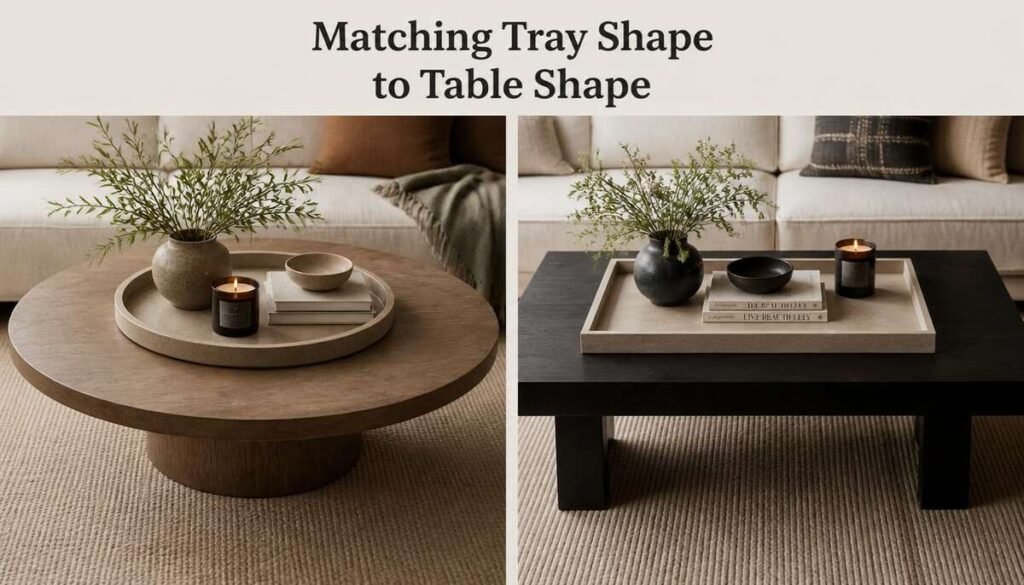
If the room already has a lot going on visually (patterned rug, layered art, an eclectic furniture mix), matching shapes keeps the table feeling calm. If the room leans minimal or the furniture is fairly uniform, a contrasting tray shape adds personality without tipping things into chaos.
Matching Tray Material to Your Table
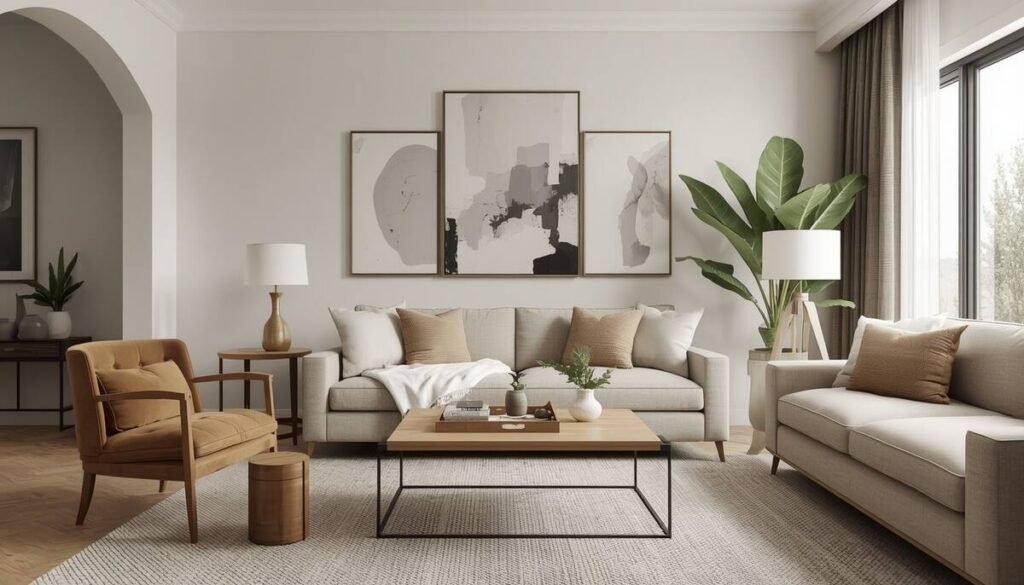
Material does more for the mood of a tray than almost any other decision, and the best pairings usually come from a bit of contrast rather than matching everything exactly.
Wood Trays

Wood adds warmth and works especially well as a grounding contrast on a glass, marble, or lacquered coffee table, softening a surface that might otherwise feel cold or a little sterile.
Woven or Natural Fiber Trays
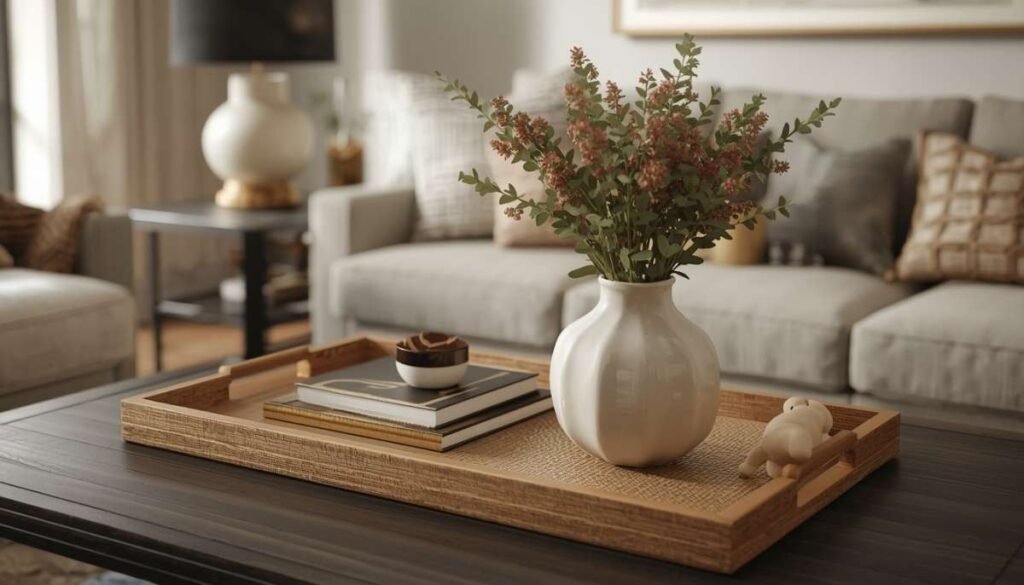
Rattan, seagrass, or woven trays bring a relaxed, textured feel, and they tend to suit rooms already leaning organic, coastal, or lightly bohemian. Bonus: they transition easily between seasons without ever feeling out of place.
Lacquer or Metal Trays
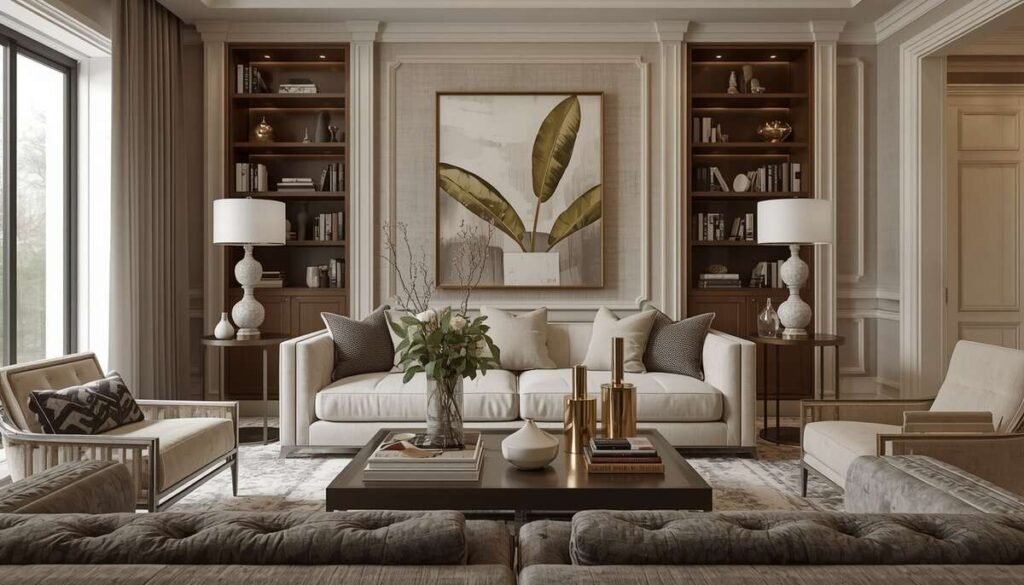
A glossy lacquer or metal tray (brass, chrome, black) adds a bit of polish and works as a nice contrast on a wood or stone coffee table, giving an otherwise casual table a more refined, finished edge.
A Quick Note on Handles
If the tray gets moved often, cleared for game night or wiped down regularly, handles are worth prioritizing over a purely decorative rimless design. They don’t have to be obvious, either. Slim cutout handles or subtle side grips still look clean while making the tray far easier to actually lift and carry.
Quick Reference: Tray Sizing and Pairing Cheat Sheet
| Table Type | Tray Size Rule | Best Material Pairing |
| Round table | Tray diameter ≈ 1/3 of table width | Wood or metal for contrast |
| Rectangular table | Tray ≈ 2/3 of table length | Lacquer or woven for contrast |
| Glass or marble table | 1/3 to 1/2 of surface area | Wood, for warmth |
| Wood table | 1/3 to 1/2 of surface area | Lacquer or metal, for polish |
The Styling Formula That Always Works
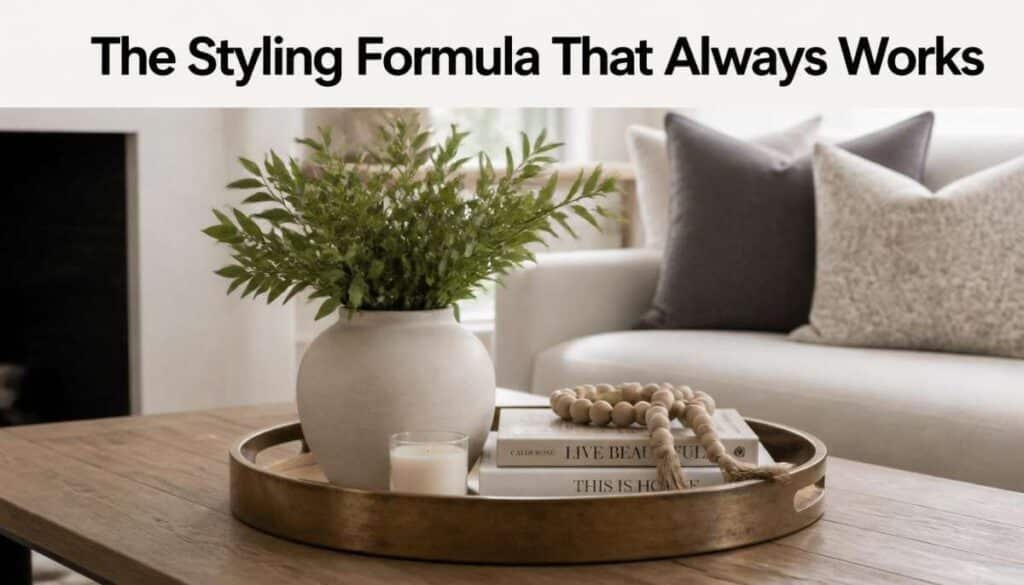
Once the tray itself is sorted, what goes on top of it follows a formula that shows up again and again in professional interior design advice: height, filler, and a personal touch. Designers sometimes call this kind of small, contained arrangement a vignette, which sounds fancier than it actually is to pull off.
Start With Height
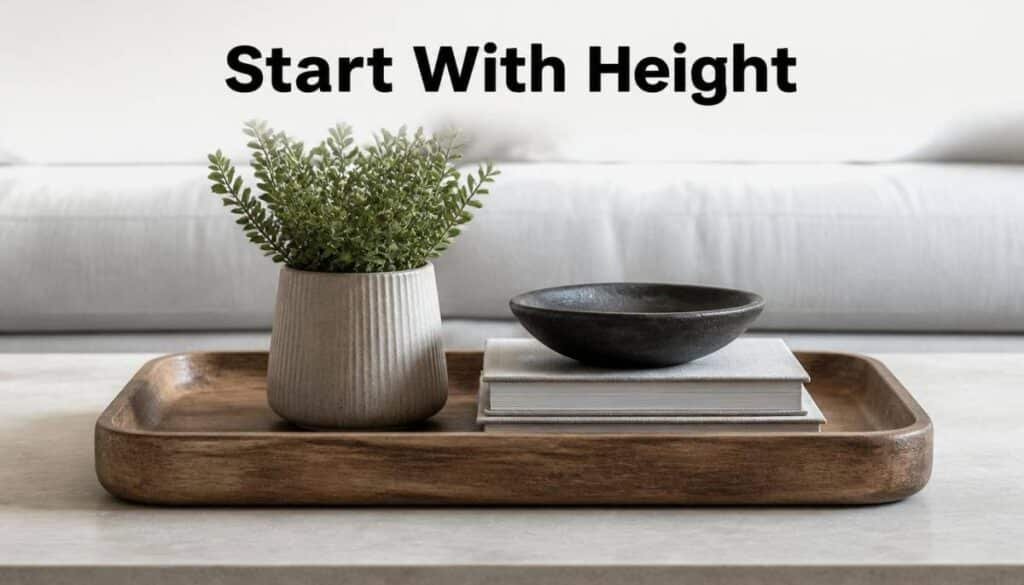
Pick one taller object to anchor the arrangement, a vase with fresh or faux stems, a small plant, or a slim sculptural object. This becomes the visual starting point everything else builds around.
Add a Filler Element
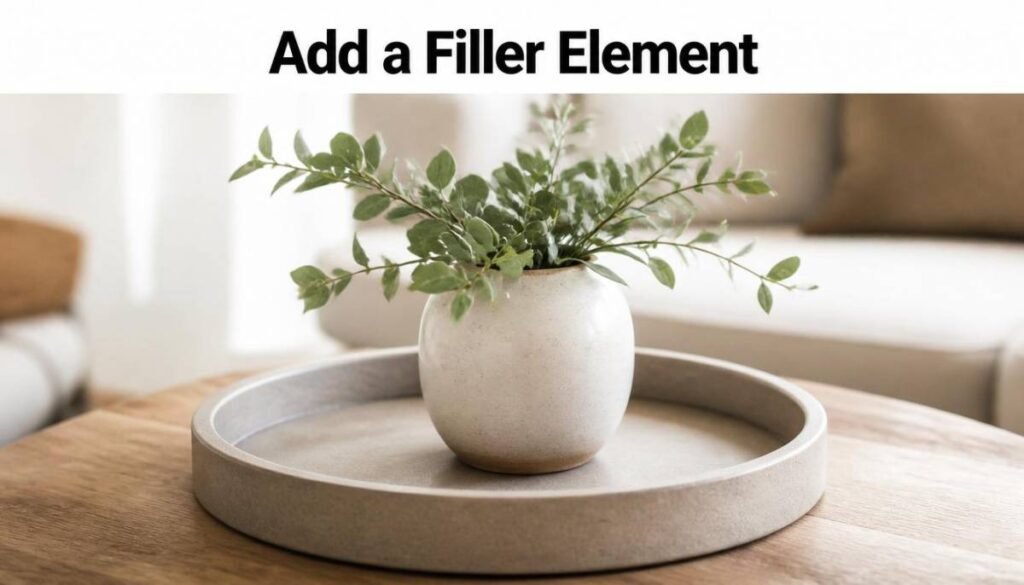
Something lower and wider comes next, a stack of two or three books, a decorative bowl, or a low candle. This fills out the base so the whole thing doesn’t feel top-heavy or lopsided.
Finish With a Personal Touch
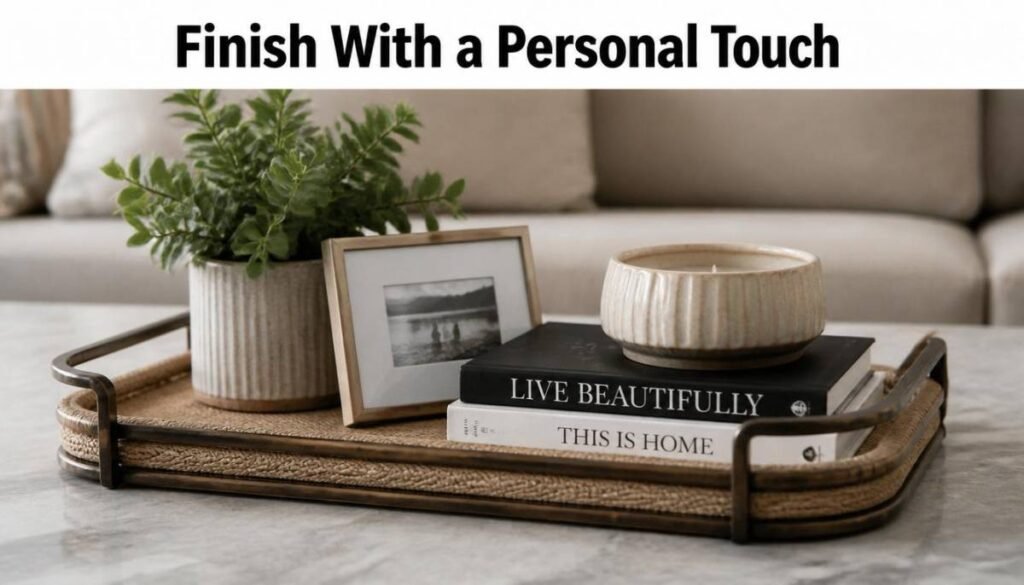
The last piece is what actually makes the tray feel like yours instead of a showroom display, a small framed photo, a travel find, or an object that means something specific to you. This is the step people skip most, and it’s usually the one that makes the difference.
Stick to odd numbers, three or five pieces total, since odd-numbered groupings tend to look more natural and less rigidly arranged than even ones do.
Two Quick Pro Tips Worth Knowing
A couple of small designer tricks make a real difference here, and they’re easy to miss if you’re just following the basic formula.
Top Your Books With Something
A stack of books on its own can look a little unfinished, like a placeholder rather than a finished piece. Setting a small object on top, a paperweight, a mini sculpture, a smooth stone, or even a tealight candle, turns the stack into a proper mini display instead of just “the books.” It’s a small move, but it’s the kind of detail that makes a tray look professionally styled rather than thrown together.
Let a Box Do Double Duty
A decorative box isn’t just a filler shape, it’s one of the most functional pieces you can add. Use it to actually hide the remote, spare charging cords, or anything else that clutters up daily life, so the tray stays photo-ready and useful at the same time. This is the detail that keeps a styled table from feeling fragile or too precious to actually live with.
Coffee Table Tray Ideas by Style
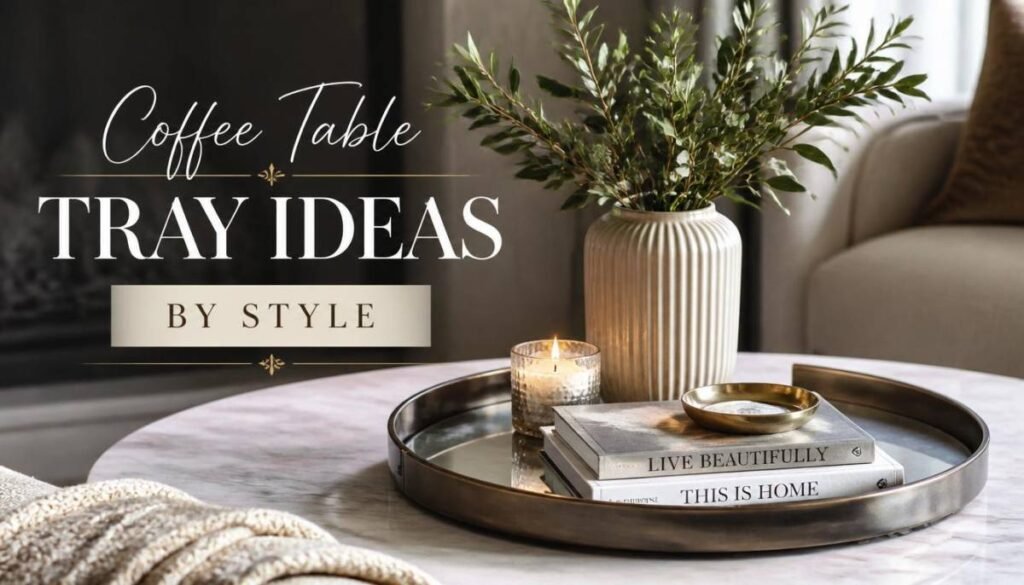
The same formula flexes easily across different interior design styles, just by swapping out the specific pieces.
Modern
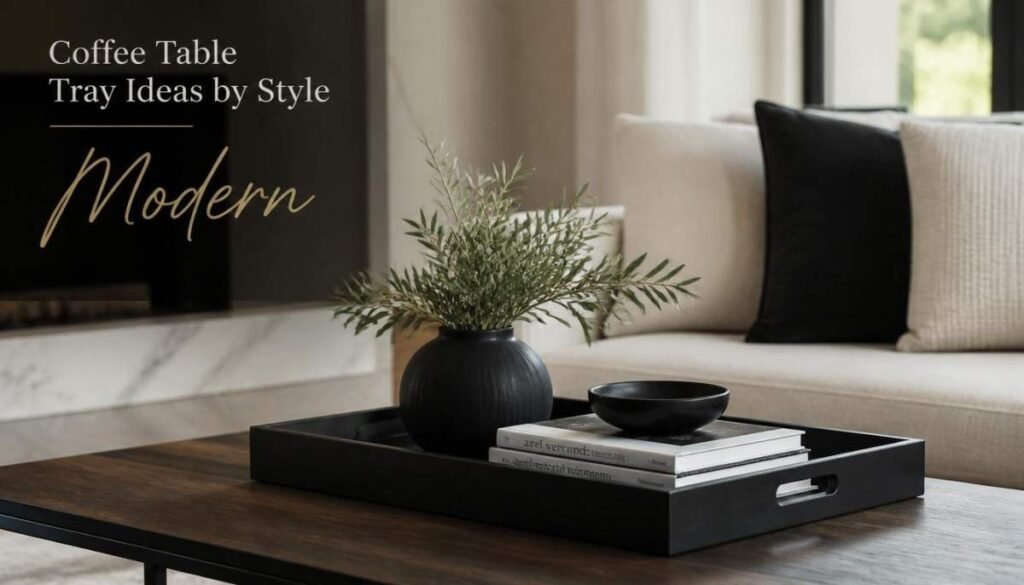
Clean lines, a single sculptural object, and a monochrome or two-tone palette. Less is more here, one striking piece usually outperforms several smaller ones fighting for attention.
Organic Modern
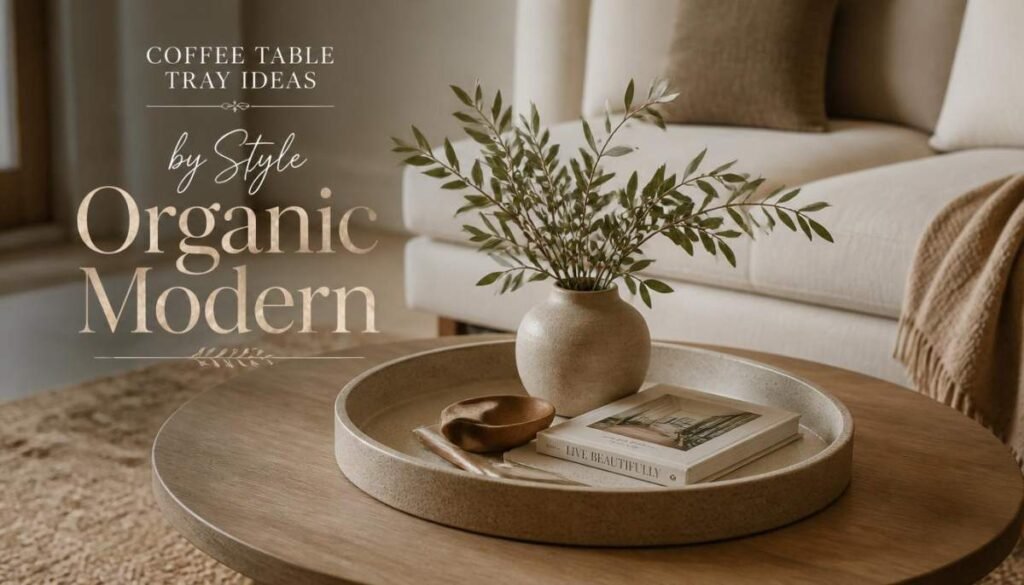
Natural textures (linen, raw wood, unglazed ceramic) paired with soft neutrals, the same material language you’ll see in Japandi or organic modern interiors. A woven tray with a simple vase and one ceramic object gets you there without much effort.
Cozy and Layered
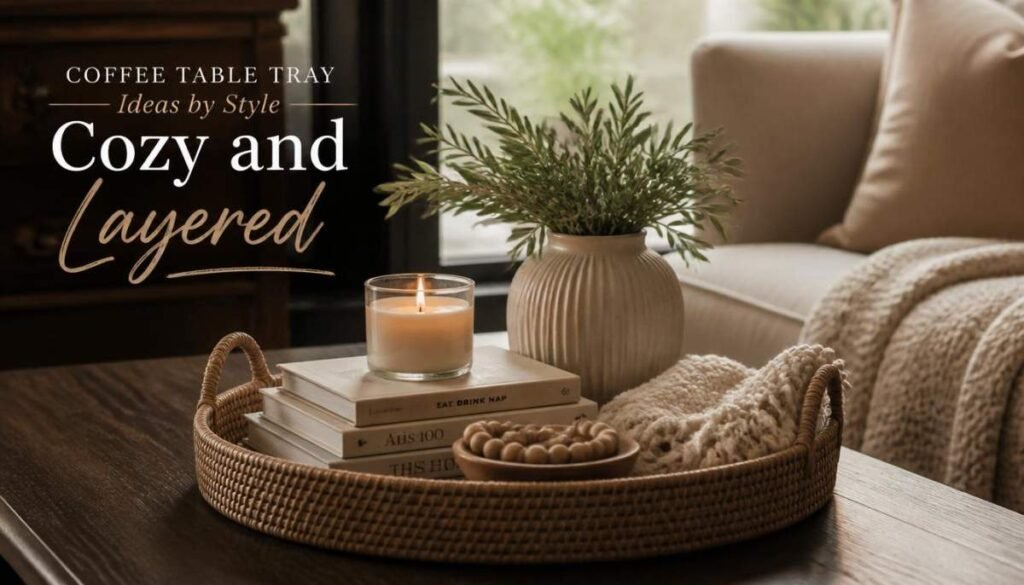
Warmer tones, mixed textures, and a slightly fuller tray, think a stack of books, a textured candle, and a small woven basket for remotes. This style forgives more visual density than modern or organic modern ever will.
Coastal or Light-Filled
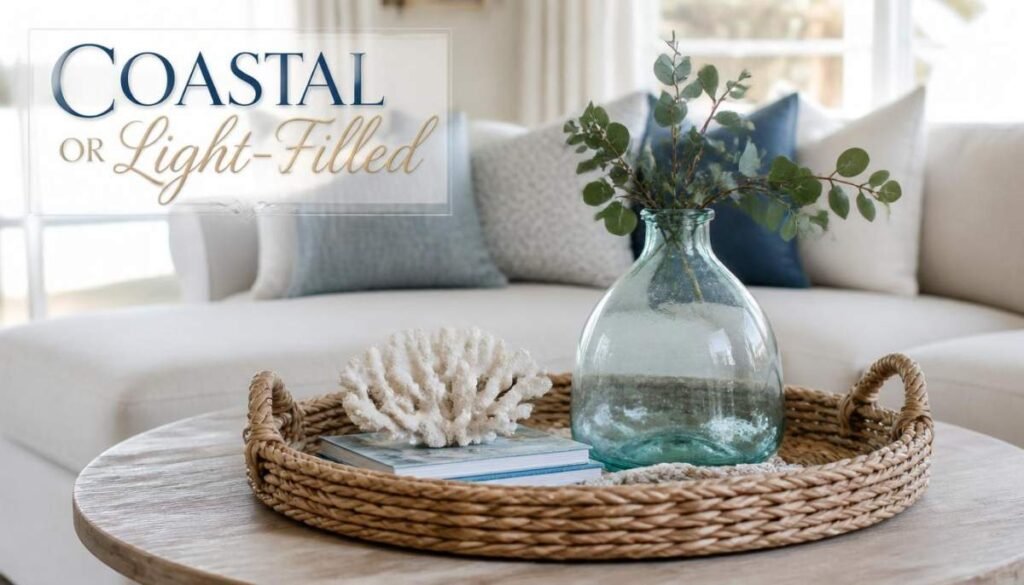
Lighter woods, glass or ceramic in soft blues and whites, and natural touches like dried coral, shells, or a simple glass vase. Especially good in rooms that already lean bright and airy.
If Your Coffee Table Has a Bottom Shelf
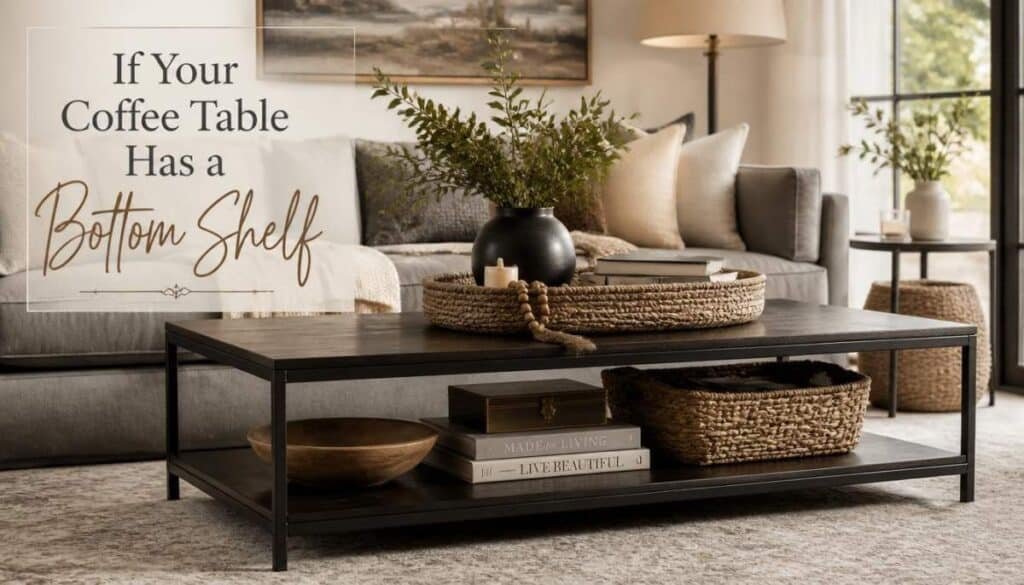
This detail gets skipped constantly, but if the coffee table has a lower shelf, it’s part of the styling too, not just extra storage. Keeping the bottom shelf simpler than the top, a stack of coffee table books or a single basket, keeps the whole piece from feeling busy top to bottom. The tray up top should still be the main event; the shelf below works best as quiet support, not a second arrangement competing for attention.
Seasonal Tray Ideas
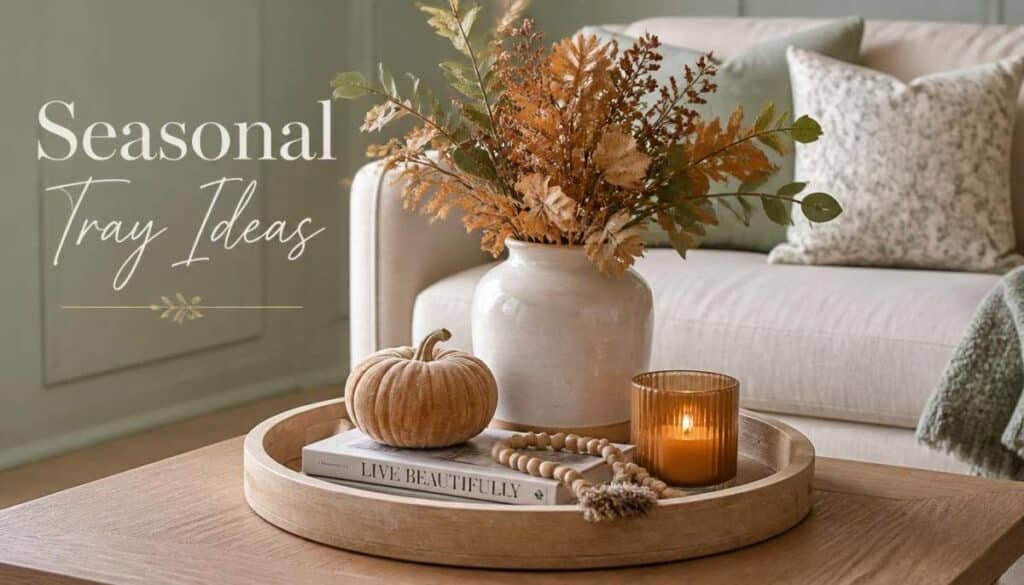
The tray is one of the easiest parts of a living room to refresh with the seasons, no full redecorating required. A neutral base arrangement (vase, candle, one decorative object) can carry through most of the year, with small swaps along the way: fresh or faux florals in spring, a citrus or greenery bowl in summer, warm-toned stems or pinecones in fall, and simple evergreen clippings or a single glass ornament in winter.
What’s Changing in 2026 Tray Styling
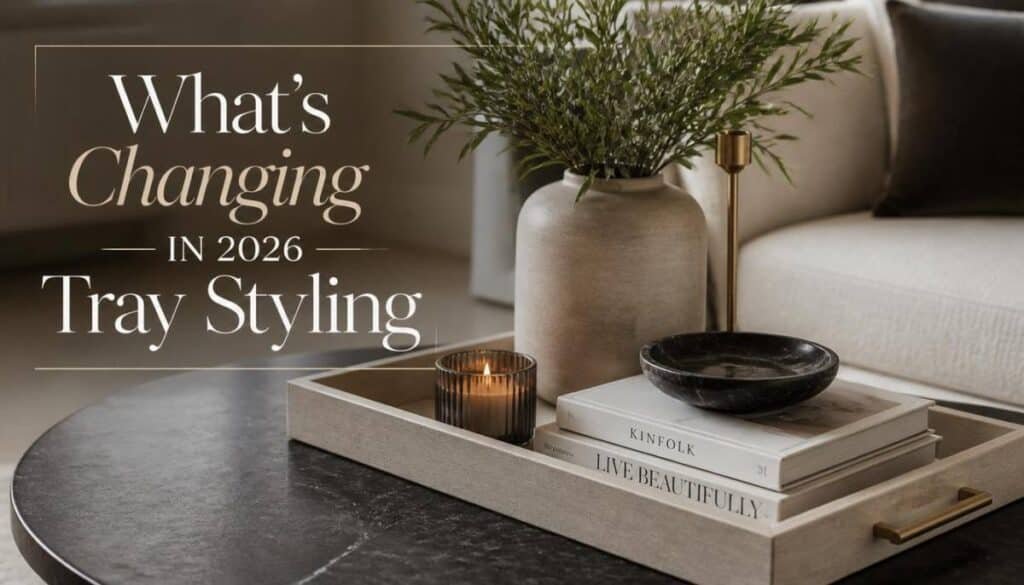
Coffee table styling shifts a little every year, and a few genuine changes are worth knowing before you settle on a look.
Trays themselves have become more central to the whole conversation. Recent trend coverage points to trays doing double duty now, grouping objects into intentional zones while also protecting the surface underneath from scratches and water rings. So they’re pulling more weight than they used to, not just decor.
There’s also a real shift away from generic, matched styling. Interior designers quoted in recent coverage from Homes & Gardens describe a move toward more personal, collected-over-time arrangements, vintage finds, travel pieces, meaningful objects, rather than the same stack of coordinated coffee table books everyone else has. That doesn’t mean throwing the formula out. It just means the “personal touch” step matters more than ever right now, worth leaning into rather than treating as an afterthought.
Color-wise, 2026 is leaning toward calmer, warmer palettes, soft beige, sage, stone gray, dusty blue, over anything too bright or high-contrast.
Unique Coffee Table Tray Alternatives
If a traditional tray doesn’t feel right for your space, that’s on-trend too, honestly. A shallow stone bowl, a vintage wooden box, or even a simple cutting board can create the same grouped, intentional effect without needing to look like a classic tray at all. This is an easy way to get a tray-style setup that still feels distinctly yours rather than something pulled straight off a shelf.
A Few Mistakes Worth Avoiding
A couple of small missteps show up more than others when styling a coffee table tray.
Overfilling it is the most common one. More than five items usually starts to look cluttered rather than curated, even when every individual piece is genuinely nice. Ignoring proportion is another, a tray that skips the one-third to one-half rule tends to look either lost or overwhelming no matter what’s styled on top of it. And forgetting function matters too: a tray with zero open space left on the table starts to feel more like a display than a living room you actually use day to day.
FAQ Section
What size tray is best for a coffee table?
The tray should cover roughly one-third to one-half of the coffee table’s surface, large enough to anchor the arrangement without crowding out space for everyday use.
How many items should be on a coffee table tray?
Three to five items usually works best, with three being a safer choice for a smaller tray and five working for a larger one.
What material tray works best?
It depends on the table. Wood adds warmth and contrasts well with glass or marble tables, while lacquer or metal trays add polish and pair well with wood or stone surfaces.
Should a coffee table tray be practical or just decorative?
Ideally both. A well-styled tray still leaves room for a drink, a remote, or a book, rather than existing purely for photos.
Round table or rectangular table, does the tray shape need to match?
Not necessarily. Matching shapes creates a calmer, more cohesive look, while a contrasting shape (round tray on a rectangular table, for example) adds visual interest without losing structure.

Hi, I’m Liam Alexander! As a home décor specialist for dailyhomevibe.com, I’m super passionate about bringing elegance and simplicity into modern living spaces. I love sharing smart design solutions, helping you optimize your space, and highlighting timeless trends to inspire you to create a home you truly love coming back to.