
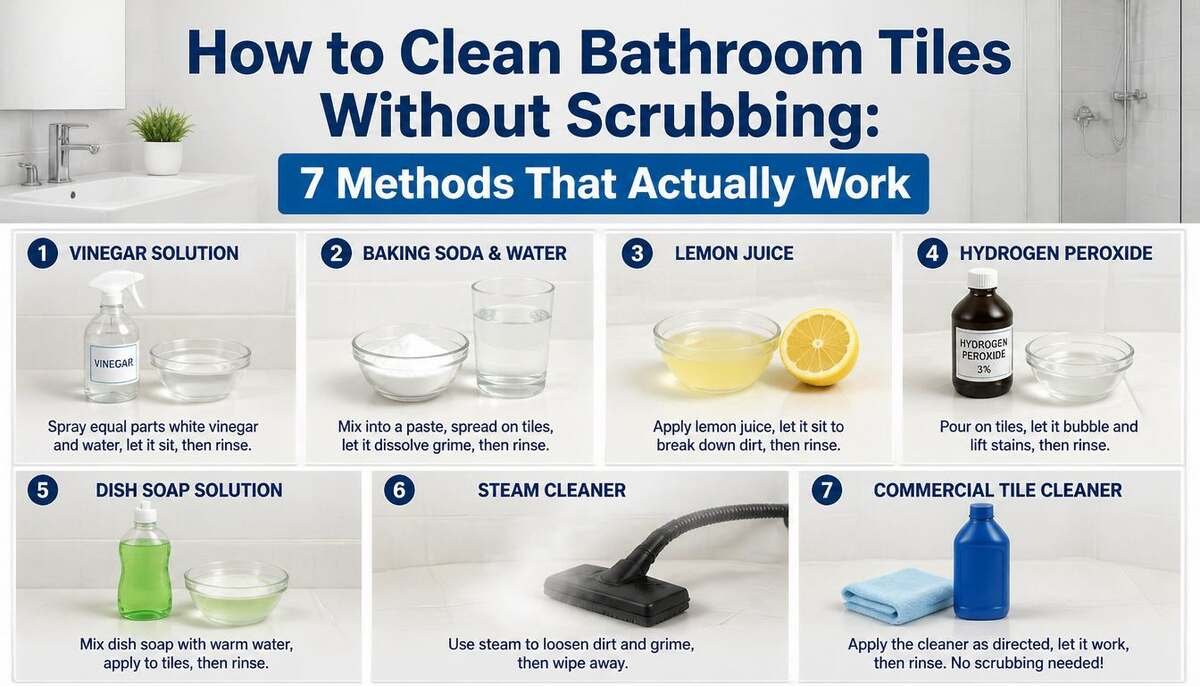
Nobody wants to spend an hour on their knees scrubbing bathroom tiles. How to Clean Bathroom Tiles Without Scrubbing. The good news is that you genuinely do not have to. The science behind no-scrub cleaning is simple: the right solution, left on the tile long enough, breaks down soap scum, hard water stains, and grime so thoroughly that rinsing it away is all you need to do. This guide covers seven methods that actually deliver on that promise, explains why each one works, and tells you exactly which tile types each method is safe for so you do not accidentally damage your surfaces in the process.
Why Scrubbing Is Not Always the Answer

Most people scrub bathroom tiles out of habit rather than necessity. The problem is that scrubbing applies physical force to a surface that chemistry could handle far more effectively and with far less effort. Dwell time, meaning the amount of time a cleaning solution sits on the tile before you rinse it, does most of the actual work. When a solution is left in place long enough, surfactants break the bond between grime and the tile surface, acids dissolve mineral deposits, and oxidizers lift stains from grout lines without any physical scrubbing required.
Understanding this principle changes how you approach bathroom tile cleaning entirely. Instead of reaching for a brush, you apply the right solution, wait, and rinse. The tile comes clean. Your arms do not ache afterward.
Know Your Tile Type Before You Start

This is the step most cleaning guides skip, and it is the step that matters most. The wrong cleaning solution on the wrong tile type can permanently etch, discolor, or damage the surface, creating a problem far worse than soap scum.
Ceramic and porcelain tiles are the most forgiving. They are non-porous and handle mild acids like vinegar, hydrogen peroxide, and most commercial bathroom cleaners without any issues. Natural stone tiles, including marble, travertine, and limestone, are acid-sensitive and will be permanently etched by vinegar, lemon juice, or any acidic cleaner. These tiles need pH-neutral cleaners only. Glass tiles handle most non-abrasive cleaners well but can streak easily. Grout type also matters since cement grout is porous and stains readily, while epoxy grout resists staining and tolerates stronger cleaners.
Method 1: White Vinegar and Dish Soap
This is the most popular no-scrub method because both ingredients are already in most homes and the combination genuinely works on soap scum and light hard water deposits. Mix one part white vinegar with one part warm water in a spray bottle, then add a few drops of dish soap and shake gently to combine.
Spray the solution generously across the tiles and grout, making sure every surface is well coated. Leave it to sit for at least 30 minutes, or up to an hour for heavier buildup. The vinegar dissolves mineral deposits while the dish soap breaks down body oils and soap residue. After the dwell time, rinse thoroughly with warm water and wipe dry with a microfiber cloth. The tiles should be clean without a single stroke of scrubbing.
One important warning: never use this method on natural stone tiles. Vinegar is acidic and will permanently etch marble, travertine, or limestone, leaving dull marks that no amount of cleaning will fix afterward.
Method 2: Baking Soda Paste and Vinegar Spray
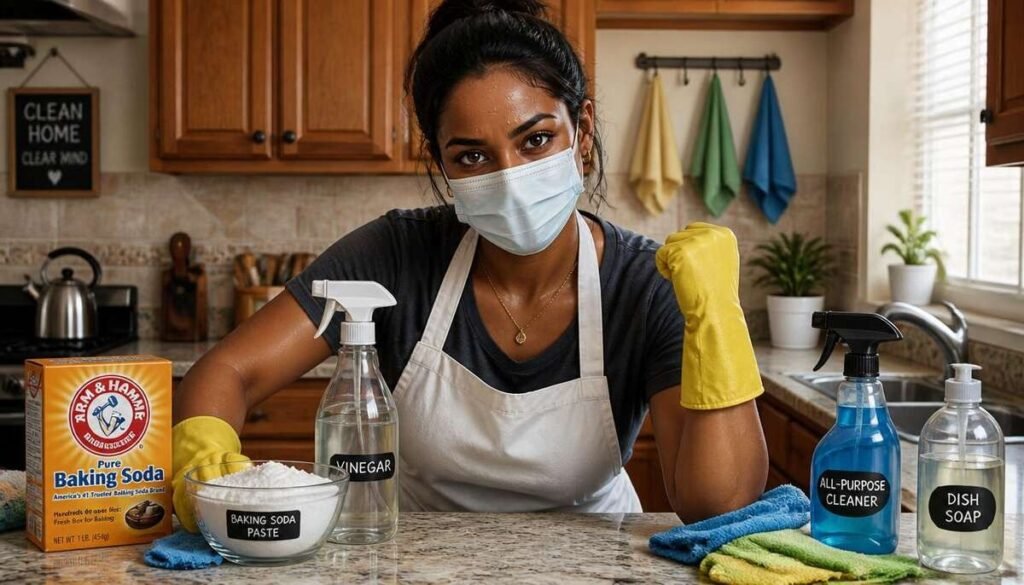
For slightly heavier soap scum or discolored grout, combining baking soda and vinegar creates a fizzing reaction that lifts stubborn deposits from tile surfaces and grout lines without any scrubbing needed. Mix baking soda with a small amount of water to form a thick paste, apply it directly to the tiles and grout lines, then spray white vinegar over the top.
The mixture will fizz immediately as the two ingredients react. This fizzing action is what does the work, loosening grime and lifting stains from porous grout surfaces as it bubbles. Leave the mixture for 20 to 30 minutes before rinsing thoroughly with warm water. For grout lines specifically, this method delivers noticeably brighter results without any brushing at all.
Again, skip this method on natural stone, as the vinegar component will cause the same acid damage as Method 1.
Method 3: Hydrogen Peroxide for Stains and Mildew
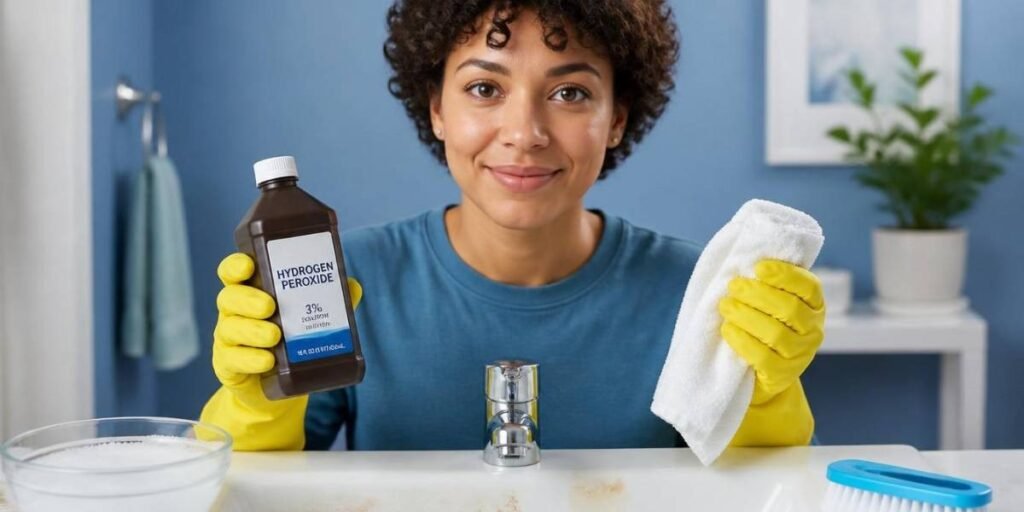
Hydrogen peroxide is one of the most effective no-scrub options for bathroom tiles with visible mildew, pink mold, or stubborn staining that vinegar alone cannot handle. Standard 3 percent hydrogen peroxide, available at any pharmacy, works well for this purpose. Pour it directly into a spray bottle and apply it generously across affected tiles and grout.
Leave it to work for at least 30 minutes. Hydrogen peroxide is an oxidizer, meaning it breaks apart the chemical structure of stains and mildew rather than simply dissolving surface dirt. After the dwell time, rinse with warm water. For particularly stubborn grout stains, mixing hydrogen peroxide with baking soda into a paste and applying it directly to the grout line before rinsing gives even stronger results.
Method 4: Oxygen Bleach Soak
Oxygen bleach, sold as sodium percarbonate powder, is the strongest natural no-scrub option for heavily stained tiles and grout. It differs from chlorine bleach and works by releasing oxygen when dissolved in warm water, lifting stains and killing mildew without the harsh fumes or surface damage that chlorine bleach can cause.
Dissolve three tablespoons of oxygen bleach powder in a bucket of warm water, following the product label for exact ratios. Apply the solution across the tiles and grout, keeping the surface wet for 20 to 30 minutes. For floor tiles, you can pour the solution directly and let it pool in the grout lines. Rinse thoroughly with clean warm water afterward and wipe dry. This method is particularly effective on cement grout that has darkened significantly over time.
Method 5: Commercial No-Scrub Bathroom Foam Cleaner
Commercial foaming bathroom cleaners are specifically engineered for no-scrub application. They cling to vertical tile surfaces without running off, which is a significant advantage over liquid solutions on shower walls, and their formula contains surfactants and enzymes that break down soap scum, body oils, and hard water deposits during the dwell time.
Apply the foam generously after a shower when the tiles are still warm and slightly damp, which helps the cleaner penetrate buildup more effectively. Leave it for 10 to 15 minutes, then rinse. Used daily or every other day, foaming enzyme cleaners prevent buildup from ever reaching the level that requires any serious cleaning effort. This is the most effective maintenance strategy for keeping bathroom tiles clean long-term with zero scrubbing involved.
Method 6: Steam Cleaning Bathroom Tiles Clean Without Scrubbing
A steam cleaner uses only water heated to a high temperature, so there are no chemicals and no residue. The steam penetrates grout and tile surfaces, softening and loosening buildup that would otherwise require significant scrubbing to shift. This method is particularly well-suited to households with allergies, young children, or anyone who prefers to avoid chemical cleaners entirely.
Glide the steam cleaner head slowly across the tile and grout, giving the heat time to work on each section before moving on. Follow immediately with a clean microfiber cloth to wipe away the loosened grime before it has a chance to resettle. Steam cleaning is safe on ceramic, porcelain, and natural stone tiles, though you should always check that your specific steam cleaner is rated for stone surfaces before using it, as some steam cleaners run at temperatures that can damage certain stone finishes.
Method 7: Bleach and Hot Water for Grout
A diluted bleach solution is the most powerful no-scrub option for dirty grout. It easily cleans grout that has turned grey or black from heavy mildew buildup. Mix one part chlorine bleach with four parts hot water. Apply it directly to the grout lines using a spray bottle. You can also carefully pour the solution along the grout.
Leave the solution on the surface for 15 to 20 minutes. Keep the bathroom well ventilated by opening a window or running the exhaust fan. The bleach oxidizes and kills mildew and bacteria at the root. This brings grout back to its original color without any scrubbing. Rinse thoroughly with clean cold water once the time is up.
How to Keep Bathroom Tiles Clean Without Scrubbing Long-Term
The most effective no-scrub strategy is not a cleaning method at all. It is daily maintenance that prevents buildup from ever reaching the point where serious cleaning is needed. Wiping tiles down with a squeegee or dry microfiber cloth after every shower removes water and soap residue before it can dry onto the surface, which is the single most impactful thing you can do for tile cleanliness.
Keep the bathroom ventilated after showering. Run an exhaust fan or open a window for 10 to 15 minutes. This reduces moisture, preventing mold and mildew in the grout. Also, seal your grout lines once a year to fill its porous surface. This prevents it from absorbing soap, water, and bacteria. A quick spray of diluted vinegar once or twice a week maintains cleanliness between deeper cleans. Together, these small habits save you time. They make future deep cleaning far less frequent and much easier.
What NOT to Use on Bathroom Tiles
Knowing what to avoid is just as important as knowing which methods work. clean bathroom tiles without scrubbing. Steel wool and abrasive scouring pads scratch tile surfaces and damage glaze permanently, making the tile more prone to future staining. Undiluted bleach applied directly to tiles without dilution can discolor grout and damage certain tile finishes over time. Vinegar and any other acidic cleaner must never be used on natural stone. Mixing different cleaning products together, particularly bleach with vinegar or bleach with ammonia-based cleaners, creates dangerous fumes and should never be done in an enclosed bathroom space.
Final Thoughts
Cleaning bathroom tiles without scrubbing is not a shortcut. It is simply a smarter application of chemistry. The right solution matches your tile type. Leave it on the surface long enough to do its job. This method consistently outperforms raw elbow grease. Start with Method 1 for regular maintenance. Move to oxygen bleach or hydrogen peroxide for heavier stains. Also, add a daily squeegee habit to keep tiles clean. The tiles requiring the most scrubbing usually just need the right solution. Try it once, and you will wonder why you ever scrubbed at all.
FAQs About Cleaning Bathroom Tiles Without Scrubbing
What is the easiest way to clean bathroom tiles without scrubbing?
The easiest method is vinegar and dish soap mixed in a spray bottle. Spray it on, leave it for 30 to 60 minutes, and rinse. The vinegar dissolves mineral deposits and soap scum while the dish soap cuts through body oils, leaving tiles clean without any scrubbing.
How do I clean bathroom tile grout without scrubbing?
Apply a baking soda and vinegar mixture directly to the grout lines, let it fizz for 20 to 30 minutes, then rinse. For darker or more stubborn grout staining, oxygen bleach dissolved in warm water left on grout for 20 to 30 minutes is the most effective no-scrub option.

Hi, I’m Liam Alexander! As a home décor specialist for dailyhomevibe.com, I’m super passionate about bringing elegance and simplicity into modern living spaces. I love sharing smart design solutions, helping you optimize your space, and highlighting timeless trends to inspire you to create a home you truly love coming back to.