

Cowhide wall decor ideas usually get filed under one category: western, rustic, maybe a little cowboy-chic. And sure, that’s where the look started. But hung the right way, with the right tone and the right neighbors on the wall, a cowhide piece works just as well in a clean, modern space as it does in a ranch-style living room.
The difference comes down to a handful of practical decisions, size, placement, tone, and what’s hanging around it, more than the hide itself. Here’s how to get all of that right.
Why Cowhide Works as Wall Decor

A cowhide piece brings something most wall decor can’t: real, physical texture. Where a print or a piece of framed art is flat, a cowhide has depth and movement built right into the material itself, natural markings, subtle color shifts, a slight sheen depending on the light. That’s part of why it reads as high-end even when it wasn’t expensive.
It also does something clever with pattern. Unlike a printed animal-print fabric, no two cowhides are ever quite the same, so the piece automatically feels one-of-a-kind rather than mass-produced.
Getting the Size Right

This is the step most people skip, and it’s the reason a cowhide can end up looking randomly stuck on a wall instead of intentionally placed.
As a general guide, a cowhide piece should feel proportional to the wall space around it, not so small it looks like an afterthought, and not so large it overwhelms the furniture beneath it. On a wall behind a sofa or bed, a good rule of thumb is keeping the hide roughly two-thirds the width of the furniture it’s centered over, similar to how art is typically sized above a piece of furniture.
Choosing Real vs. Faux Cowhide

Both options work for wall decor, and the right one depends less on budget and more on what matters to you.
Real Cowhide
Genuine cowhide has natural variation in pattern, texture, and thickness, which is part of the appeal for a lot of people, no two pieces are identical. It also tends to hold up well over time and develops a bit of character as it ages.
Faux Cowhide
Faux options have come a long way and now closely mimic the look of real hide, often at a lower price point and without the sourcing concerns some people have around animal products. For anyone who wants the look without those considerations, faux is a completely reasonable choice, and from a few feet away, most people won’t notice the difference.
Quick Reference: Design Ideas at a Glance
| Style | Best Cowhide Tone | Best Room to Try It |
| Western and Rustic | Brown and white, brindle | Living room, dining room |
| Modern Minimalist | Black and white, tricolor | Living room, home office |
| Boho | Beige, cream, natural tones | Bedroom, reading nook |
| Eclectic Gallery Wall | Any tone, contrast-driven | Hallway, stairwell landing |
| Bold Accent (2026 trend) | Metallic gold or silver | Entryway, powder room |
Cowhide Wall Decor by Style
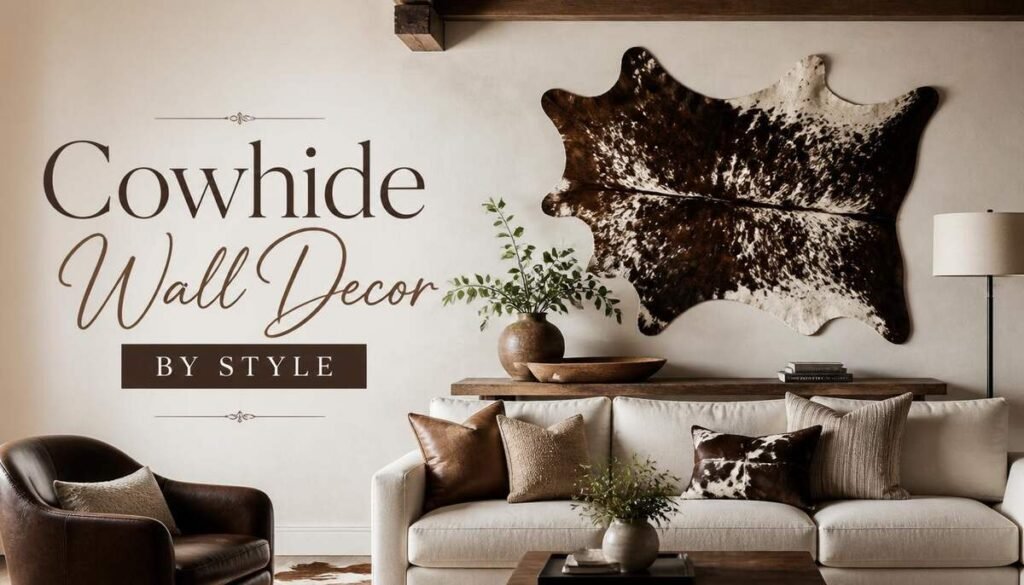
The same material reads completely differently depending on what’s around it.
Western and Rustic
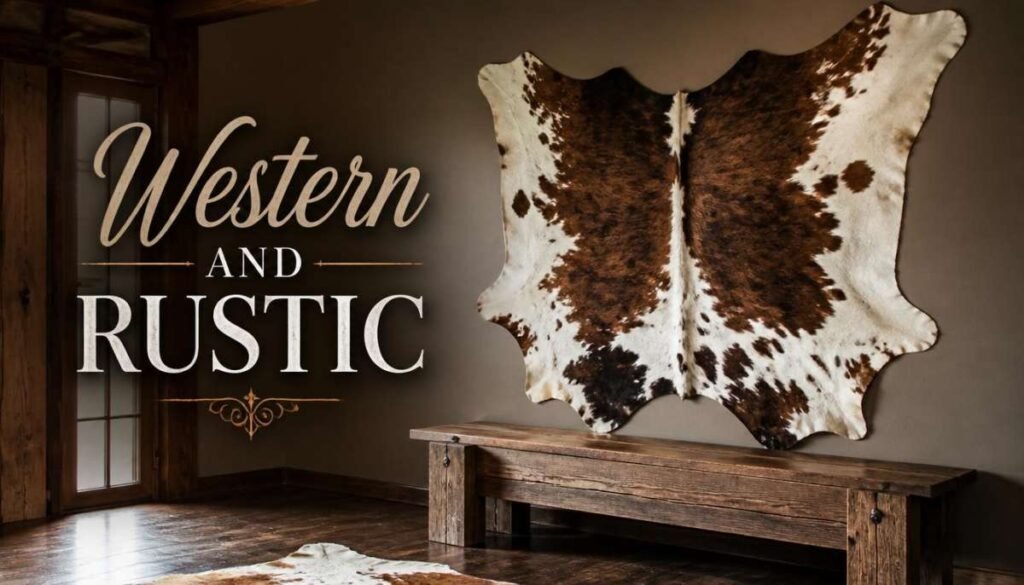
The classic pairing: warm wood tones, iron or leather accents, and a neutral or earthy color scheme. This is where cowhide feels most at home, literally, since it’s the style it originated from.
Modern Minimalist
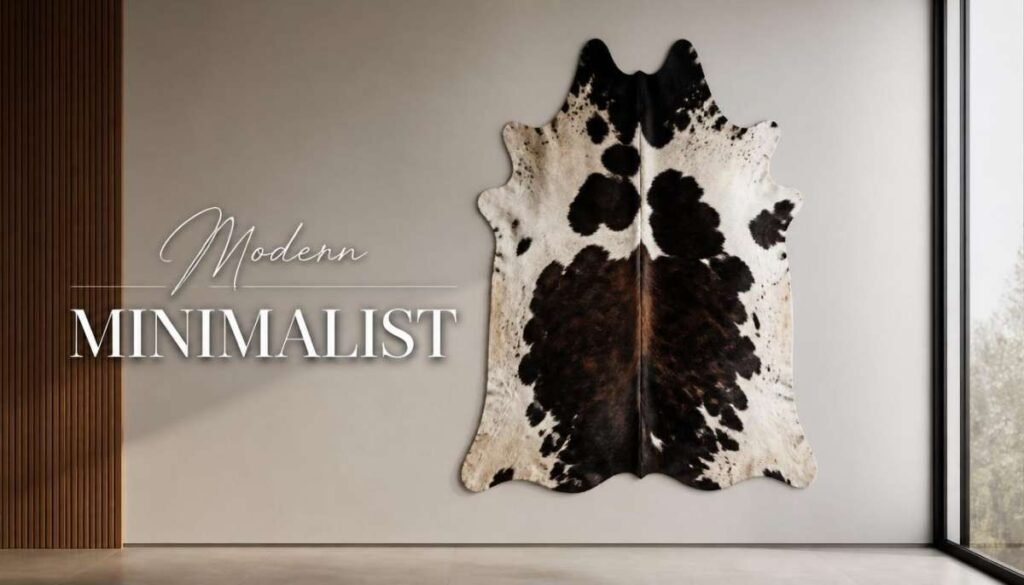
A tricolor or black-and-white cowhide against a plain white or light gray wall, with little else competing for attention, reads as surprisingly sleek. Pairing it with clean-lined furniture and metal accents (black or brass) keeps the look current rather than dated.
Boho

Layered textures make boho work, and cowhide fits right in alongside macrame, rattan, and warm neutral tones. This is one of the more forgiving styles to work cowhide into, since boho already embraces a mix of natural materials.
Eclectic Gallery Wall (Cowhide With Pictures)

This is where cowhide gets interesting. Instead of hanging a piece alone, mixing it into a gallery wall alongside framed photos or art creates real visual contrast, texture against flat frames, natural pattern against clean lines. It’s a distinctive combination that most standard gallery walls don’t have, and it’s one of the most searched ways people actually use cowhide, hung on a wall with pictures arranged around or even layered slightly over it.
Quick Reference: Hanging Methods by Hide Weight
| Hide Type | Best Hanging Method |
| Small or lightweight hide | Adhesive strips or small nails |
| Standard-size hide | Upholstery tacks or a hidden rod pocket |
| Large or thick hide | Wall-mounted clips or a wood dowel with fabric loops |
How to Actually Hang It (A Simple DIY Job)
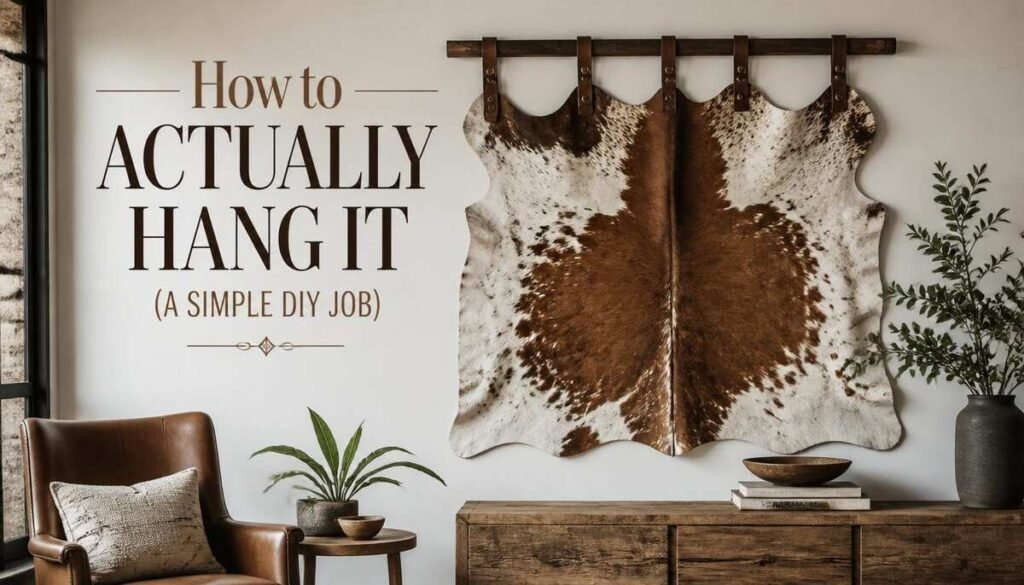
The hanging method matters more for cowhide than most wall decor, since the material has real weight and doesn’t lie perfectly flat the way a canvas does. The good news: none of this requires a professional, it’s a straightforward DIY project either way.
For smaller or lighter pieces, adhesive strips rated for the hide’s weight or a few small nails along the top edge work fine. For a cleaner look with a standard-size hide, upholstery tacks spaced evenly along the top create a finished, slightly structured edge rather than a droop.
How to Hang a Heavy Cowhide on the Wall
Larger or thicker hides need a sturdier approach than a typical lightweight piece. The most reliable method is threading a wood dowel through fabric loops sewn or glued along the back of the hide, then hanging it the way you’d hang a tapestry. This distributes the weight evenly across the top edge instead of concentrating it on a few nails or hooks, which matters once a hide gets heavy enough to pull or sag over time.
Caring for a Cowhide Wall Piece
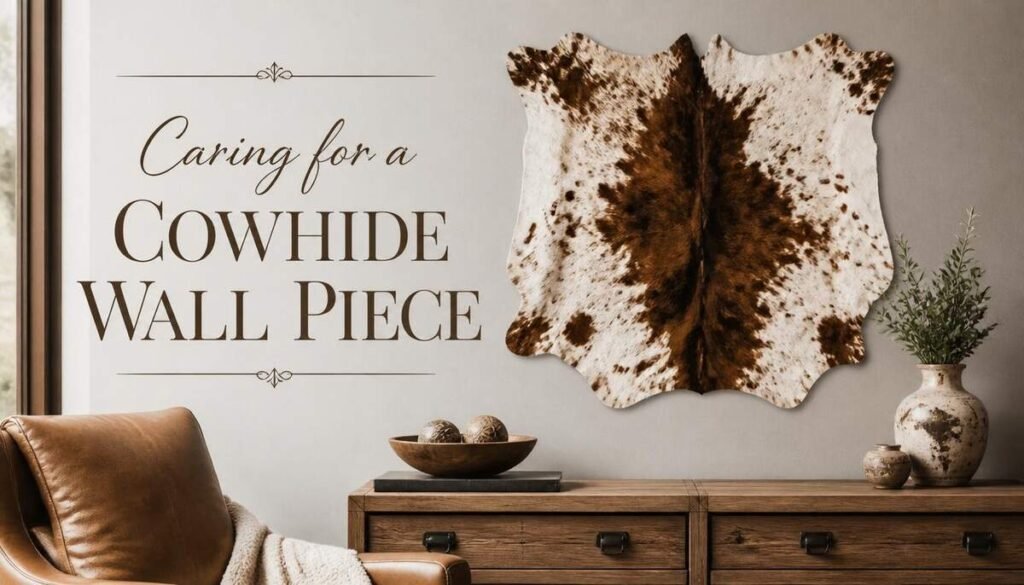
Cowhide is lower-maintenance than most people expect, but a few things help it last.
Direct, prolonged sunlight will fade the color over time, the same as it would with any natural material. This isn’t just anecdotal, either; conservation research from the Library of Congress confirms that both UV and visible light gradually break down natural fibers and dyes, which is why a spot out of harsh direct light keeps the tones truer for longer.
Day to day, dust it with a soft brush or vacuum attachment on a low setting every so often, and avoid moisture entirely, cowhide isn’t meant to get wet, and a damp cloth can cause stiffening or discoloration. Maintaining moderate humidity around the piece also helps; detailed hide care guidance recommends keeping cowhide in the 40 to 60 percent humidity range, since overly dry air can make the leather brittle over time.
For anything beyond light dusting, a professional cleaner familiar with hides is a safer bet than a DIY approach.
What’s New for 2026

A few things worth knowing before you commit to a piece.
Wall-mounted cowhide has become its own trend now, not just a rug that happens to end up on a wall. That’s a big part of why gallery walls and statement hangings have picked up so much momentum lately.
Color’s shifting too. Metallic and bold-dyed hides, think gold, silver, even vivid tones, are having a real moment as accent pieces. Used sparingly, one bold hide can do more for a room than several neutral ones combined.
And there’s a real move away from strict minimalism. 2026 rooms are leaning more layered and personal, mixing patterns rather than keeping everything pared back, which fits right into the gallery-wall approach from earlier in this guide.
Quick Tips Before You Hang It
A short list to run through before committing to a piece or a placement:
- Measure the wall and the furniture beneath it first, not just the hide itself.
- Hold the hide up (or tape paper cut to size) before nailing anything, to check proportion in real light.
- Choose a hanging method based on weight, not just looks, a heavy hide needs more support than a light one.
- Give it context: a lamp, a piece of furniture, or another texture nearby so it doesn’t look isolated.
- If mixing it into a gallery wall, place it first and build the rest of the arrangement around it, not the other way around.
A Few Mistakes Worth Avoiding
A couple of small missteps come up more than others when hanging cowhide on a wall.
Hanging it dead center with nothing else nearby can make it look more like a taxidermy trophy than intentional decor. Giving it a little context, a piece of furniture beneath it, a lamp nearby, another texture close by, helps it read as styled rather than isolated. Going too small for the wall is another common one; a cowhide that’s noticeably undersized for the space tends to look like it was hung as an afterthought rather than a planned piece.
FAQ Section
What size cowhide should I use for a wall?
A good general rule is keeping the hide roughly two-thirds the width of the furniture it’s centered over, similar to how framed art is typically sized above a sofa or bed.
Is real or faux cowhide better for wall decor?
Both work well. Real cowhide has natural variation and ages with character, while faux cowhide offers a similar look, often at a lower cost, without sourcing concerns.
How do you hang a cowhide on a wall without damaging it?
Lighter hides can use adhesive strips or small nails, while heavier hides do best with a wood dowel threaded through fabric loops, which distributes the weight evenly.
Does cowhide wall decor only work in western-style rooms?
No. A tricolor or black-and-white cowhide against a plain wall with clean-lined furniture reads as modern and minimalist, not just rustic or western.
How do you clean a cowhide wall hanging?
Regular dusting with a soft brush or low-setting vacuum attachment is usually enough. Avoid moisture, and keep the piece out of direct sunlight to prevent fading.

Hi, I’m Liam Alexander! As a home décor specialist for dailyhomevibe.com, I’m super passionate about bringing elegance and simplicity into modern living spaces. I love sharing smart design solutions, helping you optimize your space, and highlighting timeless trends to inspire you to create a home you truly love coming back to.