
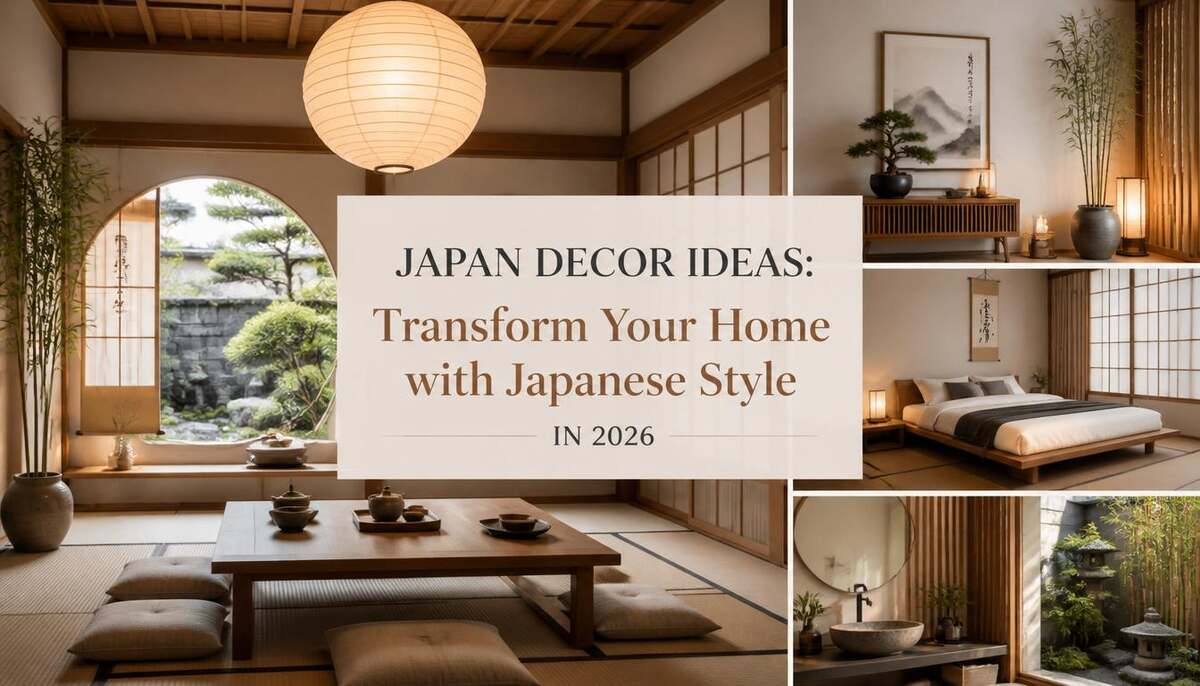
If you want a home that feels calm, clean, and deeply intentional, Japan decor ideas are exactly what you need. Japanese interior design is not just about looks. It is a philosophy. Every object has a purpose. Every space has breathing room. And every material connects you to nature.
This guide gives you practical, room-by-room Japan decor ideas that you can actually use whether you have a large home or a small apartment.
What Is Japanese Style Decoration?
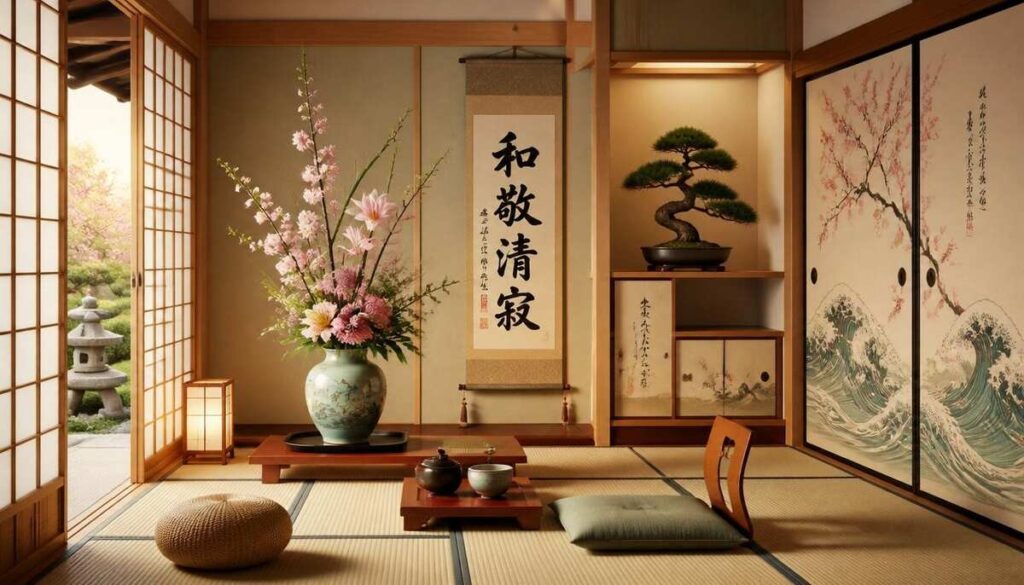
Japanese-style decoration is rooted in the concept of Ma (間) the beauty of empty space. It emphasizes simplicity, natural elements, and a seamless connection between indoor spaces and the surrounding environment.
Direct Answer: Japanese decor uses neutral colors, natural textures, low furniture, and clean lines to create a peaceful and functional living space.
Core Characteristics of Japanese Interior Design
Minimalism
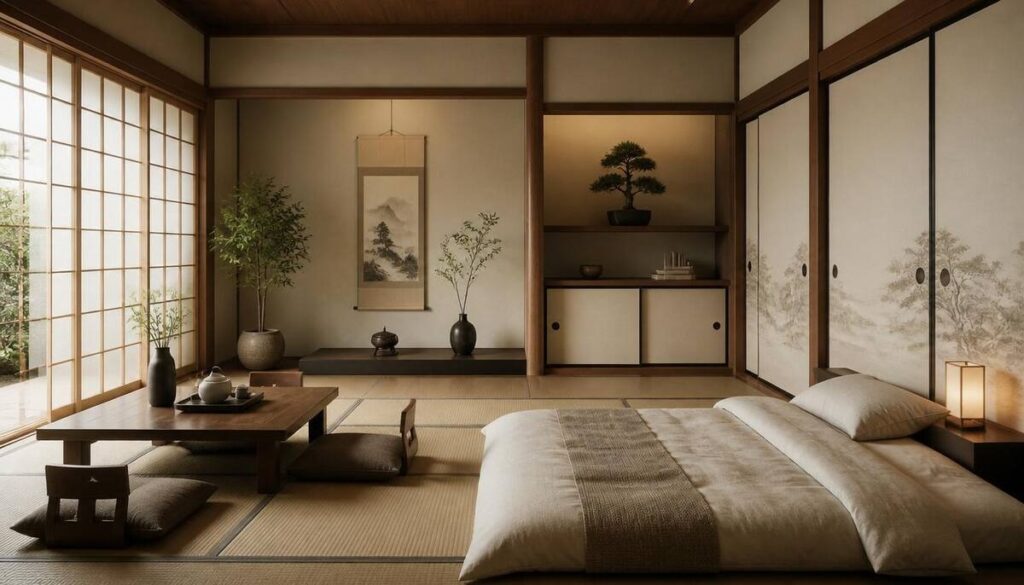
Japanese minimalism means keeping only what serves a purpose. No decorative clutter. Every shelf, surface, and corner is considered. The goal is for visual rest; your eyes should feel relaxed when they scan a room.
Natural Elements and Materials
Wood, bamboo, stone, linen, and rice paper are the foundations of Japanese interiors. These materials age beautifully and bring warmth without color.
What to use: Light oak shelves, bamboo blinds, stone countertops, washi paper lamp shades.
Neutral Color Palette
Japanese decor stays within whites, creams, warm greys, soft beige, and earthy brown tones. Occasionally, deep forest green or charcoal black is added as an accent, never as a dominant color.
Color Palette Guide:
| Role | Color |
| Base | Off-white / Warm cream |
| Secondary | Light oak / Warm grey |
| Accent | Charcoal / Forest green |
| Texture pop | Natural linen / Bamboo |
Low and Traditional Furniture
Japanese furniture sits close to the ground. Low platform beds, floor cushions (zabuton), and low dining tables (kotatsu) all reduce visual height in a room and make spaces feel more open and grounded.
Sliding Doors (Shoji)
Shoji screens and sliding doors divide space without walls. They allow soft diffused light to pass through while maintaining privacy. Even a simple frosted sliding door in a modern home captures this spirit perfectly.
Japanese Interior Design vs Japandi: A Complete Comparison
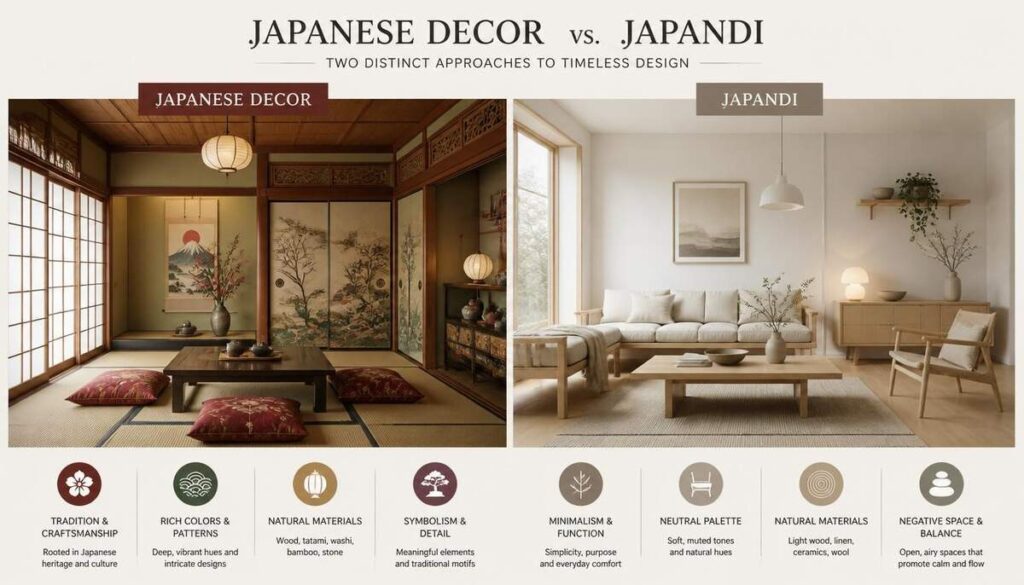
This is one of the most-searched questions in this niche, and most competitors answer it poorly.
Japanese decor is rooted in traditional wabi-sabi philosophy, tatami mats, shoji screens, and a direct connection to Japanese cultural heritage.
Japandi is a modern hybrid of Japanese and Scandinavian design. It keeps the minimalism and natural materials of both but removes culturally specific elements. Japandi is warmer, more accessible, and easier to mix with existing modern furniture.
Quick Rule: If your space has shoji screens and bamboo, it leans Japanese. If it has clean Scandi lines with warm wood and zero ornamentation, it is Japandi.
Japan Decor Ideas Room by Room
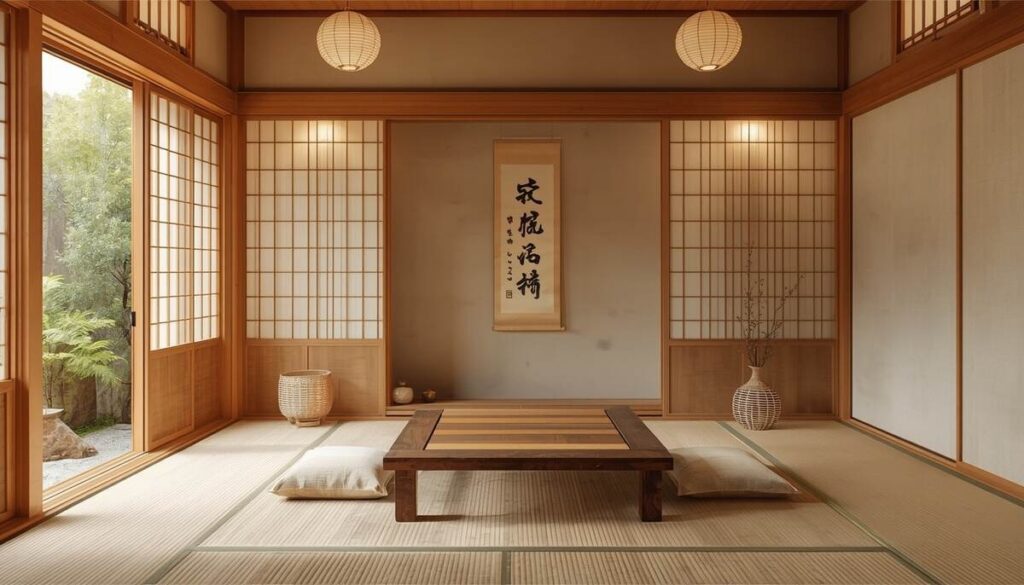
Living Room Japan Decor Ideas
1. Low Platform Sofa Setup: To begin with, replace your standard sofa with a low-profile platform sofa to create a more grounded and spacious feel. Alternatively, arrange floor cushions around a low wooden coffee table for an authentic Japanese-inspired look. Additionally, place a jute rug underneath to define the seating area and add natural texture to the room.
2. Shoji-Inspired Room Divider: Another excellent idea is to use a wooden-framed rice paper screen to separate your living room from an entryway or dining area. Not only does it provide structure and privacy, but it also allows natural light to flow freely throughout the space. As a result, the room feels both organized and open.
3. Bonsai or Ikebana Arrangement: Finally, introduce a touch of nature with a carefully placed bonsai tree or a traditional ikebana flower arrangement. For example, a single bonsai displayed on a wooden stand can become a striking focal point. Likewise, an ikebana arrangement adds beauty and balance while maintaining the minimalist principles of Japanese design. Most importantly, these natural elements bring life into the room without creating visual clutter.
Bedroom Japan Decor Ideas
4. Tatami-Style Platform Bed A low wooden platform bed with a firm mattress and linen bedding in white or oatmeal tones creates an instantly Japanese bedroom. Keep the nightstands minimal: one small tray, one lamp, nothing else.
5. Neutral Linen and Cotton Bedding: Avoid prints. Use solid natural tones, warm white, stone grey, or soft sage. Layer textures instead of colors.
6. Hidden Storage Under the Bed Japanese design hides clutter. Built-in drawers under a platform bed keep the room visually clean while maximizing function.
Bathroom Japan Decor Ideas
7. Natural Stone Washbasin A vessel sink carved from natural stone or concrete on a simple wooden vanity is one of the most striking Japanese decor ideas for a bathroom. It feels like a Japanese onsen (hot spring spa) brought home.
8. Bamboo Accessories Replace plastic soap dispensers, toothbrush holders, and towel rings with bamboo equivalents. Small changes have a massive visual impact.
9. Wooden Slatted Bath Mat A hinoki wood (Japanese cypress) bath mat outside your shower adds authentic Japanese spa energy. Hinoki also has a natural calming scent.
Kitchen Japan Decor Ideas
10. Open Minimal Shelving: Remove upper cabinet doors or replace them with open wooden shelves. Display only daily-use items: clean ceramic bowls, simple mugs, and one plant.
11. Ceramic and Handmade Tableware Japanese wabi-sabi philosophy celebrates imperfect handmade objects. Replace matching factory sets with individual handmade ceramic pieces in earthy tones.
Entryway (Genkan) Japan Decor Ideas
12. Dedicated Shoe Removal Zone. In Japanese homes, the genkan (entryway) is sacred — shoes are removed before entering. Create a small step or a wooden shoe rack at your entrance. Add a small wooden bench and one hook for bags. Clean, functional, intentional.
13. Single Hanging Scroll or Artwork: One piece of Japanese calligraphy or ink wash art on the entryway wall sets the tone for the entire home. It should be the only thing on that wall.
Japan Decor Ideas on a Budget
- Bamboo blinds are cheap, widely available, instant transformation
- Washi tape on plain walls to mimic shoji grid patterns
- Secondhand wooden furniture sanded and oiled in a natural finish
- Linen curtains in off-white replace heavy drapes affordably
- Paper lantern pendant lights cost very little and change everything
- Declutter first, Japanese style costs nothing if you start by removing
What Colors Work Best for Japanese Decor?
Stick to the following, and you cannot go wrong:
- Shiro (白) Pure white for walls and ceilings
- Kuri (栗) Chestnut brown for wood tones
- Moegi (萌黄) Pale green for plant accents
- Sumi (墨) Ink black for thin frames and lines
- Tsuchi (土) Earth tone beige for textiles
Final Thought: Japan Decor Ideas
Japanese decor ideas are not just a trend; rather, they represent a lifestyle shift toward calm, intentionality, and respect for your living space. To begin with, start with one room and focus on creating a sense of balance. Then, remove anything that does not serve a purpose or belong in the space. Next, introduce a natural element, such as wood, bamboo, or indoor plants, to bring warmth and harmony. Finally, allow the space to breathe by keeping it open, uncluttered, and connected to nature.
That is exactly what Japanese design has been teaching for centuries.
Frequently Asked Questions Japan Decor Ideas
Q: What is the key principle of Japanese home decor?
The key principle is Ma’s intentional empty space. Less is more, and every object must earn its place.
Q: Can I do Japanese decor in a small apartment?
Yes. Japanese design was actually developed for small spaces. Low furniture, hidden storage, and light neutral colors make any small room feel larger and calmer.
Q: What plants are used in Japanese interior design?
Typically, bonsai, bamboo, moss arrangements (kokedama), and peace lilies are among the most popular choices in Japanese interior design. Additionally, these plants help create a calming connection with nature while maintaining a clean and uncluttered aesthetic. Rather than filling a room with many plants, the goal is to use one or two carefully placed pieces that bring balance, beauty, and tranquility to the space.
Q: Is Japanese decor expensive?
Not necessarily. In fact, Japanese decor is based on the philosophy of simplicity rather than luxury or high cost. Instead of focusing on expensive furniture and accessories, it emphasizes thoughtful design, functionality, and natural materials. For example, decluttering your space, adding bamboo accessories, incorporating natural linen fabrics, and using wooden elements can help achieve an authentic Japanese-inspired look on almost any budget.
Q: What is wabi-sabi in Japanese decor?
Wabi-sabi is the acceptance of imperfection and impermanence. In decor, it means embracing natural wear on wood, handmade, imperfect ceramics, and aged textures rather than chasing a perfect showroom look.

Hi, I’m Ashir Zahid! I’m a home décor writer and creative enthusiast who loves finding simple and beautiful ways to make everyday spaces feel more comfortable and inviting. I enjoy exploring home styling ideas, practical decorating tips, and timeless trends that can work in real homes without making things feel complicated.
At DailyHomeVibe, I share easy-to-follow ideas for decorating different rooms, choosing the right colors and textures, and giving your home a fresh look with thoughtful details. My goal is to help readers find inspiration they can actually use, whether they are refreshing one small corner or giving their whole home a new feel.