
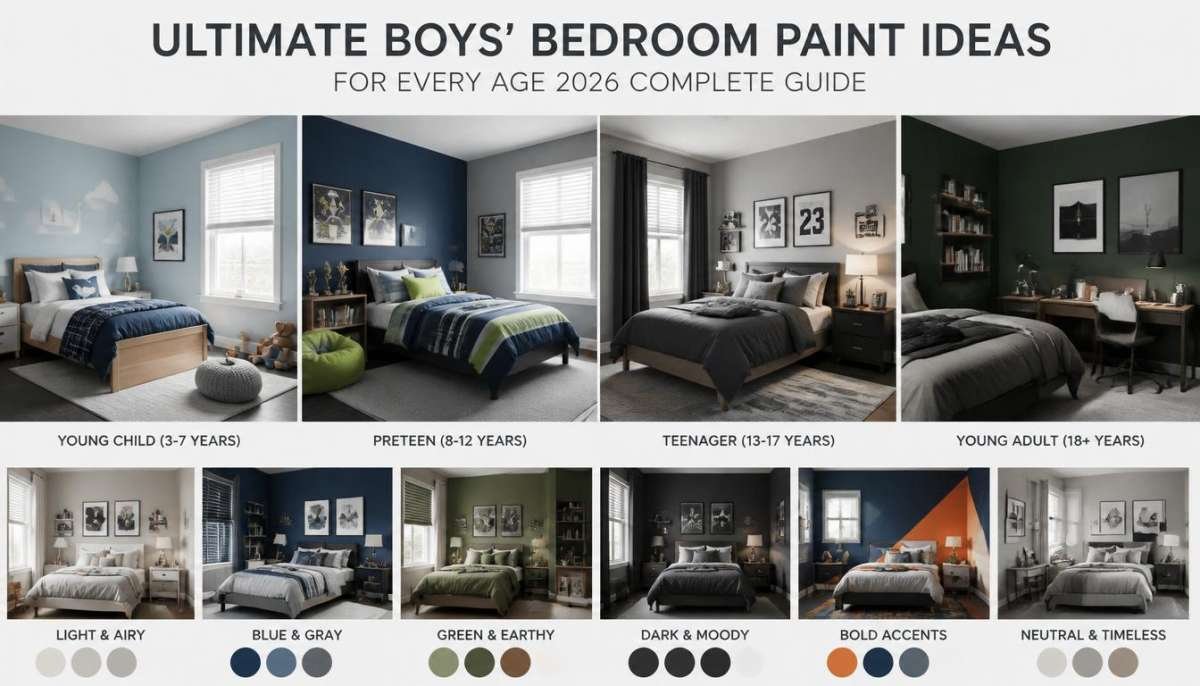
Boys’ bedroom paint ideas tend to fall into one of two traps: either the color is so juvenile it needs repainting in two years, or it’s so safe and neutral it barely feels like his room at all. The sweet spot is somewhere in between, a color that fits who he is now without needing a redo the second he outgrows dinosaurs or trucks.
Here’s how to find that sweet spot, organized by age first, then by color and finish, since what works changes more with a child’s stage than most paint guides let on.
Picking a Color That Grows With Him
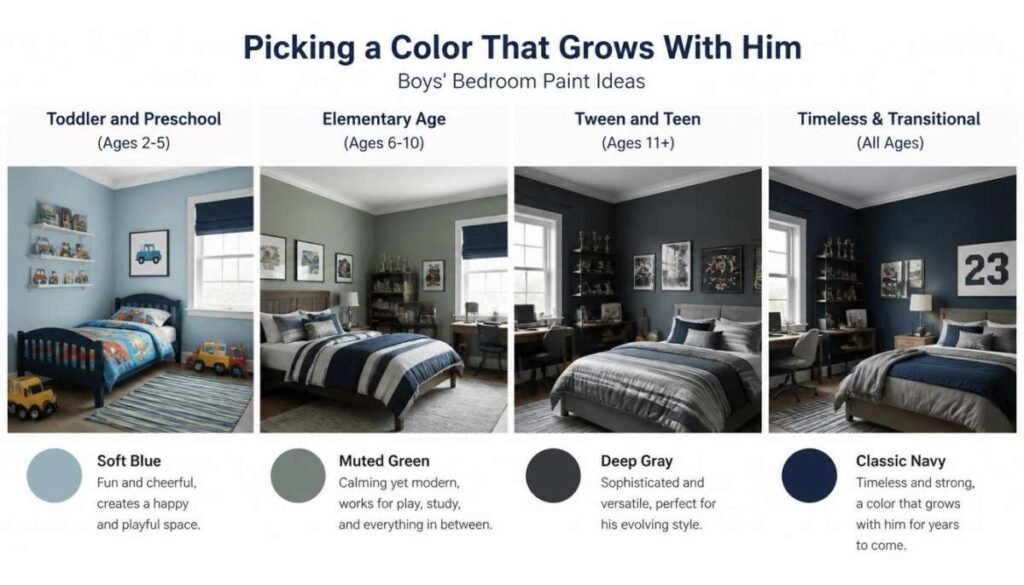
Before falling in love with a specific shade, it helps to think about how long that color actually needs to work. A four-year-old’s favorite color rarely survives to age ten, but the room usually needs to.
Toddler and Preschool (Ages 2-5)
This is the one stage where a playful, saturated color makes real sense, since a toddler’s room usually gets repainted again within a few years anyway. Soft primary tones, cheerful yellows, or a single fun accent wall work well here without much risk, since expectations for longevity are lower at this age.
Elementary Age (Ages 6-10)
This is where the “will he still like this at 12” question starts to matter. A mid-tone blue, green, or gray gives enough personality to feel like his space, without locking the room into a theme he’ll outgrow in a year or two. Save the truly kid-specific choices (dinosaurs, trucks, superheroes) for bedding and decor instead of the walls themselves.
Tween and Teen (Ages 11+)
By this point, most boys have strong opinions and want a room that feels more grown-up. Deeper, moodier colors, navy, charcoal, forest green, tend to land well here, along with matte or low-sheen finishes that read as more mature than the glossier finishes used in younger kids’ rooms.
Also Read : Best Entryway Decor Ideas to Impress Guests 2026 Complete Guide
Classic Color Ideas That Actually Work
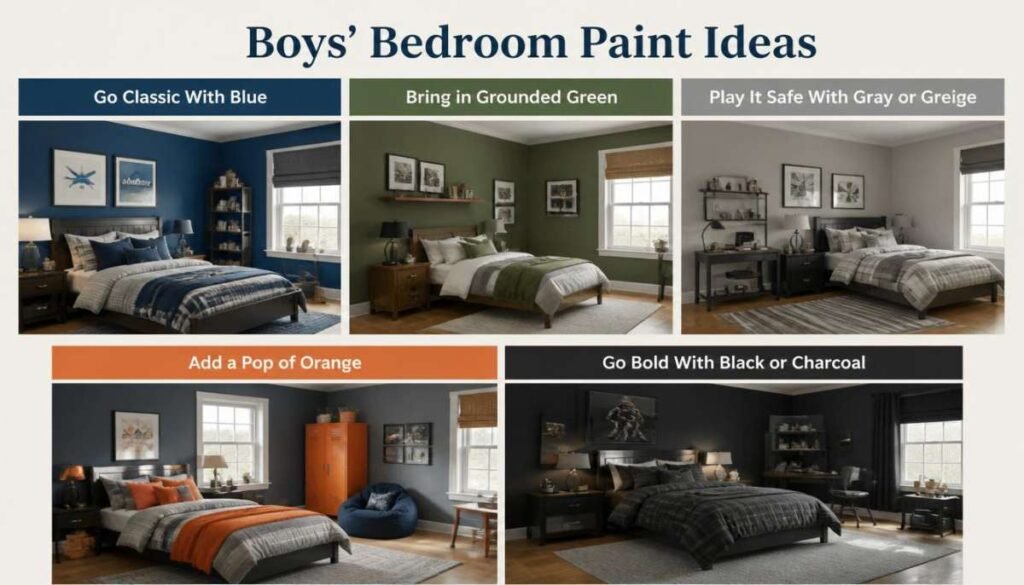
These are the shades that show up again and again in boys’ rooms, and for good reason, they’re flexible enough to work across more than one age range.
Go Classic With Blue
The default for a reason: blue is calming, easy to live with, and ranges from a soft sky tone for younger boys to a deep navy for teens, all without ever feeling like the “wrong” choice. It’s also one of the easiest colors to build a whole room around, since it pairs naturally with white trim, wood furniture, and almost any bedding pattern.
Bring in Grounded Green
A sage or forest green brings in a nature-inspired, calming quality that works particularly well paired with wood furniture, and it tends to age well from childhood into the teen years without feeling babyish. It’s also a good middle-ground pick for parents who want something more distinctive than blue but still easy to live with long-term.
Play It Safe With Gray or Greige
For anyone not ready to commit to a bold color, gray offers a flexible, easy-to-update backdrop that plays well with almost any bedding or decor swapped in later. It’s a particularly good choice if the room needs to transition smoothly from a younger, playful phase into a more mature teen look without a full repaint in between.
Add a Pop of Orange
Orange brings energy and warmth, but it’s easy to overdo. Using it as a single accent wall or in smaller doses (trim, furniture, decor) usually works better than covering all four walls in it. Muted, terracotta-leaning oranges tend to feel warmer and more grounded than bright, saturated versions, which can start to feel overstimulating in a room meant for winding down.
Go Bold With Black or Charcoal
Not a color most people think of first for a kid’s room, but on a single accent wall or paired with plenty of natural light, charcoal or even true black can look surprisingly sophisticated in a tween or teen space. This works best when balanced with lighter furniture or bedding, so the room still feels open rather than closed in.
Beyond a Solid Color: Pattern and Play
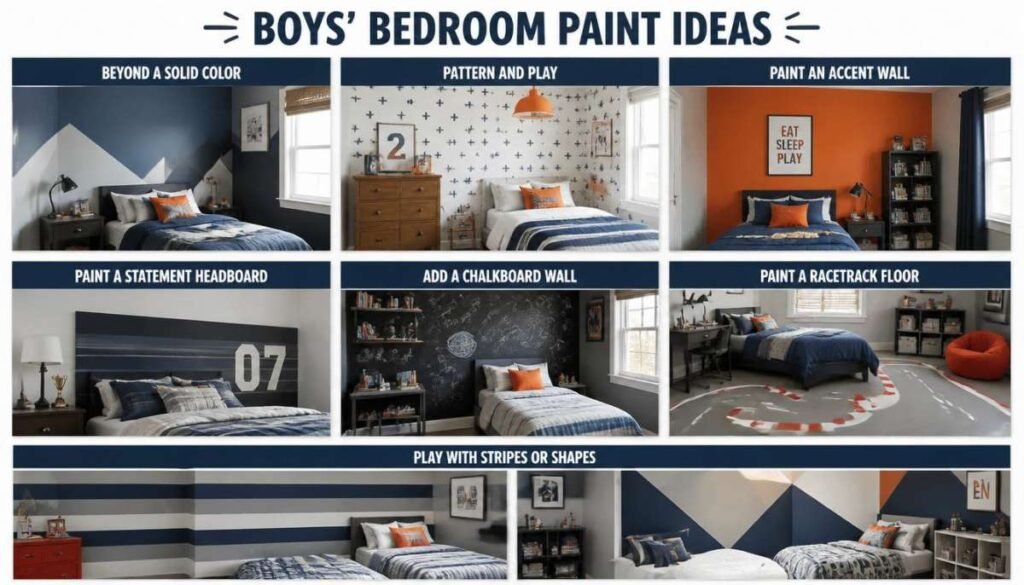
For families who want more than a single flat color, these ideas bring in personality without needing a full mural. Most of them also cost less than a full room repaint, which makes them an easy way to add character without a big commitment.
Paint an Accent Wall
Painting just one wall in a bolder color or pattern gives the room a focal point while keeping the rest of the space easy to update as tastes change. The wall behind the bed is usually the best choice, since it becomes the natural focal point of the room without competing with windows, doors, or closet space.
Paint a Statement Headboard
Instead of buying a furniture headboard, painting one directly onto the wall behind the bed adds a graphic, custom feel, and it can be as simple or elaborate as the room calls for. A simple painted rectangle or arch shape works just as well as an intricate design, and it’s an easy detail to repaint or resize as the bed itself changes over the years.
Add a Chalkboard Wall
Chalkboard paint turns part of the wall into a drawing surface, which doubles as decor and as an outlet for a kid who likes to doodle, without permanent marks on the rest of the room. Keeping it to a smaller section rather than a full wall makes it easier to maintain and less overwhelming visually.
Paint a Racetrack Floor
For younger boys especially, painting roads, a racetrack, or a simple grid pattern on the floor turns playtime into part of the room’s design instead of something separate from it. This idea works best on a floor that can be resealed or repainted later, since it’s one of the more temporary options on this list.
Play With Stripes or Shapes
Polka dots, stripes, or geometric shapes in a corner or on one wall add visual interest without the commitment of a full mural, and they’re easy to paint over later if needed. Keeping the pattern to one wall or a defined section, rather than the whole room, keeps it feeling intentional instead of busy.
Does the Room’s Light Direction Change the Color?
This is one of the most common points of confusion, and it rarely gets a clear answer. A north-facing room gets cooler, flatter light throughout the day, which can make blues and grays look duller or more muted than they did on the paint chip. A south-facing room gets warmer, stronger light, which tends to make the same colors look brighter and slightly warmer than expected.
The practical fix is simple: test the actual paint on the actual wall before committing. A color that looks perfect in a well-lit showroom can shift noticeably once it’s on a wall that only gets indirect afternoon light.
Quick Reference: Age vs. Best Approach
| Age Range | Best Color Approach | Best Finish |
| Toddler (2-5) | Playful, saturated tones or a fun accent wall | Eggshell or satin |
| Elementary (6-10) | Mid-tone blue, green, or gray | Satin |
| Tween/Teen (11+) | Deeper, moodier tones like navy or charcoal | Matte or low-sheen |
Why Paint Safety Matters More in a Kid’s Room
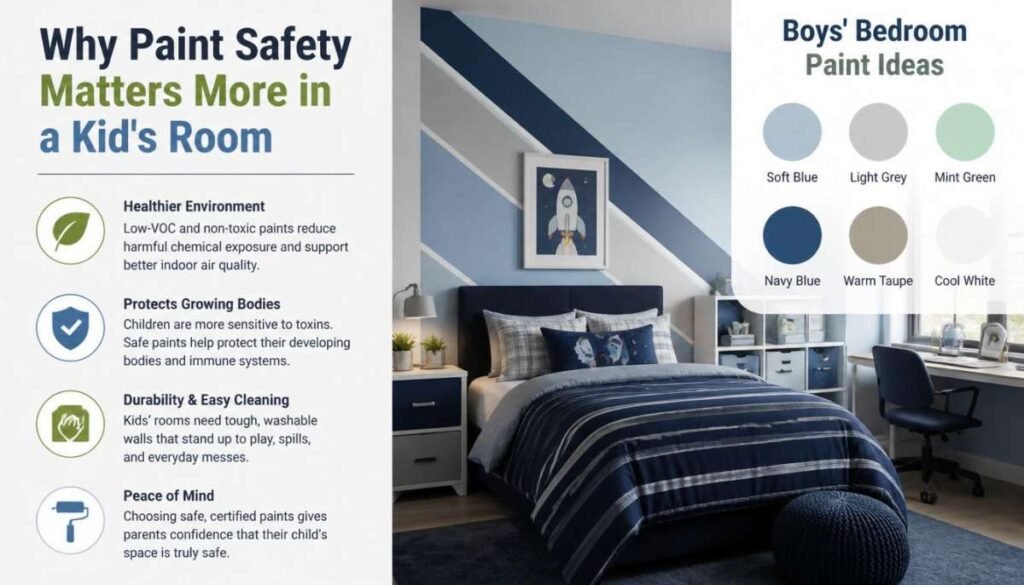
Color and finish get most of the attention, but what’s actually in the paint matters just as much, especially in a room where a child spends eight or more hours a night breathing the air.
Standard paint releases volatile organic compounds, or VOCs, as it dries and cures, and children are more affected by this than adults since their respiratory systems are still developing and they tend to breathe air closer to the floor, where heavier fumes settle. According to WebMD, even paint labeled “zero-VOC” isn’t necessarily completely free of these compounds, which is why it’s worth checking the label rather than relying on marketing terms alone.
The practical takeaway is simple: choose a low-VOC or zero-VOC paint where possible, ventilate the room well during and after painting, and give a freshly painted room a day or two before a child sleeps in it. This matters even more for a nursery or a younger child’s room, and slightly less as kids get older, but it’s a worthwhile step at any age.
One Thing That Trips Up Almost Every Repaint
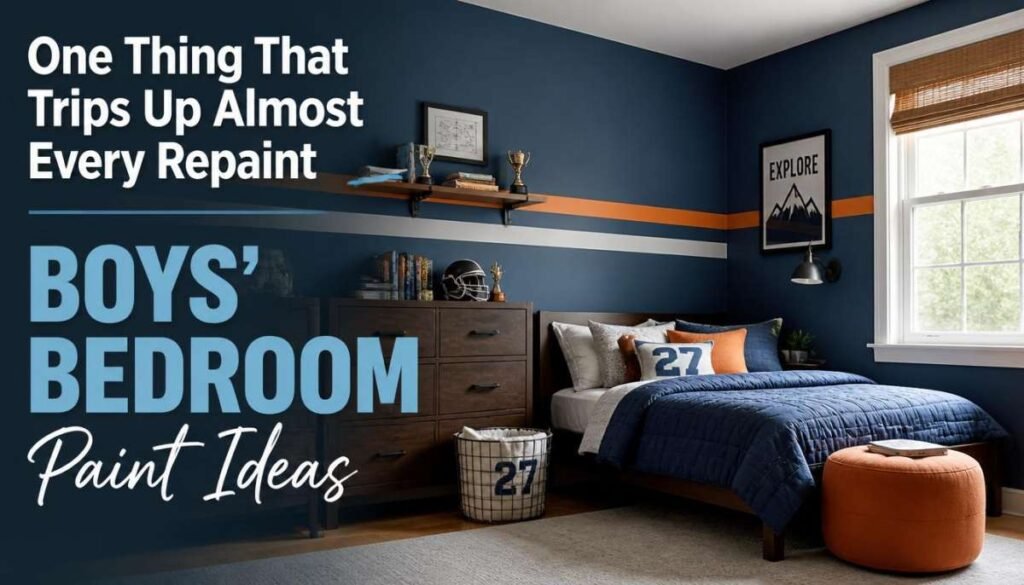
After walking through this decision with enough families, the same detail comes up more often than any color question: people underestimate how much a color shifts once furniture, bedding, and daily clutter fill the room back in. A wall that looked perfectly moody and sophisticated on an empty swatch can feel darker and smaller once a bed, dresser, and toy bins are back in place.
The practical workaround is to paint after the furniture layout is already decided, or at least mocked up with tape on the floor, rather than picturing the empty room and hoping it translates. It’s a small step that gets skipped constantly, and it’s usually the reason a “perfect” color ends up feeling off once the room is actually lived in.
Quick Reference: Sleep-Friendly vs. Stimulating Colors
| Sleep-Friendly | More Stimulating |
| Blue | Red |
| Green | Purple |
| Beige | Dark Brown |
| White | Black |
| Soft Pink | Bright Orange |
Choosing the Right Finish
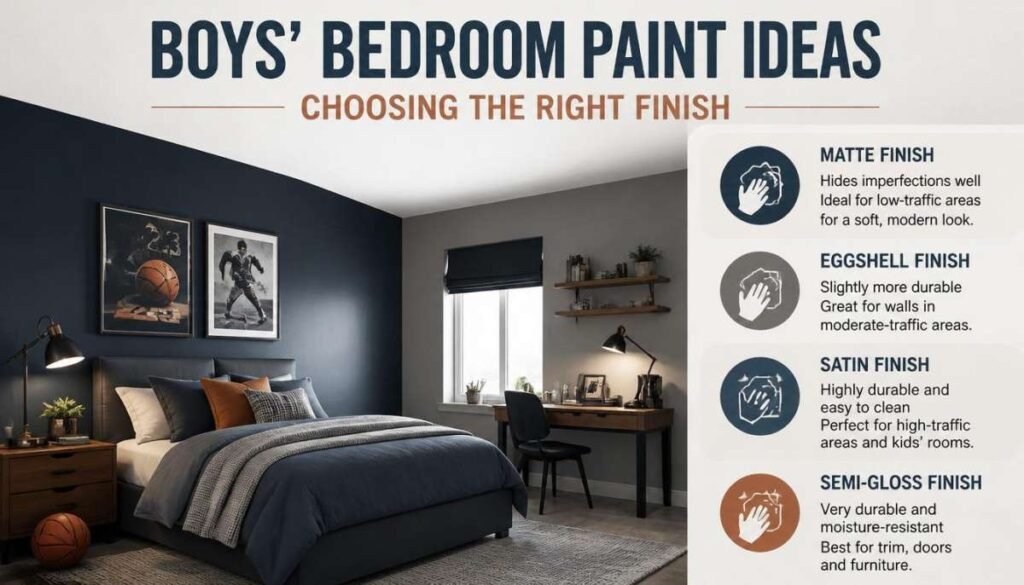
Color gets most of the attention, but finish matters just as much in a room that sees this much daily wear. Eggshell and satin finishes strike a good balance for most boys’ rooms, durable enough to wipe down marks and scuffs without being so glossy that every imperfection in the wall shows through.
Fully matte finishes look sophisticated, especially in a teen’s room, but they’re harder to clean, so they work best in rooms with a bit less daily wall contact. High-gloss is rarely the right call for a bedroom wall; it’s better saved for trim, doors, or a small painted headboard detail.
Few Mistakes Worth Avoiding
A couple of recurring issues show up more than others when planning a boys’ bedroom paint job.
Choosing a color based purely on a current obsession, like a specific character or trend, often means repainting sooner than expected. Keeping the wall color a bit more flexible and letting bedding, art, and accessories carry the specific interest tends to last longer.
Skipping the light test is another common one. A color chosen only from a paint chip or an online photo can look completely different once it’s actually on the wall, especially depending on which direction the room face
FAQ Section
What is the most popular paint color for a boy’s bedroom?
Blue remains the most popular choice, since it ranges from a soft, calming tone for younger boys to a deep navy for teens, and it pairs easily with almost any furniture or decor style.
What paint finish is best for a kid’s bedroom?
Eggshell or satin finishes usually work best, since they’re durable enough to wipe down marks and scuffs without being too glossy for a bedroom wall.
Does room direction affect how a paint color looks?
Yes. North-facing rooms get cooler, flatter light that can mute colors, while south-facing rooms get warmer light that can make the same color look brighter than expected. Testing the paint on the actual wall is the best way to check.
Should I paint a boy’s room a color he’ll outgrow?
It’s usually better to keep the wall color a bit more flexible and let bedding, art, or decor carry a specific interest or character theme, since those are much easier to swap out than a full repaint.
What age should I stop using bright, playful colors in a boy’s room?
There’s no hard rule, but many families start transitioning to more mid-tone or muted colors around elementary age, saving deeper, moodier tones for the tween and teen years.

Hi, I’m Liam Alexander! As a home décor specialist for dailyhomevibe.com, I’m super passionate about bringing elegance and simplicity into modern living spaces. I love sharing smart design solutions, helping you optimize your space, and highlighting timeless trends to inspire you to create a home you truly love coming back to.