

Glass cabinet doors show every fingerprint, water spot, and smudge almost immediately, which makes cleaning cabinets with glass doors satisfying in the moment and frustrating to keep up with. The good news is the process itself is simple, the part people usually get wrong is what happens to the wood frame around the glass, not the glass itself.
This guide covers the full process, including a question that trips a lot of people up after reading general cabinet-cleaning advice: is vinegar actually safe here, or not?
What You’ll Need
A spray bottle, white vinegar or an ammonia-free glass cleaner, two microfiber cloths (one for cleaning, one for drying), and a soft, dry cloth for dusting. That’s it, nothing specialty required.
Clear the Cabinet First
If you’re cleaning the interior glass too, empty the cabinet before starting. Set dishes or glassware on a towel nearby rather than stacking them, a toppled stack is how most kitchen accidents near glass happen.
The Step-by-Step Cleaning Process
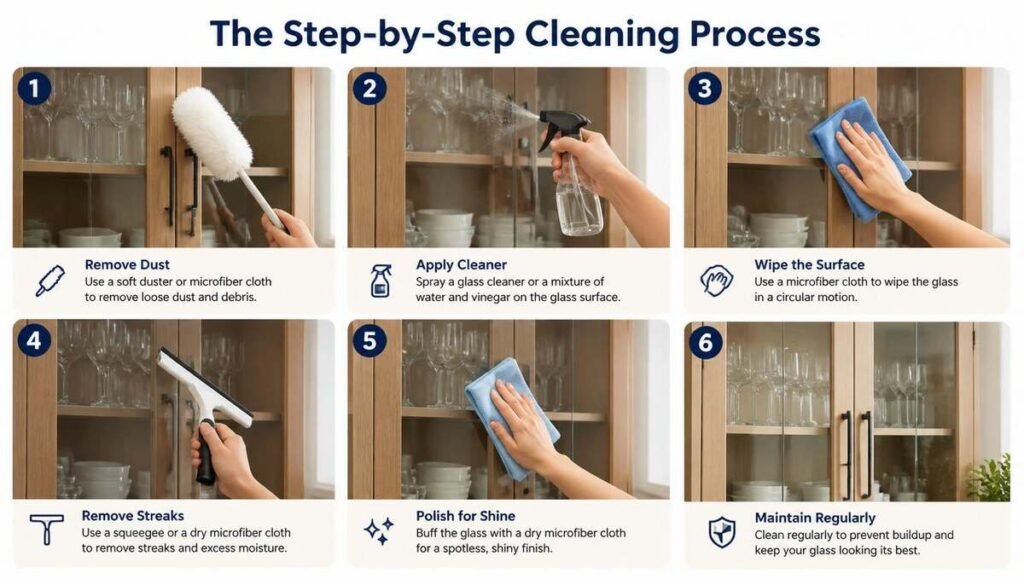
- Dust first. Wipe down both the glass and the surrounding wood frame with a soft, dry cloth to remove loose dust before anything gets wet.
- Mix your solution. Combine equal parts water and white vinegar in a spray bottle, or use an ammonia-free glass cleaner.
- Apply to the cloth, not the door. Spray the solution onto a clean microfiber cloth rather than directly onto the cabinet.
- Wipe the glass in circular motions. Gentle circles lift fingerprints and smudges more effectively than straight wipes here.
- Clean the frame separately. Use a damp, soapy cloth on the wood or metal frame, keeping excess moisture away from the edges where it meets the glass.
- Dry and buff. Finish with a separate dry microfiber cloth, buffing until the glass is streak-free.
Glass Doesn’t Have a Grain, Wood Does
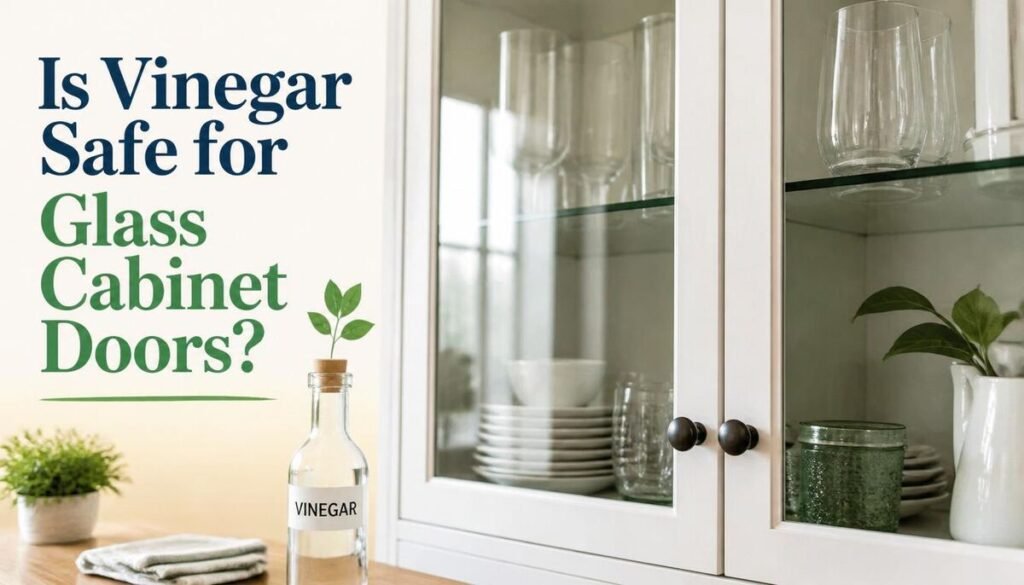
If you’ve read our guide on cleaning wood kitchen cabinets, you’ll know wiping with the wood grain matters for a streak-free finish. Glass works differently. There’s no grain to follow, so a gentle circular motion actually lifts smudges and fingerprints better than straight-line wiping does. It’s a small distinction, but mixing up the two techniques is a common reason glass ends up looking streaky even after a real effort.
Is Vinegar Safe for Glass Cabinet Doors?
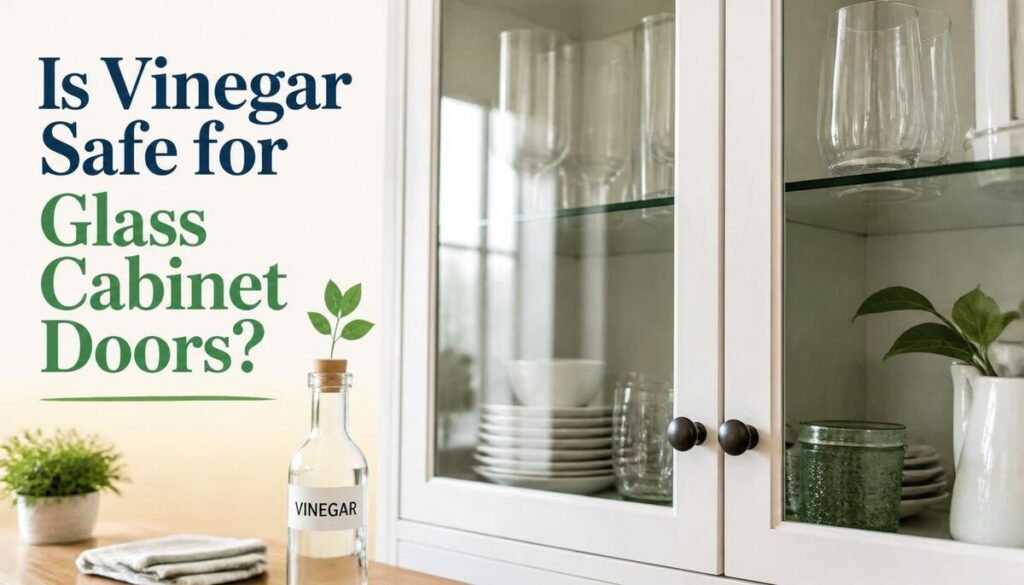
Yes, unlike wood, where vinegar’s acidity gradually damages the finish, glass has no finish to break down. A 50/50 mix of water and white vinegar is a genuinely safe, effective option for glass specifically.
The catch is what’s around the glass. If any of that vinegar solution touches the surrounding wood frame, the same damage risk from our wood-cabinet guide applies there. Vinegar is fine for the pane itself, just keep it off the frame.
Cleaning the Interior Glass
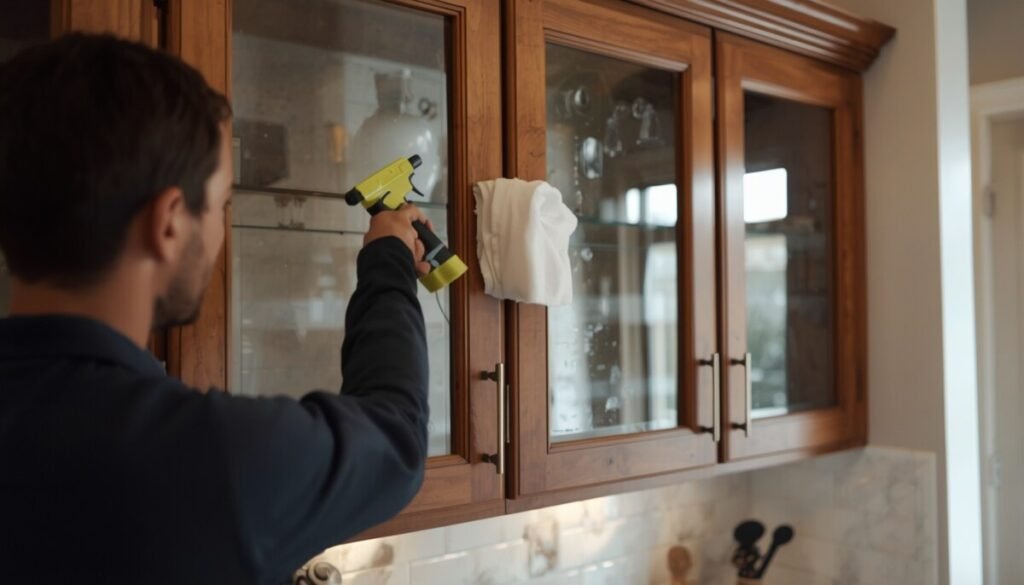
Interior glass gets less daily traffic but more built-up dust, since it’s rarely touched. Once the cabinet is empty, follow the same spray-onto-cloth process on the inside panel. Check for any residue in the corners, dust tends to collect there more than on the flat center of the glass.
Removing Grease and Stubborn Buildup
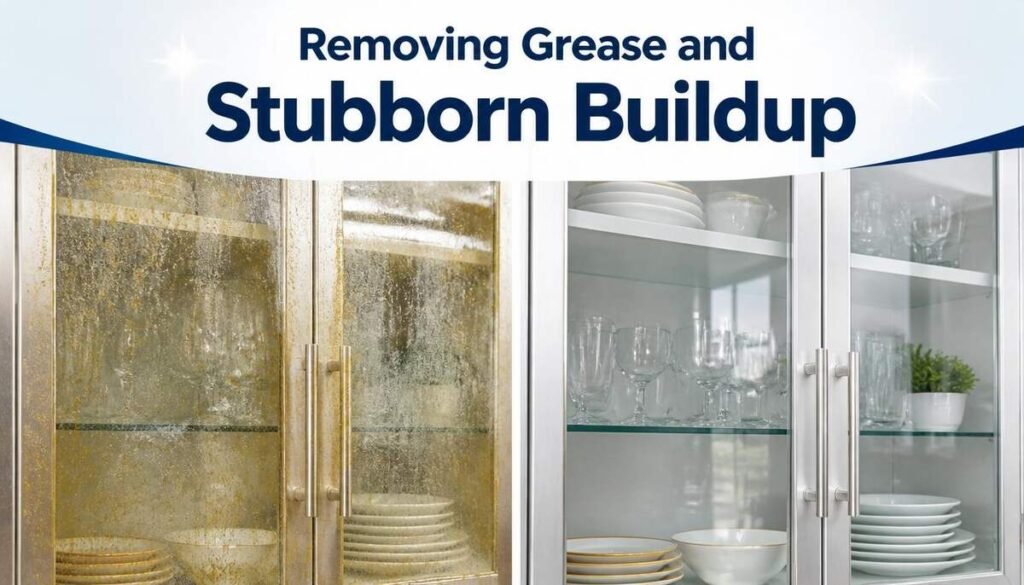
Kitchen glass has a problem display cabinets don’t: cooking grease. For doors near the stove or a busy prep area, a small amount of dish soap added to the water-vinegar mix helps cut through greasy buildup that plain glass cleaner struggles with. Let it sit on the spot for a minute before wiping, rather than scrubbing right away.
The One Rule That Protects the Wood Frame

This is worth repeating on its own: never spray cleaner directly onto a glass cabinet door. Overspray lands on the surrounding wood, and repeated exposure to glass cleaner or vinegar is exactly what damages a wood finish over time. Spraying the cloth first, every single time, is the one habit that prevents this entirely.
Cleaning Frosted Glass Cabinet Doors
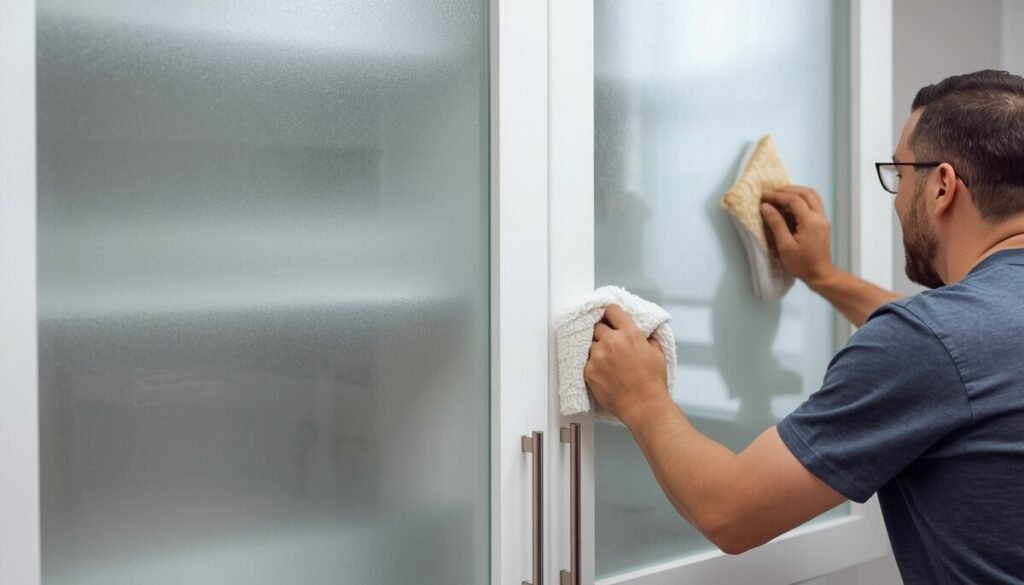
Frosted glass hides fingerprints better than clear glass, but it holds onto dust differently, the textured surface has more places for it to settle. The same water-vinegar solution works fine here, but a slightly softer cloth and a bit more time on the wipe-down helps get into the texture rather than just skimming the surface.
Preventive Habits That Keep Glass Looking Clear

A quick wipe-down once a week keeps buildup from turning into a bigger job later. Keeping hands dry before opening cabinet doors reduces fingerprints in the first place, and wiping up any splatter near the stove-adjacent doors right away, rather than letting it dry, makes the next cleaning noticeably faster.
Quick Reference: Glass vs. Wood Frame
| Glass Pane | Wood Frame | |
| Vinegar safe? | Yes | No |
| Wipe direction | Circular motion | With the grain |
| Main risk | Streaking | Finish damage from moisture/acid |
FAQ Section
Can I use vinegar to clean glass cabinet doors?
Yes, a 50/50 mix of water and white vinegar is safe for glass. Just avoid letting it touch the surrounding wood frame, where the same acidity can damage the finish.
How do you clean glass cabinet doors without streaks?
Spray the cleaning solution onto a cloth rather than the glass, wipe in gentle circular motions, then dry immediately with a separate clean microfiber cloth.
Why does my glass cabinet door keep getting streaky?
Streaking usually comes from using too much liquid or not drying immediately afterward. Spraying the cloth instead of the glass, and buffing dry right after, solves most streaking issues.
How do you clean the inside of a glass cabinet?
Empty the cabinet first, then follow the same spray-onto-cloth process used for the exterior, paying extra attention to dust that collects in the corners.
Is it safe to spray glass cleaner directly on cabinet doors?
No. Overspray can land on the surrounding wood frame and damage the finish over time. Spraying the cloth first avoids this entirely.

Hi, I’m Liam Alexander! As a home décor specialist for dailyhomevibe.com, I’m super passionate about bringing elegance and simplicity into modern living spaces. I love sharing smart design solutions, helping you optimize your space, and highlighting timeless trends to inspire you to create a home you truly love coming back to.