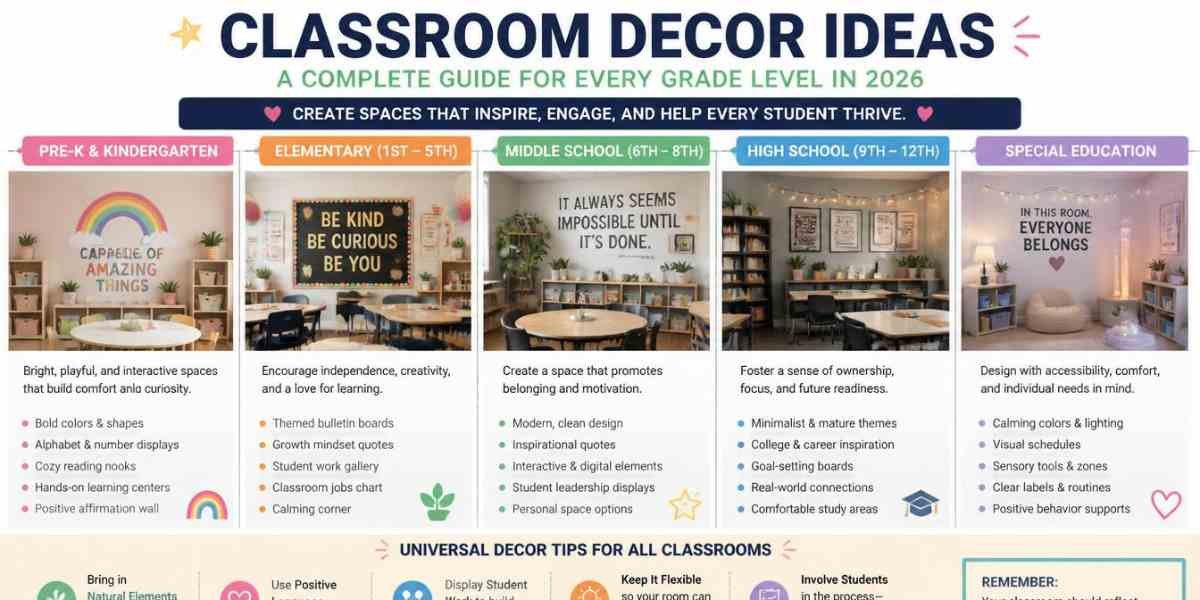
Walking into a thoughtfully decorated classroom changes how students feel before a single lesson even begins. The right decor sets a tone of warmth, focus, and belonging, while a cluttered or mismatched space can quietly work against everything a teacher is trying to build. Good classroom decor is not about how many things are on the walls. It is about making intentional choices that actually support how students learn and feel in the room.
This guide covers classroom decor ideas for every grade level, the design trends shaping 2026 classrooms, and practical tips for creating a space that feels calm, organized, and genuinely welcoming. Whether you are decorating for kindergarten or high school, you will find ideas here that go beyond a Pinterest board and into something you can actually use.
Why Classroom Decor Matters More Than It Seems

It is easy to treat classroom decor as the fun, optional part of teaching, something to handle once the lesson plans are sorted. In reality, the physical environment plays a real role in how students engage with the room. A classroom that feels organized and calm tends to reduce anxiety and helps students locate routines and expectations more easily, while a space that is visually overwhelming can do the opposite, even with the best intentions behind it.
Decor also communicates values before a teacher says a word. A classroom with diverse representation, clear behavior expectations on display, and a dedicated space for student work tells students that this room was built with them in mind. The goal is not to fill every wall, but to make every piece of decor earn its place by serving a purpose, whether that purpose is organizational, emotional, or instructional.
Classroom Decor Trends for 2026

Classroom design continues to shift away from overstimulating, color-saturated walls toward something calmer and more intentional. Several clear trends are shaping how teachers are decorating their rooms this year.
Minimalist and Calming Palettes
Soft neutrals, muted sage greens, warm creams, and gentle pastels are replacing the bright primary color schemes that dominated classroom decor for years. This shift reflects growing awareness that visually busy environments can increase sensory overload for some students, particularly those with attention or sensory processing differences. A calmer palette does not mean a boring room. It means the color that is used carries more visual weight and intention.
Nature-Inspired and Woodland Themes
Woodland and nature-inspired decor has become one of the most consistently popular themes across early years and elementary classrooms. Forest animals, soft greens and browns, and organic shapes create a retreat-like feeling that pairs easily with existing decor, making it simple to refresh just one corner of the room without committing to a full overhaul.
Nostalgic 90s-Inspired Accents
A wave of nostalgia is bringing pastel checkerboards, retro smiley faces, and reimagined vintage school supply motifs back into classroom design, particularly in upper elementary and middle school spaces. This trend works because it feels playful without veering into anything overly childish, which makes it a good fit for older students who still appreciate a bit of personality in the room.
Flexible, Theme-Light Spaces
Rather than committing to one rigid theme for the entire year, more teachers are choosing a neutral base palette, such as black, grey, or navy, and layering in accent colors and seasonal touches that can rotate easily. This approach saves money over time and makes it simple to adjust the room for holidays or themed units without redecorating the whole space.
Classroom Decor Ideas for Elementary School
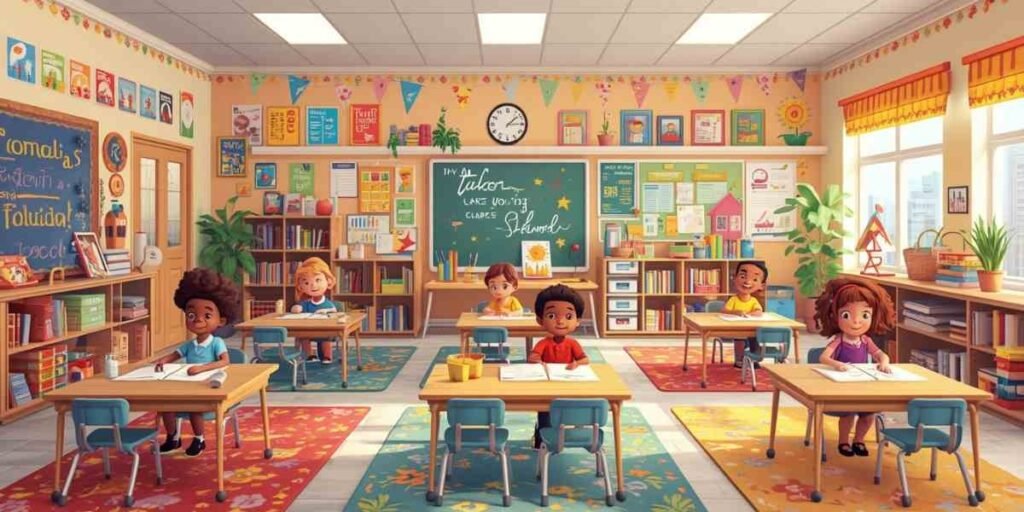
Elementary classrooms benefit from decor that is warm, structured, and visually supportive of routines, since younger students rely heavily on visual cues throughout the day.
A reading corner remains one of the most valuable additions to any elementary classroom. A rug, a few cushions, soft lighting, and shelves of accessible books transform an unused corner into a space students genuinely want to spend time in. Labeled bins and bulletin boards displaying classroom rules give young students a visual reference they can return to throughout the day without needing constant reminders from the teacher. Door decorations also matter more than they might seem to, since they are often the very first thing a student sees each morning, setting the tone before they even step inside.
Classroom Decor Ideas for Kindergarten
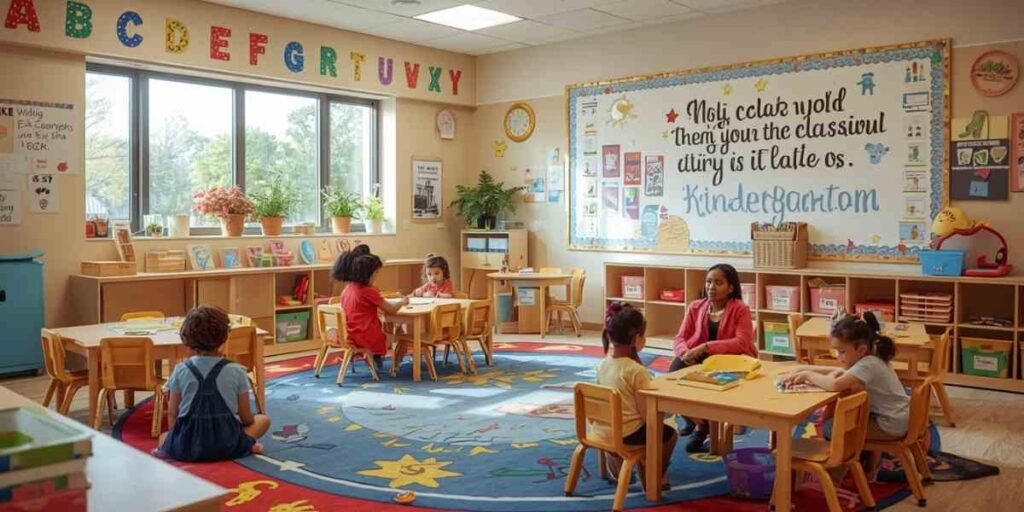
Kindergarten classrooms need decor that is simple, bright without being chaotic, and built around very clear visual systems, since most kindergarten students are still learning to read and rely heavily on pictures and color coding.
Picture-based labels on storage bins, cubbies, and supply areas help young students navigate the room independently. A calm-down corner with soft seating and a simple visual breathing guide gives kindergarten students a dedicated space to regulate their emotions, which has become an increasingly common and valuable addition to early years classrooms. Large, friendly alphabet and number displays positioned at a child’s eye level, rather than high on the wall where adults tend to place them, make a meaningful difference in how often young students actually engage with them.
Classroom Decor Ideas for Middle School
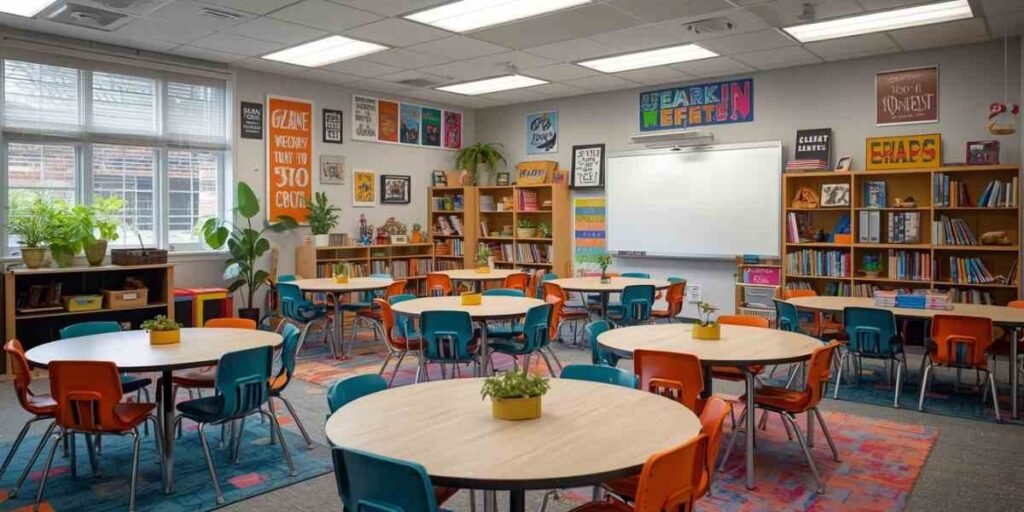
Middle school students respond differently to decor than younger students. The room still needs structure, but overly childish themes can feel disconnected from how middle schoolers see themselves at this stage.
Motivational quotes paired with clean, modern typography tend to land better in middle school than cartoon-style graphics. A dedicated space for showcasing student work, even something as simple as a designated bulletin board for current projects, gives older students a sense of ownership over the room. Subtle nostalgic touches, like retro color palettes or vintage-inspired posters, tend to resonate well with this age group since they feel current without being overly young.
Classroom Decor Ideas for High School
High school classrooms generally move further away from traditional decor and closer to something that resembles a genuine workspace or studio, particularly in subject-specific rooms like art, science, or English classrooms.
Inspirational quotes from relevant figures in the subject being taught, whether that is authors, scientists, or historical figures, add context and depth rather than just decoration. Flexible seating areas and a visible space for displaying ambitious, real student work, such as published writing or design projects, signal to high schoolers that the room takes their work seriously. Many high school teachers also find that minimal, sophisticated decor, rather than anything overly themed, creates an environment that feels more aligned with how older students want to be treated.
Classroom Decor Ideas for Preschool
Preschool classrooms require an entirely different approach, focused heavily on sensory engagement, safety, and supporting very early developmental milestones.
Soft textures, large simple shapes, and bright but not overwhelming colors work best for this age group. Dedicated sensory areas with safe, touchable materials give preschoolers an outlet for the natural exploration that defines this developmental stage. Labels paired with both pictures and words help introduce early literacy concepts gently, even before students are ready to read independently.
Classroom Decor Ideas for 4th Grade and Upper Elementary
Fourth grade and upper elementary students sit in an interesting middle ground. They are old enough to appreciate more sophisticated design choices but still benefit from the structure that younger classroom decor provides.
This is often the age group where teachers introduce more complex organizational systems, such as detailed behavior charts or goal-tracking displays, since upper elementary students are developmentally ready to engage with more nuanced feedback systems. Subject-specific decor zones, such as a dedicated math wall with anchor charts or a writing corner with mentor texts displayed, tend to be particularly effective at this stage since students are working with more advanced academic content.
How to Decorate a Classroom Without Overspending or Overdoing It
A genuinely well-decorated classroom does not require an unlimited budget or an overwhelming amount of decor. A few practical strategies make a significant difference in both cost and visual impact.
Starting with a neutral base, such as black, brown, grey, or navy bulletin board backgrounds, makes it easy to add a single seasonal accent color without needing to repaper boards every few months. Colorful bed sheets can also work surprisingly well as a durable, budget-friendly bulletin board background that holds up far better than traditional paper. Focusing spending on a few high-quality, reusable pieces rather than many disposable items tends to be more cost-effective over multiple school years, even if the upfront cost feels higher.
A Real Experience Worth Sharing
Reading genuine feedback from people who have actually purchased classroom decor and supplies offers a level of honesty that product photos cannot provide.
This kind of feedback reflects a broader pattern seen in classroom supply reviews, where bulk ordering for childcare and school settings tends to go smoothly when teachers plan ahead and order decor in coordinated batches rather than piecing it together item by item.
Final Thoughts
The best classroom decor does more than look good in photos. It supports the actual rhythm of the school day, helps students feel a genuine sense of belonging, and makes routines easier to follow without constant verbal reminders.
Choose decor with intention, let function guide the aesthetic, and remember that a calm, well-organized space often does more for student engagement than the most elaborate theme ever could. Start with the basics that matter most for your specific grade level, then build out from there one thoughtful piece at a time.
Frequently Asked Questions
What are good classroom decor ideas for elementary school?
A reading corner, labeled storage bins, a clear classroom rules display, and a welcoming door design are all strong starting points. These elements support both organization and a sense of comfort for younger students.
What classroom decor themes are popular for 2026?
Minimalist calming palettes, nature-inspired woodland themes, and nostalgic 90s-style accents are among the most popular trends this year, particularly across elementary and middle school classrooms.
How do I decorate a classroom on a budget?
Use a neutral base for bulletin boards so you only need to refresh a small accent area for each season, invest in a few durable reusable pieces rather than many disposable items, and consider fabric backgrounds like bed sheets, which hold up better than paper over time.

Hi, I’m Liam Alexander! As a home décor specialist for dailyhomevibe.com, I’m super passionate about bringing elegance and simplicity into modern living spaces. I love sharing smart design solutions, helping you optimize your space, and highlighting timeless trends to inspire you to create a home you truly love coming back to.