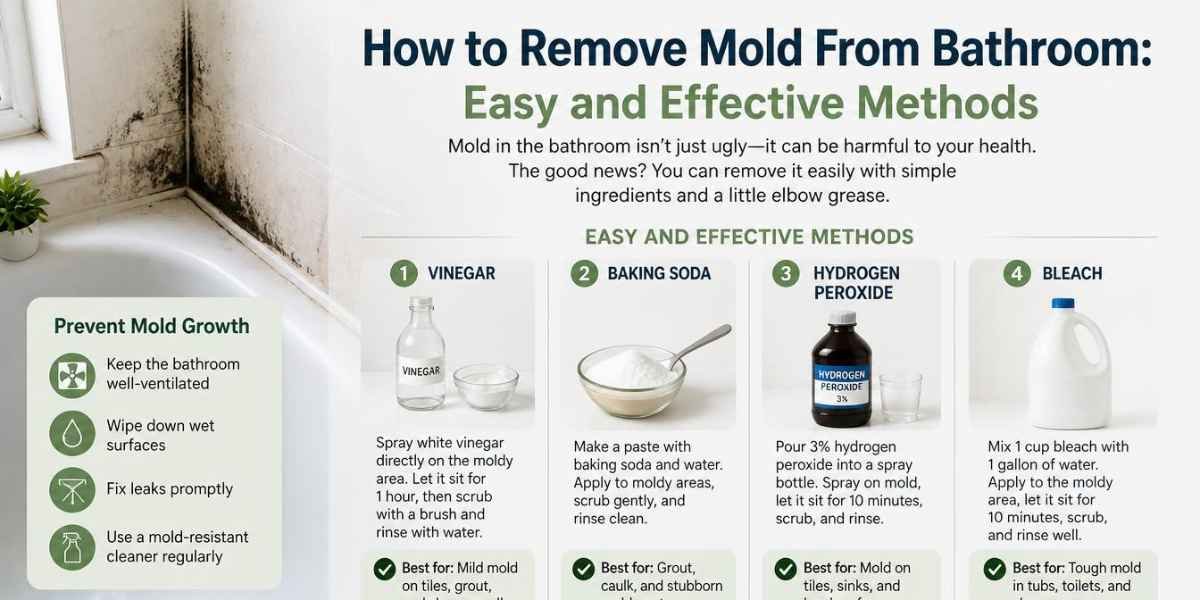
Learning how to remove mold from bathroom surfaces can help keep your space cleaner, fresher, and more comfortable. Bathroom mold commonly appears around shower walls, grout, ceilings, corners, and areas that stay damp because of poor ventilation or frequent exposure to moisture.
Small areas of surface mold can often be cleaned with the right approach and a little patience. However, removing the visible growth is only part of the solution. Controlling humidity, improving airflow, and fixing leaks can help prevent mold from returning.
Say Goodbye to Bathroom Mold for Good

Bathroom mold can appear almost overnight, especially around shower walls, grout, ceilings, corners, and other areas that stay damp. Warm temperatures, steam, and poor ventilation create the perfect environment for mold to grow.
The good news is that small areas of surface mold can often be handled with the right cleaning method. However, cleaning the visible mold is only part of the job. Reducing moisture and fixing the cause can help keep those unwanted dark spots from coming back.
Also Read: Carpet Cleaning Hacks That Actually Work 2026 Guide
What Makes Your Bathroom a Mold Magnet?
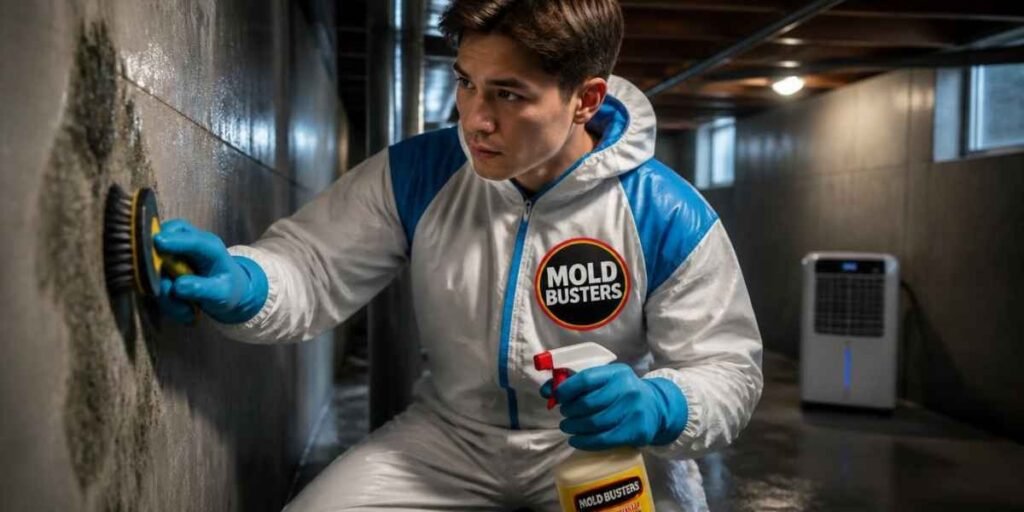
Bathrooms naturally contain the three things mold loves most: moisture, warmth, and limited airflow. Every hot shower adds steam to the air, and that moisture can settle on walls, ceilings, tiles, and other surfaces.
Leaks can make the situation worse. A dripping pipe, damaged shower seal, or hidden water leak can keep areas damp for long periods, allowing mold to grow beneath surfaces where ordinary cleaning may not reach.
If you notice a musty smell or repeated damp patches, don’t ignore them. These signs can point to excess moisture that needs attention before the mold problem becomes larger.
The Right Way to Tackle Bathroom Mold
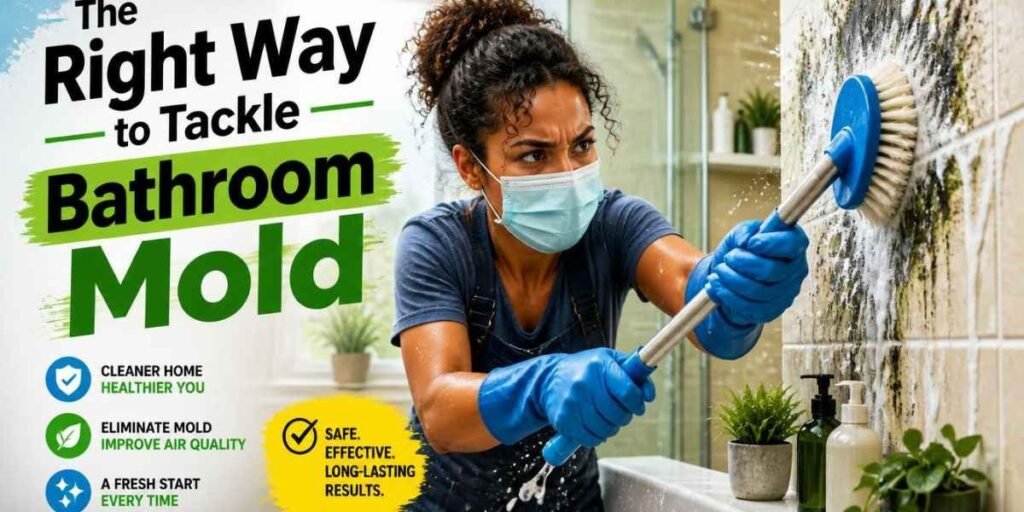
Before cleaning, improve ventilation and allow the bathroom to dry as much as possible. Wear appropriate gloves and eye protection, and avoid unnecessarily disturbing moldy material while preparing the area.
For small areas on hard, non-porous surfaces, use a suitable household mold-cleaning product according to its label instructions. Let the product sit for the recommended time, then scrub and rinse as directed.
Never mix bleach with ammonia, vinegar, acids, or other cleaning products. Combining household chemicals can create dangerous fumes. Always follow the cleaner’s safety instructions and keep the room properly ventilated.
Give Moldy Grout a Fresh Start
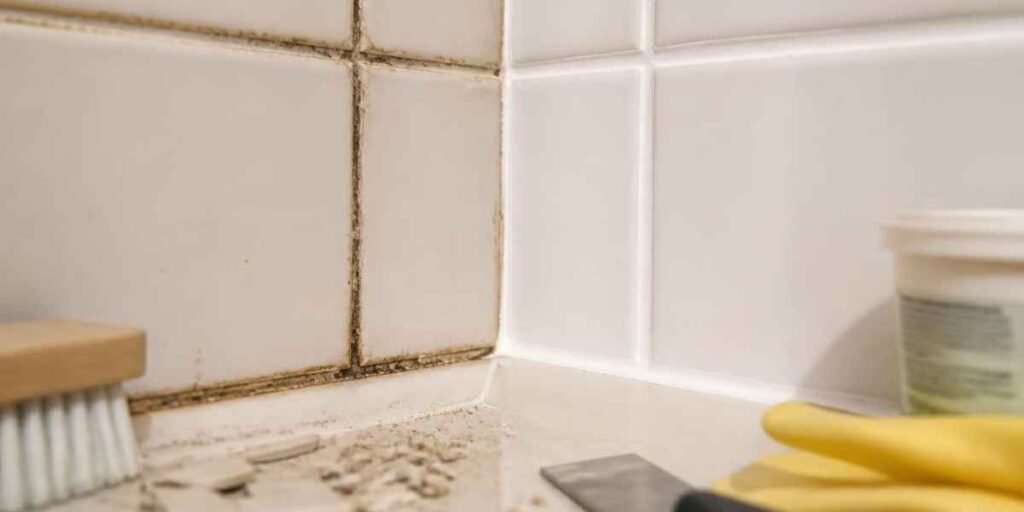
Grout can be particularly vulnerable because its porous texture can hold moisture and soap residue. Before treating mold, clean away surface dirt and buildup so the affected area is easier to work on.Apply a suitable grout or bathroom mold cleaner according to its instructions, then use a soft or medium brush to loosen the growth. Avoid aggressive scrubbing that could damage the grout or surrounding surfaces.
If the mold repeatedly returns or has penetrated damaged grout, replacing the affected section may offer a better long-term solution. New grout should also be kept dry and properly sealed where appropriate.
When Shower Caulk Turns Black
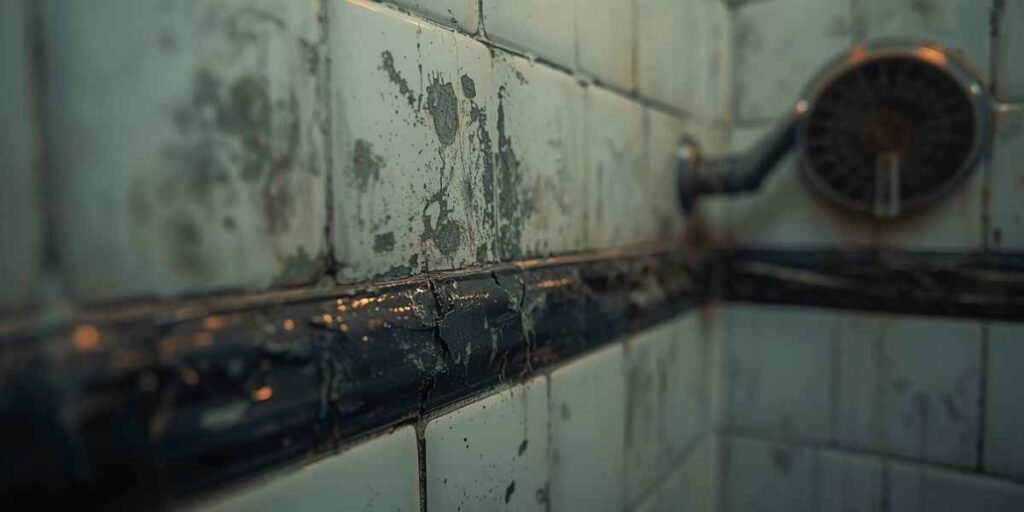
Moldy shower caulk can be frustrating because the growth may extend beneath the surface of the sealant. If cleaning doesn’t remove the discoloration, the mold may have penetrated the caulk rather than simply sitting on top.
In that situation, removing the old caulk and applying fresh bathroom-grade, mold-resistant sealant may work better. The surface should be thoroughly cleaned and completely dry before new caulk is installed.
Clear Mold From a Bathroom Ceiling
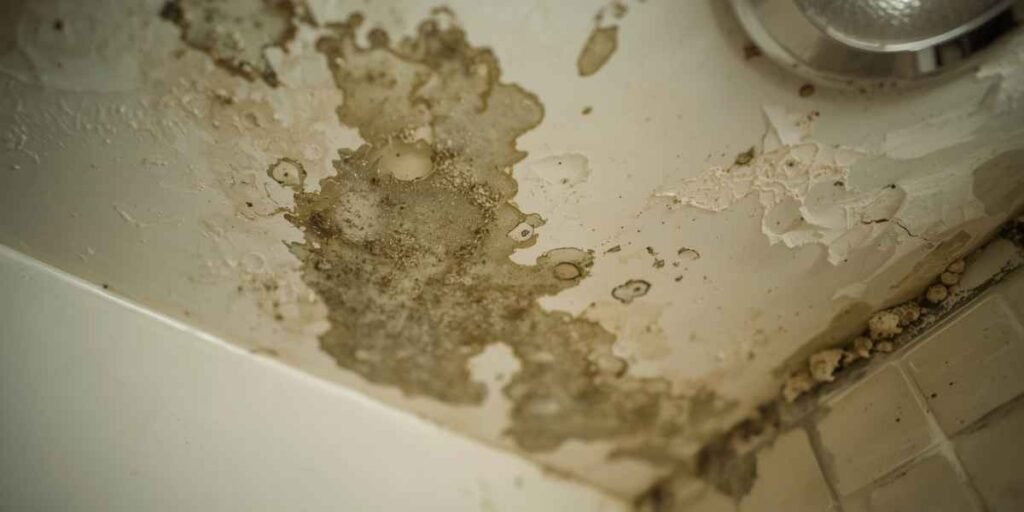
Bathroom ceilings often develop mold because shower steam naturally rises and collects overhead. Without enough ventilation, moisture can remain trapped against the ceiling and create favorable conditions for mold.
For a small surface area, use an appropriate mold-removal product and follow its safety instructions carefully. Protect nearby surfaces and allow the ceiling to dry completely after cleaning.
If the ceiling feels soft, shows water damage, or repeatedly develops mold, investigate the moisture source instead of repeatedly cleaning the surface. Persistent ceiling mold can sometimes indicate a leak or ventilation problem.
Restore Clean, Fresh Bathroom Walls

Mold on tiled or other hard bathroom walls can often be treated when the growth remains on the surface. The cleaning approach should match the material because painted walls, tiles, and other finishes may require different products and techniques.
Bubbling paint, damaged plaster, or recurring dampness can indicate a deeper moisture problem. In these situations, finding and correcting the source should come before cosmetic repairs.
Keep Mold From Finding Its Way Back
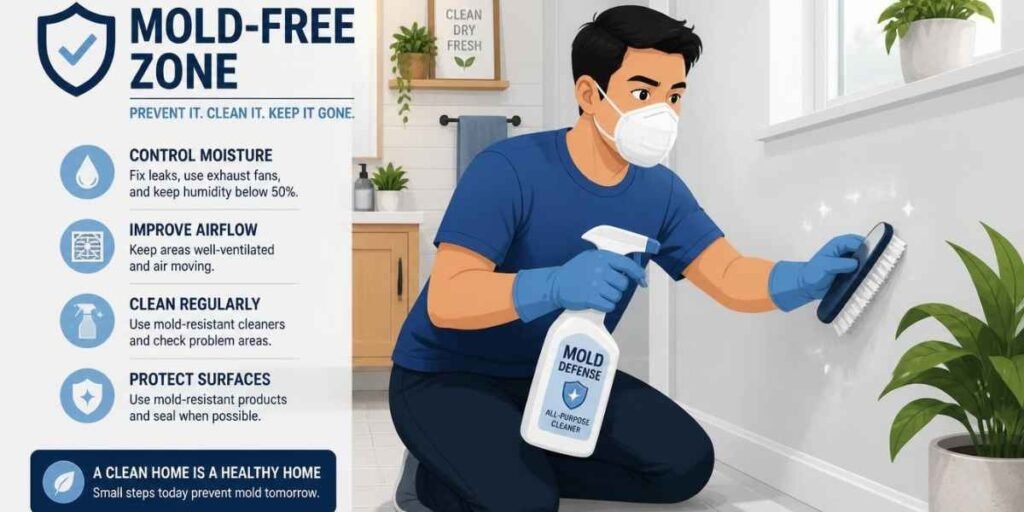
Getting rid of visible mold is only half the battle. Keeping your bathroom dry is what makes the biggest difference over time.Run the exhaust fan while showering and continue using it afterward to remove humid air. If you have a window, opening it when appropriate can also improve airflow and help moisture escape.
Wipe excess water from shower surfaces, repair leaks promptly, and avoid leaving wet towels or mats bunched up on the floor. Small daily habits can make your bathroom much less welcoming to mold.
Take Control of Bathroom Humidity
High humidity can turn a clean bathroom into a perfect environment for mold growth. An effective exhaust fan can remove moisture from the room, while a dehumidifier may help in bathrooms that remain unusually humid.
Pay attention to condensation on windows, walls, and ceilings. If these surfaces frequently remain wet after a shower, your bathroom may need better airflow or ventilation.
A small humidity monitor can also help you understand how damp the room actually becomes. Tracking humidity makes it easier to recognize when ventilation needs improvement.
Bathroom Mold Mistakes That Can Make Things Worse
One common mistake is cleaning the visible mold without fixing the moisture problem. If condensation, leaks, or poor ventilation continue, new growth can appear soon after the old mold has been removed.
Another mistake is using excessive amounts of cleaning chemicals or combining different products. More cleaner does not necessarily mean better results, and unsafe combinations can create serious hazards.Never mix bleach with ammonia, vinegar, acids, or other cleaners. Follow the product label carefully, use recommended protective equipment, and provide adequate ventilation while cleaning.
Frequently Asked Questions
What is the easiest way to remove bathroom mold?
For small areas, use an appropriate mold-removal product on the affected hard surface and follow its label directions. Drying the area afterward and improving ventilation can help prevent the mold from returning.
Why does mold keep coming back in my bathroom?
Recurring mold usually points to an unresolved moisture problem. Poor ventilation, condensation, plumbing leaks, and damp building materials can all contribute to repeated growth.
Can I remove mold from bathroom grout?
Yes, surface mold on grout can often be cleaned with a suitable grout or bathroom mold cleaner. Severely damaged or repeatedly affected grout may need to be replaced.
Should I use bleach to remove bathroom mold?
Bleach may be suitable for certain hard, non-porous surfaces when used according to its label. Never mix bleach with other cleaning products because hazardous fumes can develop.

Hi, I’m Liam Alexander! As a home décor specialist for dailyhomevibe.com, I’m super passionate about bringing elegance and simplicity into modern living spaces. I love sharing smart design solutions, helping you optimize your space, and highlighting timeless trends to inspire you to create a home you truly love coming back to.